ART
BEAUTÉ ET BIEN-ÊTRE
ARTISANAT
CULTURE ET HISTOIRE
DIVERTISSEMENT
ENVIRONNEMENT
NOURRITURE ET BOISSONS
INGÉNIERIE INVERSE
SCIENCES
SPORTS
TECHNOLOGIE
TECHNOLOGIE PORTABLE
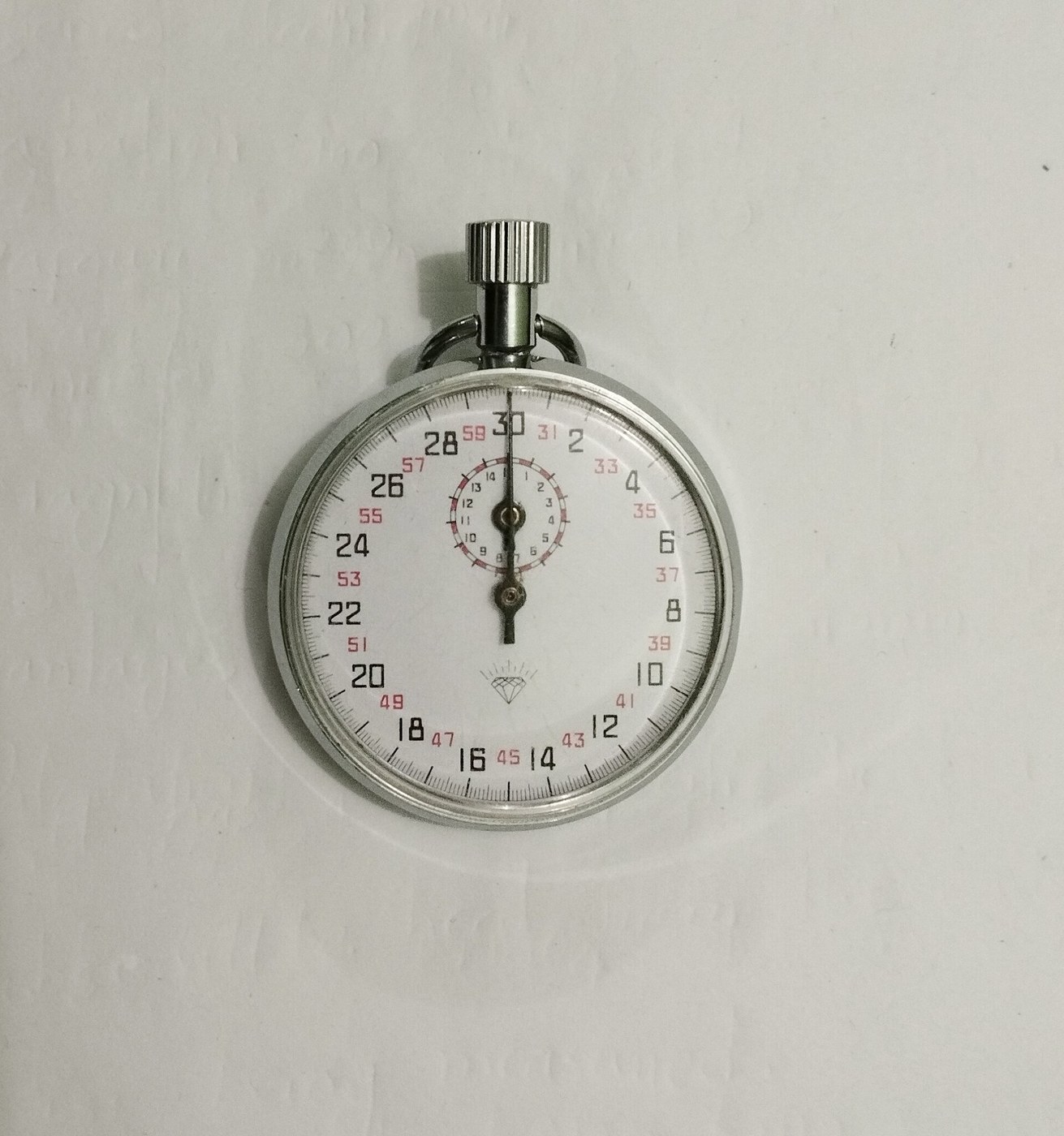


Timing by Hand: Your Reaction Time Is the Biggest Error in the Experiment
The stopwatch is the second most used tool in this whole catalogue, and it is also the one whose error nobody writes down. A stopwatch resolves to a hundredth of a second; the hand holding it does not.
A human takes something like a fifth of a second to react to a visual signal, and varies by about a tenth of a second from try to try. Against a two-second interval that is a 5% error before anything else has gone wrong — far larger than any other error in a typical bench experiment.
Almost all of it can be designed away, and none of it can be averaged away. The fix is the same one the systematic-error rung ends on: change the measurement so the error matters less, rather than taking the same bad measurement more times.
Intermédiaire
3 hours
Consignes
1
1
Measure your own reaction time before trusting a number
Measure your own reaction time before trusting a number
Start the watch and stop it as fast as you can. The time you get is roughly your reaction spread — the difference between your start reaction and your stop reaction. Do it ten times and record the whole set.
Expect something in the region of 0.1 to 0.2 s, varying by several hundredths. That number is yours, it changes with fatigue and practice, and it is the floor under every interval you time by hand.
The falling-ruler test gives the same answer more convincingly: a partner drops a ruler between your fingers and you catch it, and the distance it fell converts to a time. 20 cm of fall is about 0.2 s. It costs nothing and makes the size of the effect impossible to argue with.
Outils nécessaires :
 Chronomètre
 Règle
Règle2
2
Time ten of them and divide, rather than timing one
Time ten of them and divide, rather than timing one
Chargement du notebook Jupyter…
Outils nécessaires :
Chronomètre Pendule
 Ordinateur de bureau
3
3
Count from zero, and count out loud
Count from zero, and count out loud
Start the watch on a swing and call that swing ZERO, not one. Counting the starting swing as one gives a count that is one too high and a period that is systematically short — the commonest single mistake in bench timing.
Count out loud, and take the count at the same point in the motion every time. The centre of the swing is far better than the end: the pendulum is moving fastest there, so it passes the mark sharply, while at the ends it dawdles and the instant is impossible to judge.
A fixed marker helps more than it sounds — a pin, a chalk line, the edge of something behind the bob. Judging when the bob passes a mark is a much easier task than judging when it reaches a position in mid-air, and the whole error here is a judgement error.
Outils nécessaires :
ChronomètrePendule4
4
When to stop timing by hand at all
When to stop timing by hand at all
Some intervals cannot be stretched. A falling ball takes half a second from a metre, and you cannot drop it a hundred times in a row and time the lot.
When the interval is short and cannot be extended, replace the HAND rather than trying harder. A light gate, a microphone triggering on the impact, a phone recording at high frame rate and counted back frame by frame — all remove the reaction time entirely and cost very little.
Or measure something else. Timing a fall is hard; measuring how FAR it fell is easy and the arithmetic converts one to the other. Changing which quantity you measure is often cheaper than improving how you measure the awkward one, and that is worth asking before every timed experiment.
Outils nécessaires :
ChronomètreRègleOrdinateur de bureauBlueprints liés
Ces blueprints partagent des connaissances — techniques, matériaux ou principes
CC0 Domaine public
Ce blueprint est publié sous CC0. Vous êtes libre de copier, modifier, distribuer et utiliser ce travail pour tout usage, sans demander la permission.
Soutenez le Maker en achetant des produits via son Blueprint où il perçoit une Commission Maker définie par les Vendeurs, ou créez une nouvelle itération de ce Blueprint et incluez-le comme connexion dans votre propre Blueprint pour partager les revenus.