ART
BEAUTÉ ET BIEN-ÊTRE
ARTISANAT
CULTURE ET HISTOIRE
DIVERTISSEMENT
ENVIRONNEMENT
NOURRITURE ET BOISSONS
INGÉNIERIE INVERSE
SCIENCES
SPORTS
TECHNOLOGIE
TECHNOLOGIE PORTABLE
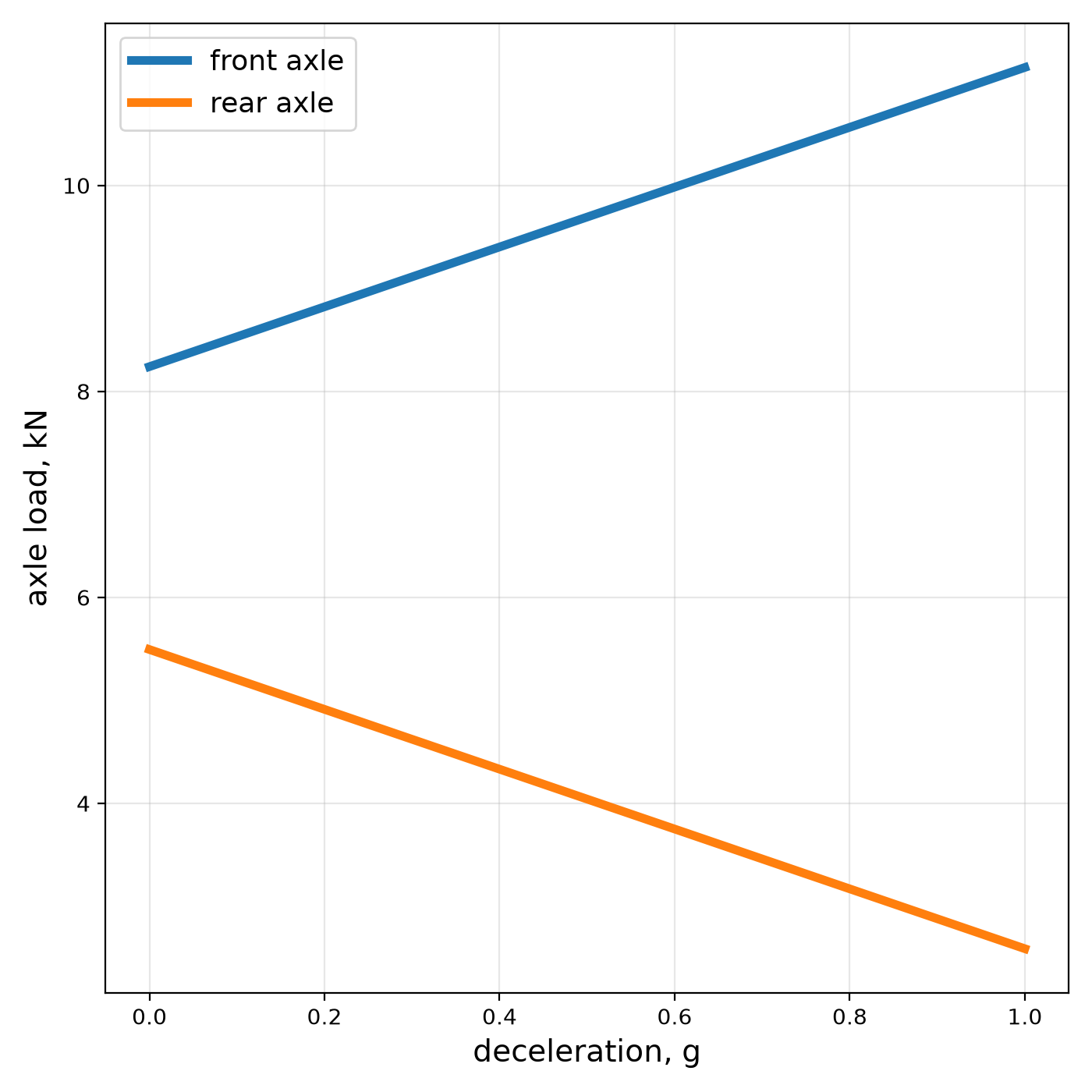
Youblob (generated from this blueprint's notebook) · CC0

Weight Transfer Under Braking: Why the Front Brakes Are Bigger
Brake hard and the nose dips: load moves from the rear wheels to the front. A tyre can only grip in proportion to the load on it, so in a hard stop the front tyres can do far more of the braking than the rear. Ask the rear brakes to do their static share and the rear wheels lock, and a car with locked rear wheels turns round.
This practice rung works out the load on each axle at several decelerations, and shows how to find a vehicle's centre-of-gravity height — the number the whole calculation turns on — with two scales and a block.
Débutant
About 2 hours
Consignes
1
1
Axle loads and centre-of-gravity height
Axle loads and centre-of-gravity height
Chargement du notebook Jupyter…
2
2
Measure a cart's centre of gravity
Measure a cart's centre of gravity
Build or take a wheeled cart — the dynamics cart set, or a board on the axle-and-wheel kit — and load it with weights. Stand its front wheels on the kitchen scale and its rear wheels on a block of the same height; read the front load. Weigh the whole cart too.
Raise the rear wheels by 100 mm on a stack of books and read the front load again. Put your numbers into the notebook in place of the example inputs.
Now move the weights higher on the cart and repeat: the front load changes MORE when the cart is tilted, and the notebook gives a greater height. A high centre of gravity means more weight transfer — the reason a tall van pitches so much more than a low car.
Matériaux pour cette étape :
 Poids1 jeu
Outils nécessaires :
 Balance de cuisine numérique
 Jeu de chariots de dynamique (faible frottement)
 Règle
Règle3
3
Context
Context
A practice rung: the statics of a braking vehicle, which set the proportions of every brake system — bigger front brakes, pressure-limiting valves to the rear, and today anti-lock systems that keep each wheel just short of locking.
**Honest limits of the model.** Rigid body, no suspension movement, level road, and constant deceleration. Suspension geometry can resist the pitch (anti-dive); a slope changes the static loads; and a tyre's grip is not exactly proportional to its load.
Outils requis
3- Espace réservé
- Espace réservé
- Espace réservé
Blueprints liés
Ces blueprints partagent des connaissances — techniques, matériaux ou principes
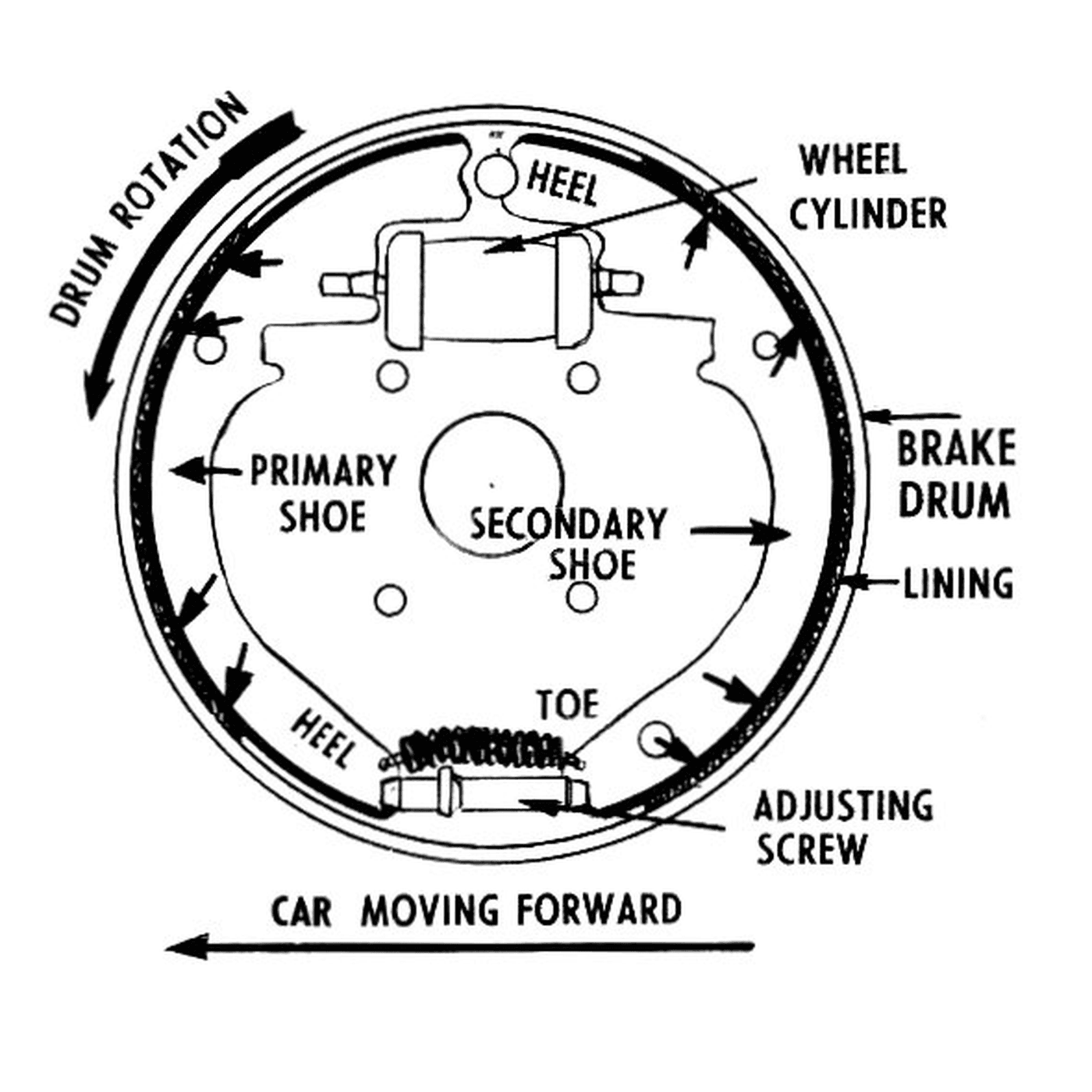
The Drum Brake: Shoes That Push Themselves Harder
par Martin
Mécanique
13
0
0
0
0
0
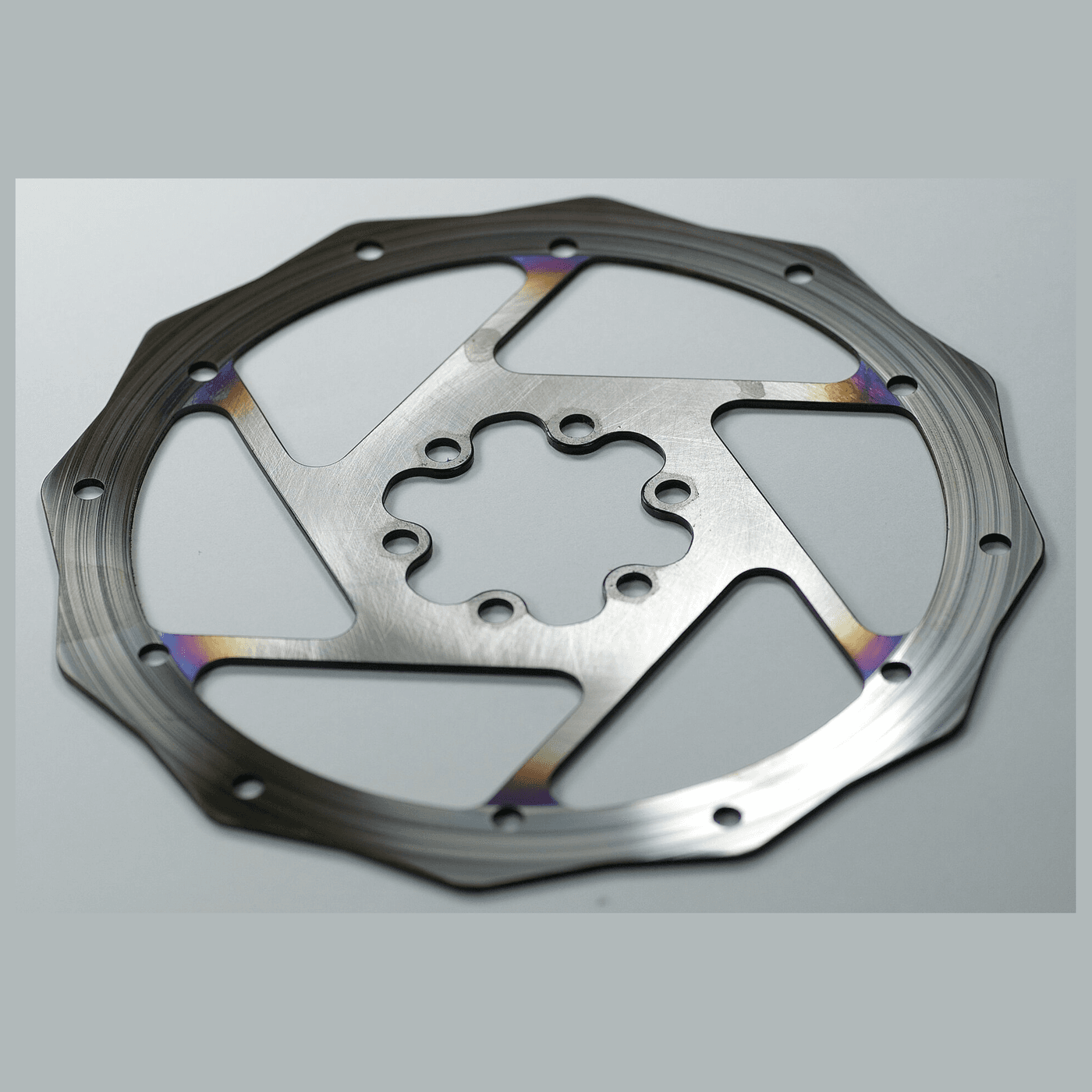
The Disc Brake: A Stop Is Heat, and the Disc Can Get Rid of It
par Emma
Mécanique
10
0
0
0
0
0

The Hydraulic Shock Absorber: Liquid Forced Through a Small Passage
par Emma
Mécanique
15
0
0
0
0
0
Hydraulic Brake
par Emma
TECHNOLOGIE
38
0
0
0
0
0
Pneumatic Tyre
par Spartan
Course
39
0
0
0
0
0
CC0 Domaine public
Ce blueprint est publié sous CC0. Vous êtes libre de copier, modifier, distribuer et utiliser ce travail pour tout usage, sans demander la permission.
Soutenez le Maker en achetant des produits via son Blueprint où il perçoit une Commission Maker définie par les Vendeurs, ou créez une nouvelle itération de ce Blueprint et incluez-le comme connexion dans votre propre Blueprint pour partager les revenus.