Collaboration
ART
BEAUTÉ ET BIEN-ÊTRE
ARTISANAT
CULTURE ET HISTOIRE
DIVERTISSEMENT
ENVIRONNEMENT
NOURRITURE ET BOISSONS
INGÉNIERIE INVERSE
SCIENCES
SPORTS
TECHNOLOGIE
TECHNOLOGIE PORTABLE
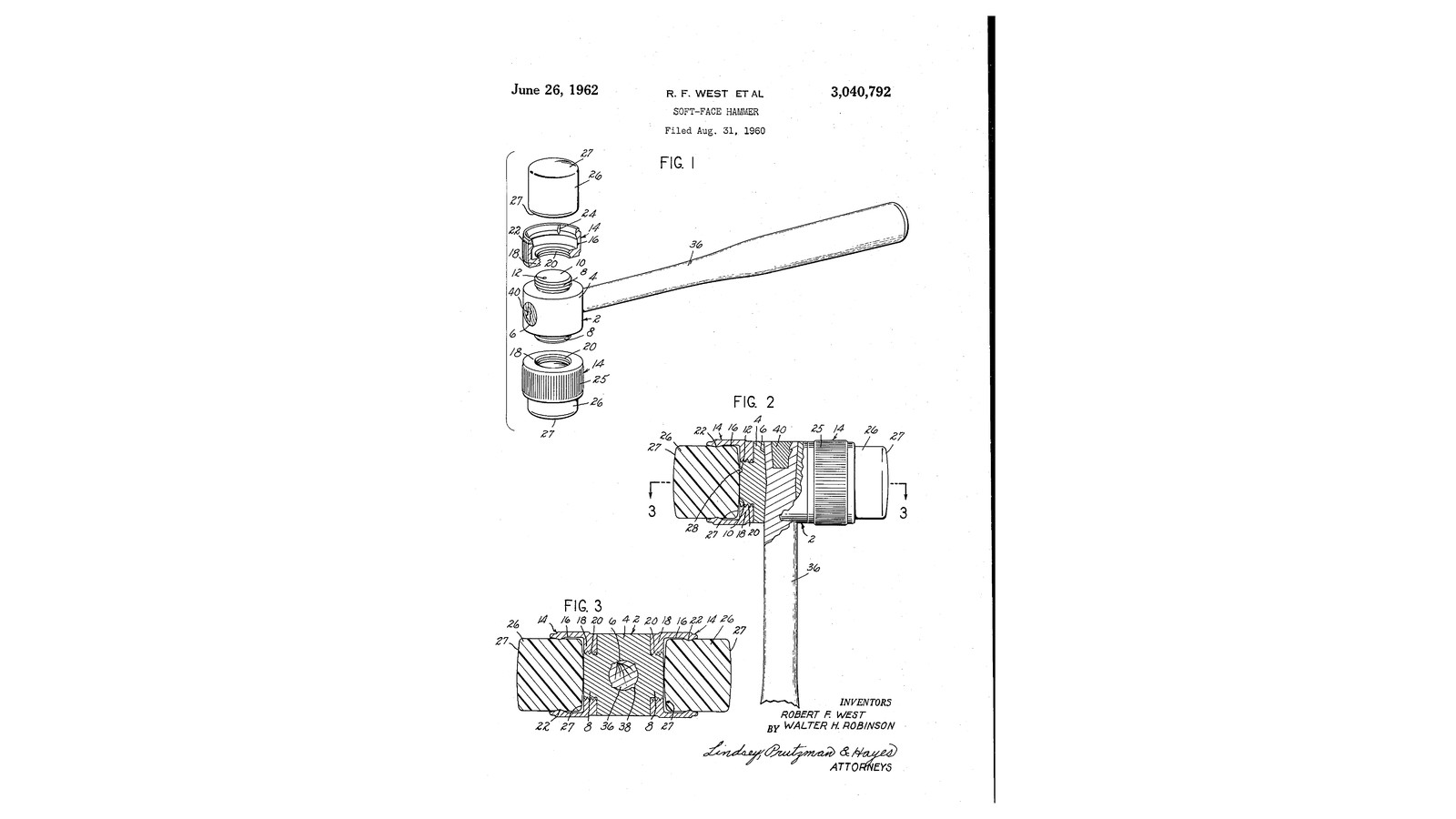


Reversible-Tip Soft-Face Hammer: Domed Rubber Tips Locked in Screw-On Sockets by an Internal Rib (West & Robinson, 1962)
Robert F. West and Walter H. Robinson of Connecticut received US 3,040,792, dated 26 June 1962, for The Stanley Works. A tubular socket screws onto a threaded boss at each end of the hammer's head. A rubber tip, domed at both ends, is pushed into the socket past an internal rib, which bites into it, and its rubber fills short grooves so it cannot turn. The tip can be pulled out and turned round to use its other end. On its first blows the tip's inner face squeezes into an off-centre hole in the boss and forms its own dowel, which stops the socket unscrewing.
The patent gives no sizes; every size here is ours.
Avancé
About 2 days
Consignes
1
1
The tip's proportions
The tip's proportions
Chargement du notebook Jupyter…
2
2
Read US 3,040,792
Read US 3,040,792
"Upon being subjected to the percussive forces during initial use, some of the plastic material of the inner face 27 of the striking tip 26 will be extruded or forced into the eccentrically located recess 12 in the boss surface 10 to provide a self-forming dowel pin 28 which effectively prevents inadvertent loosening of the threaded connection between boss and mounting socket during use."
3
3
Turn the head 2
Turn the head 2
From 35 mm steel bar turn a body 4 80 mm long with a boss 8 20 mm across and 15 mm long at each end; cut M20 threads on the bosses with the die. In each boss's end face drill a recess 12 4 mm across and 4 mm deep, 6 mm off centre. Drill a 20 mm handle eye 6 through the middle in a V-block.
Matériaux pour cette étape :
 Barre ronde en acier doux1 pièce
 Huile de coupe1 pièce
Outils nécessaires :
 Tour à métaux
 Mandrin de tour à 3 mors
 Outil de coupe pour tour
 Bédane de tronçonnage
 Jeu de tarauds et filières
 Porte-filière
 Étau d'établi
 Perceuse à colonne
 Bloc en V
 Jeu de forets
 Pointeau
 Pied à coulisse numérique 6 pouces
 Lunettes de sécurité
4
4
Turn the sockets 14
Turn the sockets 14
From 48 mm bar turn two sockets 30 mm long. Knurl the outside 25. Drill and tap the collar end 18 M20, 8 mm deep. From the other end, before boring, drill four 4 mm holes 20 mm deep centred on a 38 mm circle, for the grooves 24. Bore the aperture 16 38 mm across and 20 mm deep, leaving a rib 22 4 mm wide 10 mm in, turned to 35 mm with 30 degree ramps either side.
Matériaux pour cette étape :
Barre ronde en acier doux2 piècesHuile de coupe1 pièceOutils nécessaires :
Tour à métauxMandrin de tour à 3 morsOutil de coupe pour tour Barre d'alésageBédane de tronçonnage
 Molette à moleterPerceuse à colonneJeu de foretsJeu de tarauds et filières
 Tourne-à-gauchePied à coulisse numérique 6 pouces
5
5
Make the tips 26
Make the tips 26
For each tip, cut nine discs of 4 mm natural rubber sheet 40 mm across and bond them into a stack with contact cement; clamp it overnight. Grind it round to 38.5 mm on the belt sander, then dome both ends: a large curve over most of the face and a small round where it meets the side, the same at both ends, 36 mm long overall.
Matériaux pour cette étape :
 Plaque de caoutchouc naturel1 pièce
 Colle contact1 pièce
Outils nécessaires :
 Boussole
 Cutter de précision
 Serre-joint à pompe
 Ponceuse à bandePied à coulisse numérique 6 pouces
6
6
Assemble
Assemble
Turn an ash handle to drive into the eye and wedge it. Screw a socket onto each boss hand-tight. Push a tip into each socket, squeezing it past the rib in the vice between soft packing, until its inner dome bears on the boss. Give the first few blows on a wood block: the rubber pushes into the boss's recess and locks the socket. To turn a tip round, pull it out, reverse it and push it back.
Matériaux pour cette étape :
 Planche de bois dur1 pièce
 Colle à bois1 pièce
Outils nécessaires :
 Tour à bois
 Jeu d'outils de tournage (HSS)
 Scie à métaux
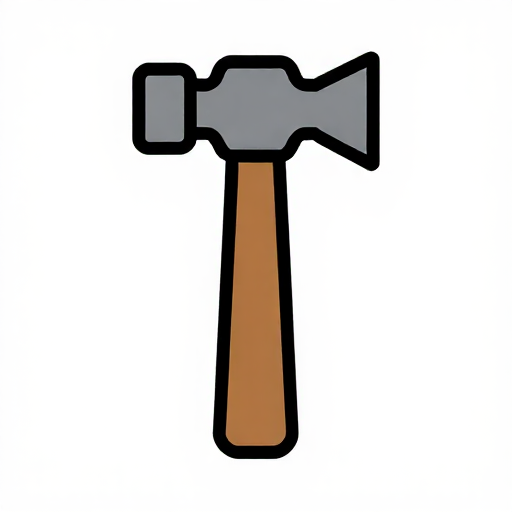 Marteau à panne bombéeÉtau d'établi
7
7
Troubleshooting
Troubleshooting
Reversible-tip hammer troubleshooting.
Flow
Loading...
8
8
History and honest limits
History and honest limits
**Robert F. West** of Simsbury and **Walter H. Robinson** of West Hartford, Connecticut, assignors to The Stanley Works, US 3,040,792, dated 26 June 1962, filed 31 August 1960. They claimed sockets with an internal portion of reduced cross-section whose surfaces are "inclined to provide ramp surfaces", and symmetrical tips "having end surfaces of convexly curvilinear configuration", removable and "reversible in said sleeves". They list natural rubber, synthetic rubbers, nylon and cellulose esters for the tips; ours are laminated natural rubber. They give proportions but no sizes; every size here is ours.
Matériaux
6- 2 piècesEspace réservé
- 2 piècesEspace réservé
- 1 pièceEspace réservé
- 1 pièceEspace réservé
- 1 pièceEspace réservé
- 1 pièceEspace réservé
Outils requis
24- Espace réservé
- Espace réservé
- Espace réservé
- Espace réservé
- Espace réservé
- Espace réservé
- Espace réservé
- Espace réservé
- Espace réservé
- Espace réservé
- Espace réservé
- Espace réservé
- Espace réservé
- Espace réservé
- Espace réservé
- Espace réservé
- Espace réservé
- Espace réservé
- Espace réservé
- 1 vendor sell this, none ship to you yetEspace réservé
- Espace réservé
- Espace réservé
- Espace réservé
- Espace réservé
Ce plan fabrique

Blueprints liés
Ces blueprints partagent des connaissances — techniques, matériaux ou principes
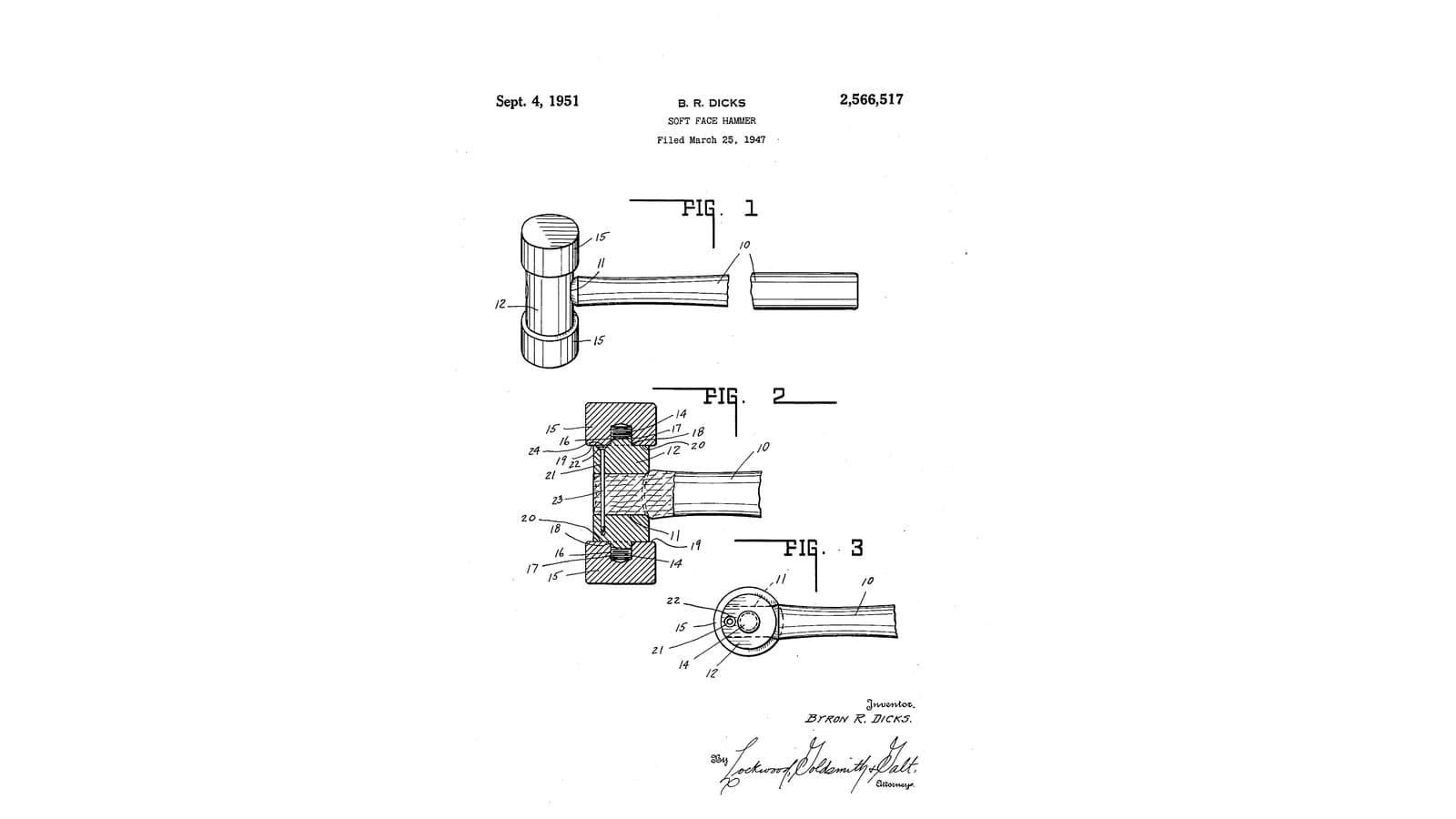
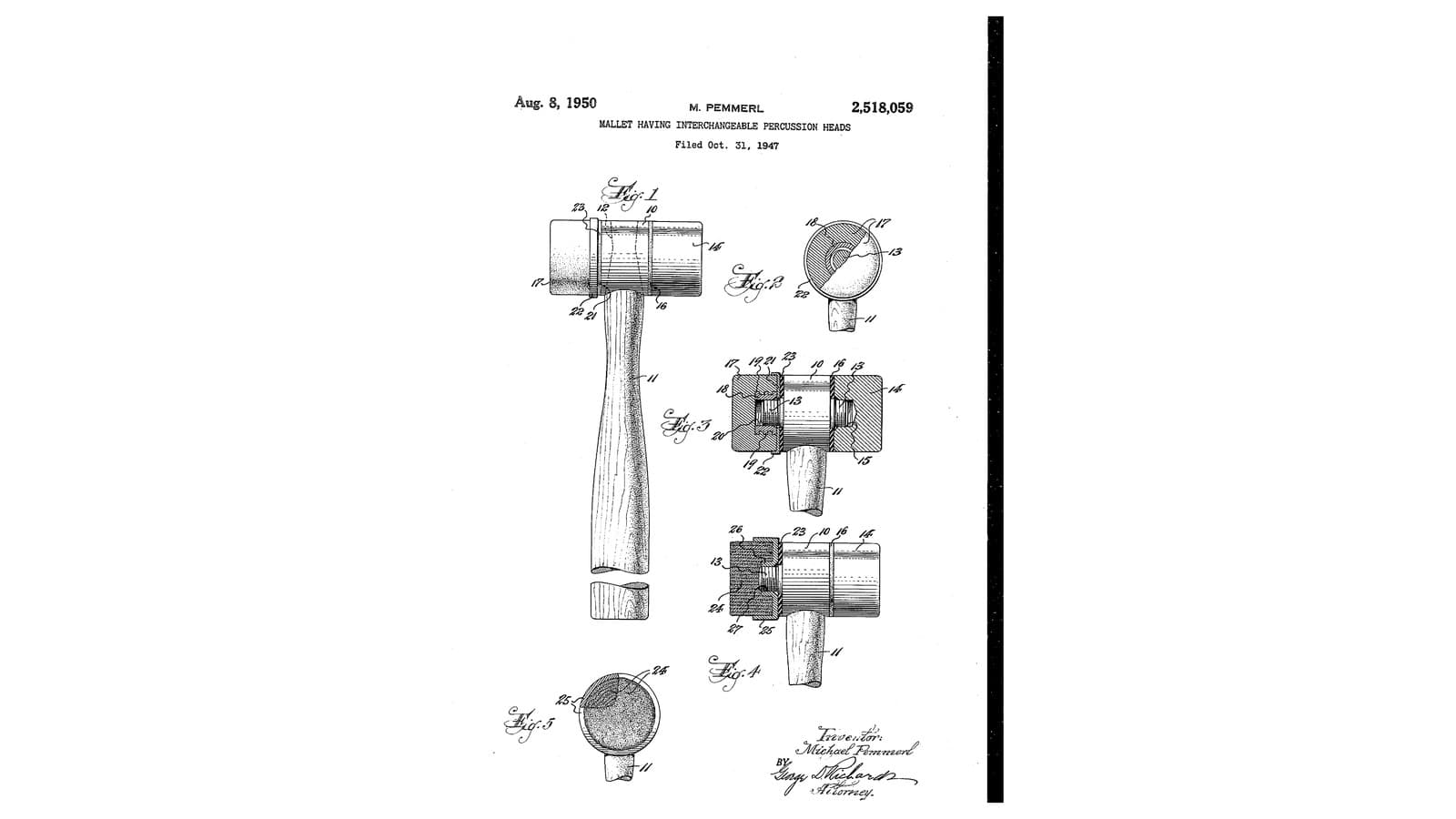
CC0 Domaine public
Ce blueprint est publié sous CC0. Vous êtes libre de copier, modifier, distribuer et utiliser ce travail pour tout usage, sans demander la permission.
Soutenez le Maker en achetant des produits via son Blueprint où il perçoit une Commission Maker définie par les Vendeurs, ou créez une nouvelle itération de ce Blueprint et incluez-le comme connexion dans votre propre Blueprint pour partager les revenus.