
ART
BEAUTÉ ET BIEN-ÊTRE
ARTISANAT
CULTURE ET HISTOIRE
DIVERTISSEMENT
ENVIRONNEMENT
NOURRITURE ET BOISSONS
INGÉNIERIE INVERSE
SCIENCES
SPORTS
TECHNOLOGIE
TECHNOLOGIE PORTABLE
What Heat Costs: Scale, Grain Growth and Burnt Steel
Forge

Créé par

Forge

24. septembre 2026NO
1
0
0
0
0

What Heat Costs: Scale, Grain Growth and Burnt Steel

Heat is not free. Every minute at temperature takes something from the steel, and past a certain point the damage cannot be undone by anything you do afterwards. Three things happen in order as the temperature rises: the surface oxidises, the grain grows, and finally the metal burns — oxygen penetrates the grain boundaries and the piece crumbles under the hammer. The first is a nuisance, the second is fixable, the third is terminal. Knowing which you are looking at, and which can still be recovered, is what separates a salvageable piece from scrap.
Avancé
3 hours

Consignes

1

Grain growth: too hot, too long, and the steel gets coarse

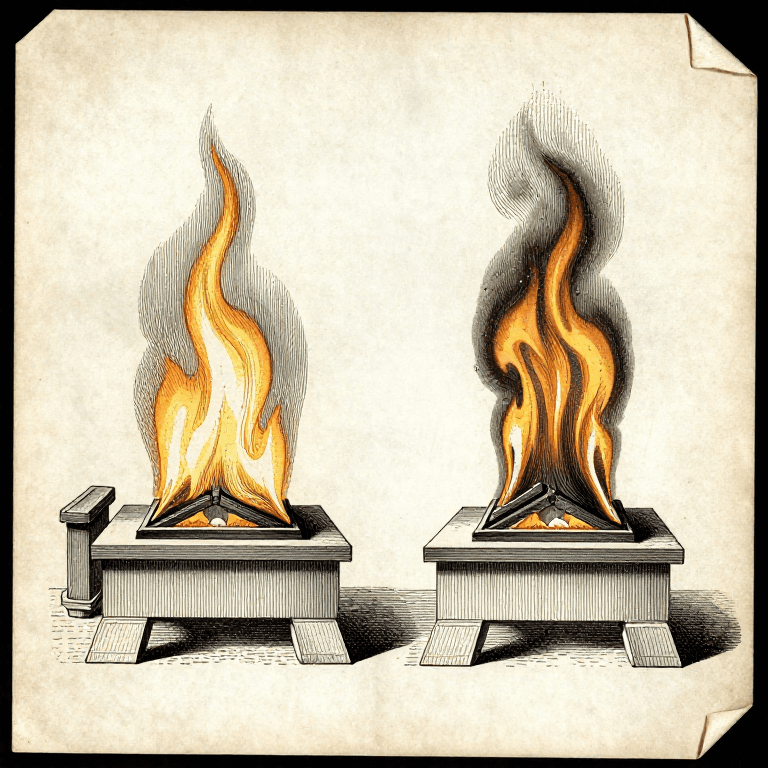
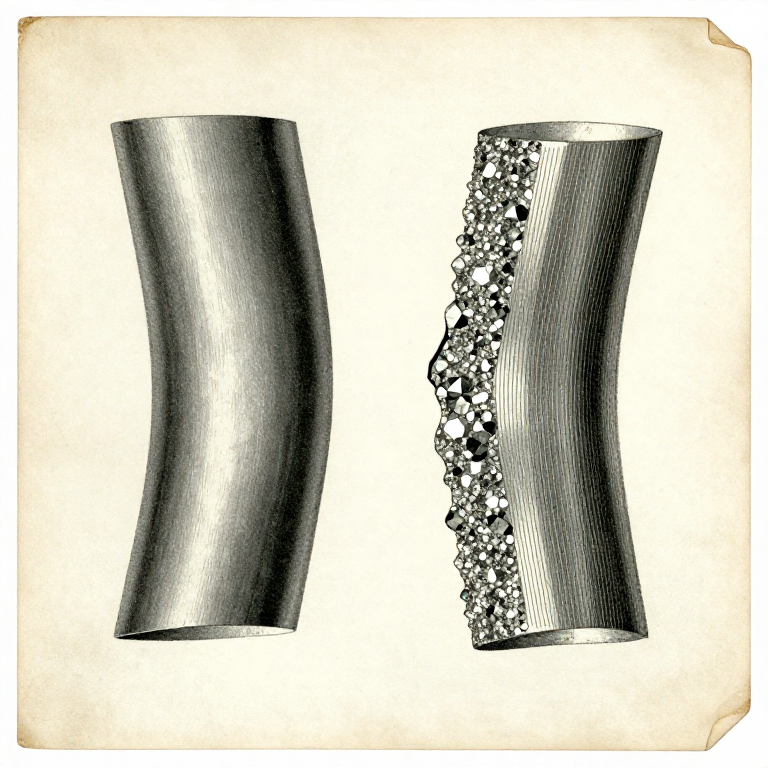
Steel is made of crystal grains, and above the critical temperature those grains GROW — faster the hotter it is and the longer it is held. Coarse-grained steel is brittle: it breaks with a crystalline sparkly fracture instead of a fine grey one. Break a test piece and look at the fracture with a loupe. A fine, almost velvety grey surface is good steel; visible glittering crystals mean the grain has grown and the toughness has gone with it. The good news is that this one is repairable. NORMALISING — heating just above critical and cooling in still air, two or three times — refines the grain back down. The published heat-treatment blueprint normalises before hardening for exactly this reason.

Matériaux pour cette étape :

Barre d'acier douxBarre d'acier doux2 pièces

Outils nécessaires :

Forge de forgeronForge de forgeron
Loupe de bijoutierLoupe de bijoutier
EnclumeEnclume
Marteau de forgeMarteau de forge
2

Burnt steel: the point of no return

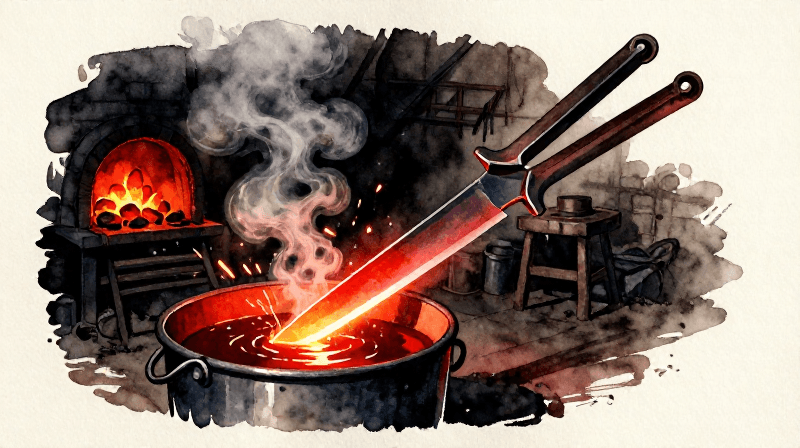
Take steel far enough past welding heat and it throws bright sparks like a firework and the surface looks wet and running. At that point oxygen has penetrated along the grain boundaries and the metal has no strength holding its grains together. Burnt steel crumbles under the hammer and cracks along fissures that appear from nowhere. It cannot be recovered — no amount of normalising, forging or heat treatment restores it. The only fix is to cut off the burnt section and start from sound metal. The warning signs come in order: heavy sparking, an unnaturally liquid-looking surface, and a piece that suddenly feels soft and crumbly under the hammer. Pull it out at the first, not the third.

Matériaux pour cette étape :

Barre d'acier douxBarre d'acier doux1 pièce

Outils nécessaires :

Forge de forgeronForge de forgeron
Lunettes teintées de forgeLunettes teintées de forge
Pinces de forgeronPinces de forgeron
Marteau de forgeMarteau de forge
3

Different metals, very different windows

Steel is forgiving: a wide working range and visible warnings. Most other metals are not, and their warnings arrive too late. COPPER and BRASS do not glow usefully until they are near melting, so colour is no guide at all — and brass loses zinc as white fume well before that, which is both a material loss and genuinely harmful to breathe. ALUMINIUM never glows: it goes from apparently fine to collapsing with no visual warning whatsoever, which is why people melt aluminium parts by accident and never see it coming. For those, use an instrument or a physical indicator — a mark made with a temperature-indicating crayon, or the old trick of a smear of soap that chars at a known point. The eye simply has nothing to work with.

Matériaux pour cette étape :

Barre d'acier douxBarre d'acier doux1 pièce

Outils nécessaires :

Thermomètre infrarougeThermomètre infrarouge
Thermocouple avec afficheurThermocouple avec afficheur
Forge de forgeronForge de forgeron
Gants de cuir à crispinGants de cuir à crispin
4

Work in fewer, better heats

Every trip into the fire costs scale, risks grain growth and uses fuel. A smith who plans the sequence and gets three operations out of one heat finishes with less loss and better steel than one who reheats after every few blows. Plan before the piece goes in: know what you will do at this heat, have the tools laid out, and work while it is hot rather than thinking while it cools. That is the real reason experienced smiths look unhurried — the thinking happened earlier. And stop working the steel when it drops below forging heat. Hammering cold steel hardens it, can crack it, and achieves very little movement for the effort. Back in the fire is the right answer; forcing it is not.

Matériaux pour cette étape :

Barre d'acier douxBarre d'acier doux1 pièce
Charbon de bois en morceauxCharbon de bois en morceaux2 pièces

Outils nécessaires :

Forge de forgeronForge de forgeron
EnclumeEnclume
Marteau de forgeMarteau de forge
Pinces de forgeronPinces de forgeron

Matériaux

2

Outils requis

9

CC0 Domaine public

Ce blueprint est publié sous CC0. Vous êtes libre de copier, modifier, distribuer et utiliser ce travail pour tout usage, sans demander la permission.

Soutenez le Maker en achetant des produits via son Blueprint où il perçoit une Commission Maker définie par les Vendeurs, ou créez une nouvelle itération de ce Blueprint et incluez-le comme connexion dans votre propre Blueprint pour partager les revenus.

Commentaires

(0)

Se connecter pour participer à la discussion

Chargement des commentaires...