SENI
KECANTIKAN & KESEHATAN
KERAJINAN
BUDAYA & SEJARAH
HIBURAN
LINGKUNGAN
MAKANAN & MINUMAN
REKAYASA BALIK
ILMU PENGETAHUAN
OLAHRAGA
TEKNOLOGI
PERANGKAT PAKAI
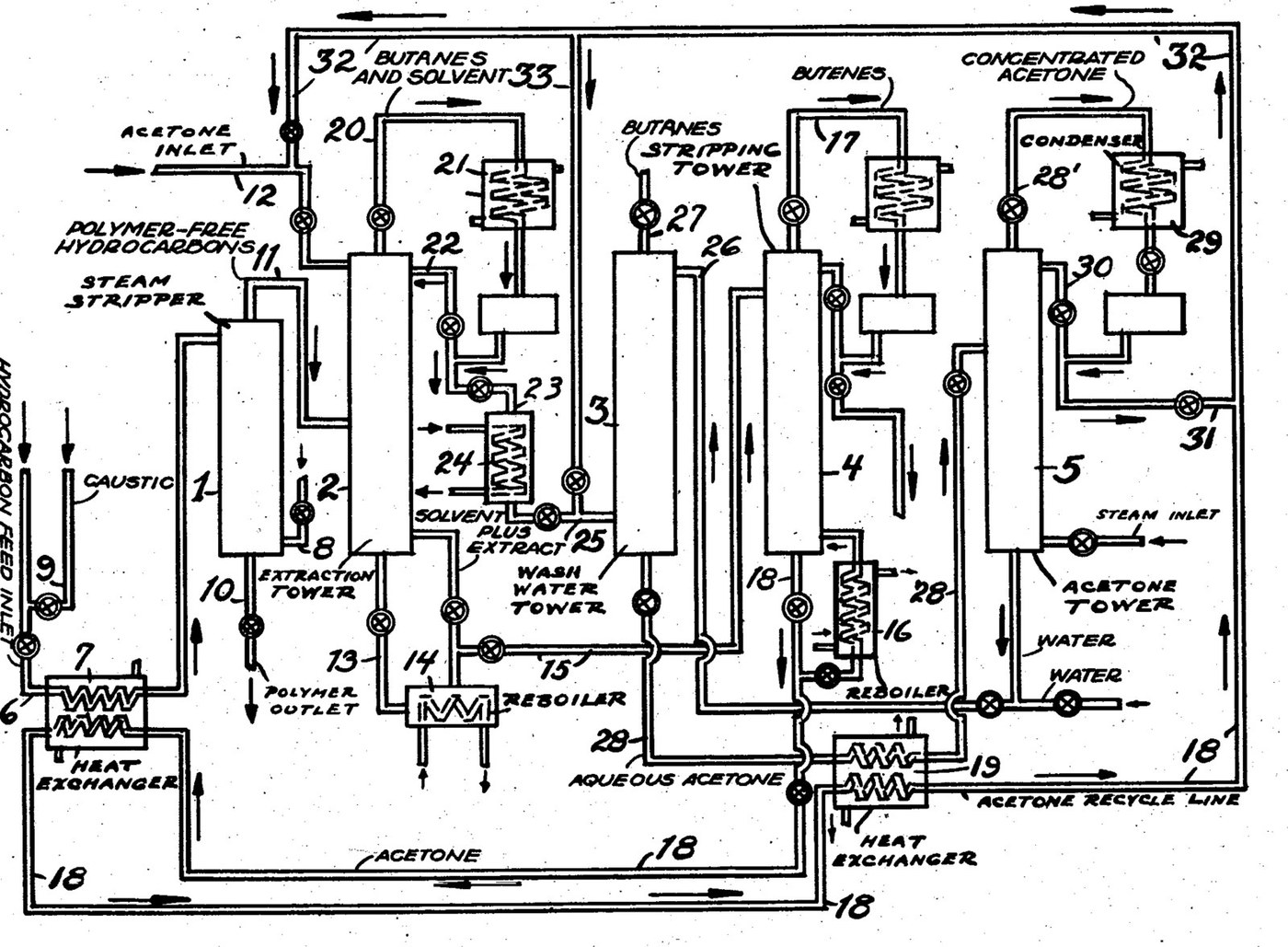


Normal Butylene Fraction: Cracked-Gas C4 Cut Extractively Distilled with Aqueous Acetone (Long, Standard Oil Development, US 2,449,610)
Butanes and butylenes boil too close together to part by plain distillation. Distil them through a stream of watery acetone, which holds back the butylenes, and the butanes go overhead while the butylenes come out at the bottom.
Result: a butylene fraction of 26.7 % butene-1 and 63.5 % butenes-2 (90.2 % normal butylenes), with 3.6 % isobutylene, 4.4 % normal butane and 1.8 % isobutane.
Source: Long, US 2,449,610 (1948). Not given: tower sizes and plates, water amounts, caustic strength. Long does not say how the acid-treated C4 cut is made; it is matched by kind to the Packie & Rupp blueprint. Extremely flammable gases under pressure. Picture: the patent drawing.
Ahli
1 day
Instruksi
1
1
Start from the acid-treated C4 cut of cracked gas oil
Start from the acid-treated C4 cut of cracked gas oil
Use the four-carbon fraction from cracking a gas oil, with the bulk of its isobutylene removed by sulphuric acid. Long's, by volume: isobutane 42.4 %, normal butane 9.4, isobutylene 2.0, butene-1 15.0, butenes-2 30.2, high-boiling material 1.0.
Material untuk langkah ini:
 Fraksi butana-butilena tanpa isobutilena1 as required
Alat yang dibutuhkan:
 Tabung gas bertekanan
2
2
Steam-strip out the heavy material
Steam-strip out the heavy material
Strip the feed with steam in the first tower, adding caustic to neutralise any sulphuric acid esters left from the acid treatment. The heavy material leaves at the bottom; the hydrocarbons go overhead as vapour.
Alat yang dibutuhkan:
 Alat suling bertingkat
 Ketel uap
 Air
 Larutan natrium hidroksida
3
3
Distil through aqueous acetone
Distil through aqueous acetone
Feed the vapour into the second tower and pass it up through aqueous acetone (14-17 % water) flowing down, at 120-200 °F and 50-150 lbs pressure. With 85 % solvent on the top plate and a cold reflux ratio of 6.5 to 1, the butanes go overhead and the butylenes leave in the acetone at the bottom.
Alat yang dibutuhkan:
Alat suling bertingkat Aseton
 Pengukur Tekanan
 Kumparan kondensor
4
4
Strip the butylenes from the acetone
Strip the butylenes from the acetone
In a third tower, reboiled at the bottom and refluxed at the top with product butylenes, distil the butylenes off the acetone. They come over as 26.7 % butene-1 and 63.5 % butenes-2, with 3.6 % isobutylene and 6.2 % butanes.
Alat yang dibutuhkan:
Alat suling bertingkatKumparan kondensorTabung gas bertekanan5
5
Recover the acetone and keep it clean
Recover the acetone and keep it clean
Wash the acetone out of the overhead butanes with water, keeping it below 15 % in the water or the layers emulsify badly. Reconcentrate the dilute acetone to about 83 % acetone, 17 % water, and recycle it. Bleed part of the recycled acetone into the butanes before washing, so the heavy material building up in it leaves with them.
Alat yang dibutuhkan:
Alat suling bertingkatAirAsetonBahan
1- 1 as requiredPlaceholder
Cetak biru ini membuat
Blueprint terkait
Blueprint ini berbagi pengetahuan — teknik, bahan, atau prinsip
CC0 Domain Publik
Cetak biru ini dirilis di bawah CC0. Anda bebas untuk menyalin, memodifikasi, mendistribusikan, dan menggunakan karya ini untuk tujuan apa pun, termasuk komersial, tanpa meminta izin.
Dukung Maker dengan membeli produk melalui Cetak Biru mereka di mana mereka mendapatkan Komisi Pembuat yang ditetapkan oleh Penjual, atau buat iterasi baru dari Cetak Biru ini dan masukkan sebagai koneksi di milik Anda sendiri.