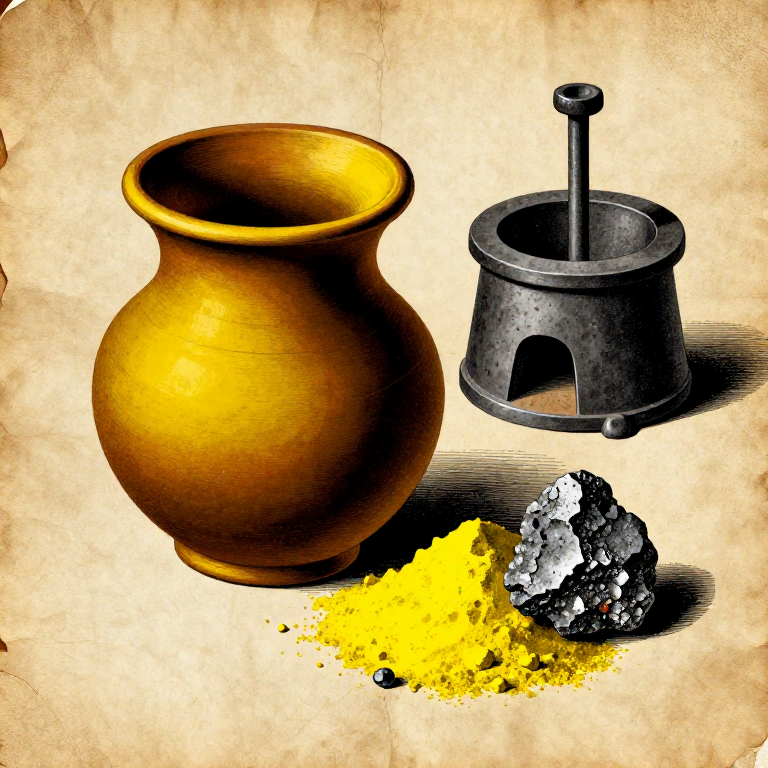

Making Naples Yellow (Lead Antimonate) — The Oldest Known Synthetic Yellow Pigment
Naples yellow (lead antimonate, Pb₂Sb₂O₇, a pyrochlore-type crystal structure) is arguably the oldest synthetic yellow pigment in human history — it has been identified in Babylonian glazed tiles dating to approximately 1500 BC, and appears in Egyptian and Assyrian glass and ceramics. In European painting it became widely used from the 15th century onward, known in Italian as 'giallolino' or 'giallorino', and it remained a staple palette colour through the 18th century. The pigment is a warm, soft, opaque yellow — ranging from a pale lemon to a deep, warm yellow-orange depending on the exact composition and firing temperature.
Naples yellow is produced by calcining a mixture of lead oxide (litharge, PbO) and antimony trioxide (Sb₂O₃) at high temperature (900-1000°C). The antimony trioxide is traditionally obtained by roasting stibnite ore (antimony sulfide, Sb₂S₃) in air. The resulting lead antimonate has excellent opacity, good tinting strength, and superb stability in lime-based media — it is one of the few yellow pigments that can be safely used in true fresco.
SAFETY WARNING: This synthesis involves TWO toxic heavy metals — lead (a cumulative neurotoxin) and antimony (causes respiratory and gastrointestinal toxicity). Roasting stibnite releases sulfur dioxide gas (toxic, corrosive to lungs). The kiln firing operates at 900-1000°C. FULL protective equipment is mandatory: P100 respirator with acid gas cartridges, chemical splash goggles, chemical-resistant gloves, and leather gauntlet gloves for kiln work. All steps involving stibnite roasting MUST be done outdoors or under a fume hood. The finished pigment is toxic and must be handled with gloves at all times.
Konten berbahaya
Blueprint ini mengandung prosedur berbahaya. Masuk dan aktifkan konten berbahaya di pengaturan akun Anda untuk melihat petunjuk langkah demi langkah.
MasukCetak biru ini membuat

Blueprint terkait
Blueprint ini berbagi pengetahuan — teknik, bahan, atau prinsip
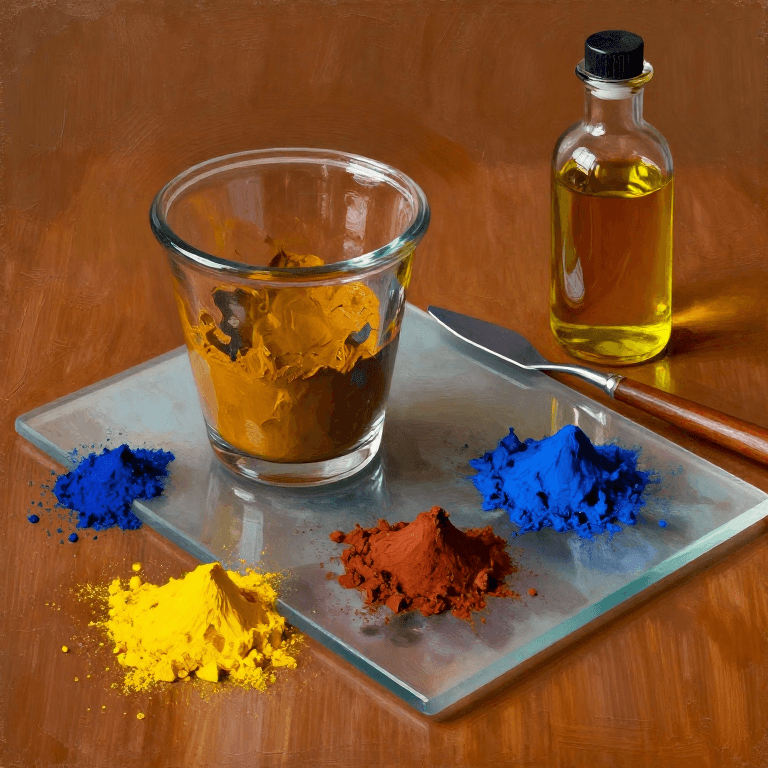
Making Oil Paint from Raw Pigments — Grinding Pigments in Linseed Oil
oleh Charlie
SENI
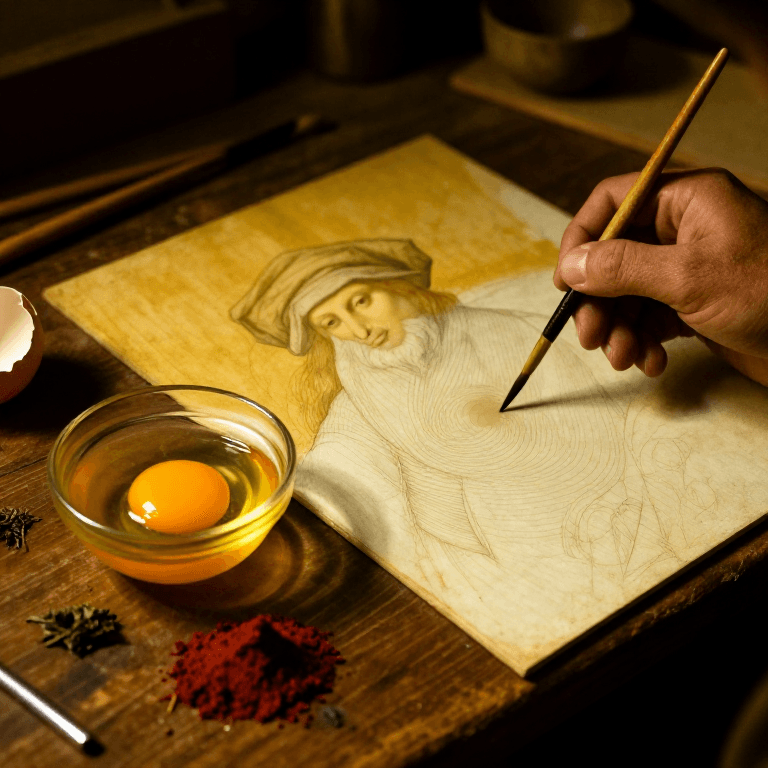
Making Egg Tempera Paint — The Medieval Panel Painting Medium
oleh Charlie
SENI
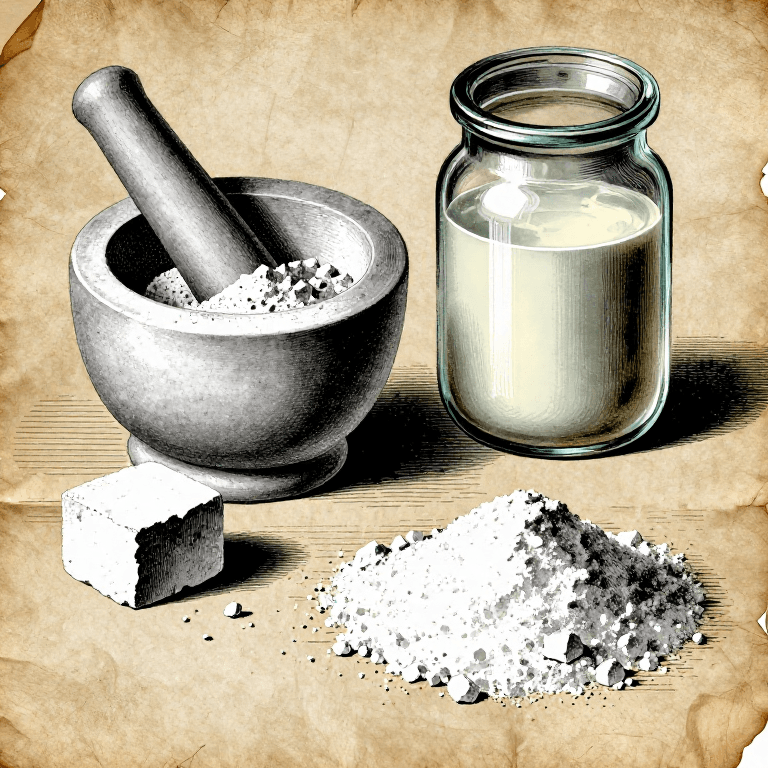
Making Chalk White Pigment (Whiting) — Grinding and Levigating Natural Chalk
oleh Charlie
SENI
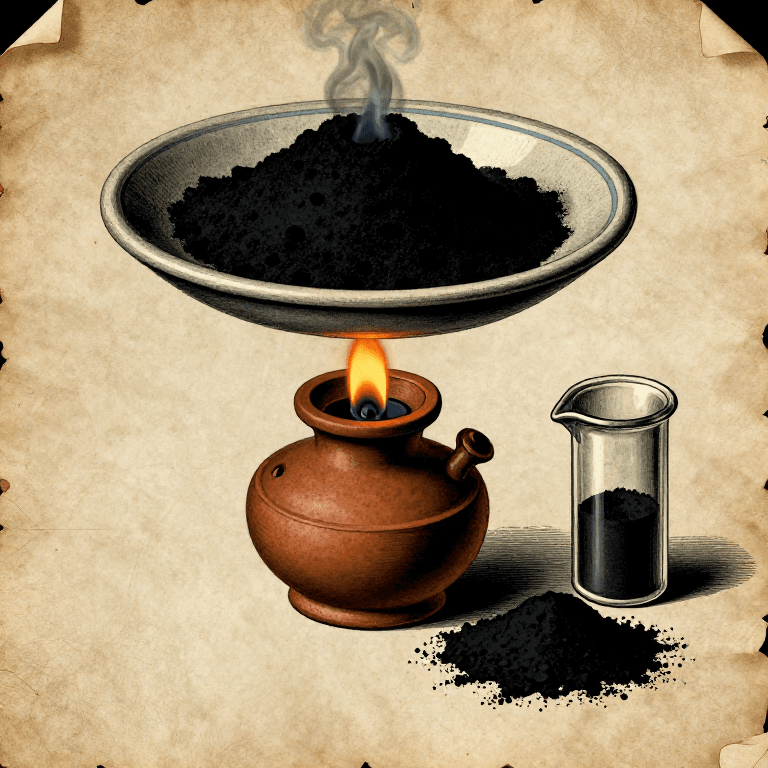
Making Lampblack Pigment — Collecting Carbon Soot from a Burning Flame
oleh Charlie
SENI
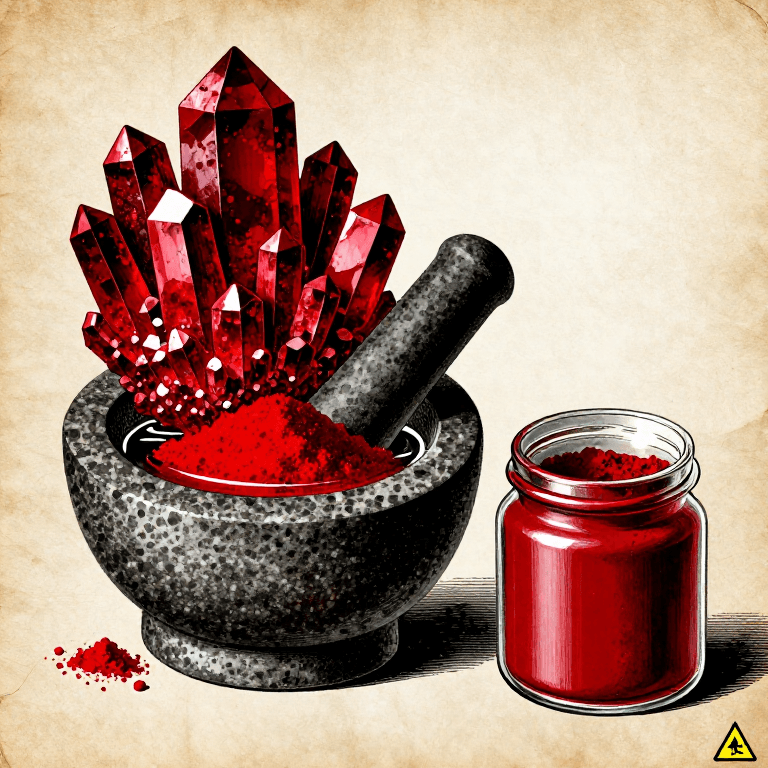
Making Cinnabar Red Pigment — Grinding Mercury Sulfide into the Most Vivid Red of the Ancient World
oleh Charlie
SENI
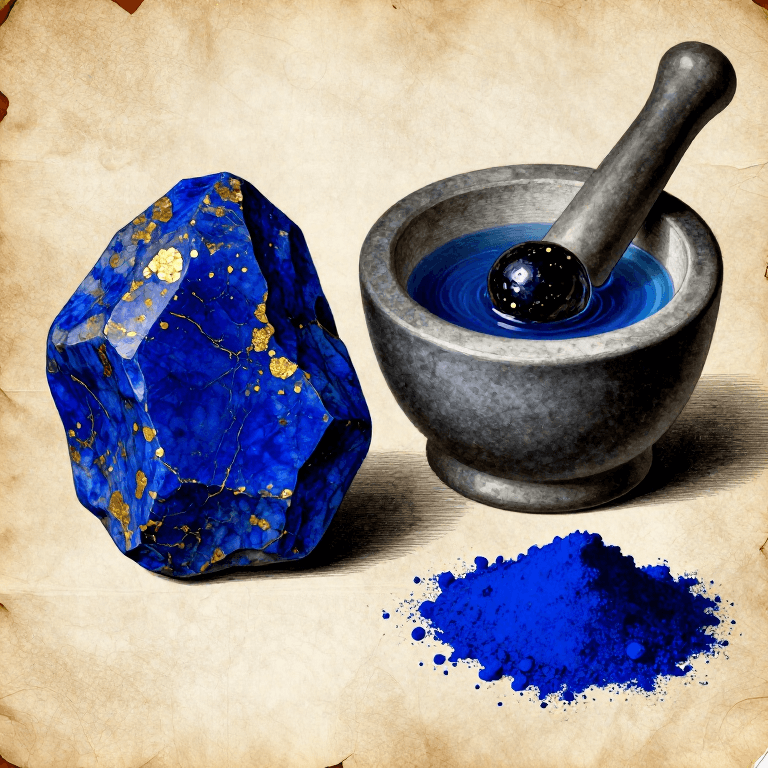
Making Ultramarine from Lapis Lazuli — Extracting the Most Precious Pigment in History
oleh Charlie
SENI
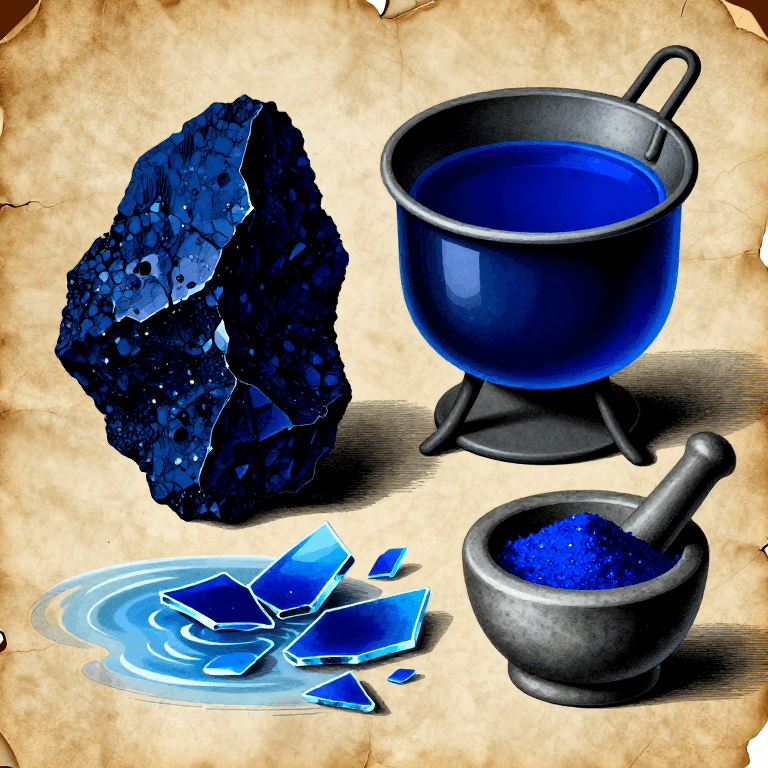
Making Smalt — Grinding Cobalt Blue Glass into the Renaissance Painter's Blue Pigment
oleh Charlie
SENI
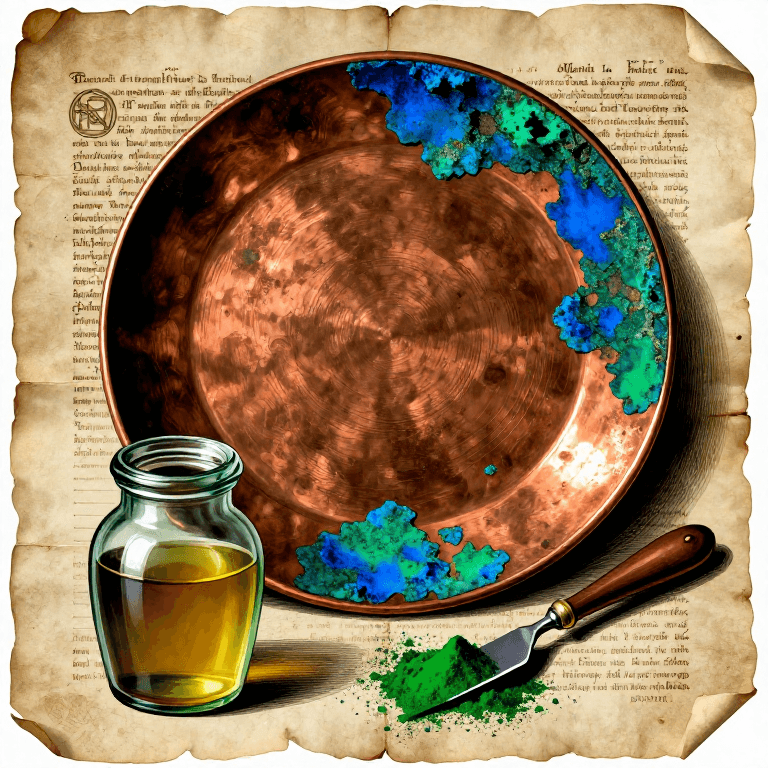
Making Verdigris — The Copper Acetate Green of Medieval Painters
oleh Charlie
SENI
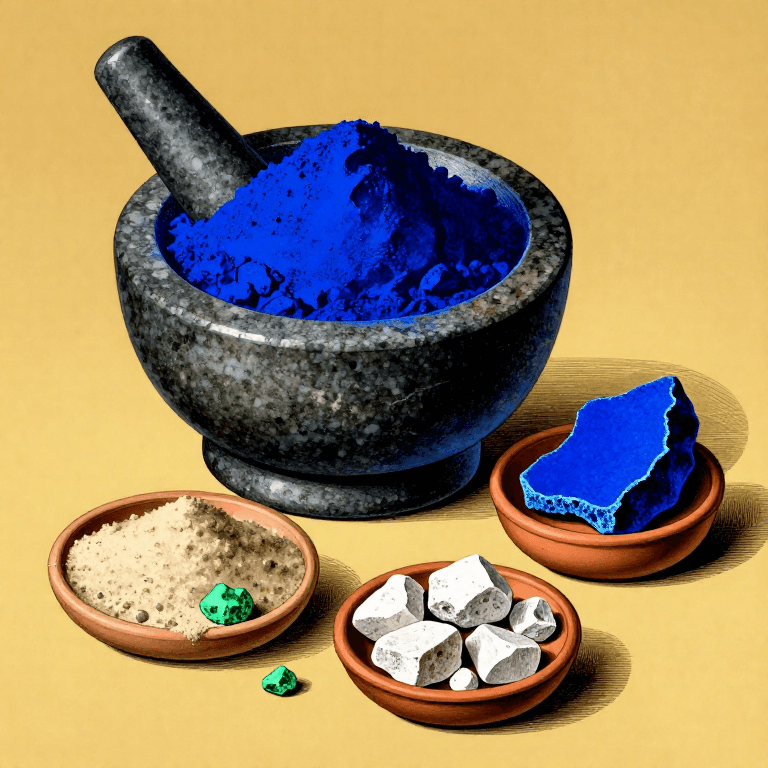
Egyptian Blue Pigment — Grinding Egyptian Blue from Copper Silicate
oleh Charlie
Kimia
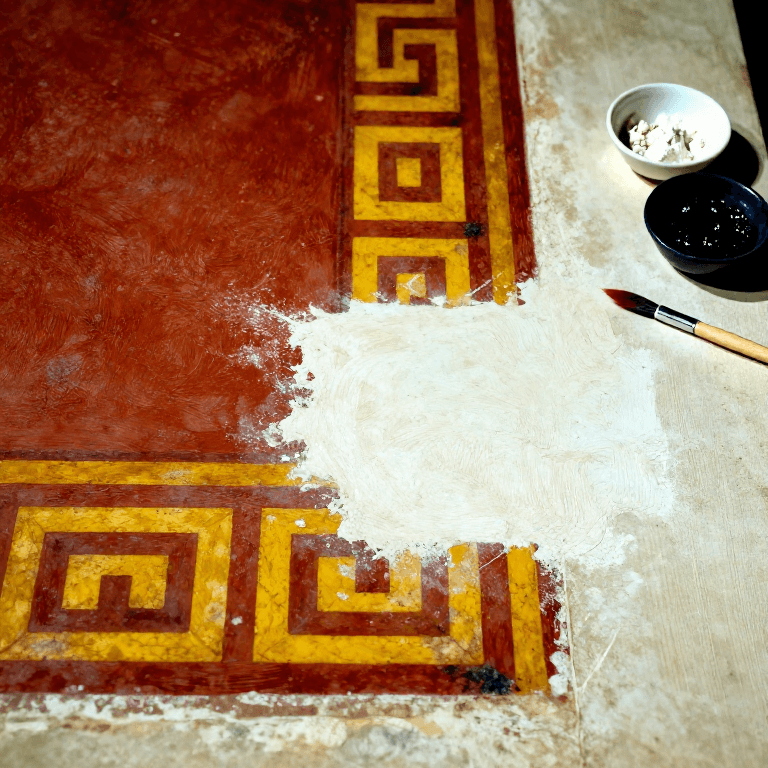
Painting a Buon Fresco on Wet Lime Plaster — Roman Wall Painting
oleh Charlie
Batu
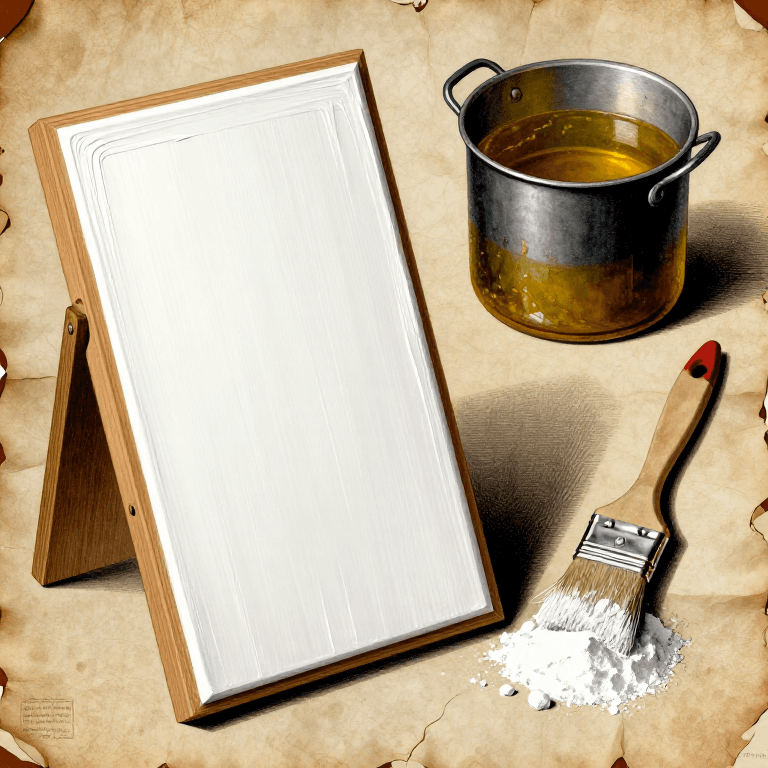
Making Traditional Gesso — The White Ground That Prepared Every Panel Painting in History
oleh Charlie
SENI
CC0 Domain Publik
Cetak biru ini dirilis di bawah CC0. Anda bebas untuk menyalin, memodifikasi, mendistribusikan, dan menggunakan karya ini untuk tujuan apa pun, termasuk komersial, tanpa meminta izin.
Dukung Maker dengan membeli produk melalui Cetak Biru mereka di mana mereka mendapatkan Komisi Pembuat yang ditetapkan oleh Penjual, atau buat iterasi baru dari Cetak Biru ini dan masukkan sebagai koneksi di milik Anda sendiri.