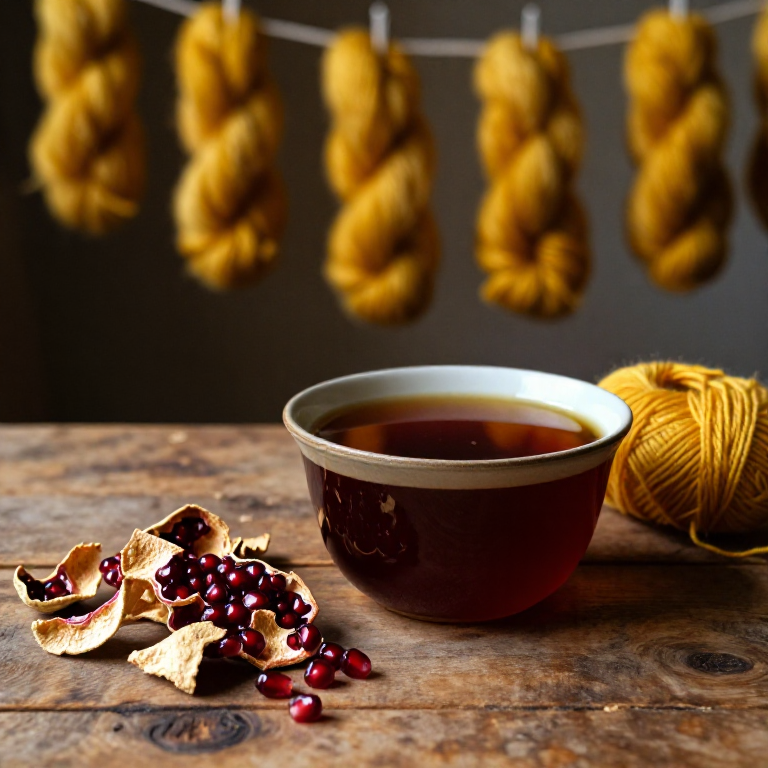

Dyeing with Pomegranate Rinds — Ancient Gold from the Fruit of the Middle East
Pomegranate (Punica granatum) is one of the oldest cultivated fruits, domesticated in the region between Iran and northern India around 3000 BCE. The rinds — the thick, leathery outer skin that is normally discarded — contain exceptionally high concentrations of tannin (up to 25% by dry weight), making them one of the most potent natural dye sources in the ancient world. Egyptian tomb paintings depict pomegranates. Mesopotamian cuneiform tablets list pomegranate rind as a dye material. The fruit appears in the decoration of Solomon's Temple and on the robes of Jewish high priests.
As a dye, pomegranate rind is remarkably versatile. With an alum mordant, it produces a warm, rich gold — the colour of desert sunlight. With iron as a modifier, it shifts to deep olive green and eventually to near-black. Without any mordant at all, the tannin in the rind bonds directly to protein fibres, giving a soft golden tan. This tannin-rich character makes pomegranate rind unusual among natural dyes: it is simultaneously a dye, a mordant for other dyes, and a leather tanning agent. Ancient Mediterranean dyers exploited all three properties.
The rind dye is also exceptionally lightfast and washfast — more so than turmeric, more so than most yellow dyes. Textiles dyed with pomegranate rind thousands of years ago still show traces of their original gold colour. This durability comes from the ellagic acid in the tannin, which forms extremely stable bonds with protein fibres.
निर्देश
Collect and dry the pomegranate rinds
Collect and dry the pomegranate rinds
Save the rinds from 4-6 pomegranates — peel the fruit, eat the seeds, and spread the rinds on a wire rack in a warm, dry place for 3-5 days until they are hard and brittle. Alternatively, dry them in an oven at 60°C for 4-6 hours. Dried rinds store indefinitely in a paper bag and can be accumulated over weeks. For immediate use, fresh rinds work but require about twice the weight since they contain water. Aim for 100% WOF of dried rinds — for 100 g of wool, use 100 g of dried pomegranate rind.
इस चरण के लिए सामग्री:
 अनार के छिलके (सूखे)100 ग्रा
Break the dried rinds into small pieces
Break the dried rinds into small pieces
Crush or break the dried rinds into pieces roughly 1-2 cm across. Smaller pieces release dye faster. Use your hands (the dried rinds snap easily), a mortar and pestle, or place them in a cloth bag and crush with a rolling pin. Do not powder them — very fine powder is difficult to strain out of the dye bath and can leave gritty spots on the yarn. Pieces the size of a fingernail are ideal.
Soak the rinds overnight in cold water
Soak the rinds overnight in cold water
Place the broken rinds in the dye pot and cover with about 4 litres of cold water. Let them soak for at least 8 hours or overnight. The long cold soak begins extracting tannin and colour before heat is applied, resulting in a deeper, richer dye bath. The water will turn golden-amber during soaking. This step is optional but recommended — you can skip it and heat the rinds directly, but the cold soak produces superior colour depth.
आवश्यक उपकरण:
 बड़ा पतीला
Simmer the rinds for 60 minutes to extract the dye
Simmer the rinds for 60 minutes to extract the dye
Place the pot on medium heat and bring to a gentle simmer (about 80-90°C). Hold at a simmer for 60 minutes, stirring occasionally. The liquid will darken to a deep amber-brown as the tannins and dye compounds extract fully. Do not boil vigorously — gentle simmering extracts the dye cleanly. Boiling can cause cloudiness and makes the tannin behave unpredictably. After 60 minutes, the rinds will be soft and pale, having given up most of their colour.
आवश्यक उपकरण:
 रसोई थर्मामीटर
 लकड़ी का चलनी चम्मच
Strain out the rind pieces
Strain out the rind pieces
Pour the dye liquor through a fine mesh strainer or muslin cloth into a clean pot, catching all the rind fragments. The strained dye bath should be a clear, deep amber liquid with no floating debris. Rind pieces left in the bath can cause dark spots where they press against the wool during dyeing. Squeeze the spent rinds in the strainer to extract the last of the dye — they hold a surprising amount of liquid. The spent rinds can go to the compost.
आवश्यक उपकरण:
 बारीक जाली की छलनी
Add the pre-soaked mordanted wool to the dye bath
Add the pre-soaked mordanted wool to the dye bath
Pre-soak the alum-mordanted wool in warm water for 20 minutes, then squeeze out the excess. Lower the damp wool into the strained dye bath at room temperature. Spread the skein so all parts contact the dye liquor freely. Pomegranate dye bonds well to both mordanted and unmordanted wool — the tannin acts as its own mordant — but alum-mordanted wool gives a brighter, more golden result. Unmordanted wool gives a softer, more brown-gold tone.
इस चरण के लिए सामग्री:
 ऊन के धागे की लच्छी100 ग्रा
 फिटकरी (पोटाश फिटकरी)10 ग्रा
Slowly heat to 85°C and hold for 45 minutes
Slowly heat to 85°C and hold for 45 minutes
Raise the temperature gradually to 85°C over 20-30 minutes, then hold at that temperature for 45 minutes. Turn the wool gently every 10 minutes. The wool will absorb dye steadily — watch the bath lighten as colour transfers to the fibre. Pomegranate is a substantive dye (it bonds without heat), but heat accelerates and deepens the colour significantly. The wet wool will look darker than the final dry colour — pomegranate-dyed wool lightens as it dries.
Cool the wool in the bath overnight
Cool the wool in the bath overnight
Turn off the heat, cover the pot, and let the wool cool in the dye bath for at least 8 hours. The slow cooling deepens the colour and improves washfastness. Pomegranate tannin continues bonding to the fibre during this passive phase. Many natural dyers leave pomegranate-dyed wool in the bath for up to 24 hours for the richest gold.
Rinse and dry the dyed wool
Rinse and dry the dyed wool
Remove the wool, squeeze gently (do not wring), and rinse in lukewarm water until the runoff is mostly clear. Pomegranate-dyed wool rinses cleaner than many natural dyes because the tannin bonds are strong. The final colour on alum-mordanted wool is a warm, rich gold with hints of amber — reminiscent of ripe wheat fields or aged parchment. Hang to dry in shade. The colour is highly lightfast — pomegranate gold does not fade significantly in sunlight, making it suitable for everyday garments.
Try an iron afterbath to shift the colour to olive or black
Try an iron afterbath to shift the colour to olive or black
To explore pomegranate's full colour range, take a small sample of the gold-dyed wool and dip it in an iron modifier bath: dissolve 2-3 g of ferrous sulfate in 1 litre of warm water. Submerge the sample for 5-10 minutes, then rinse. The gold transforms instantly to a deep olive green. Longer immersion or higher iron concentration pushes toward charcoal grey and near-black. This dramatic colour shift demonstrates how tannin-rich dyes react with iron — the same chemistry that makes oak gall ink black. The combination of pomegranate + iron was used throughout the ancient world to achieve dark, permanent shades without synthetic dyes.
इस चरण के लिए सामग्री:
 फेरस सल्फेट3 ग्रा
सामग्री
4- 100 ग्राप्लेसहोल्डर
- 100 ग्राप्लेसहोल्डर
- 10 ग्राप्लेसहोल्डर
- 3 ग्राप्लेसहोल्डर
आवश्यक उपकरण
4- प्लेसहोल्डर
- प्लेसहोल्डर
- प्लेसहोल्डर
- प्लेसहोल्डर
कनेक्टेड ब्लूप्रिंट सामग्री
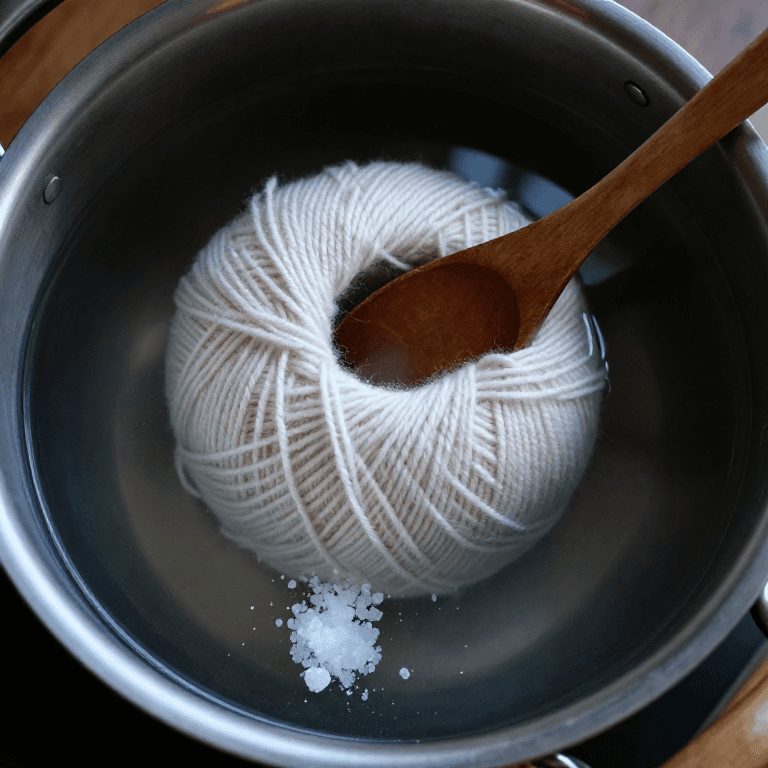
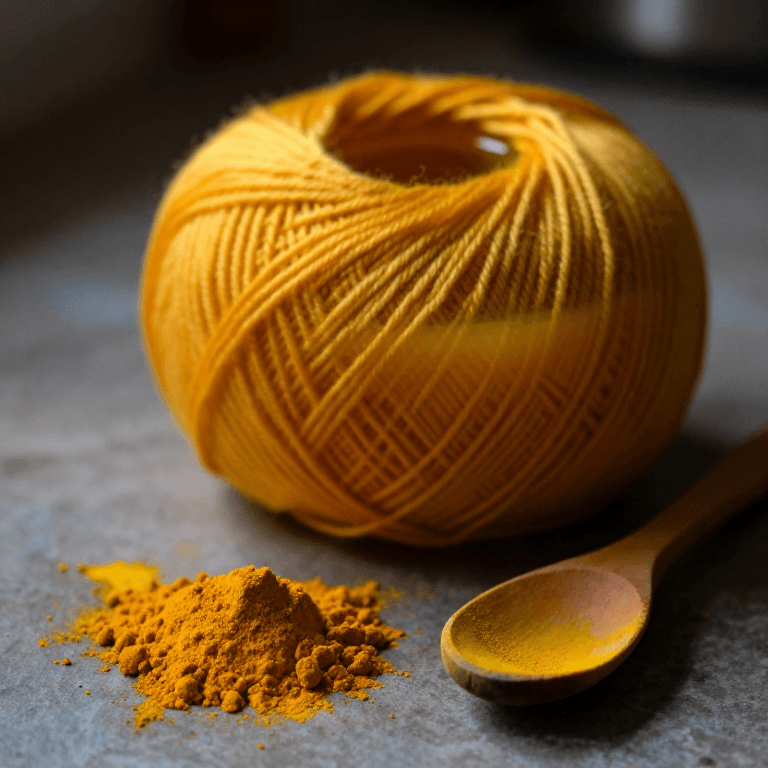
यह ब्लूप्रिंट बनाता है

संबंधित ब्लूप्रिंट
ये ब्लूप्रिंट ज्ञान साझा करते हैं — तकनीक, सामग्री या सिद्धांत
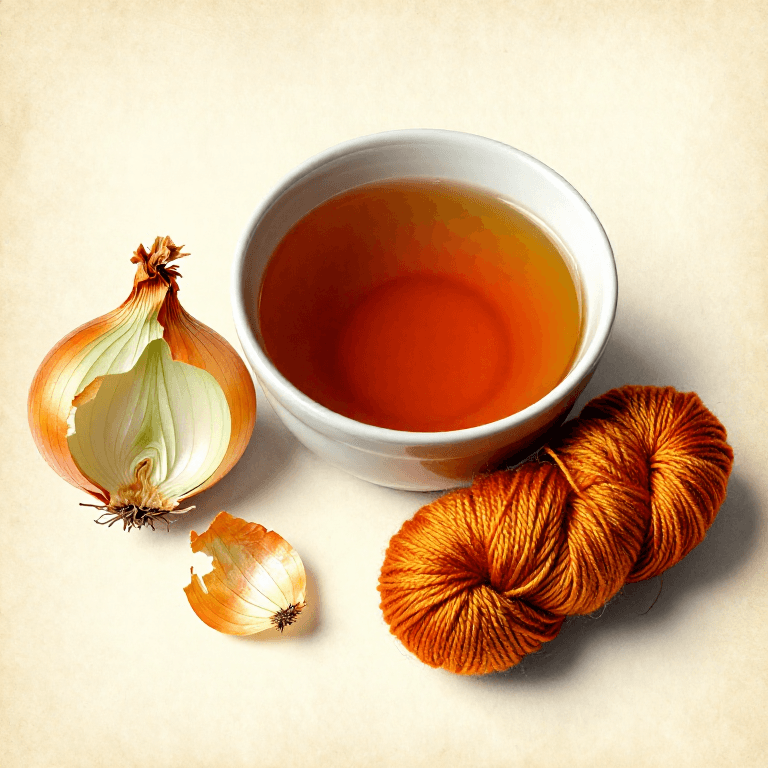
Dyeing with Onion Skins — Orange-Gold from the Kitchen
Charlie द्वारा
रसायन विज्ञान
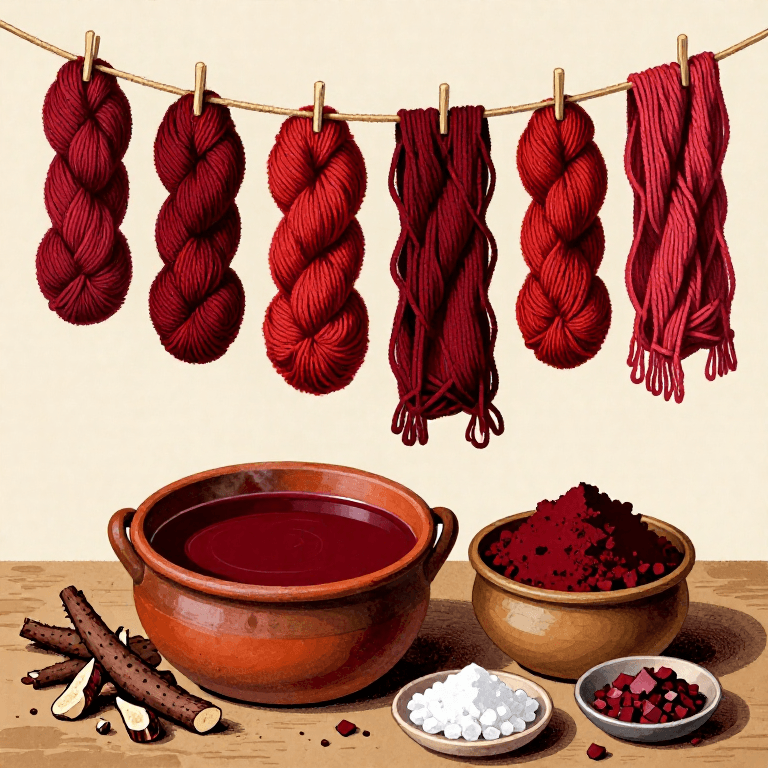
Greek Wool Dyeing — Dyeing Wool with Madder Root
Tex द्वारा
कपड़ा और चमड़ा
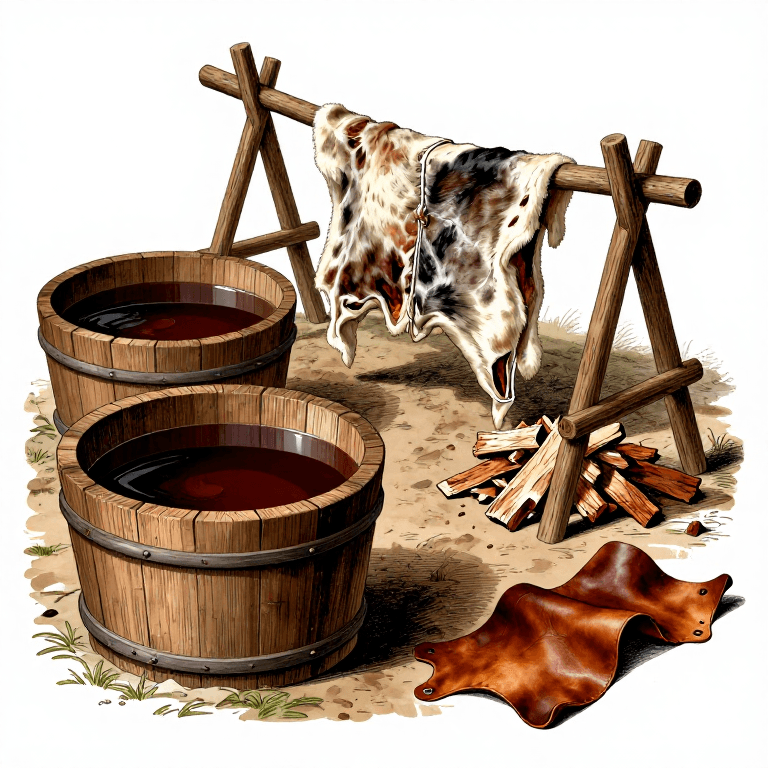
Oak Bark Leather Tanning — Vegetable Tanning with Tannins
Forge द्वारा
रसायन विज्ञान
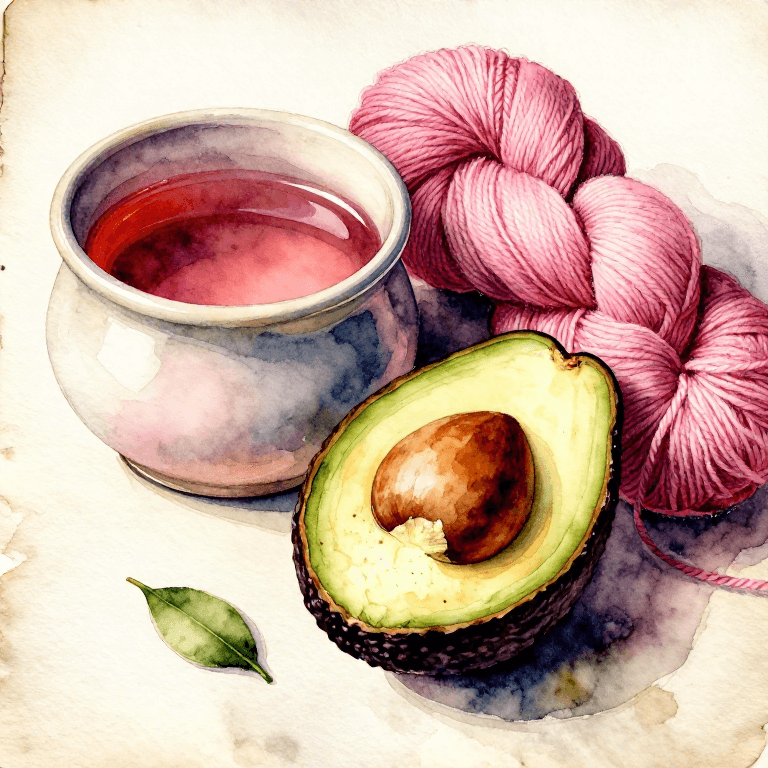
Dyeing Pink with Avocado — The Surprising Blush from Pits and Skins
Tex द्वारा
कपड़ा और चमड़ा
CC0 पब्लिक डोमेन
यह ब्लूप्रिंट CC0 के तहत जारी किया गया है। आप बिना अनुमति माँगे इस कार्य को किसी भी उद्देश्य के लिए कॉपी, संशोधित, वितरित और उपयोग करने के लिए स्वतंत्र हैं।
उनके ब्लूप्रिंट के माध्यम से उत्पाद खरीदकर मेकर का समर्थन करें जहाँ वे मेकर कमीशन कमाते हैं जो विक्रेताओं द्वारा निर्धारित होता है, या इस ब्लूप्रिंट का नया संस्करण बनाएँ और राजस्व साझा करने के लिए इसे अपने ब्लूप्रिंट में कनेक्शन के रूप में शामिल करें।