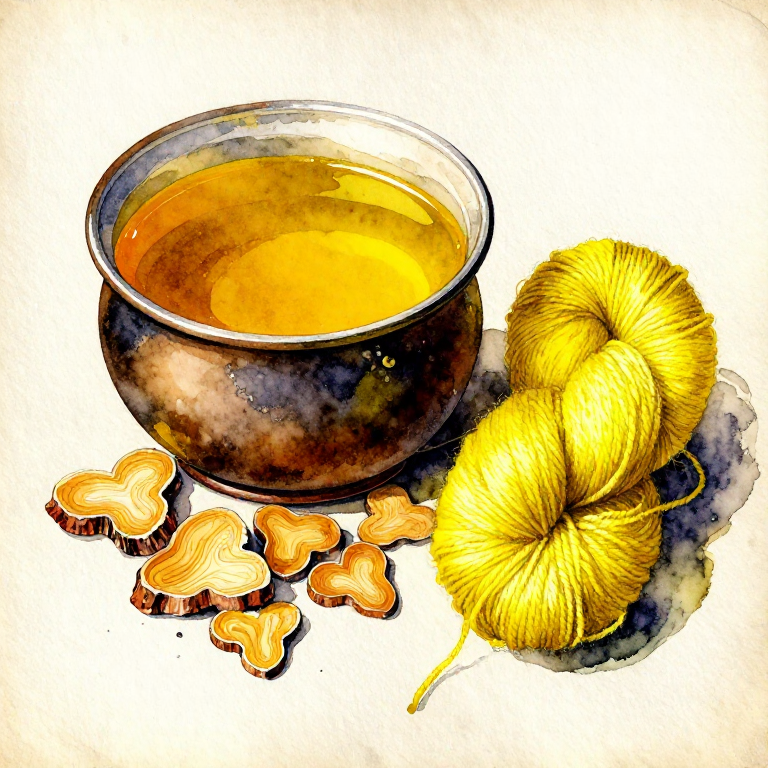

Dyeing Yellow with Osage Orange — The Brilliant Heartwood Dye of the Americas
Osage orange (Maclura pomifera) is a thorny tree native to the south-central United States — originally growing in a narrow range from eastern Texas through Oklahoma and Arkansas. The Osage people and other Indigenous nations used the tree's dense, flexible wood for making bows (the French name bois d'arc — bowwood — became the Anglicised 'bodark'). They also used the vivid yellow heartwood as a dye source, producing some of the brightest and most lightfast yellows achievable from any plant.
Osage orange heartwood contains morin and other flavonoid pigments that produce an exceptionally vivid, warm yellow-gold on alum-mordanted wool. The colour is often described as fluorescent — it has an almost glowing quality in daylight that few other natural dyes match. What makes osage orange truly remarkable among yellow dyes is its lightfastness: it approaches the permanence of weld and significantly exceeds goldenrod, marigold, or turmeric. This combination of vivid colour and durability made it one of the most valued dye woods of the Americas.
In the 19th century, osage orange became an important commercial dyewood. After the tree was planted widely as a hedgerow plant across the American Midwest (its thorns made effective livestock fencing before barbed wire), the wood became readily available. Dyers used it as a cheaper substitute for the tropical fustic wood (Maclura tinctoria), to which it is closely related. Today, osage orange heartwood is available from woodworkers and specialty dye suppliers as chips or sawdust.
निर्देश
Weigh the osage orange heartwood chips
Weigh the osage orange heartwood chips
Use 50-100% WOF of osage orange heartwood chips or sawdust. For 100 g of wool, weigh out 50-100 g of chips. Osage orange heartwood is a vivid yellow-orange colour — this is the dyeing portion of the wood. The pale sapwood contains little pigment. Good quality chips should be bright yellow when freshly cut, darkening to a deeper orange-gold with age. Sawdust extracts faster than chips but both work well. If you have access to osage orange prunings, the heartwood of even small branches contains usable amounts of dye.
इस चरण के लिए सामग्री:
 ओसेज ऑरेंज के अंतःकाष्ठ के छिलके80 ग्रा
आवश्यक उपकरण:
 डिजिटल रसोई तराज़ू
Soak the chips overnight in warm water
Soak the chips overnight in warm water
Place the osage orange chips in a dye pot with 4 litres of warm water and soak overnight (8-12 hours). The water will begin turning a vivid yellow within minutes — osage orange releases colour more readily than most heartwood dyes because its pigments are relatively water-soluble. By morning, the soaking liquid will be an intense golden-yellow. This pre-soak softens the wood fibres and ensures thorough extraction during simmering.
आवश्यक उपकरण:
 बड़ा पतीला
Simmer the chips for 60 minutes
Simmer the chips for 60 minutes
Bring the pot to a gentle simmer (80-85°C) and hold for 60 minutes. Stir occasionally. The liquid will deepen to an intensely vivid yellow-gold — one of the most striking dye baths you will encounter from any plant source. Do not boil, as excessive heat can dull the fluorescent quality of the colour. The chips can be simmered a second time in fresh water for a lighter bath. Osage orange is a generous dye source — the chips retain considerable pigment even after the first extraction.
आवश्यक उपकरण:
 रसोई थर्मामीटर
 लकड़ी का चलनी चम्मच
Strain out the chips
Strain out the chips
Strain the dye liquor through a fine mesh strainer into a clean pot. If using sawdust rather than chips, strain through muslin cloth to catch the fine particles. Press the chips to extract all the vivid yellow liquid. The strained dye bath should be a deep, clear golden-yellow. Wood chip fragments left in contact with wool during dyeing can cause darker spots at contact points.
आवश्यक उपकरण:
 बारीक जाली की छलनी
Dye alum-mordanted wool at 80°C for 45 minutes
Dye alum-mordanted wool at 80°C for 45 minutes
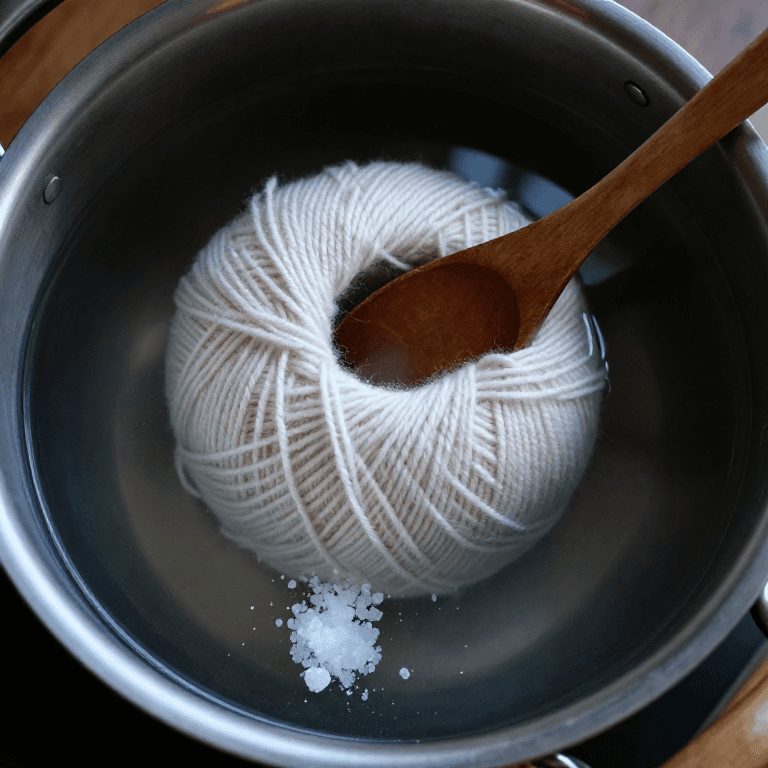
Pre-wet the alum-mordanted wool in lukewarm water for 15 minutes, squeeze gently, and lower it into the osage orange dye bath at room temperature. Slowly raise to 80°C over 20 minutes, then hold for 45 minutes. Turn gently every 10 minutes. The wool will absorb colour rapidly, turning a vivid, warm yellow-gold. The alum mordant forms a stable complex with the morin pigment, producing the best lightfastness and the brightest colour. Without mordant, the colour is still yellow but paler and less permanent.
इस चरण के लिए सामग्री:
 ऊन के धागे की लच्छी100 ग्रा
 फिटकरी (पोटाश फिटकरी)10 ग्रा
Cool overnight, rinse, and dry
Cool overnight, rinse, and dry
Turn off the heat and let the wool cool in the dye bath overnight. Remove, squeeze gently, and rinse in lukewarm water until the runoff is clear. The final colour is a warm, vivid yellow-gold with an almost luminous quality — osage orange yellow seems to glow in natural light. This colour has excellent lightfastness, comparable to weld and far superior to most flower-based yellows. Osage orange-dyed wool retains its brightness for years with normal use. Dry in shade.
सामग्री
3- प्लेसहोल्डर
- 100 ग्राप्लेसहोल्डर
- 10 ग्राप्लेसहोल्डर
आवश्यक उपकरण
5- प्लेसहोल्डर
- प्लेसहोल्डर
- प्लेसहोल्डर
- प्लेसहोल्डर
- प्लेसहोल्डर
कनेक्टेड ब्लूप्रिंट सामग्री
Mordanting Wool with Alum — The Foundation of Natural Dyeing
Tex द्वारा
कपड़ा और चमड़ा
Dyeing Red with Sappanwood — The Asian Heartwood Dye That Preceded Brazilwood
Tex द्वारा
कपड़ा और चमड़ा
Dyeing Yellow with Fustic — The Colonial Dyewood That Coloured the New World Trade
Tex द्वारा
कपड़ा और चमड़ा
यह ब्लूप्रिंट बनाता है

संबंधित ब्लूप्रिंट
ये ब्लूप्रिंट ज्ञान साझा करते हैं — तकनीक, सामग्री या सिद्धांत
Dyeing Yellow with Goldenrod — One of the Best Wild-Plant Dyes in Nature
Tex द्वारा
कपड़ा और चमड़ा
Iron Saddening — Darkening and Shifting Natural Dye Colours with Iron Water
Tex द्वारा
कपड़ा और चमड़ा
Dyeing Yellow with Fustic — The Colonial Dyewood That Coloured the New World Trade
Tex द्वारा
कपड़ा और चमड़ा
CC0 पब्लिक डोमेन
यह ब्लूप्रिंट CC0 के तहत जारी किया गया है। आप बिना अनुमति माँगे इस कार्य को किसी भी उद्देश्य के लिए कॉपी, संशोधित, वितरित और उपयोग करने के लिए स्वतंत्र हैं।
उनके ब्लूप्रिंट के माध्यम से उत्पाद खरीदकर मेकर का समर्थन करें जहाँ वे मेकर कमीशन कमाते हैं जो विक्रेताओं द्वारा निर्धारित होता है, या इस ब्लूप्रिंट का नया संस्करण बनाएँ और राजस्व साझा करने के लिए इसे अपने ब्लूप्रिंट में कनेक्शन के रूप में शामिल करें।