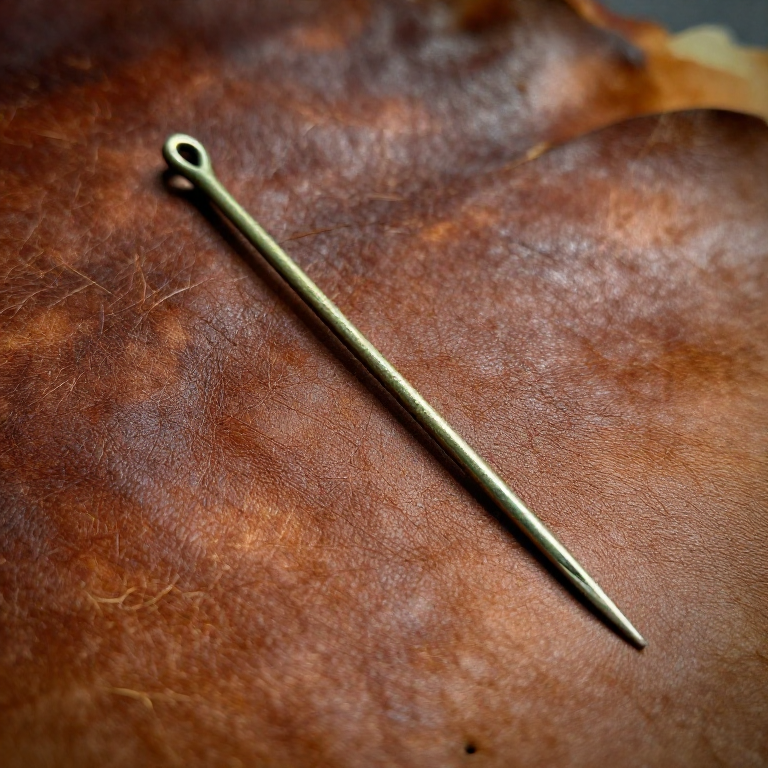


Making a Bronze Needle — Drawing and Hammering Fine Wire
The bronze needle was one of the smallest yet most transformative tools of the Bronze Age. It made possible fitted clothing, leather working, sail-making, and surgical suturing — tasks that bone needles could perform but bronze needles did faster, finer, and without breaking.
Unlike larger tools that are cast in moulds, a needle is too thin to cast directly. Instead, a short bronze rod is hammered and drawn into a taper, then the eye is punched through with a fine pointed tool. The entire process relies on repeated cycles of cold-hammering (to shape and harden) and annealing (heating to soften for further working).
A well-made bronze needle is 6-10 cm long, about 2 mm in diameter at the thickest point, tapers to a sharp point, and has an eye large enough to thread sinew or flax fibre.
دستورالعملها
Cast a small bronze rod
Cast a small bronze rod
مواد مورد نیاز این مرحله:
 ورق مس27 گرم
Hammer the rod to initial taper
Hammer the rod to initial taper
ابزارهای مورد نیاز:
 سنگ کوبه
 لوح سنگی تخت
Anneal to restore workability
Anneal to restore workability
مواد مورد نیاز این مرحله:
 زغال چوب500 گرم
Continue hammering to needle dimensions
Continue hammering to needle dimensions
Form the eye end
Form the eye end
Punch the eye
Punch the eye
Sharpen the point
Sharpen the point
ابزارهای مورد نیاز:
 سنگ تیزکنی
Polish and final work-hardening
Polish and final work-hardening
ابزارهای لازم
3- جایگزین
- جایگزین
- جایگزین
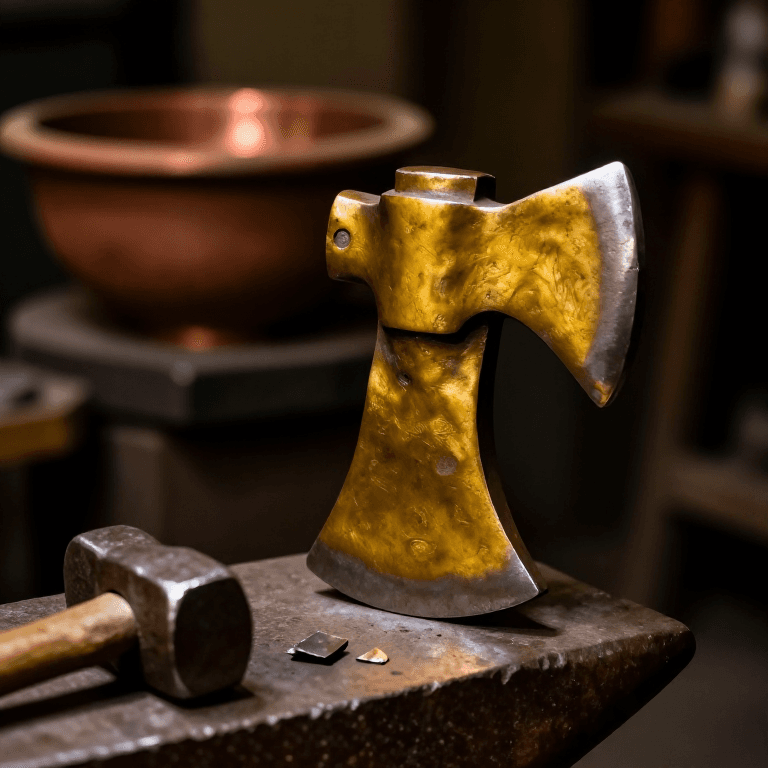
این نقشه میسازد
نقشههای مرتبط
این نقشهها دانش مشترکی دارند — تکنیکها، مواد یا اصول
CC0 مالکیت عمومی
این نقشه تحت مجوز CC0 منتشر شده است. شما آزاد هستید آن را کپی، ویرایش، توزیع و برای هر هدفی بدون نیاز به اجازه استفاده کنید.
با خرید محصولات از طریق نقشه از سازنده حمایت کنید و او کمیسیون سازنده تعیین شده توسط فروشندگان، دریافت میکند یا یک نسخه جدید از این نقشه ایجاد کنید و آن را به عنوان اتصال در نقشه خود قرار دهید تا درآمد به اشتراک گذاشته شود.