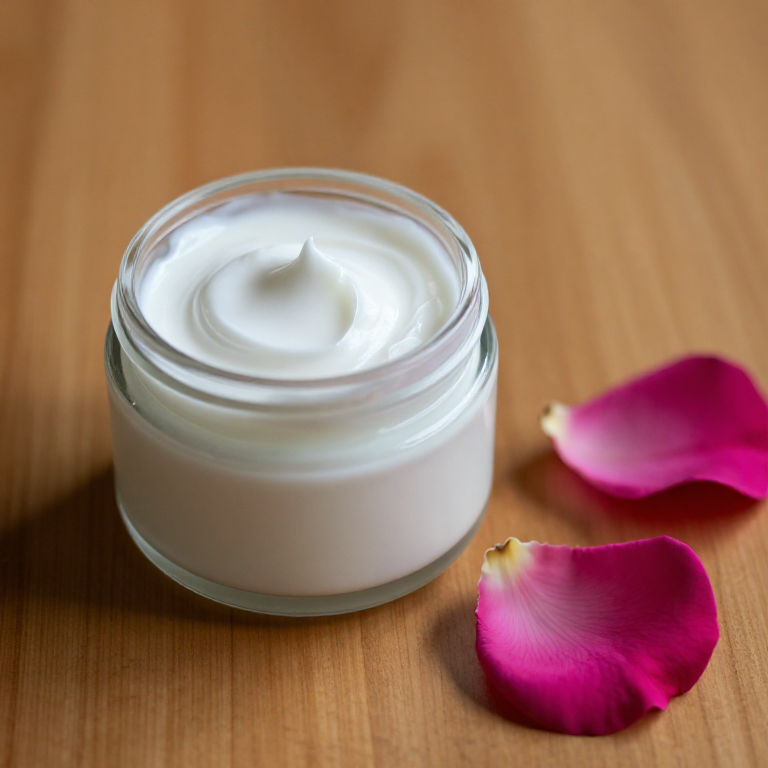


Cold Cream
Every moisturiser on every shelf is a descendant of one recipe written down by a Greek physician in Rome in the second century. Galen's cerate was beeswax, olive oil and water beaten together until the water was trapped inside the fat — and it is called cold cream because that trapped water evaporates off your skin and genuinely feels cool.
What makes it interesting is that it should not work. Oil and water do not mix. Beating them hard enough forces the water into droplets so small they cannot find each other again, and the beeswax holds them apart — a real emulsion, made with a bowl and a spoon, eighteen hundred years before anyone could explain why it held.
This is Galen's version: three ingredients, no preservative, no synthetic emulsifier. It separates eventually, and so did his.
دستورالعملها
Sterilise the jar and everything that touches the cream
Sterilise the jar and everything that touches the cream
Boil or oven-sterilise the jar, bowl and spoon and let them dry fully. This cream contains water and no preservative, so anything living that gets in will grow.
Patch-test the oil on your inner arm
Patch-test the oil on your inner arm
If you have never used sweet almond oil on skin, put a little on your inner forearm and wait a day. Almond is a tree nut — anyone with a nut allergy should use olive oil instead.
Weigh 12 g of beeswax
Weigh 12 g of beeswax
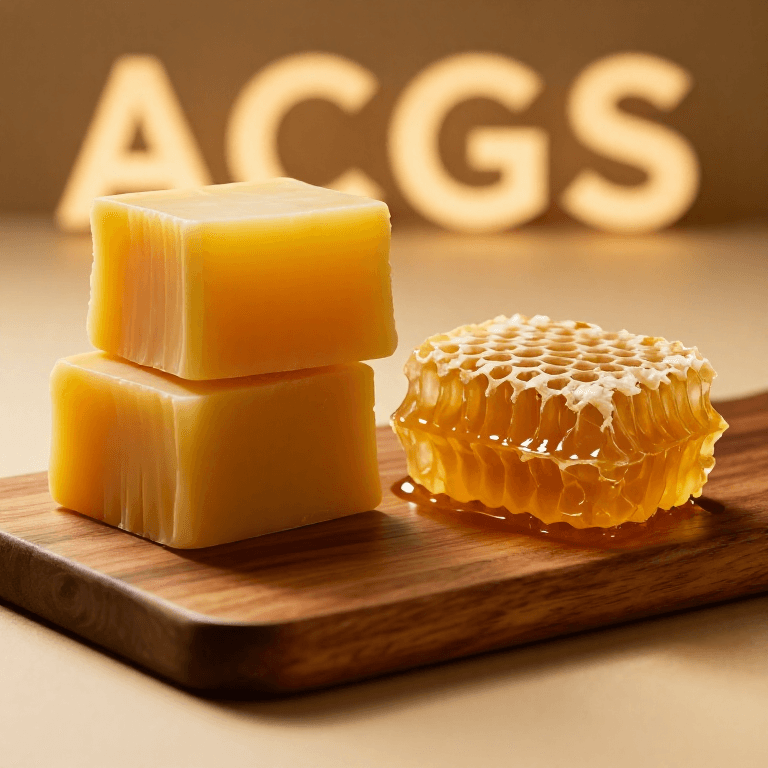
Weigh cosmetic-grade beeswax and grate or chop it small so it melts evenly. Yellow beeswax gives a faint honey smell; white refined wax is neutral.
مواد مورد نیاز این مرحله:
 موم زنبور عسل12 گرم
ابزارهای مورد نیاز:
 ترازوی دیجیتال
Weigh 50 g of oil
Weigh 50 g of oil
Sweet almond oil for a light modern feel, or extra virgin olive oil for Galen's original. Both work; olive is heavier on the skin and smells of olive.
مواد مورد نیاز این مرحله:
 روغن بادام شیرین (تصفیهشده)50 گرم
Melt wax and oil together over a water bath
Melt wax and oil together over a water bath
Warm them gently in a bowl over simmering water until the wax is fully liquid and the mixture is clear. Never heat oils over direct flame.
Bring the oil phase to 70 °C
Bring the oil phase to 70 °C
Check with a thermometer and hold it around 70 °C. Hot enough that the wax cannot start setting the moment cooler liquid arrives.
ابزارهای مورد نیاز:
 دماسنج آشپزخانه
Warm 20 ml of rose water to the same 70 °C
Warm 20 ml of rose water to the same 70 °C
Heat the rose water separately to match. Both phases at the same temperature is the single most important rule here — cold water hitting hot wax sets it into gritty lumps instantly.
مواد مورد نیاز این مرحله:
 گلاب (تقطیر با بخار)20 میلیلیتر
Take the oil phase off the heat
Take the oil phase off the heat
Move the bowl onto a folded cloth on the bench. From here on the mixture must be cooling, not heating.
Add the rose water in a very thin stream while beating hard
Add the rose water in a very thin stream while beating hard
Pour the warm rose water in slowly — a trickle, over a minute or more — beating continuously and vigorously the whole time. Pouring it in at once gives you wax and a puddle, not cream. The droplet size you create now is the emulsion.
Keep beating as it cools and thickens
Keep beating as it cools and thickens
Do not stop when the water is in. Keep working it as the mixture pales, thickens and turns opaque — this takes several minutes and it is where the cream actually forms.
Beat until it reaches room temperature
Beat until it reaches room temperature
Continue until the bowl is no longer warm to the back of your hand. Stopping while it is still warm lets the droplets drift together and the cream splits later in the jar.
Check the texture
Check the texture
It should be white, thick and smooth, holding a peak on the spoon. Gritty means the wax set too fast; a wet layer means the emulsion broke. Both are recoverable — remelt gently and beat again.
Pot it and label with the date
Pot it and label with the date
Spoon into the sterile jar, tapping to remove air pockets, and close it once fully cold. Write the date on it.
Keep it cool and use it within two weeks
Keep it cool and use it within two weeks
Store in the fridge and take it out with a clean spoon, never fingers. There is no preservative in this and it contains water — discard it at any smell, colour change or spotting. A month is optimistic; two weeks is realistic.
History & Context — the oldest recipe still in production
History & Context — the oldest recipe still in production
Galen, second century AD. The physician Claudius Galenus described a ceratum refrigerans — a cooling cerate — of white wax, olive oil and water, sometimes with rose petals. Pharmacopoeias carried it as Unguentum Aquae Rosae, rose water ointment, into the twentieth century, and it is still an official preparation in some. There are very few recipes of any kind with an unbroken eighteen-hundred-year production history.
Why it feels cold. The name is literal and the mechanism is simple physics: the cream is a water-in-oil emulsion, so applying it spreads a lot of finely divided water over your skin. Evaporation takes latent heat from the skin, and you feel it as cooling. A pure oil or an anhydrous balm cannot do this, which is why it was valued as a cooling application long before anyone cared about moisturising.
What actually holds it together. Not the beeswax alone. Vigorous beating shears the water into droplets a few micrometres across, and at that size Brownian motion keeps them suspended faster than gravity can bring them together; the wax raises the viscosity so far that the droplets can barely move at all. It is a kinetically stabilised emulsion, not a thermodynamically stable one — which is a technical way of saying it is always slowly separating, and Galen's separated too. His was made in small quantities and used fresh.
The improvement, and why this blueprint leaves it out. Nineteenth-century pharmacists found that adding a little borax transforms the stability: borax reacts with free cerotic acid in the beeswax to form a soap, and that soap is a genuine emulsifier. Most twentieth-century cold cream formulae, including the classical USP one, contain borax — and that USP formula also contained spermaceti from sperm whales, long since replaced. Borates are now classified in the EU as toxic for reproduction and are restricted in cosmetics there. This blueprint gives the borax-free Galenic original: less stable, shorter-lived, and containing nothing that needs a restriction. If you read an old formula calling for sodium borate, that is what it was for and that is why modern products use something else.
مواد
3- 12 گرمجایگزین
- جایگزین
- 20 میلیلیترجایگزین
ابزارهای لازم
2- جایگزین
- جایگزین
مواد نقشههای متصل

نقشههای مرتبط
این نقشهها دانش مشترکی دارند — تکنیکها، مواد یا اصول

CC0 مالکیت عمومی
این نقشه تحت مجوز CC0 منتشر شده است. شما آزاد هستید آن را کپی، ویرایش، توزیع و برای هر هدفی بدون نیاز به اجازه استفاده کنید.
با خرید محصولات از طریق نقشه از سازنده حمایت کنید و او کمیسیون سازنده تعیین شده توسط فروشندگان، دریافت میکند یا یک نسخه جدید از این نقشه ایجاد کنید و آن را به عنوان اتصال در نقشه خود قرار دهید تا درآمد به اشتراک گذاشته شود.