
هنر
زیبایی و سلامت
صنایع دستی
فرهنگ و تاریخ
سرگرمی
محیط زیست
غذا و نوشیدنی
آینده سبز
مهندسی معکوس
علوم
ورزش
فناوری
پوشیدنی‌ها
Building a Plank Door — A Battened Door from Riven Timber and Iron Nails
Woody

ایجاد شده توسط

Woody

26. مه 2026NO
۱۴
۰
۰
۰
۰

Building a Plank Door — A Battened Door from Riven Timber and Iron Nails

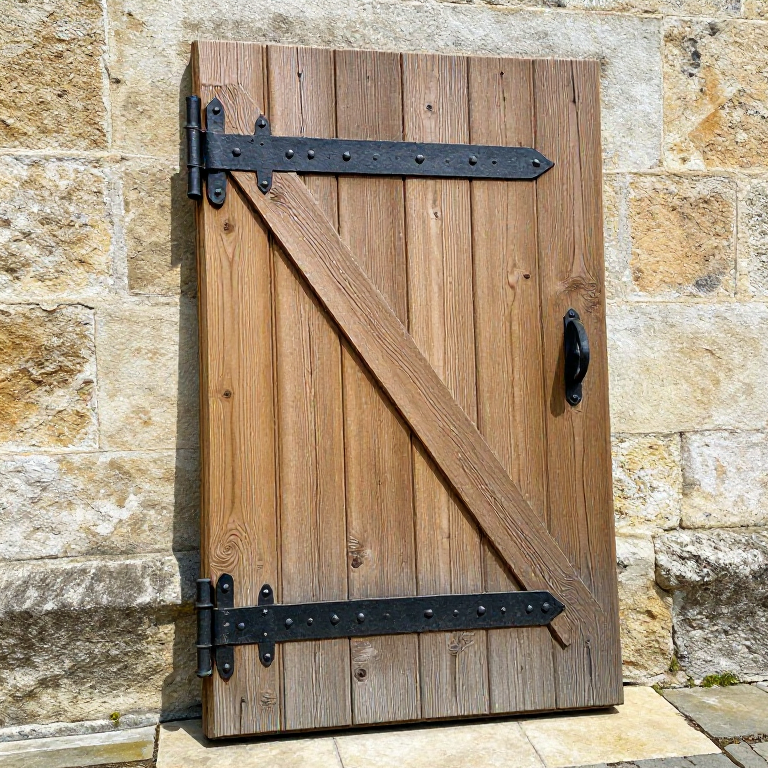
The simplest type of door — and the most common in medieval Europe — is the plank-and-batten door: several wide boards laid side by side and held together by horizontal battens nailed across the back. No frame, no panel, no joinery more complex than a nail. Despite this simplicity, a well-made plank door lasts for centuries — examples survive in English churches dating to the 12th century.

The planks must be riven, not sawn. Riven planks follow the natural grain of the wood, making them resistant to moisture penetration and warping. The battens (horizontal crosspieces) are nailed across the back, preventing the planks from cupping or separating. A diagonal brace running from the hinge side at the top to the latch side at the bottom prevents the door from sagging under its own weight — without this brace, a heavy plank door drops at the free corner within months.

Iron hinges and a latch complete the door. The strap hinge — a long iron bar attached to the batten and pivoting on a pin driven into the door frame — is the traditional hinge for plank doors, distributing the weight across several battens rather than concentrating it at two points.

متوسط
4-6 hours

دستورالعمل‌ها

1

Rive and dress the door planks

Rive 4-6 wide planks from a straight-grained oak log. Each plank should be the full height of the doorway (typically 170-200 cm) and 15-25 cm wide. Dress the faces smooth with a drawknife or adze. The edges that meet in the middle of the door must be straight and true — lay each plank against the next and check for gaps. A light pass with a drawknife along the edge removes any high spots. The planks can be green or seasoned — green planks shrink as they dry, so leave them slightly wider and plan for small gaps.

ابزارهای مورد نیاز:

DrawknifeDrawknife
2

Lay out the planks and mark the battens

Lay the planks face-down on a flat surface, edges tight together, in the arrangement they will form the door. Mark the position of three horizontal battens across the back: one near the top, one near the bottom, and one in the middle. The battens should be about 15-20 cm from each end. Also mark a diagonal brace running from the top hinge corner to the bottom latch corner — this brace must run in this direction to act as a compression strut that prevents the free corner from sagging.
3

Cut and attach the battens

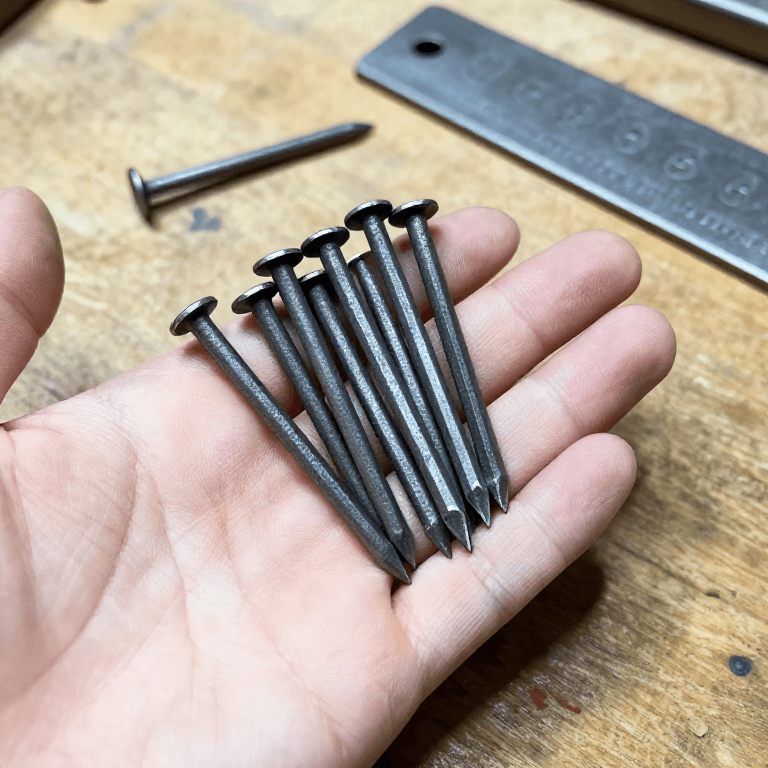
Cut three battens from straight hardwood — each the full width of the door, about 8-10 cm wide and 2-3 cm thick. Lay each batten across the back of the door at the marked positions and nail through from the back into each plank. Use iron nails long enough to penetrate the full thickness of the batten and at least two-thirds into the plank. Two nails per plank per batten — staggered slightly to avoid splitting. Clinch the nail tips over on the front face if they protrude, or use nails that are just the right length.

مواد مورد نیاز این مرحله:

Iron NailsIron Nails30 pieces

ابزارهای مورد نیاز:

Forge Hammer (Cross-Peen)Forge Hammer (Cross-Peen)
4

Fit the diagonal brace

Cut a diagonal brace to fit between the top batten on the hinge side and the bottom batten on the latch side. The ends of the brace must be cut at an angle to sit flush against the battens. Nail the brace to each plank it crosses. The diagonal acts as a compression member — when the door hangs from its hinges, the weight of the free corner pushes down along the brace into the hinge-side bottom batten, transferring the load back to the wall. Without this brace, the nails alone carry the shear load and gradually work loose.
5

Hang the door on strap hinges

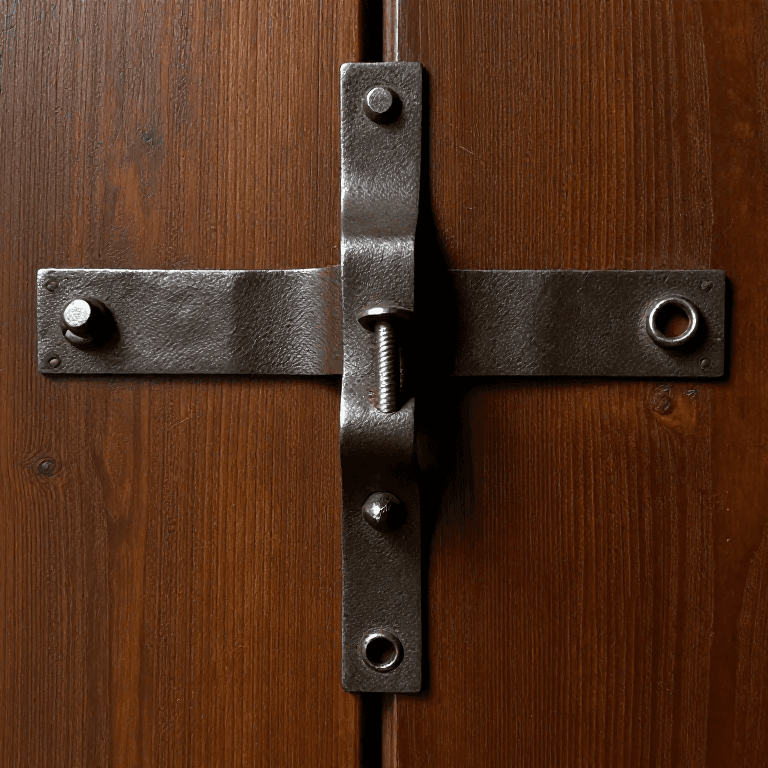
A strap hinge is a long iron bar with a loop at one end that drops over a pin (the pintle) driven into the door frame. The strap lies flat across the back of the door, nailed to one or two battens. Use two strap hinges — one at the top batten and one at the bottom. The long strap distributes the door's weight across the full width of the batten. Drive the pintles into the frame at the correct height, then lift the door and drop the hinge loops over the pins. Check that the door swings freely.

ابزارهای مورد نیاز:

Iron Strap HingeIron Strap Hinge
6

Fit a latch and check the swing

Install a simple iron latch on the inside of the door — a drop bar or a thumb latch that can be operated from both sides. The latch catch is screwed or nailed to the door frame. Test the door by opening and closing it several times. Check that it hangs straight and does not drag on the floor or the frame. If the door sags slightly at the free corner, the diagonal brace may be too loose — tap a thin wedge between the brace end and the batten to tighten it.

مواد

1

ابزارهای لازم

3

مواد نقشه‌های متصل

CC0 مالکیت عمومی

این نقشه تحت مجوز CC0 منتشر شده است. شما آزاد هستید آن را کپی، ویرایش، توزیع و برای هر هدفی بدون نیاز به اجازه استفاده کنید.

با خرید محصولات از طریق نقشه از سازنده حمایت کنید و او کمیسیون سازنده تعیین شده توسط فروشندگان، دریافت می‌کند یا یک نسخه جدید از این نقشه ایجاد کنید و آن را به عنوان اتصال در نقشه خود قرار دهید تا درآمد به اشتراک گذاشته شود.

بحث و گفتگو

(0)

ورود برای شرکت در بحث

در حال بارگذاری نظرات...