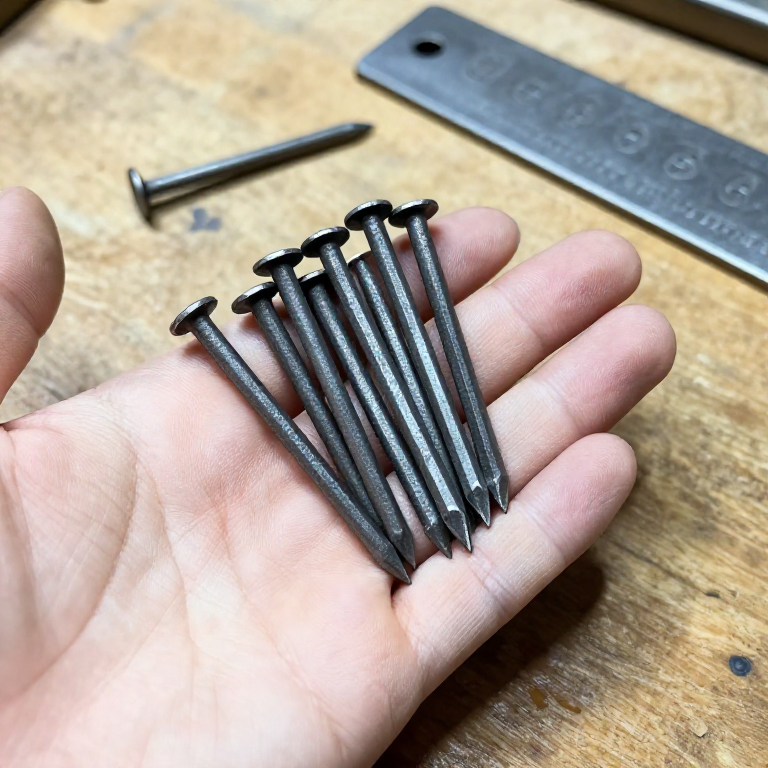


Forging Iron Nails by Hand — Drawing, Cutting, and Heading
Before wire-drawing machines and nail-cutting factories, every nail was forged individually by hand. A skilled nailer could produce 200-300 nails per day — and millions were needed. The Roman army alone consumed an estimated 7 tonnes of iron nails for a single fortress. Medieval cathedrals, Viking longships, and colonial farmhouses all depended on hand-forged nails.
The process is deceptively simple: heat an iron rod, draw it to a taper, cut it to length, insert the cut end into a heading plate, and hammer the protruding end into a head. Each nail takes about 30 seconds for an experienced nailer — making it one of the fastest and most repetitive forge operations.
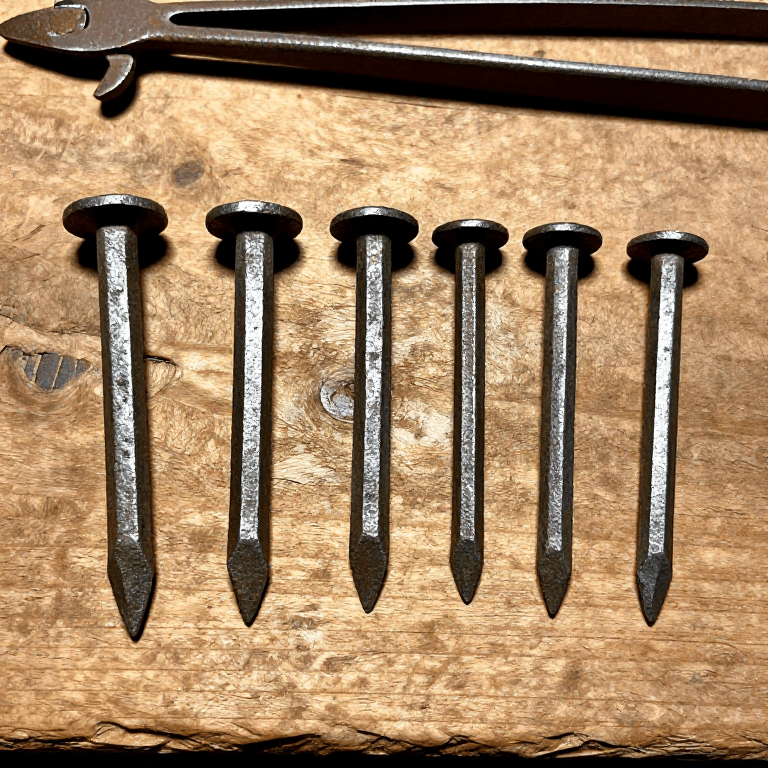
Hand-forged nails have a characteristic square cross-section (from the square rod stock) and an irregular rose head from the final heading blows. This is the blueprint for the most-produced iron object in human history.
دستورالعملها
Prepare the nail rod
Prepare the nail rod
مواد مورد نیاز این مرحله:
 زغال چوب2 کیلوگرم
Heat the tip to forging temperature
Heat the tip to forging temperature
ابزارهای مورد نیاز:
 آتشدان (آتش آهنگری)
Draw the taper
Draw the taper
ابزارهای مورد نیاز:
 چکش آهنگری
 انبر آهنگری
Cut nearly through at the nail length
Cut nearly through at the nail length
Insert into the heading plate
Insert into the heading plate
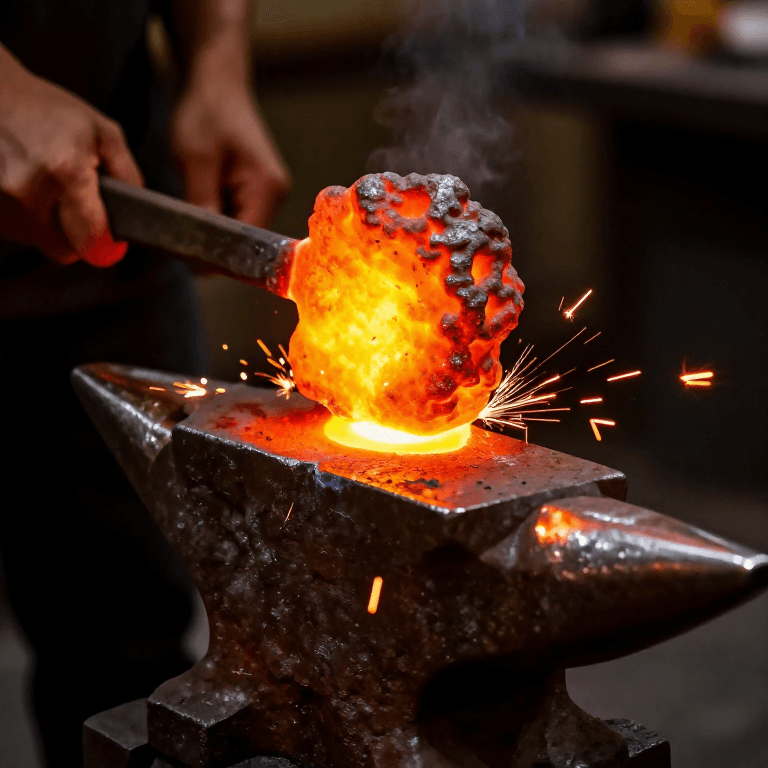
Forge the head
Forge the head
Snap free and quench
Snap free and quench
مواد مورد نیاز این مرحله:
 آب2 l
آب2 lRepeat for the batch
Repeat for the batch
ابزارهای لازم
3- جایگزین
- جایگزین
- جایگزین
مواد نقشههای متصل



نقشههای مرتبط
این نقشهها دانش مشترکی دارند — تکنیکها، مواد یا اصول
CC0 مالکیت عمومی
این نقشه تحت مجوز CC0 منتشر شده است. شما آزاد هستید آن را کپی، ویرایش، توزیع و برای هر هدفی بدون نیاز به اجازه استفاده کنید.
با خرید محصولات از طریق نقشه از سازنده حمایت کنید و او کمیسیون سازنده تعیین شده توسط فروشندگان، دریافت میکند یا یک نسخه جدید از این نقشه ایجاد کنید و آن را به عنوان اتصال در نقشه خود قرار دهید تا درآمد به اشتراک گذاشته شود.