
همکاری
هنر
زیبایی و سلامت
صنایع دستی
فرهنگ و تاریخ
سرگرمی
محیط زیست
غذا و نوشیدنی
مهندسی معکوس
علوم
ورزش
فناوری
پوشیدنی‌ها
Wishbone-Mast Ice Yacht: 16 ft Backbone, Twin-Pole Mast and Double Lateen Booms (Boy Mechanic, 1919)
Woody

ایجاد شده توسط

Woody

13. نوامبر 2026NO
۸
۰
۰
۰
۰

Wishbone-Mast Ice Yacht: 16 ft Backbone, Twin-Pole Mast and Double Lateen Booms (Boy Mechanic, 1919)

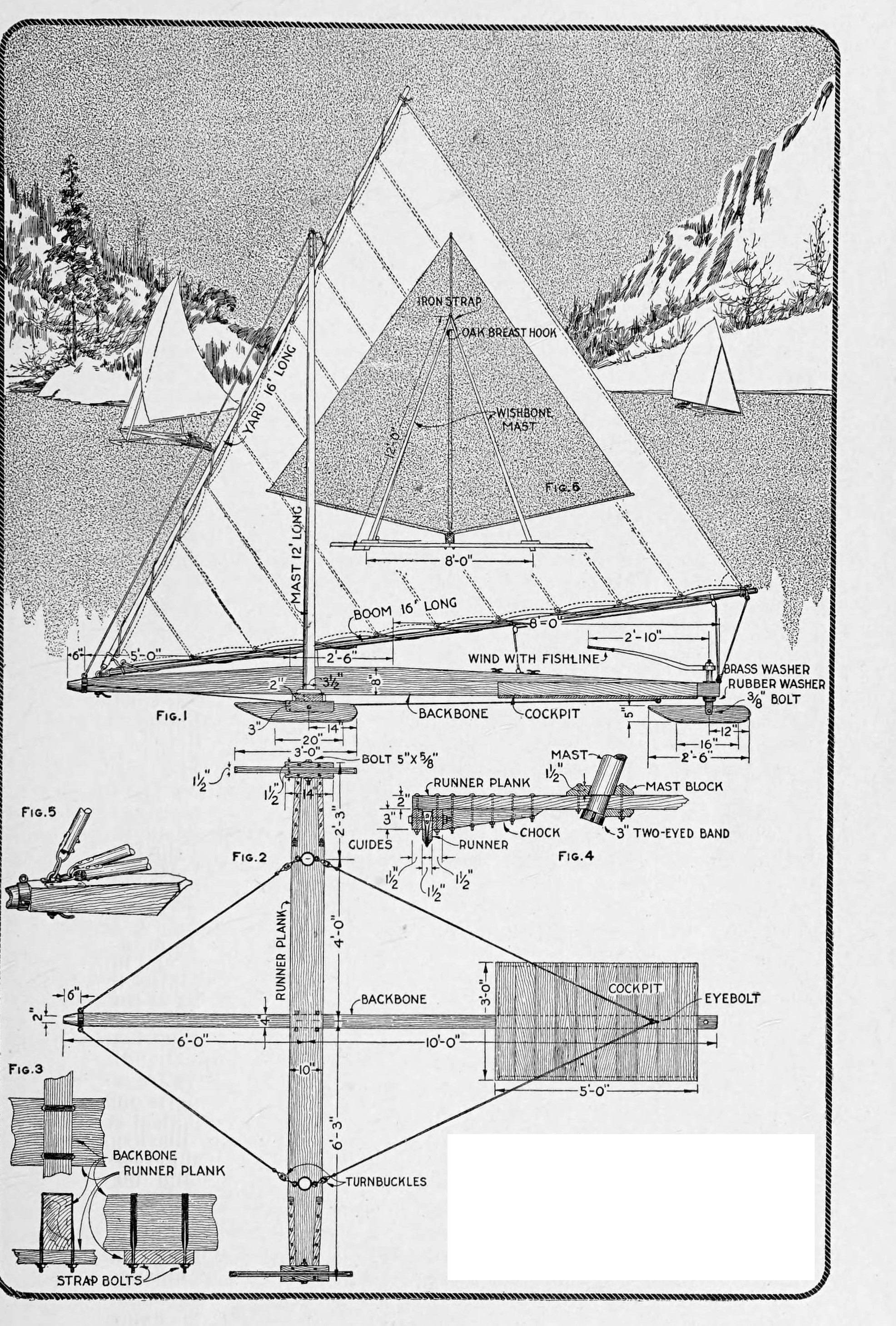
John F. Pjerrou's ice yacht from The Boy Mechanic, Book 3 (1919), for one or two passengers: a 16 ft spruce backbone on a 12 ft 6 in runner plank, oak runners shod with half-round iron, a mast of two 12 ft poles joined at the head, and two lateen sails on a yard and two 16 ft booms that spread into a V when running before the wind. It takes down for storage.
پیشرفته
Several weeks

دستورالعمل‌ها

1

Main sizes and the mast's height

در حال بارگذاری دفترچهٔ Jupyter…
2

Read The Boy Mechanic, Book 3

"The dimensions given are for a small yacht, and care must be taken, in adapting the design, to maintain proper proportions for stability and safety."
3

Make the backbone and runner plank

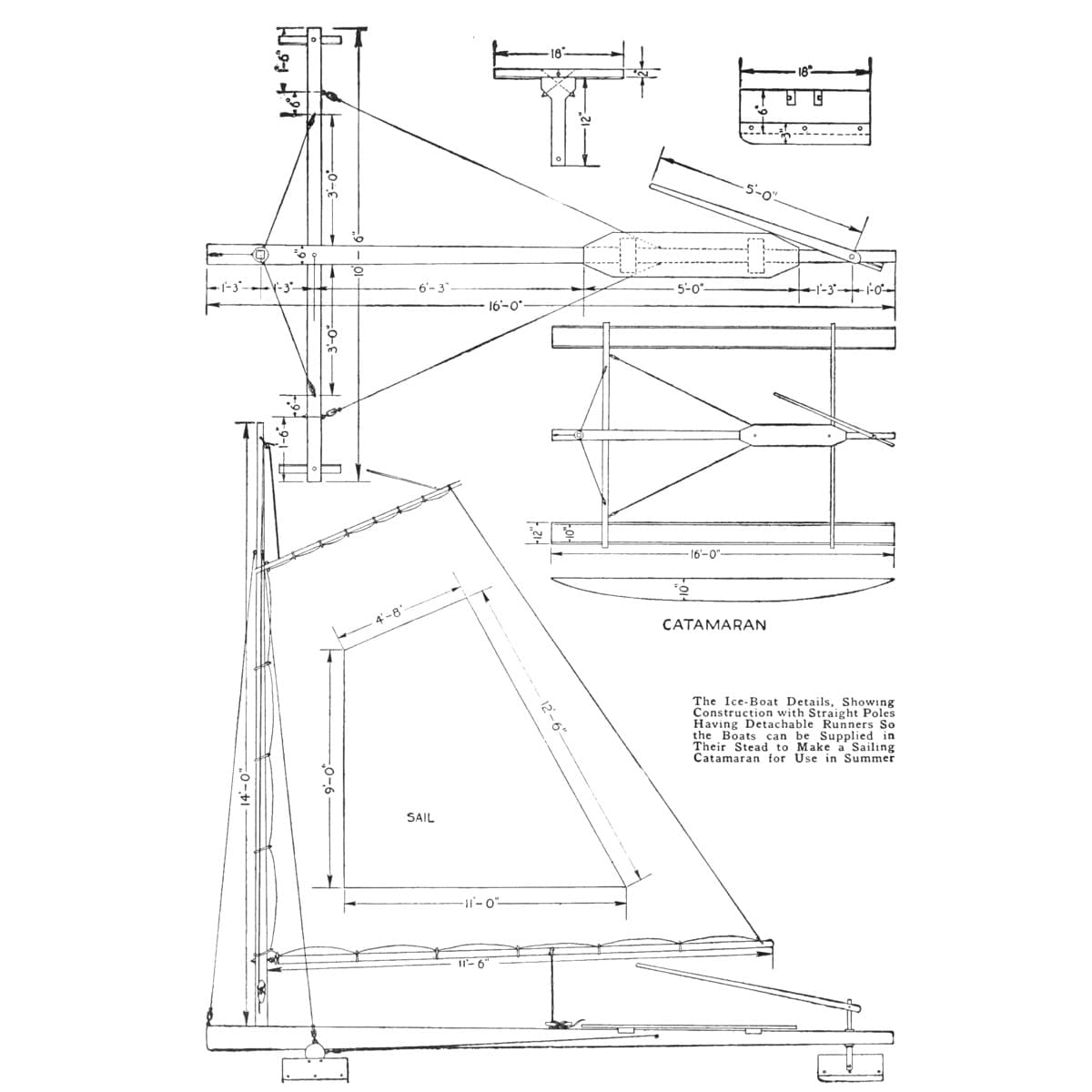
Use only the best straight-grained spruce or white pine. Backbone: 4 in thick, 16 ft long and 8 in high at the centre, with a ridge 8 in high and 2 ft 6 in long; taper it from the middle, 5 ft 6 in from the forward end, to 4 in at each end, and fit a three-eye metal ring at the bow (Figs. 1, 5). Runner plank: 2 in thick, 10 in wide, 12 ft 6 in long, tapered to 8 in at the ends. Set the backbone on the plank at right angles, 6 ft from the bow, and clamp them with two strap bolts, washers and nuts (Figs. 2, 3).

مواد مورد نیاز این مرحله:

الوار کاجالوار کاج2 قطعه
حلقهٔ فلزیحلقهٔ فلزی1 قطعه
پیچ U شکلپیچ U شکل2 قطعه
واشر تختواشر تخت4 قطعه
مهرهٔ شش‌گوشمهرهٔ شش‌گوش4 قطعه

ابزارهای مورد نیاز:

ارهٔ دستیارهٔ دستی
رندهٔ دستیرندهٔ دستی
کارد دودستهکارد دودسته
دریل دستهٔ گردان با متهدریل دستهٔ گردان با مته
آچار فرانسهآچار فرانسه
متر نواریمتر نواری
مدادمداد
4

Fit the guides and forward runners

Bolt guides of straight-grained oak, 1-1/2 by 3 by 14 in, to the plank ends with 5/16 in carriage bolts, and bolt oak chocks at each tapered edge (Fig. 4). Make the forward runners of oak, 1-1/2 by 5 by 36 in, shaped at the ends as drawn, and shoe them with half-round strap iron held by screws with carefully countersunk heads. Pivot them on 5/8 in bolts (5 in long in Fig. 1), nuts to the inner side, with washers and jam nuts, or rivet the bolt ends slightly so the nuts cannot work loose.

مواد مورد نیاز این مرحله:

تختهٔ بلوط سفیدتختهٔ بلوط سفید3 قطعه
پیچ سرگرد گردن‌چهارگوشپیچ سرگرد گردن‌چهارگوش8 قطعه
تسمهٔ آهنی نیم‌گردتسمهٔ آهنی نیم‌گرد2 قطعه
پیچ چوبپیچ چوب1 قطعه
واشر تختواشر تخت4 قطعه
مهرهٔ شش‌گوشمهرهٔ شش‌گوش4 قطعه

ابزارهای مورد نیاز:

ارهٔ دستیارهٔ دستی
رندهٔ دستیرندهٔ دستی
دریل دستهٔ گردان با متهدریل دستهٔ گردان با مته
دریل دستیدریل دستی
ست مته خزینهست مته خزینه
ارهٔ آهن‌برارهٔ آهن‌بر
آچار فرانسهآچار فرانسه
5

Make the stern runner and steering

Make the stern runner of oak, 1-1/2 by 5 by 30 in, shod like the others. Pivot it on a 3/8 in bolt in a hanger of heavy iron strip bent into a U and riveted to a vertical shaft. Put a heavy rubber washer, protected by a metal one, on the shaft; thread its upper end for a washer and nut, slip a section of pipe over the shaft, and clamp the steering handle (2 ft 10 in in Fig. 1) on a squared part of the shaft. The hanger may be forged, or made by a blacksmith.

مواد مورد نیاز این مرحله:

تختهٔ بلوط سفیدتختهٔ بلوط سفید1 قطعه
تسمهٔ آهنی نیم‌گردتسمهٔ آهنی نیم‌گرد1 قطعه
تسمه فولاد نرمتسمه فولاد نرم1 قطعه
میلهٔ گرد فولاد نرممیلهٔ گرد فولاد نرم1 قطعه
پرچ‌های آهنیپرچ‌های آهنی2 قطعه
پیچ سرگرد گردن‌چهارگوشپیچ سرگرد گردن‌چهارگوش1 قطعه
واشر لاستیکیواشر لاستیکی1 قطعه
واشر تختواشر تخت2 قطعه
مهرهٔ شش‌گوشمهرهٔ شش‌گوش2 قطعه
لوله فولادی گالوانیزهلوله فولادی گالوانیزه1 قطعه

ابزارهای مورد نیاز:
کورهٔ آهنگریکورهٔ آهنگری
سندانسندان
چکشچکش
گیرهٔ رومیزیگیرهٔ رومیزی
ارهٔ آهن‌برارهٔ آهن‌بر
دریل دستیدریل دستی
سوهان (سوهان دستی)سوهان (سوهان دستی)
آچار فرانسهآچار فرانسه
6

Build the cockpit

Fix a cockpit 5 ft long and 3 ft wide, with 4 in coaming, to the lower side of the backbone toward the stern; fasten its floor to the backbone with lag screws and fasten the coaming securely. Square corners are easiest; rounded ends with steamed, bent coaming are better. Larger craft may carry it on ribs.

مواد مورد نیاز این مرحله:

تختهٔ کاجتختهٔ کاج4 قطعه
پیچ چوب سرشش‌گوش (لاگ)پیچ چوب سرشش‌گوش (لاگ)6 قطعه
پیچ چوبپیچ چوب1 قطعه

ابزارهای مورد نیاز:

ارهٔ دستیارهٔ دستی
دریل دستهٔ گردان با متهدریل دستهٔ گردان با مته
آچار فرانسهآچار فرانسه
متر نواریمتر نواری
7

Square up and stay the frame

Line up runners, plank and backbone at right angles so the craft tracks true. Hold them with four 1/4 in wire-rope stays with turnbuckles, from eyes on the bow band and on the bands at the plank ends to an eyebolt below the cockpit (Fig. 2). Loop each rope end and clamp the eye with steel clamps made for the purpose (wire-rope clips); metal thimbles in the loops make a better finish.

مواد مورد نیاز این مرحله:

سیم‌بکسلسیم‌بکسل1 قطعه
مهارکش (تانکر)مهارکش (تانکر)4 قطعه
انگشتانهانگشتانه8 قطعه
بست سیم‌بکسلبست سیم‌بکسل8 قطعه
پیچ چشمیپیچ چشمی1 قطعه

ابزارهای مورد نیاز:

ارهٔ آهن‌برارهٔ آهن‌بر
آچار فرانسهآچار فرانسه
متر نواریمتر نواری
8

Make the wishbone mast

Shape two poles of hickory or ash, 3-1/2 in thick at the base and 2 in at the top (12 ft in Fig. 6). Join them carefully at the masthead, bolt them together into an oak breast hook, and reinforce the joint with an iron strap with an eye at its upper end for the forward stay. Step the lower ends in sockets in the runner plank, about 8 ft apart, reinforced with oak mast blocks, and fit their projecting ends with 3 in two-eyed bands for the stays (Figs. 4, 6).

مواد مورد نیاز این مرحله:

تیرک چوبیتیرک چوبی2 قطعه
تختهٔ بلوط سفیدتختهٔ بلوط سفید1 قطعه
تسمه فولاد نرمتسمه فولاد نرم1 قطعه
پیچ سرگرد گردن‌چهارگوشپیچ سرگرد گردن‌چهارگوش2 قطعه
مهرهٔ شش‌گوشمهرهٔ شش‌گوش2 قطعه

ابزارهای مورد نیاز:

کارد دودستهکارد دودسته
رندهٔ دستیرندهٔ دستی
ارهٔ دستیارهٔ دستی
دریل دستهٔ گردان با متهدریل دستهٔ گردان با مته
اسکنه‌هااسکنه‌ها
کورهٔ آهنگریکورهٔ آهنگری
سندانسندان
چکشچکش
9

Make the yard and booms

Make the yard and two booms of hickory or ash, each 16 ft long, 2-3/4 in at the middle tapering to 1-1/2 in at the ends, with metal rings on the ends against splitting. Bolt loops to their forward ends to engage an eyebolt and ring on the backbone at the bow; set the eyebolt in a slotted plate of 3/16 in sheet iron, fastened by a lever nut (Fig. 5).

مواد مورد نیاز این مرحله:

تیرک چوبیتیرک چوبی3 قطعه
حلقهٔ فلزیحلقهٔ فلزی6 قطعه
پیچ چشمیپیچ چشمی1 قطعه
ورق فولاد نرمورق فولاد نرم1 قطعه
تسمه فولاد نرمتسمه فولاد نرم1 قطعه
پیچ سرگرد گردن‌چهارگوشپیچ سرگرد گردن‌چهارگوش3 قطعه
مهرهٔ شش‌گوشمهرهٔ شش‌گوش3 قطعه

ابزارهای مورد نیاز:

کارد دودستهکارد دودسته
رندهٔ دستیرندهٔ دستی
ارهٔ آهن‌برارهٔ آهن‌بر
دریل دستیدریل دستی
سوهان (سوهان دستی)سوهان (سوهان دستی)
گیرهٔ رومیزیگیرهٔ رومیزی
10

Sew the sails

Make two lateen sails of 8-oz unbleached cotton duck: lap the breadths about 1 in and stitch along the edge (or fold 1 in and double-stitch), the seams parallel to the leech. Reinforce each corner with a triangular patch of duck and bind the edges with 1/4 in tarred rope, using a sailor's palm, a diamond-pointed needle and sail twine, well waxed (the wax is ours: beeswax). Along the yard and boom edges punch holes, set two 3/4 in brass grommet rings in each, one each side, and overcast them with buttonhole stitch. Sew in reef points of 1/8 in cotton rope, whipped at the ends.

مواد مورد نیاز این مرحله:

پارچهٔ کرباسپارچهٔ کرباس1 قطعه
نخ بادباننخ بادبان1 قطعه
موم زنبور عسلموم زنبور عسل1 قطعه
طناب قیراندودطناب قیراندود1 قطعه
پرچ حلقه‌ای برنجیپرچ حلقه‌ای برنجی40 قطعه
طناب پنبه‌ایطناب پنبه‌ای1 قطعه

ابزارهای مورد نیاز:

کف‌دستی بادبان‌دوزکف‌دستی بادبان‌دوز
سوزن بادبانسوزن بادبان
پانچ کاغذپانچ کاغذ
قیچیقیچی
متر نواریمتر نواری
11

Set up and rig

Fit the forward ring and strap bolts, the runners and steering, then step the mast, clamp the masthead and fit the bands; set the bottom stays and the masthead stay with the turnbuckles. Lace the sails to yard and booms and fix the forward ends at the bow. Run a 3/8 in halyard from the yard through a pulley at the masthead and a second on the runner plank to cleats by the cockpit, and haul up so the sails set. Lash the main sheets to the boom ends, through pulleys at the stern of the backbone and on the booms about 1 ft and 5 ft from their ends, then to cleats at the cockpit; the second boom needs a duplicate set. Taking down is the reverse.

مواد مورد نیاز این مرحله:

طنابطناب1 قطعه
قرقرهقرقره6 قطعه
بند طناب (کلیت)بند طناب (کلیت)4 قطعه
پیچ چوبپیچ چوب1 قطعه

ابزارهای مورد نیاز:

آچار فرانسهآچار فرانسه
دریل دستیدریل دستی
12

Finish

Smooth the masts, yard and booms, sandpaper them lightly and give them several coats of spar varnish; paint the other woodwork. He gives the metal fittings two coats of red lead "or other good paint for use on metals exposed to the weather": red lead is a lead poison, so use the other paint.

مواد مورد نیاز این مرحله:

کاغذ سنبادهکاغذ سنباده1 قطعه
ورنی دکلورنی دکل1 قطعه
رنگ روغنرنگ روغن1 قطعه

ابزارهای مورد نیاز:

قلم‌موی پهنقلم‌موی پهن
13

Sailing and troubleshooting

Ice yacht sailing.

Flow

Loading...
14

History and honest limits

From "A Wishbone-Mast Ice Yacht" by John F. Pjerrou, in **The Boy Mechanic, Book 3**, Popular Mechanics, 1919 (Project Gutenberg 71856; checked on the archive.org scan boymechanic0003unse, pp. 17-20). He gives no sail outline sizes. The tools, the metric figures and the choice of the non-lead paint he allows are ours.

مواد

35

ابزارهای لازم

21

این نقشه می‌سازد

نقشه‌های مرتبط

این نقشه‌ها دانش مشترکی دارند — تکنیک‌ها، مواد یا اصول

CC0 مالکیت عمومی

این نقشه تحت مجوز CC0 منتشر شده است. شما آزاد هستید آن را کپی، ویرایش، توزیع و برای هر هدفی بدون نیاز به اجازه استفاده کنید.

با خرید محصولات از طریق نقشه از سازنده حمایت کنید و او کمیسیون سازنده تعیین شده توسط فروشندگان، دریافت می‌کند یا یک نسخه جدید از این نقشه ایجاد کنید و آن را به عنوان اتصال در نقشه خود قرار دهید تا درآمد به اشتراک گذاشته شود.

بحث و گفتگو

(0)

ورود برای شرکت در بحث

در حال بارگذاری نظرات...