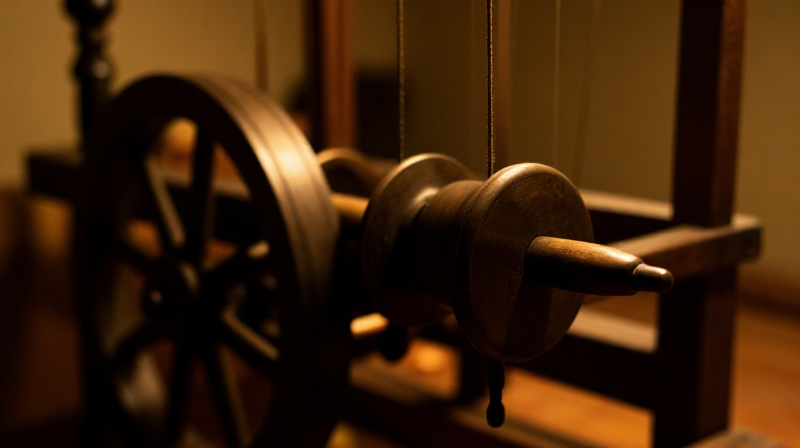

The Spinning Jenny — Multi-Spindle Yarn Production
In 1764, James Hargreaves of Stanhill, Lancashire, invented the spinning jenny — the first machine capable of spinning multiple threads simultaneously. According to tradition, Hargreaves was inspired when he saw an overturned spinning wheel with its spindle still turning vertically, and realized that a row of vertical spindles could be driven from a single wheel. The original jenny had 8 spindles; later versions expanded to 16, 80, and eventually 120.
The spinning jenny was a direct response to the crisis created by Kay's flying shuttle (1733). Weavers using flying shuttles consumed thread so much faster than hand-spinners could produce it that yarn shortages plagued the English textile industry for decades. Hargreaves' jenny multiplied one spinner's output by 8 or more, finally matching spinning capacity to weaving demand.
The jenny works on the same principle as the great wheel — intermittent drafting and winding — but with multiple spindles arranged in a row. The spinner draws a movable carriage backward to draft all threads simultaneously, then pushes it forward to wind the spun yarn onto the spindles. The machine was small enough to fit in a cottage and required no power source beyond human muscle, making it the last great tool of the domestic spinning tradition before factory mechanization took over.
دستورالعملها
Prepare carded roving for all spindles
Prepare carded roving for all spindles
Card and prepare enough wool roving to feed all spindles simultaneously. Each spindle needs its own continuous supply of roving — for an 8-spindle jenny, prepare at least 8 rolags or roving lengths of approximately 50 grams each. Lay them in order beside the machine so they can be attached quickly without tangling.
مواد مورد نیاز این مرحله:
 Raw Wool Fleece400 گرم
Attach leader yarns to each spindle
Attach leader yarns to each spindle
Tie a short leader yarn (30 cm of previously spun thread) to the base of each spindle. Wind each leader up the spindle tip so it hangs free. These leaders provide grip for the roving when spinning begins — without them, the smooth spindles cannot catch loose fiber. Ensure all leaders are the same length for even drafting.
ابزارهای مورد نیاز:
 Spinning Jenny
Join roving to each leader
Join roving to each leader
Fan out the starting end of each roving into a wispy tail. Overlap each tail with its corresponding leader by 10 cm. Lay each roving in the clamp bar of the movable carriage — the bar holds all rovings parallel and prevents them from tangling. Each roving must feed freely from the carriage to its spindle.
Position the carriage close to the spindles
Position the carriage close to the spindles
Push the movable carriage forward until the roving-to-leader overlaps are just in front of the spindles. The carriage rides on rails and moves smoothly back and forth. In the forward position, the distance between carriage and spindles is minimal — about 15 cm. This is the starting position before each drafting stroke.
Turn the drive wheel to spin all spindles
Turn the drive wheel to spin all spindles
Turn the large drive wheel with your right hand. A single drive band connects the wheel to all spindles through a system of pulleys, spinning all of them simultaneously. The twist enters all 8 threads at once. Begin with a moderate speed — approximately 2–3 wheel turns per second — until you develop a feel for how quickly the twist travels into the fiber.
Draw the carriage backward to draft
Draw the carriage backward to draft
With your left hand, pull the carriage slowly and steadily backward along its rails while the wheel keeps spinning. As the carriage moves away from the spindles, it draws all 8 rovings simultaneously, thinning them and allowing twist to enter the drafted zone. This is identical to the backward walk on a great wheel — but now happening on 8 threads at once.
Control the draft length
Control the draft length
Pull the carriage back approximately 60–80 cm — the full extent of the rails. All 8 threads should now be spun to an even thickness along their full drafted length. Check visually: each thread should look similar in diameter. If one thread is thicker or thinner than the others, its roving was uneven — this is corrected by adjusting the roving preparation, not during spinning.
Stop the wheel and prepare to wind on
Stop the wheel and prepare to wind on
Once the carriage reaches full extension, stop turning the drive wheel. The 8 threads are now fully spun and suspended between the carriage clamp and the spindle tips. Before winding on, press down the faller wire — a thin metal bar that guides the yarn onto the spindle shaft below the tip, preventing it from wrapping around the tip itself.
Push the carriage forward to wind on
Push the carriage forward to wind on
Turn the wheel slowly while pushing the carriage forward toward the spindles. The spindles rotate and wind the spun yarn onto their shafts. Guide the carriage at the same speed as the winding to maintain tension — too fast and the yarn goes slack (tangles), too slow and the yarn stretches (weakens). The faller wire distributes the yarn evenly along each spindle.
Repeat the draft-and-wind cycle
Repeat the draft-and-wind cycle
This is the jenny's rhythm: carriage back (draft with twist) → carriage forward (wind on) → carriage back again. Each cycle produces 60–80 cm of yarn on all 8 spindles simultaneously — 5–6 meters total per cycle. An experienced jenny spinner could complete 10–12 cycles per minute, producing over 50 meters of yarn per minute across all spindles.
Join new roving as each supply runs out
Join new roving as each supply runs out
When a roving runs thin, stop the machine. Fan the old tail and new roving start, overlap them, and re-clamp in the carriage. In practice, rovings rarely run out simultaneously — the spinner must stop when any single roving runs out, replace it, and resume. This downtime was the jenny's main inefficiency compared to the later water frame's continuous operation.
Build cops on each spindle
Build cops on each spindle
As yarn accumulates, the faller wire should be adjusted gradually so each spindle builds an even cone-shaped cop. Move the wire slightly with each wind-on stroke to distribute layers. When spindles are full (approximately 30–50 grams each), stop the machine and slide the cops off all 8 spindles. An 8-spindle jenny produces 240–400 grams of yarn per set of full cops.
Wind cops into skeins for finishing
Wind cops into skeins for finishing
Wind the yarn from each cop into a skein using a niddy-noddy or swift. Tie each skein with figure-eight ties in 4 places. The skeined yarn needs washing and twist-setting before use — soak in warm water (40°C) for 20 minutes, gently squeeze dry, and hang under light tension to dry. The jenny produced yarn suitable for weft (crosswise threads) but too soft for warp — warp yarn still required the stronger twist of a hand-wheel or the later water frame.
Understand the jenny's historical impact
Understand the jenny's historical impact
The spinning jenny transformed the economics of textile production. Before 1764, it took 4–8 spinners to supply one weaver. After the jenny, one spinner with an 80-spindle machine could supply 10 weavers. But the jenny's soft yarn was only suitable for weft — the warp problem was solved by Arkwright's water frame (1769), and both limitations were overcome by Crompton's spinning mule (1779), which combined the jenny's multi-spindle design with the water frame's roller drafting to produce both strong warp and fine weft.
مواد
1- 400 گرمجایگزین
ابزارهای لازم
1- جایگزین
مواد نقشههای متصل
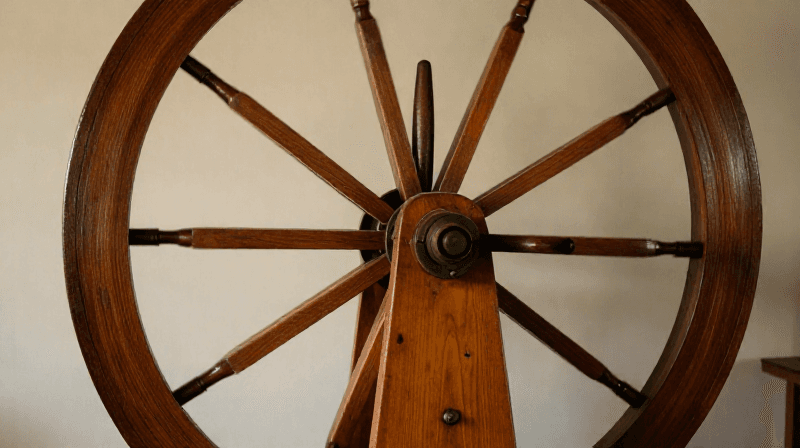
Spinning Yarn on a Great Wheel — The Walking Wheel
توسط Tex
منسوجات و چرم
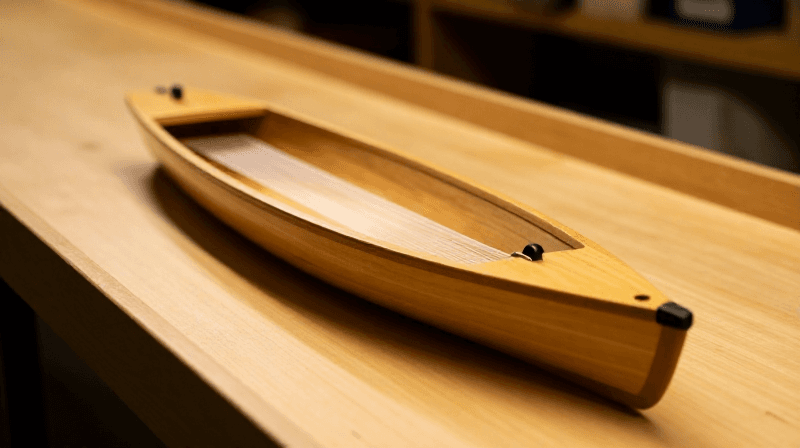
Weaving with a Flying Shuttle — Kay's Invention That Launched the Textile Revolution
توسط Tex
منسوجات و چرم
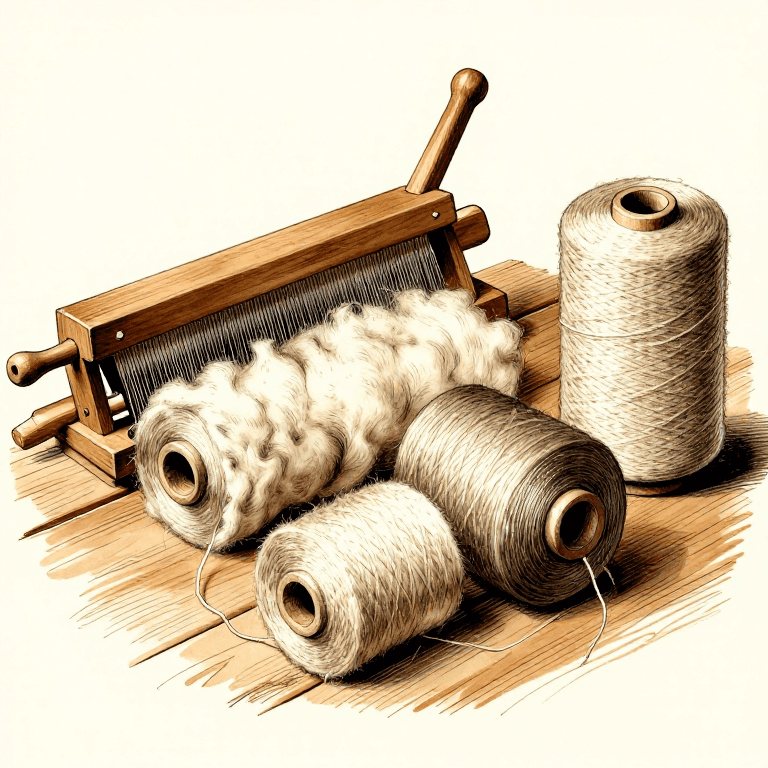
Carding and Combing Raw Wool for Spinning — Preparing Fleece for the Drop Spindle
توسط Tex
باستان
نقشههای مرتبط
این نقشهها دانش مشترکی دارند — تکنیکها، مواد یا اصول
CC0 مالکیت عمومی
این نقشه تحت مجوز CC0 منتشر شده است. شما آزاد هستید آن را کپی، ویرایش، توزیع و برای هر هدفی بدون نیاز به اجازه استفاده کنید.
با خرید محصولات از طریق نقشه از سازنده حمایت کنید و او کمیسیون سازنده تعیین شده توسط فروشندگان، دریافت میکند یا یک نسخه جدید از این نقشه ایجاد کنید و آن را به عنوان اتصال در نقشه خود قرار دهید تا درآمد به اشتراک گذاشته شود.