LIST
FEGURÐ OG VELLÍÐAN
HANDVERK
MENNING OG SAGA
SKEMMTUN
UMHVERFI
MATUR OG DRYKKUR
ÖFUGVERKFRÆÐI
VÍSINDI
ÍÞRÓTTIR
TÆKNI
KLÆÐANLEG TÆKNI
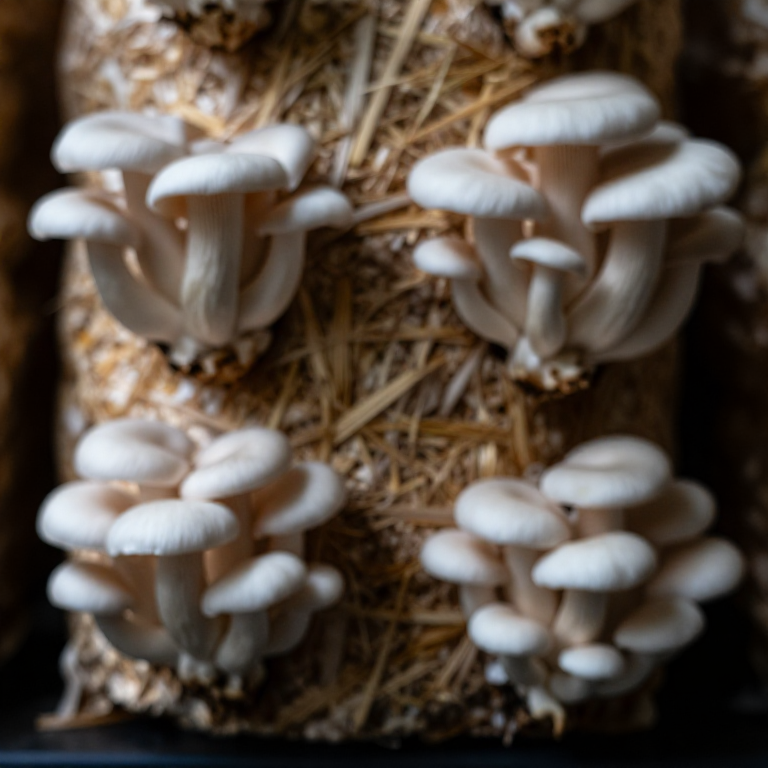

Cultivating Oyster Mushrooms on Straw — Growing Edible Fungi from Spore to Harvest
Miðlungs
Leiðbeiningar
1
1
Understand Fungal Biology
Understand Fungal Biology
Fungi are neither plants nor animals — they are a separate kingdom that obtains nutrients by secreting enzymes externally and absorbing the dissolved products. The oyster mushroom (Pleurotus ostreatus) is a white-rot saprophyte that decomposes lignin and cellulose in dead wood and agricultural waste. The organism lives as a network of thread-like hyphae (collectively the mycelium) that permeate the substrate. What we call a 'mushroom' is the fruiting body — a temporary reproductive structure that produces and disperses spores, analogous to a fruit on a tree. A single oyster mushroom releases up to 2 billion spores.
2
2
Prepare Grain Spawn
Prepare Grain Spawn
Grain spawn is the mushroom grower's equivalent of seed. Rye, wheat, or millet grain is hydrated by soaking for 12-24 hours, drained, and sterilized in autoclavable bags or mason jars at 121°C for 90 minutes. After cooling, the sterile grain is inoculated with a small piece of mycelium-colonized agar or liquid culture under sterile conditions. The mycelium colonizes the grain over 10-14 days at 24°C, coating each kernel in a white fuzzy network. Grain spawn is then used to inoculate the bulk substrate. One jar of grain spawn (1 liter) can inoculate 10-20 kg of straw.
Efni fyrir þetta skref:
 Sveppasáning1 stykki
 Hveiti1 stykki
Nauðsynleg verkfæri:
 Nákvæmnisvog
 Mason-krukka (til að drekka úr)
3
3
Pasteurize Wheat Straw Substrate
Pasteurize Wheat Straw Substrate
Chop wheat or barley straw into 5-10 cm lengths. Pasteurize by submerging in water heated to 65-80°C for 60-90 minutes — this kills most competing molds and bacteria while leaving beneficial thermophilic organisms that resist contamination. Alternatively, cold-water lime pasteurization soaks straw in water with 1% hydrated lime (calcium hydroxide) for 12-18 hours at ambient temperature — the high pH (12+) kills competitors. After pasteurization, drain thoroughly until the straw is at 65-75% moisture content (squeeze test: a firm squeeze produces a few drops of water but no stream).
Efni fyrir þetta skref:
 Hálmur1 stykki
 Slökkt kalk (kalsíumhýdroxíð)1 stykki
4
4
Inoculate and Pack Growing Bags
Inoculate and Pack Growing Bags
Mix grain spawn evenly through the cooled, pasteurized straw at 5-10% spawn rate by weight. Pack the inoculated straw firmly into polyethylene grow bags (clear or black, 0.06-0.08 mm thickness), eliminating air pockets. Tie the bag closed. Cut 6-8 small holes (10 mm diameter) spaced evenly around the bag with a clean blade — these will become fruiting sites. The straw provides cellulose and lignin as carbon sources, along with nitrogen from residual grain protein. Place bags in a dark incubation room at 22-25°C with minimal airflow.
Nauðsynleg verkfæri:
 Hnífur
 Innri poki úr pólýetýleni
5
5
Monitor Mycelial Colonization
Monitor Mycelial Colonization
Over 14-21 days, white mycelium spreads outward from each grain spawn point, eventually merging into a continuous network throughout the straw. The bag turns progressively whiter as colonization advances. Temperature inside the bag rises 2-5°C above ambient from metabolic heat — monitor to prevent overheating above 30°C, which can kill the mycelium. Green mold (Trichoderma) contamination appears as bright green patches and indicates insufficient pasteurization or contaminated spawn. Colonization is complete when the entire bag is uniformly white with no visible uncolonized straw.
Nauðsynleg verkfæri:
 Hitamælir
6
6
Trigger Fruiting Conditions
Trigger Fruiting Conditions
Once fully colonized, move bags to fruiting conditions: drop temperature to 15-18°C (simulating autumn), increase fresh air exchange to reduce CO₂ below 800 ppm, provide indirect light (500-1,000 lux for 12 hours daily, mimicking forest canopy), and maintain humidity at 85-95% by misting walls and floor. The combination of temperature drop, fresh air, light, and high humidity triggers the mycelium to switch from vegetative growth to reproductive mode. Within 3-7 days, tiny pin-like primordia emerge from the holes in the bag — the first visible sign of mushroom formation.
Nauðsynleg verkfæri:
 Rakamælir
7
7
Harvest and Manage Flushes
Harvest and Manage Flushes
Oyster mushroom clusters grow rapidly once pinned — doubling in size daily. Harvest when cap edges are still slightly curled under (before they flatten and begin to release spores). Twist or cut the entire cluster at the base. After the first harvest (first flush), rest the bag for 7-10 days, maintaining humidity. Soak the colonized block in cold water for 2-4 hours to rehydrate if dried out. A second flush typically produces 60-70% of the first flush yield, and a third flush produces less again. Total biological efficiency (fresh mushroom weight / dry substrate weight × 100) reaches 75-125% for Pleurotus ostreatus.
8
8
Understand Mushroom Nutritional Value
Understand Mushroom Nutritional Value
Oyster mushrooms contain 3-4% protein (dry weight 25-30%), all essential amino acids, dietary fiber (chitin and beta-glucans), B vitamins (niacin, riboflavin, pantothenic acid), vitamin D2 (ergocalciferol, dramatically increased by UV exposure after harvest), potassium, phosphorus, and iron. Beta-1,3/1,6-glucans in the cell wall are immunomodulatory — they activate macrophages and natural killer cells via the dectin-1 receptor. Pleurotus species also produce lovastatin (a cholesterol-lowering compound) and pleuran (a polysaccharide with antitumor activity in animal studies).
9
9
Explore Mycelium Applications Beyond Food
Explore Mycelium Applications Beyond Food
Oyster mushroom mycelium is being developed as a sustainable material platform. Mycelium composites (substrate colonized by mycelium, then dried and heat-killed) replace expanded polystyrene packaging — Ecovative Design commercialized this as MycoComposite. Mycelium leather (Mylo by Bolt Threads, Reishi by MycoWorks) grows sheets of dense mycelial tissue that are tanned and finished like animal leather. Pleurotus ostreatus is one of the most effective species for mycoremediation — it degrades petroleum hydrocarbons, pesticides, and even polyurethane plastic through its lignin-degrading enzyme systems (laccases and peroxidases).
10
10
Document Findings and Growing Summary
Document Findings and Growing Summary
Record oyster mushroom cultivation key data: spawn run 14-21 days at 24°C, fruiting at 15-18°C with 85-95% humidity, 500-1,000 lux light, harvest 5-7 days after pinning, biological efficiency 75-125%. Oyster mushrooms are the ideal beginner species — they tolerate a wide range of substrates and conditions, resist contamination aggressively, and demonstrate the complete fungal life cycle in under 6 weeks. Growing mushrooms from scratch teaches more about fungal biology than any textbook, because you watch colonization, primordia formation, and fruiting happen in real time through a transparent bag.
Efni
4- 1 stykkiStaðgengill
- 1 stykkiStaðgengill
- 1 stykkiStaðgengill
- 1 stykkiStaðgengill
Efni úr tengdum teikningum
10% eignun
Cultivating a Sourdough Starter from Wild Yeast — The Living Culture Behind the World's Oldest Bread
eftir Bob
Líffræði
67
0
0
0
6
0
10% eignun
Growing a Kombucha SCOBY from Sweetened Tea — The Symbiotic Culture That Brews Itself
eftir Bob
Líffræði
76
0
0
0
3
0
10% eignun
Tapping Birch Sap — Spring Harvest from Living Trees
eftir Bob
Vatnalíf
94
0
0
0
6
0
10% eignun
Retting Flax to Produce Linen Fiber — From Plant to Thread
eftir Bob
Textíll og leður
78
0
0
0
5
0
10% eignun
Egyptian Papyrus Making — Crafting Sheets from Cyperus Papyrus Stems
eftir Bob
Pappírsgerð
67
0
0
0
3
0
Þessi teikning býr til

Tengd Blueprint
Þessi blueprint deila þekkingu — tækni, efni eða meginreglur
Understanding Carbon Through Charcoal Making — The Element of Life and Fire
eftir Peter
Forn
125
0
0
0
1
0
Growing Saltpeter from Niter Beds — The Explosive Element in Every Living Thing
eftir Peter
Forn
286
0
0
0
5
0
Hættulegt
Isolating Phosphorus from Bone Ash — The Element Discovered in Urine
eftir Nafnlaus smiður
Forn
56
0
0
0
1
0
CC0 opinbert ríki
Þessi teikning er gefin út undir CC0. Þér er frjálst að afrita, breyta, dreifa og nota þetta verk í hvaða tilgangi sem er, án þess að biðja um leyfi.
Studdu smiðinn með því að kaupa vörur í gegnum teikningu hans þar sem hann fær þóknun smiða sem seljendur ákvarða, eða búðu til nýja endurskoðun á þessari teikningu og tengdu hana sem tengingu í þinni eigin teikningu til að deila tekjum.