Samvinna
LIST
FEGURÐ OG VELLÍÐAN
HANDVERK
MENNING OG SAGA
SKEMMTUN
UMHVERFI
MATUR OG DRYKKUR
ÖFUGVERKFRÆÐI
VÍSINDI
ÍÞRÓTTIR
TÆKNI
KLÆÐANLEG TÆKNI
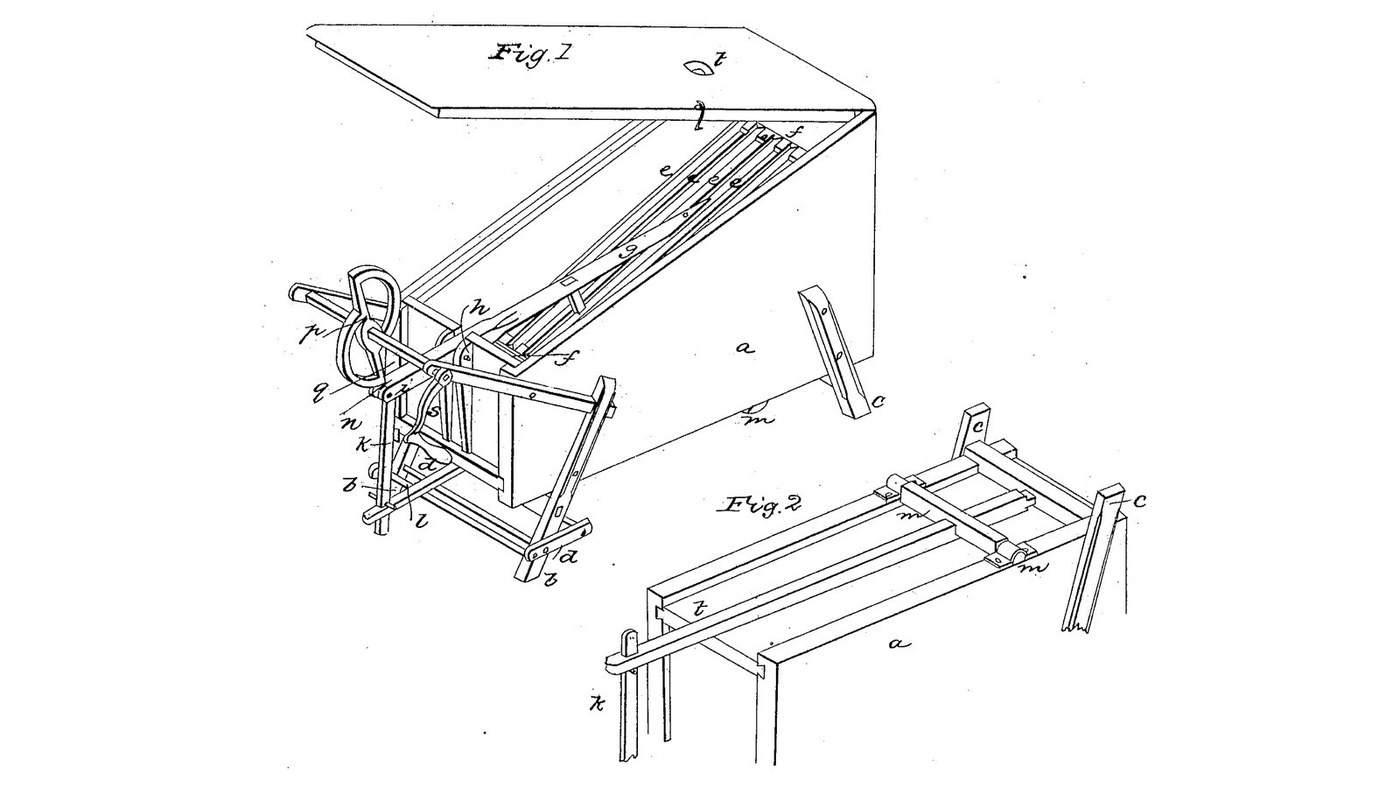

Spring-Pole Cam Churn: A Two-Arc Cam Lifts a Hinged Strip Dasher and a Wooden Spring Pole Drives It Down
Alexander W. Cunningham of West Middleton, Pennsylvania, received US 27,276, dated 28 February 1860, for a churn. A box deeper at the rear holds a dasher of strips set edge-on, hinged on a lever at the front. A cam of two semicircular arcs lifts the dasher slowly; when each arc's end passes the roller, a spring pole of hickory under the box drives it down with force. Two strokes to each turn of the crank.
The patent gives no sizes; every size here is ours.
Lengra kominn
About 3 days, plus printing
Leiðbeiningar
1
1
Two half-circles on one shaft
Two half-circles on one shaft
Hleð Jupyter-vinnubók…
2
2
Two dasher strokes to a turn, one week before
Two dasher strokes to a turn, one week before
Clement gets two strokes a turn from a toggle. Cunningham gets them from a cam of two arcs.
3
3
A dasher worked by a lever
A dasher worked by a lever
Cooper's dasher hangs on levers. Cunningham hinges his whole dasher on one lever at the box's front.
4
4
Read US 27,276
Read US 27,276
"The cam p consists of two semicircular arcs, one extremity of each arc being placed at the center of the other semicircular arc, the arcs being united by their chords and the shaft passing through the chords at a point midway between the inner extremities of the two arcs." ... "On turning the shaft, the dasher is raised up gradually, and falls suddenly with the full force of the spring pole."
5
5
Print the cam p
Print the cam p
Two semicircular arcs of 80 mm radius, a band 10 mm thick and 20 wide, joined along their chords by a bar 250 mm long, with a hub bored 20.6 mm midway between the arcs' inner ends. PETG, 0.2 mm layers, 100 % infill.
6
6
Box a, cover and feet
Box a, cover and feet
From 20 mm hardwood board make a box 700 mm long and 260 wide inside, 200 mm deep at the front end and 375 at the rear: cut the sides with their lower edges sloping 175 mm over the length, glue and screw the ends and bottom between them, and seal the inside joints with silicone sealant. Cut a slot 44 x 95 mm in the front end's middle, 20 to 115 mm above the inside floor, for the lever. Hinge a cover on the top and drill a 10 mm air hole t in it. Screw two front feet b, 40 x 40 mm, 460 mm long, to the sides' outer faces 160 mm behind the front, and two rear feet c, 340 mm long, 640 mm behind it, so the sides stand upright and the bottom falls to the rear. Hinge a small frame d (two legs 305 mm and a bar) to the front feet, folded up; let it down to raise the front end.
Efni fyrir þetta skref:
 Harðviðarborð4 stykki
 Trélím1 stykki
 Tréskrúfur60 stykki
 Sílikonþéttiefni1 stykki
 Skáphjör4 stykki
Nauðsynleg verkfæri:
 Borðsög
 Stingsög
 Hleðslubor
 Borasett
 Stangarþvinga
 Skrúfjárnasett
 Málband
 Sandpappír
7
7
Dasher strips e, cross pieces f and lever g
Dasher strips e, cross pieces f and lever g
Cut five hardwood strips 20 x 20 mm, 600 mm long, and set them in two cross pieces f, 30 x 25 mm, 240 long, 54 mm apart and turned 45 degrees, so each presents an edge to the cream. Cut a hardwood lever 40 x 30 mm, 977 mm long; bore it 12.8 mm across 265 mm from one end for the pivot h, and 15 mm from that end for the pin i; saw a slot 22 mm wide from that end for 165 mm, for the roller. Screw the cross pieces under the long arm so the strips lie 2 mm above the floor when it rests along it. Pivot the lever on a 12 mm stainless pin in two hardwood brackets on the front end's outer face, 35 mm out and 70 mm above the inside floor, the long arm through the slot.
Efni fyrir þetta skref:
Harðviðarborð2 stykkiTrélím1 stykkiTréskrúfur12 stykki Stöng úr ryðfríu stáli1 stykki
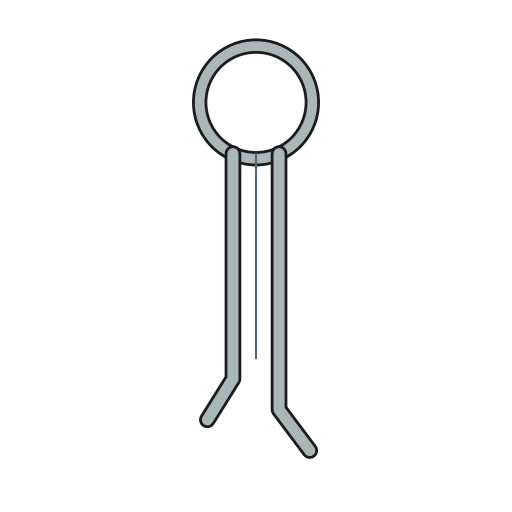 Splitti2 stykki
Nauðsynleg verkfæri:
BorðsögStingsögHleðsluborBorasett Járnsög
 Þjalir (handþjöl)StangarþvingaSkrúfjárnasett
8
8
Roller n, pitman k, spring pole l and cross piece m
Roller n, pitman k, spring pole l and cross piece m
Cut a roller 40 mm across and 20 long from hardwood dowel, bore it 12.6 mm and set it in the lever's slot on a 12 mm stainless pin i. On the pin's ends outside the lever hang two hardwood pitman links 8 x 30 mm with holes 200 mm apart. Cut a spring pole 40 x 25 mm, about 1010 mm long, from straight-grained ash (the patent: "hickory or other suitable wood"); screw its rear end to a block under the bottom's rear, run it forward under the box, and hold it up on a hardwood cross piece m hung from the sides 590 mm from the front. Pin its front end between the pitman links; it should lift the lever's short arm so the dasher rests on the floor.
Efni fyrir þetta skref:
 Harðviðartappar1 stykkiStöng úr ryðfríu stáli1 stykkiHarðviðarborð1 stykki
 Askborð1 stykkiTréskrúfur8 stykkiSplitti4 stykki
Nauðsynleg verkfæri:
BorðsögHleðsluborBorasettJárnsögÞjalir (handþjöl) SkrúfstykkiSkrúfjárnasett
9
9
Arms, shaft q, cam p and crank s
Arms, shaft q, cam p and crank s
Bolt two hardwood arms 15 x 30 mm, 450 mm long, along the box's sides, reaching 300 mm out in front, and bore their ends 20.8 mm across directly above the roller, 70 mm above its centre at rest. Pass a 20 mm stainless shaft through them with the cam on it over the roller, held by collars; fit a hardwood crank 150 mm long with a dowel handle on one end. Set the cam so each arc meets the roller by its inner end as the crank turns.
Efni fyrir þetta skref:
Harðviðarborð1 stykki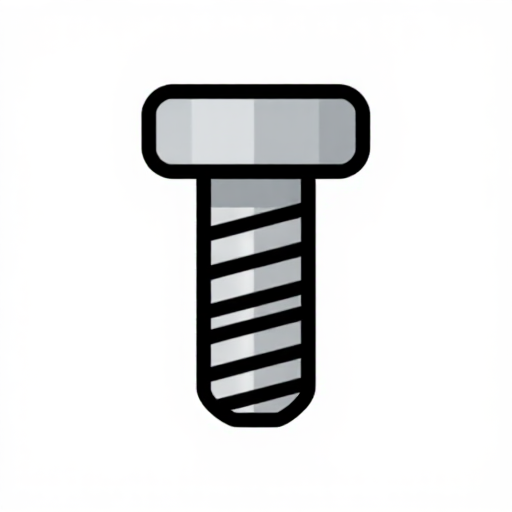 Vagnbolti4 stykki
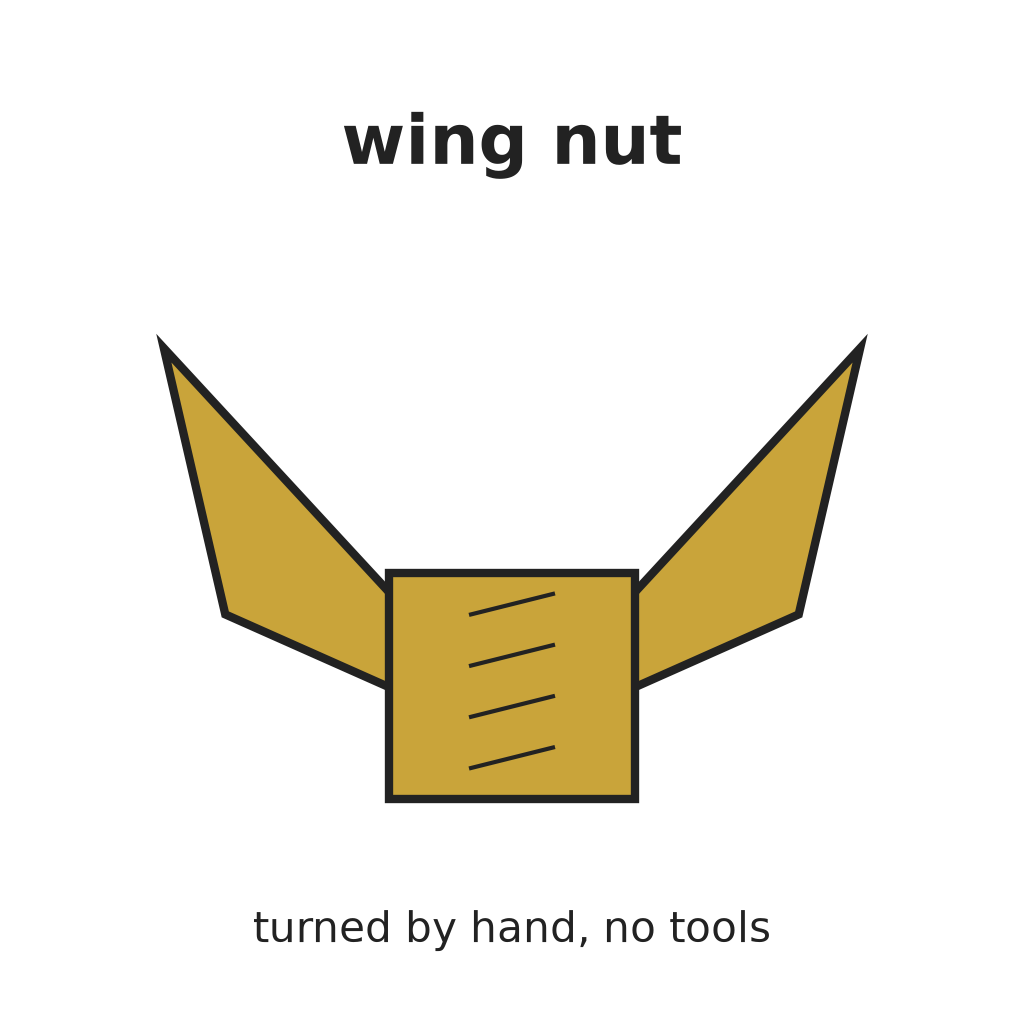 Vængjahneta4 stykkiStöng úr ryðfríu stáli1 stykki
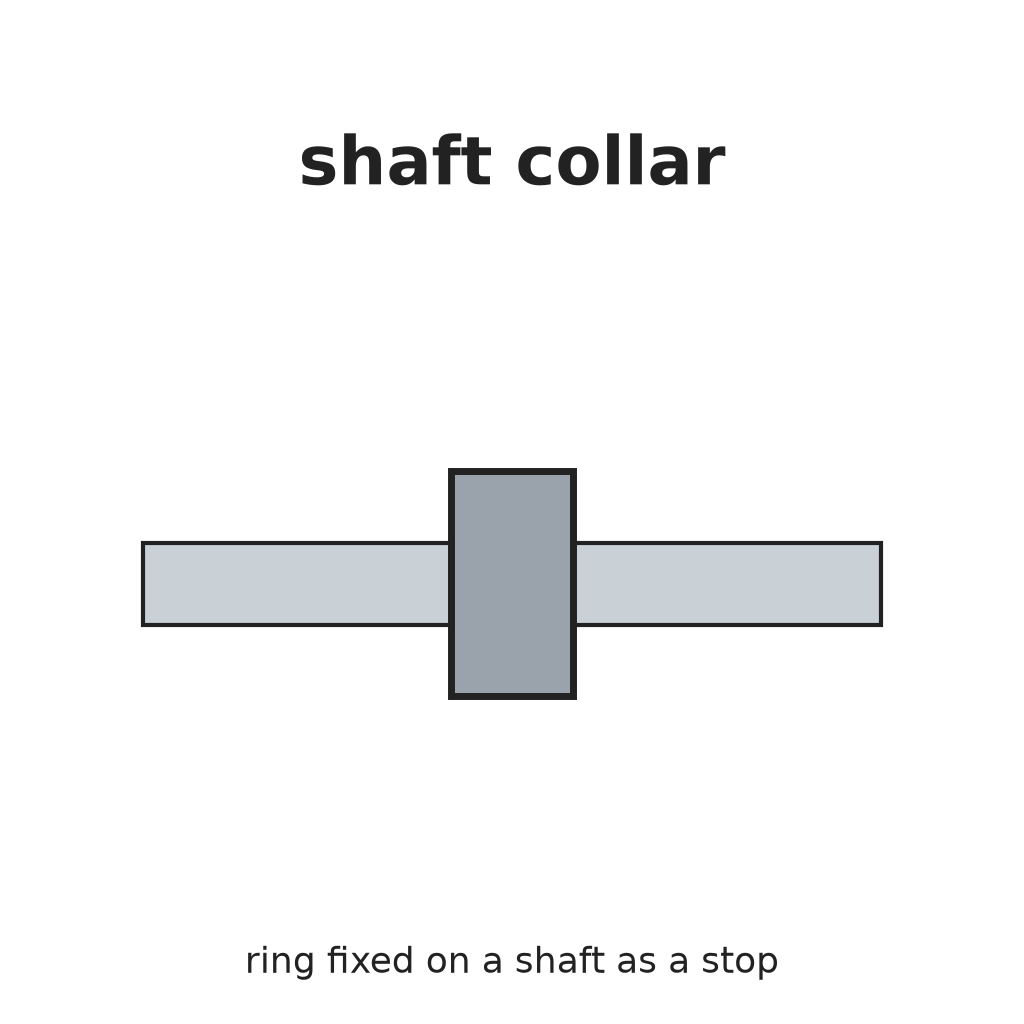 Shaft Collar2 stykkiHarðviðartappar1 stykkiTrélím1 stykki
 PETG-þráður1 stykki
Nauðsynleg verkfæri:
 FDM-þrívíddarprentariBorðsögHleðsluborBorasett
 Spaðabora-settJárnsögÞjalir (handþjöl)
 Skiptilykill
10
10
The build in 3D
The build in 3D
FreeCAD model of this build, the box cut through the middle: the strip dasher on the lever g, the pivot h, the roller and pitman, the spring pole under the bottom on the cross piece m, and the two-arc cam on its shaft and crank in front.
11
11
Churn
Churn
Pour in about 15 litres of heavy cream at about 15 °C, checked with the thermometer: no more, as the patent says the box "must not be filled so full as to cover the dasher with cream when it is raised". Close the cover and turn the crank steadily, timing it: the dasher rises slowly and falls hard, twice a turn. When the butter comes, let down the frame d to raise the front end, as the patent advises, so everything runs to the rear; lift the cover and dasher, take out the butter, pour the buttermilk into a bowl, wash the butter in cold water until it runs clear, salt and weigh it.
Efni fyrir þetta skref:
 Rjómi15 l
 Gróft sjávarsalt1 stykki
 Vatn1 stykki
Nauðsynleg verkfæri:
 Hitamælir með nema sem situr í
 Skeiðklukka
 Stafræn eldhúsvog
 Stór hrærskál úr ryðfríu stáli
12
12
Troubleshooting
Troubleshooting
Spring-pole cam churn troubleshooting.
Flow
Loading...
13
13
History and honest limits
History and honest limits
**Alexander W. Cunningham** of West Middleton, Washington County, Pennsylvania, US 27,276, 28 February 1860, "Churn". He claimed the spring dasher worked by a cam, made of longitudinal strips presenting their angular edge to the cream, with a box deeper at one end than the other. The text calls the frame on the front feet both d and u. The patent gives no sizes or materials beyond the hickory pole; every size here is ours, our pole is ash, and our cam is printed.
Efni
16- 4 stykkiStaðgengill
- 3 stykkiStaðgengill
- 80 stykkiStaðgengill
- 1 stykkiStaðgengill
- 4 stykkiStaðgengill
- 1 stykkiStaðgengill
- 6 stykkiStaðgengill
- 1 stykkiStaðgengill
- 1 stykkiStaðgengill
- 4 stykkiStaðgengill
- 4 stykkiStaðgengill
- 2 stykkiStaðgengill
- 1 stykkiStaðgengill
- 15 lStaðgengill
- 1 stykkiStaðgengill
- 1 stykkiStaðgengill
Nauðsynleg verkfæri
18- Hleðslubor3% þóknunMagento Legacy Storeships internationallyStaðgengill
- Staðgengill
- Staðgengill
- Staðgengill
- Staðgengill
- Staðgengill
- Staðgengill
- Staðgengill
- Staðgengill
- Staðgengill
- Staðgengill
- Staðgengill
- Staðgengill
- Staðgengill
- Staðgengill
Hönnunarskrár
2Þessi teikning býr til


Tengd Blueprint
Þessi blueprint deila þekkingu — tækni, efni eða meginreglur
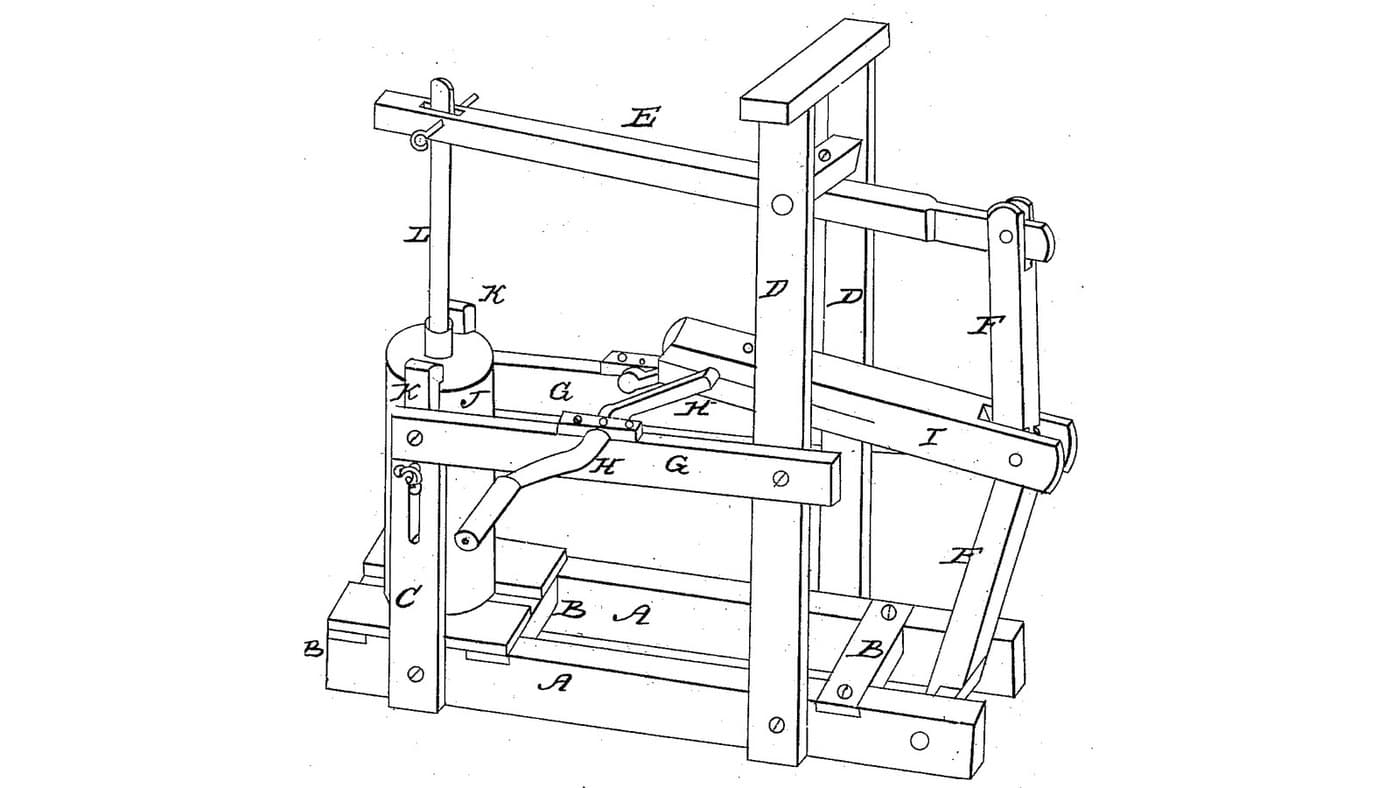
Toggle-Lever Churn: A Crank Crooks and Straightens a Jointed Lever, Rocking a Walking Beam Twice Each Turn
eftir Buttercup
Trésmiði
0
0
0
0
0
0
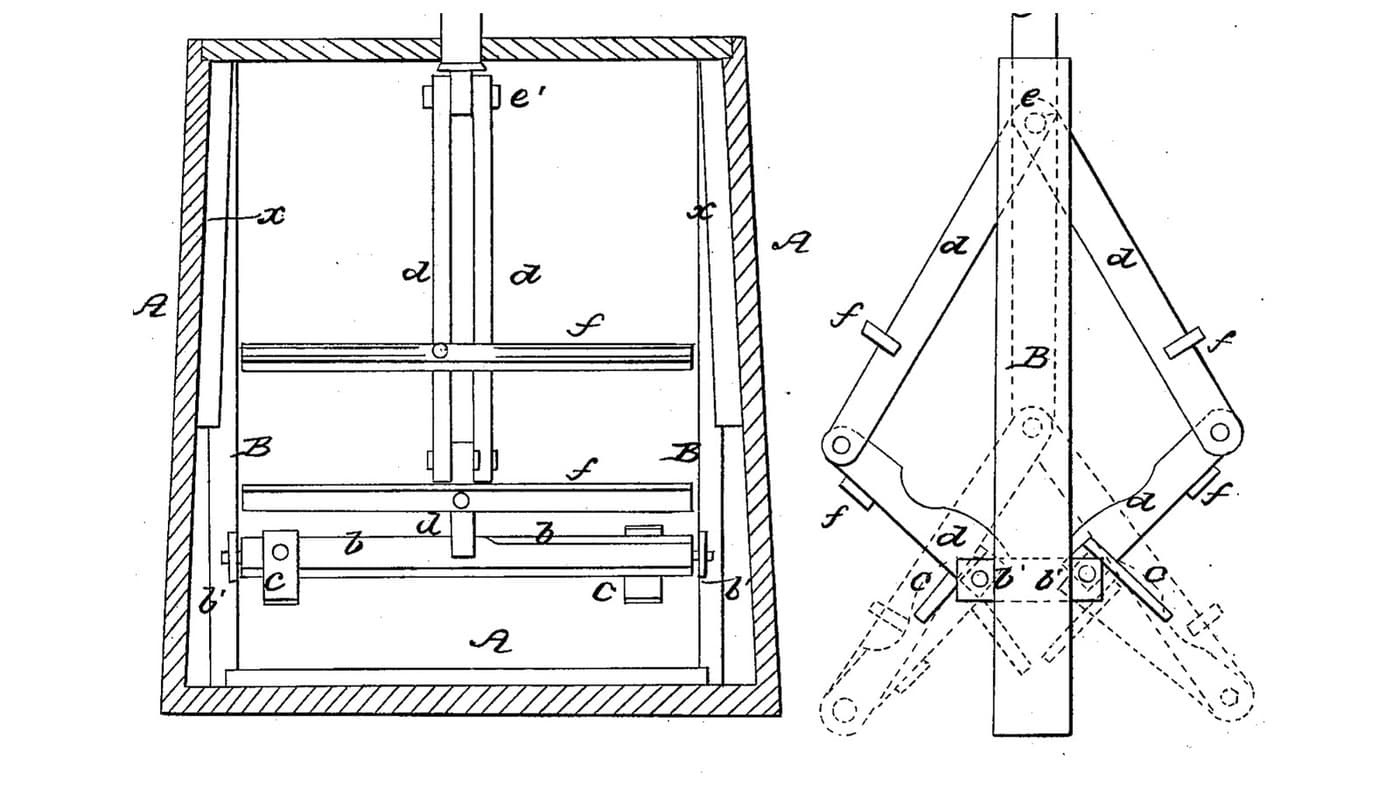
Folding-Lever Dasher Churn: The Dash Rod Folds Two Levers and Swings the Agitators Side to Side
eftir Buttercup
Trésmiði
2
0
0
0
0
0

Churning Butter from Cream — The 5,000-Year-Old Fat Separation
eftir TheChef
HANDVERK
60
0
0
0
0
0
CC0 opinbert ríki
Þessi teikning er gefin út undir CC0. Þér er frjálst að afrita, breyta, dreifa og nota þetta verk í hvaða tilgangi sem er, án þess að biðja um leyfi.
Studdu smiðinn með því að kaupa vörur í gegnum teikningu hans þar sem hann fær þóknun smiða sem seljendur ákvarða, eða búðu til nýja endurskoðun á þessari teikningu og tengdu hana sem tengingu í þinni eigin teikningu til að deila tekjum.