LIST
FEGURÐ OG VELLÍÐAN
HANDVERK
MENNING OG SAGA
SKEMMTUN
UMHVERFI
MATUR OG DRYKKUR
ÖFUGVERKFRÆÐI
VÍSINDI
ÍÞRÓTTIR
TÆKNI
KLÆÐANLEG TÆKNI
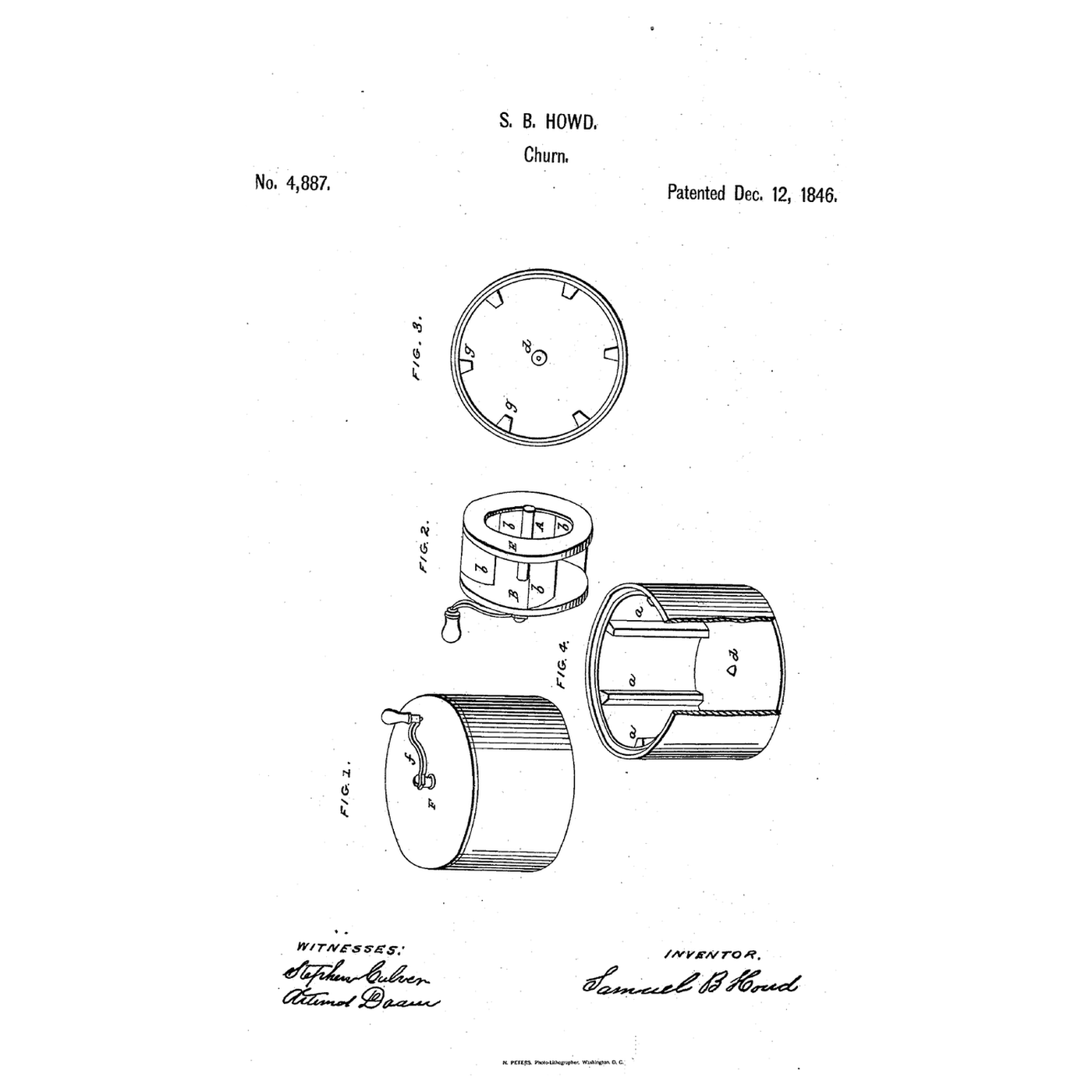

Draw-and-Throw Rotary Churn: Cream Drawn In at the End, Thrown Against Breakers
Howd's churn works like a pump wheel: "a rotary dasher which draws the milk and cream in at its end and expels it at its periphery against stationary breakers."
Samuel B. Howd of Arcadia, New York, received US 4,887, dated 12 December 1846, for a churn made from "a common wash tub or water pail": breakers fixed round its inside, and a dasher of a disk and a rim joined by four or more paddles whose edges lie on tangents to the orifice in the rim, stepped at the bottom and turned by a crank above the cover.
This rung works out his proportions, then prints the dasher, breakers and step, fits them in a pot, and makes butter.
Miðlungs
About 3 hours, plus printing
Leiðbeiningar
1
1
His proportions
His proportions
Hleð Jupyter-vinnubók…
2
2
An upright rotary churn before it
An upright rotary churn before it
The embedded blueprint shapes its floats so the cream cannot simply swirl. Howd throws it outward against fixed breakers instead.
3
3
Read US 4,887
Read US 4,887
"When operated the dasher should be turned in the direction in which the inner edges of the paddles point. This will draw the milk and cream up through the orifice in the rim and throw it from between the paddles off tangentially on every side against the breakers."
4
4
Print the parts
Print the parts
Print the dasher disk-down: a 190 mm disk and rim joined by six paddles on tangents to the orifice; it needs a 200 mm bed. Print four breakers, the step and the crank arm. Print in PETG at 0.2 mm layers, 30 % infill, 4 walls; wash before first use.
Efni fyrir þetta skref:
 PETG-þráður1 stykki
Nauðsynleg verkfæri:
 FDM-þrívíddarprentari
5
5
Print the dasher
6
6
Print the breaker
7
7
Print the step
8
8
Print the crank arm
9
9
Breakers and step
Breakers and step
Take a stock pot about 220 mm across. Bed the step in the centre of its floor and the four breakers upright round its wall, evenly spaced, in silicone, so the dasher clears them by 6–12 mm. Cut a plywood cover with a centre hole for the shaft.
Efni fyrir þetta skref:
 Soðpottur1 stykki
 Sílikonþéttiefni1 stykki
 Krossviðarplata1 stykki
Nauðsynleg verkfæri:
 Laufsög
 Hleðslubor
 Borasett
 Málband
10
10
Shaft and crank
Shaft and crank
Glue the dasher on a 10 mm square hardwood shaft so its rim runs at least 50 mm above the floor. Stand the shaft in the step, pass it through the cover, and glue the crank arm and a dowel handle on top.
Efni fyrir þetta skref:
 Harðviðartappar1 stykki
 Trélím1 stykki
Nauðsynleg verkfæri:
 Handsög
 Sandpappír
11
11
The build in 3D
The build in 3D
FreeCAD model of this build, not of the patent: the pot cut away to show the breakers round its wall, the step and shaft, and the dasher of disk, rim and tangential paddles, with the crank.
12
12
Crank and make butter
Crank and make butter
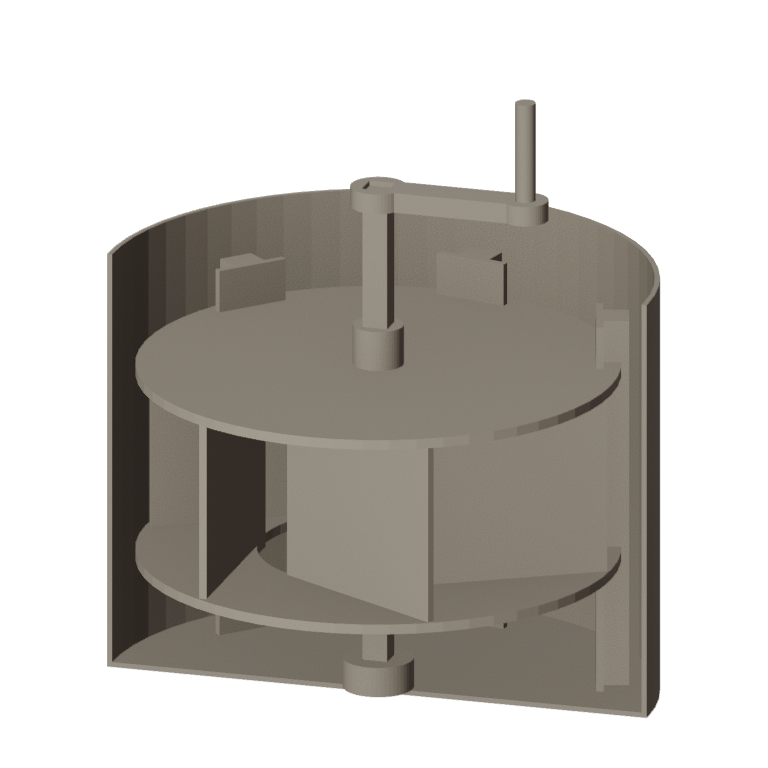
Let the heavy cream stand until it reaches about 15 °C, checked with the thermometer. Pour in 1.5 litres, enough to cover the rim. Fit the cover and crank the way the paddles' inner edges point; time until the butter comes. Pour off the buttermilk, add cold water, churn a little and pour off again until it runs clear; work in a pinch of salt and weigh the butter.
Efni fyrir þetta skref:
 Rjómi1500 ml
 Gróft sjávarsalt1 stykki
 Vatn1 stykki
Nauðsynleg verkfæri:
 Hitamælir með nema sem situr í
 Skeiðklukka
 Stafræn eldhúsvog
 Stór hrærskál úr ryðfríu stáli
13
13
A dasher that churns slowly, breakers that shift
A dasher that churns slowly, breakers that shift
Draw-and-throw rotary churn troubleshooting.
Flow
Loading...
14
14
History and honest limits
History and honest limits
**Samuel B. Howd** of Arcadia, Wayne County, New York, received US 4,887, dated 12 December 1846. His breakers rested on the bottom and might reach to the cover, screwed from outside or held by hoops so they could be removed for cleaning; "if greater velocity is required than can be given by the crank attached directly to the shaft ... a common spur wheel and pinion may be applied." He claimed the construction of a churn having a rotary dasher which draws the cream in at its end and expels it at its periphery against stationary breakers.
**Honest limits.** A stock pot and printed parts stand in for his tub and wooden dasher. FDM prints hold food in their layer lines, so wash well and replace when worn. Your times and weights are the result.
Efni
9- 1 stykkiStaðgengill
- 1 stykkiStaðgengill
- 1 stykkiStaðgengill
- 1 stykkiStaðgengill
- 1 stykkiStaðgengill
- 1 stykkiStaðgengill
- 1500 mlStaðgengill
- 1 stykkiStaðgengill
- 1 stykkiStaðgengill
Nauðsynleg verkfæri
11- Staðgengill
- Staðgengill
- Hleðslubor3% þóknunMagento Legacy Storeships internationallyStaðgengill
- Staðgengill
- Staðgengill
- Staðgengill
- Staðgengill
- Staðgengill
- Staðgengill
- Staðgengill
Hönnunarskrár
5Þessi teikning býr til
Tengd Blueprint
Þessi blueprint deila þekkingu — tækni, efni eða meginreglur
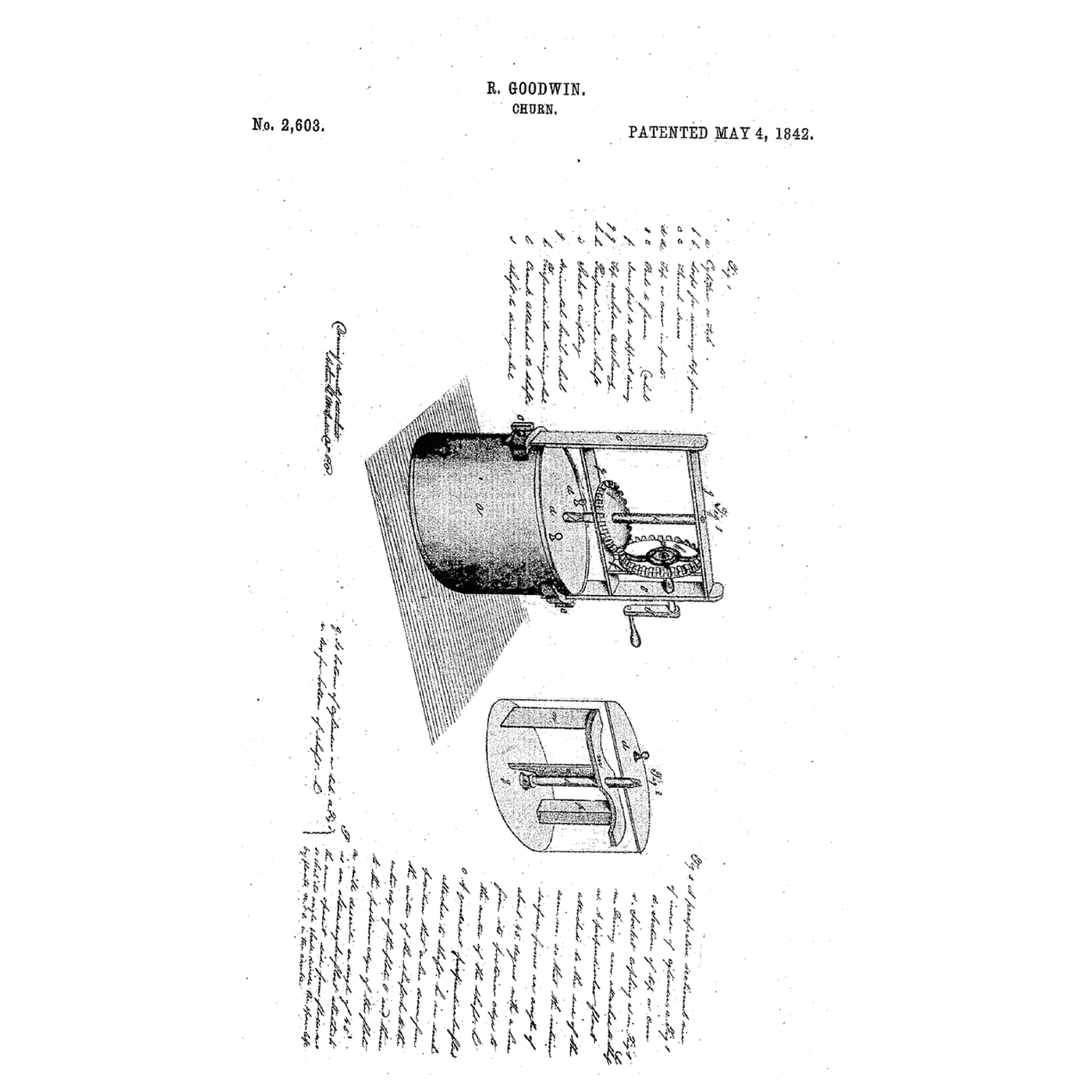
Rotary Stirring Churn: Three Floats That Stop the Cream Merely Going Round
eftir YourGrandma
MATUR OG DRYKKUR
32
0
0
0
0
0
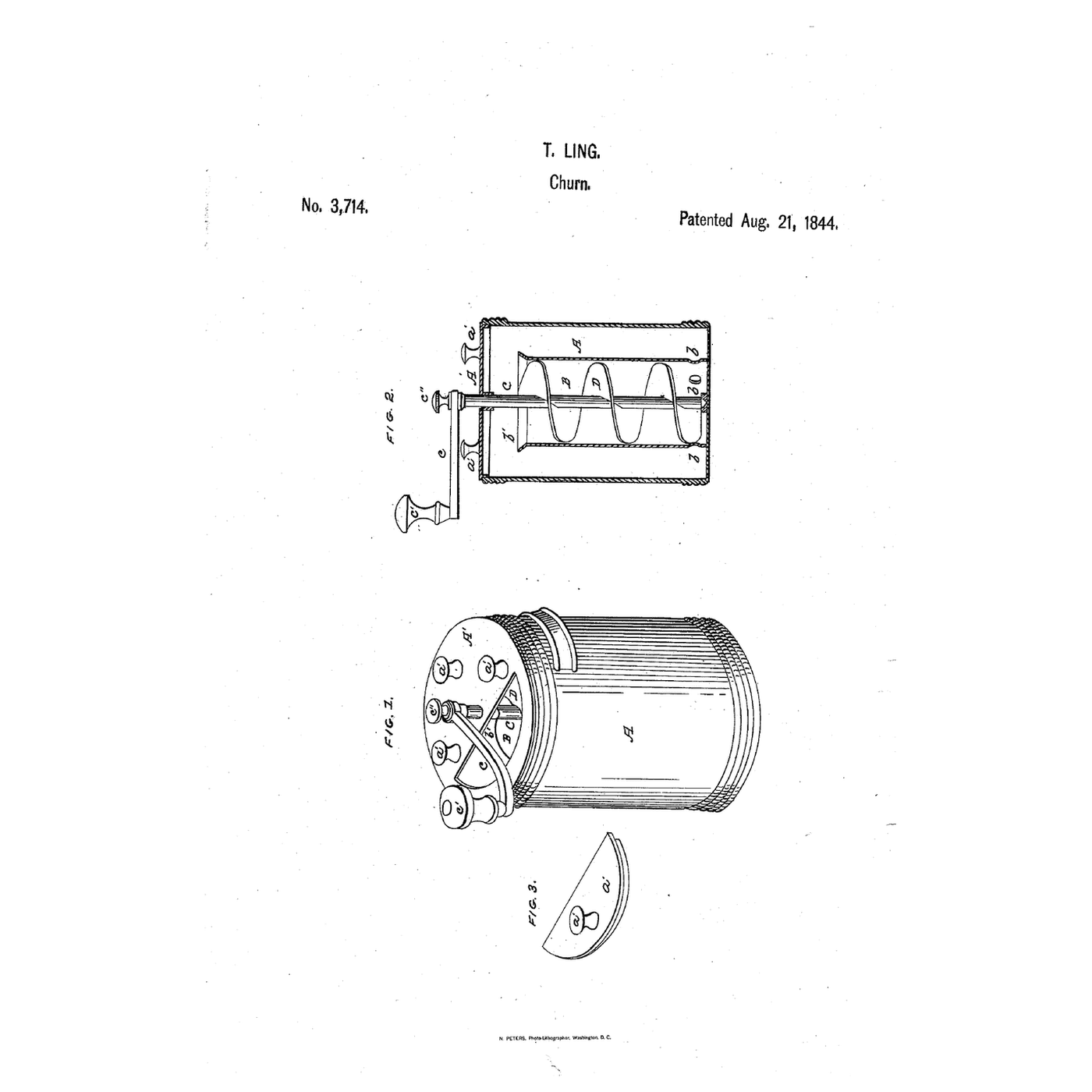
Screw-Lift Churn: An Archimedean Screw Keeps the Whole Body of Cream Moving
eftir Emma
MATUR OG DRYKKUR
24
0
0
0
0
0

Churning Butter from Cream — The 5,000-Year-Old Fat Separation
eftir TheChef
HANDVERK
54
0
0
0
0
0
CC0 opinbert ríki
Þessi teikning er gefin út undir CC0. Þér er frjálst að afrita, breyta, dreifa og nota þetta verk í hvaða tilgangi sem er, án þess að biðja um leyfi.
Studdu smiðinn með því að kaupa vörur í gegnum teikningu hans þar sem hann fær þóknun smiða sem seljendur ákvarða, eða búðu til nýja endurskoðun á þessari teikningu og tengdu hana sem tengingu í þinni eigin teikningu til að deila tekjum.