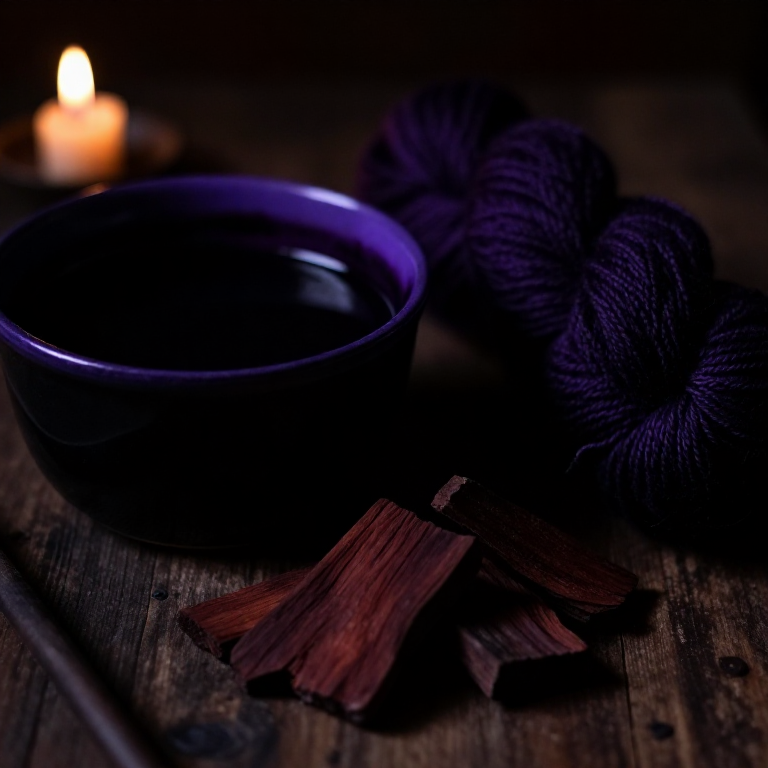

Dyeing with Logwood — The Colonial-Era Route to Natural Black and Purple
Logwood (Haematoxylum campechianum) is a small, thorny tree native to the swamps and coastlines of Central America — the Yucatán Peninsula, Belize, Guatemala, and Honduras. Its heartwood contains haematoxylin, a compound that oxidises to haematein, one of the most versatile dye molecules in nature. With an alum mordant, logwood produces rich violet-purple. With iron, it gives the deepest, truest natural black achievable without synthetic chemistry. With chrome (historically used, now avoided for toxicity), it gives navy blue.
Logwood changed the geopolitics of the Caribbean. When Spanish colonists discovered the dye in the 16th century, it became immensely valuable — rivalling indigo and cochineal. English buccaneers in Belize spent as much time cutting logwood as raiding ships. The Treaty of Paris (1763) specifically included logwood-cutting rights. The Baymen of Belize — English logwood cutters — are the direct ancestors of modern Belize, and logwood appears on the Belizean coat of arms to this day.
Logwood remained the world's primary source of natural black dye until synthetic aniline blacks replaced it in the late 19th century. Even after synthetics, logwood persisted in one critical application: histological staining. The haematoxylin and eosin (H&E) stain, used in virtually every medical pathology laboratory in the world, is made from logwood. Every tissue biopsy examined under a microscope is stained with the same molecule that once coloured pirate ships and Victorian mourning clothes.
Leiðbeiningar
Weigh the logwood chips
Weigh the logwood chips
Use 50-100% WOF of logwood chips for a deep colour. For 100 g of wool: 50 g gives a medium purple or grey; 100 g gives deep purple or near-black depending on the mordant. Logwood is sold as small chips or shavings of the dark reddish-brown heartwood. The chips should smell faintly sweet and woody. Higher quality chips are darker — pale or whitish chips come from the sapwood, which contains much less haematoxylin.
Efni fyrir þetta skref:
 Kampesjuviðarspænir80 g
Nauðsynleg verkfæri:
 Stafræn eldhúsvog
Soak the chips overnight in warm water
Soak the chips overnight in warm water
Place the logwood chips in a pot with about 4 litres of warm water and soak overnight (8-12 hours). The chips swell and begin releasing haematoxylin — the water will turn a deep, inky purple-red. This cold extraction draws out the dye gently and completely. Logwood that is simmered without pre-soaking releases less colour and wastes material. The soaking liquid will darken dramatically overnight — by morning it looks like dark grape juice.
Nauðsynleg verkfæri:
 Soðpottur
Simmer the chips for 60 minutes
Simmer the chips for 60 minutes
Bring the pot to a gentle simmer (80-85°C — logwood should not be boiled vigorously) and hold for 60 minutes. Stir occasionally. The liquid will deepen to an intensely dark purple, nearly opaque. After simmering, the chips will be pale and spent. Logwood releases haematoxylin in waves — the first extraction is the strongest, but a second simmer of the same chips in fresh water yields a useful paler bath.
Nauðsynleg verkfæri:
 Eldhúshitamælir
 Trésleif
Strain out the chips
Strain out the chips
Strain the dye liquor through a fine mesh strainer or muslin cloth into a clean pot. The strained liquid is an intensely dark purple-black — one of the most concentrated natural dye baths you will encounter. Logwood chips left in contact with the wool during dyeing can cause dark spots, so strain thoroughly. Save the spent chips for a second, weaker extraction if desired.
Nauðsynleg verkfæri:
 Fínt sigti
Dye alum-mordanted wool for violet-purple
Dye alum-mordanted wool for violet-purple
For violet-purple: use alum-mordanted wool. Pre-wet the wool, lower it into the logwood bath at room temperature, and slowly raise to 80°C over 30 minutes. Hold at 80°C for 45 minutes, turning gently. The wool absorbs the haematein-aluminium complex, producing a rich violet-purple — the colour of amethyst. This is the classic logwood purple that was used for ecclesiastical vestments, academic robes, and luxury fabrics.
Efni fyrir þetta skref:
 Ullarbandshespa100 g
 Álún (kalíumálún)10 g
Use an iron afterbath for true black
Use an iron afterbath for true black
For natural black: after dyeing with logwood on alum-mordanted wool, give the purple-dyed wool a brief iron afterbath. Dissolve 2 g of ferrous sulfate in 2 litres of warm water. Submerge the logwood-purple wool for 10-15 minutes. The iron reacts with the haematein, darkening the purple to deep charcoal grey and ultimately to near-black. Rinse immediately when the desired depth is reached. This logwood + iron combination was the standard method for achieving natural black in European and American textiles from the 1600s through the 1800s.
Efni fyrir þetta skref:
 Járnsúlfat2 g
Cool, rinse, and dry
Cool, rinse, and dry
Cool the dyed wool in the bath for several hours (or overnight for the richest colour), then rinse in lukewarm water until the runoff is mostly clear. Logwood purple and black have good washfastness but only moderate lightfastness — they will fade slowly in prolonged direct sunlight. For items that will see sun exposure, overdye with a second dip after several months to refresh the colour. Dry in shade. The final result is one of the most satisfying achievements in natural dyeing: true black from wood, water, and iron.
Efni
4- Staðgengill
- 100 gStaðgengill
- Staðgengill
- 2 gStaðgengill
Nauðsynleg verkfæri
5- Staðgengill
- Staðgengill
- Staðgengill
- Staðgengill
- Staðgengill
Efni úr tengdum teikningum
Mordanting Wool with Alum — The Foundation of Natural Dyeing
eftir Tex
Textíll og leður
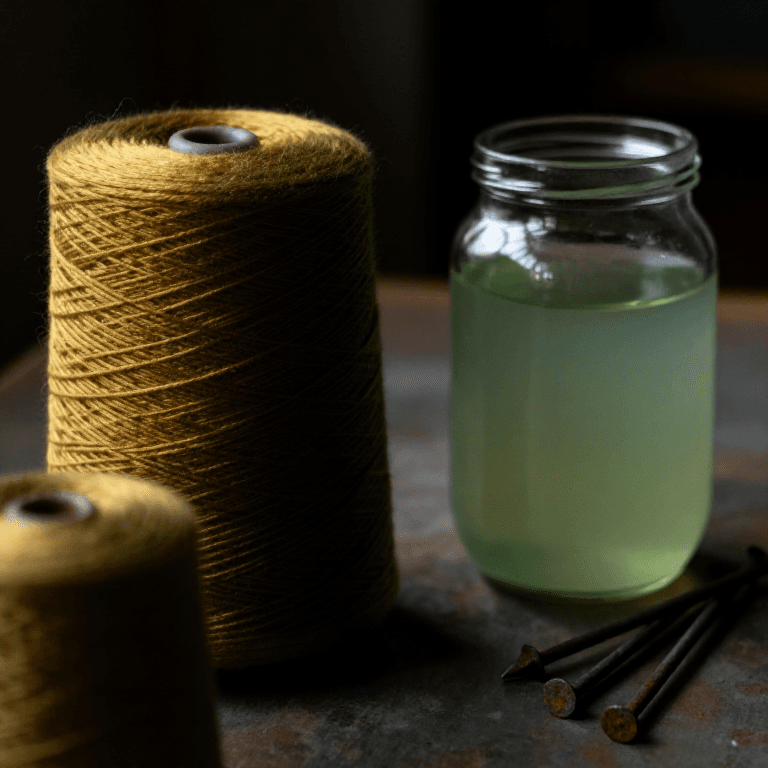
Iron Saddening — Darkening and Shifting Natural Dye Colours with Iron Water
eftir Tex
Textíll og leður
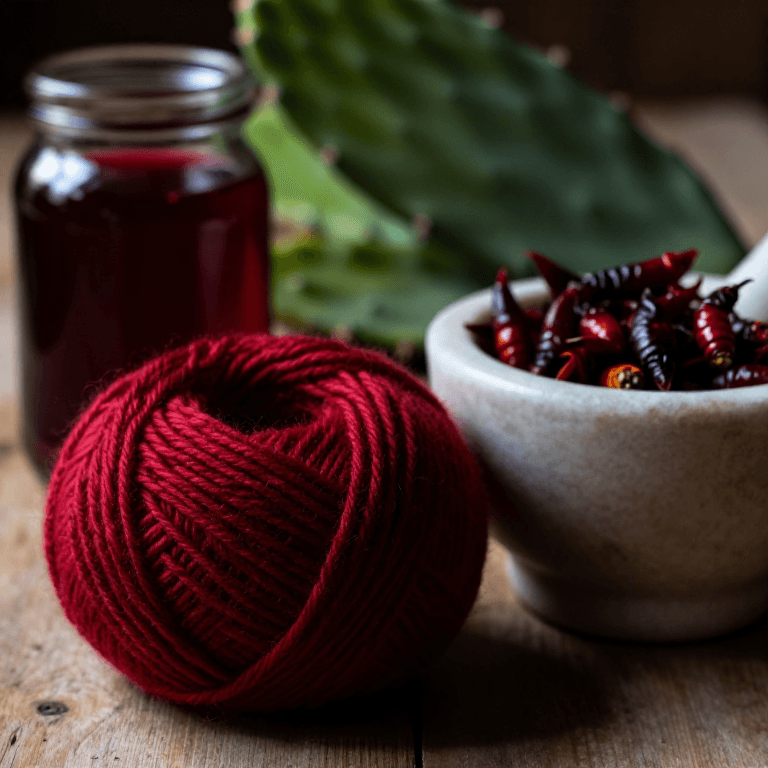
Dyeing Crimson with Cochineal — The Insect Dye That Conquered the World
eftir Tex
Textíll og leður
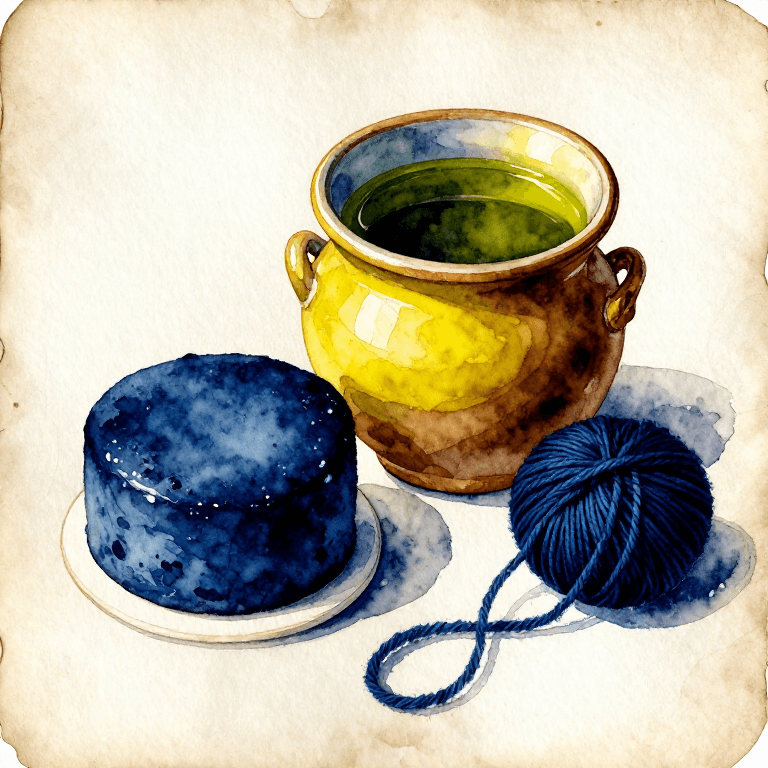
Dyeing Blue with Natural Indigo — The Tropical Vat Dye That Coloured Civilisation
eftir Tex
Textíll og leður
Þessi teikning býr til

Tengd Blueprint
Þessi blueprint deila þekkingu — tækni, efni eða meginreglur
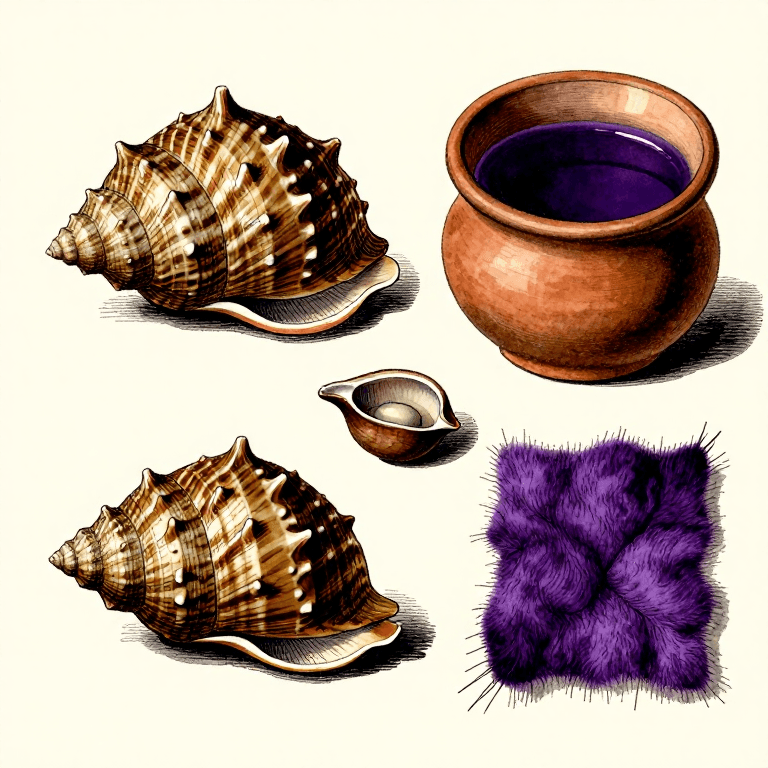
Extracting Tyrian Purple from Murex Shells — The Royal Dye
eftir Charlie
Sjór
Dyeing Purple with Lichen — The Orchil Fermentation Vat
eftir Tex
Textíll og leður
Making Iron Gall Ink from Oak Galls — Medieval Writing Ink
eftir Charlie
Efnafræði
Dyeing Red with Brazilwood — The Dyewood That Named a Nation
eftir Tex
Textíll og leður

Tyrian Purple from Murex — The Most Precious Dye in Human History
eftir Tex
Textíll og leður
Dyeing Purple-Grey with Blackberries — The Hedgerow Dye of Prehistoric Europe
eftir Tex
Textíll og leður
Dyeing Blue with Japanese Indigo — The Fresh-Leaf Salt-Rub Method
eftir Tex
Textíll og leður
CC0 opinbert ríki
Þessi teikning er gefin út undir CC0. Þér er frjálst að afrita, breyta, dreifa og nota þetta verk í hvaða tilgangi sem er, án þess að biðja um leyfi.
Studdu smiðinn með því að kaupa vörur í gegnum teikningu hans þar sem hann fær þóknun smiða sem seljendur ákvarða, eða búðu til nýja endurskoðun á þessari teikningu og tengdu hana sem tengingu í þinni eigin teikningu til að deila tekjum.