Samvinna
LIST
FEGURÐ OG VELLÍÐAN
HANDVERK
MENNING OG SAGA
SKEMMTUN
UMHVERFI
MATUR OG DRYKKUR
ÖFUGVERKFRÆÐI
VÍSINDI
ÍÞRÓTTIR
TÆKNI
KLÆÐANLEG TÆKNI
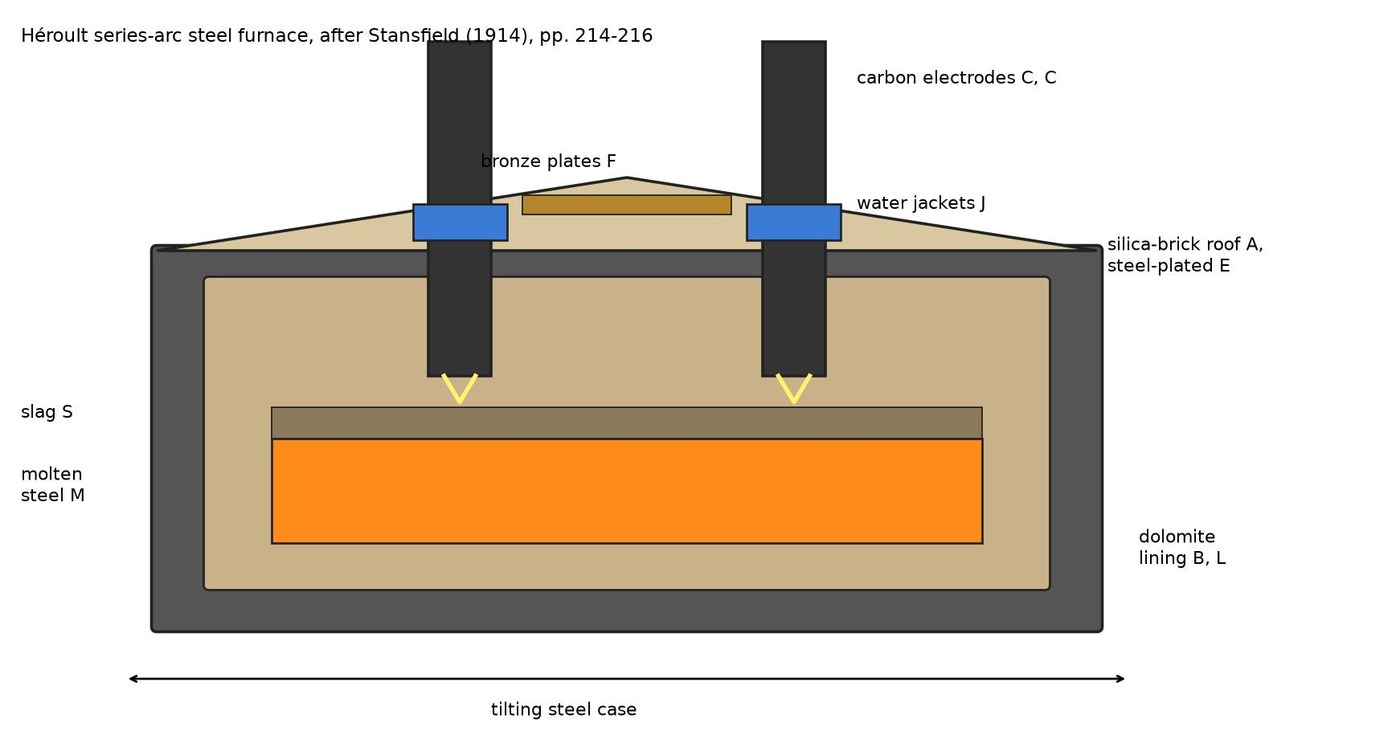

Electric Arc Furnace: the Héroult Series-Arc Steel Furnace (Stansfield, 1914)
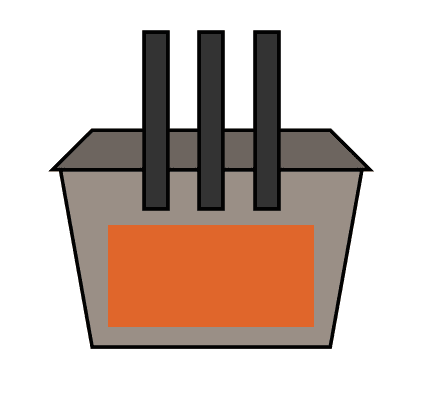
Héroult's steel furnace: a tilting hearth like an open-hearth furnace, lined with dolomite, with two carbon electrodes coming down through the roof. The current goes down one electrode, arcs into the slag, passes through the molten steel and arcs back up the other, so the heat goes straight into the metal.
Result: an electric steel furnace about 7 x 4 ft inside for a 3 ton charge, run at about 350 kW and 110 V.
Source: A. Stansfield, The Electric Furnace, 2nd ed. (1914), pp. 115-116, 214-216. Unknown: case and tilting gear details, electrode size. Picture: a drawn diagram (Fig. 93 is blank in the scan).
Sérfræðingur
Unknown
Leiðbeiningar
1
1
Build the case and lining
Build the case and lining
Build the furnace in a steel case on a tilting mounting, about 7 x 4 ft inside, with charging doors at the ends. Line it with dolomite bricks and crushed dolomite; dolomite or magnesite on the hearth, which allows strongly basic slags. Ours: mild steel plate. Not given: the case and tilting gear, the bricks' making.
Efni fyrir þetta skref:
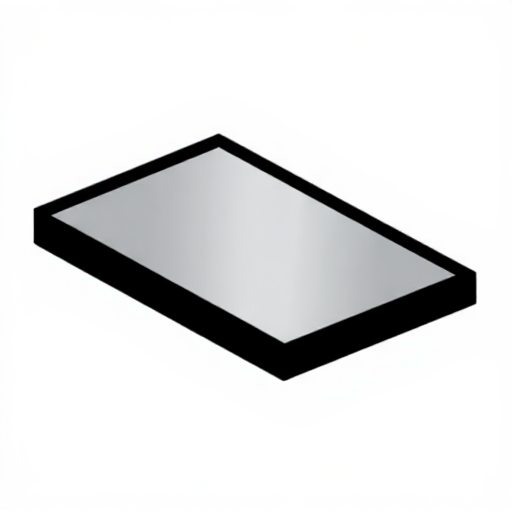 Plata úr mjúku stáli1 case
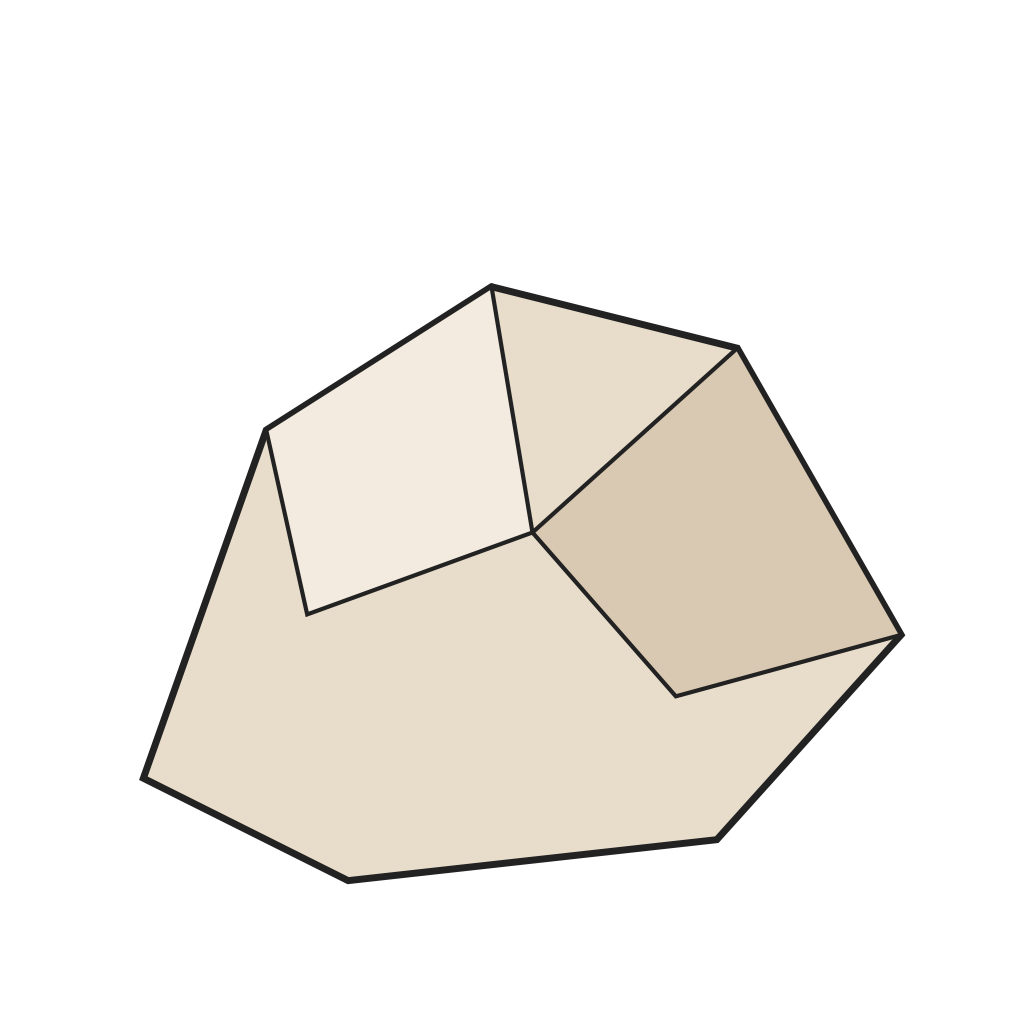 Dólómít (magnesíukalksteinn)1 lining and crushed dolomite
 Magnesítkubbar1 hearth, if magnesite
Nauðsynleg verkfæri:
 Ljósbogasuðuvél
 Múrskeið
 Óþekkt mál
2
2
Make the removable roof
Make the removable roof
Make the roof of silica brick, covered with steel plates and given eyes so it can be lifted off. Between the two electrode holes use bronze plates instead of steel, because steel there would raise the inductance of the AC circuit. Fit water jackets round each electrode hole for a close fit, so less heat escapes and the electrodes do not burn in the air. Ours: copper tube for the water jackets. Silica brick has no head here.
Efni fyrir þetta skref:
 Óþekktur efniviður1 silica brickPlata úr mjúku stáli1 roof plates
 Bronsplata1 plates between electrodes
 Koparrör1 water jackets
Nauðsynleg verkfæri:
Ljósbogasuðuvél Súlubor
 Vatn
3
3
Hang the electrodes
Hang the electrodes
Use two vertical carbon electrodes, square in section. Carry each in a holder on an arm supported by the furnace itself, so its height does not change when the furnace tilts: four contact pieces round the electrode, drawn tight by a steel strap and a screw in the arm, with the cable bolted to them. Raise and lower each electrode separately, by a regulator controlled by the voltage between it and the metal. Not given: electrode size, the regulator's build.
Efni fyrir þetta skref:
 Kolarafskaut2 electrodes
 Óþekktur málmur1 holders, arms, contact pieces
Nauðsynleg verkfæri:
Súlubor4
4
Melt and refine a charge
Melt and refine a charge
Charge steel scrap with some iron ore and lime. Keep each electrode a little above the slag, leaving room for its arc. Regulate the current by hand while the scrap melts, then switch to automatic; full power only after about an hour. Pour off the slag and make a second, then a third, with lime and a little sand and fluorspar, before the final additions. At La Praz this took about 350 kW at 110 V: 5 hours for 1.25 tons of low-carbon steel, 8 hours for 2.33 tons of high-carbon steel. Not given: the electric supply.
Nauðsynleg verkfæri:
VatnEfni
8- 1 roof platesStaðgengill
- 1 lining and crushed dolomiteStaðgengill
- 1 hearth, if magnesiteStaðgengill
- 1 silica brickStaðgengill
- 1 plates between electrodesStaðgengill
- 1 water jacketsStaðgengill
- 2 electrodesStaðgengill
- 1 holders, arms, contact piecesStaðgengill
Efni úr tengdum teikningum
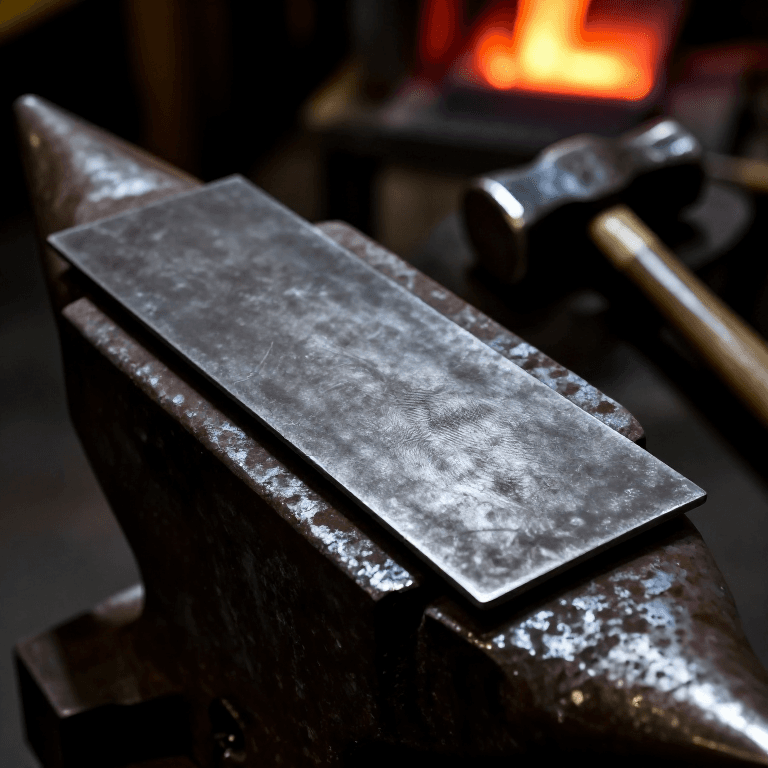

Þessi teikning býr til
CC0 opinbert ríki
Þessi teikning er gefin út undir CC0. Þér er frjálst að afrita, breyta, dreifa og nota þetta verk í hvaða tilgangi sem er, án þess að biðja um leyfi.
Studdu smiðinn með því að kaupa vörur í gegnum teikningu hans þar sem hann fær þóknun smiða sem seljendur ákvarða, eða búðu til nýja endurskoðun á þessari teikningu og tengdu hana sem tengingu í þinni eigin teikningu til að deila tekjum.