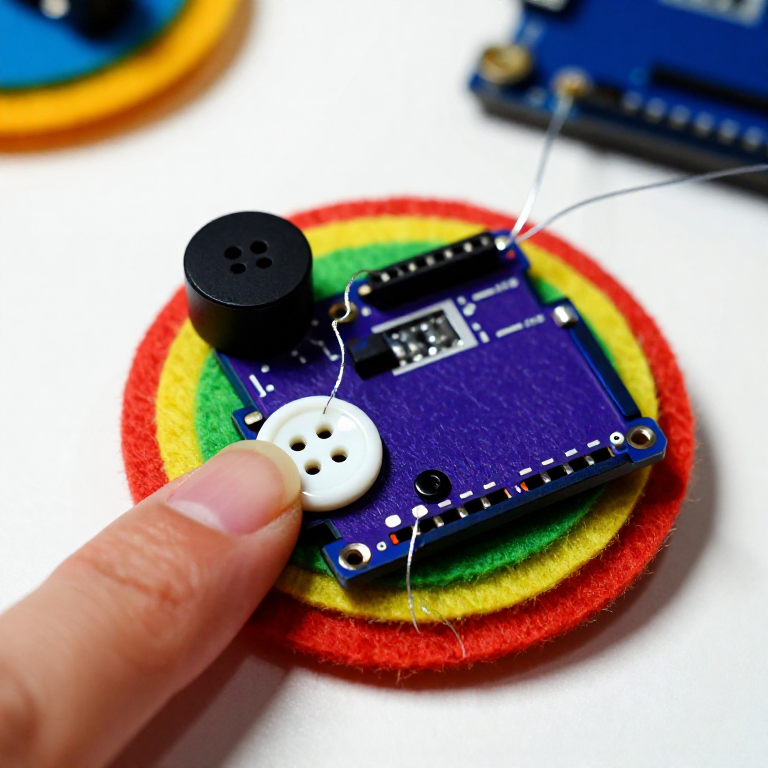


Making a LilyPad Musical Patch
Sew a patch that plays a tune. A LilyPad buzzer and a button let the microcontroller sing a short melody whenever you press it — a musical badge, a fabric greeting card, or a costume piece. This project introduces the buzzer and the Arduino tone() function that turns pin signals into notes.
Leiðbeiningar
Sew the board, buzzer and button
Sew the board, buzzer and button
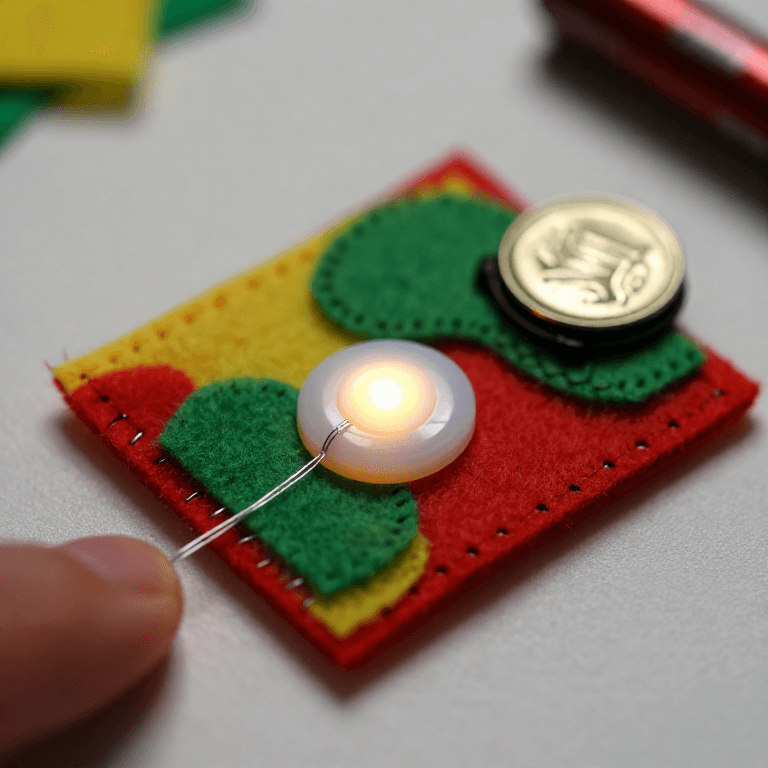
Sew a LilyPad Arduino, a LilyPad buzzer and a LilyPad button onto felt. Wire it: the buzzer's + tab to pin 9 and its - tab to -; the button's tabs to analog pin A2 and to -. Keep the lines from crossing.
Efni fyrir þetta skref:
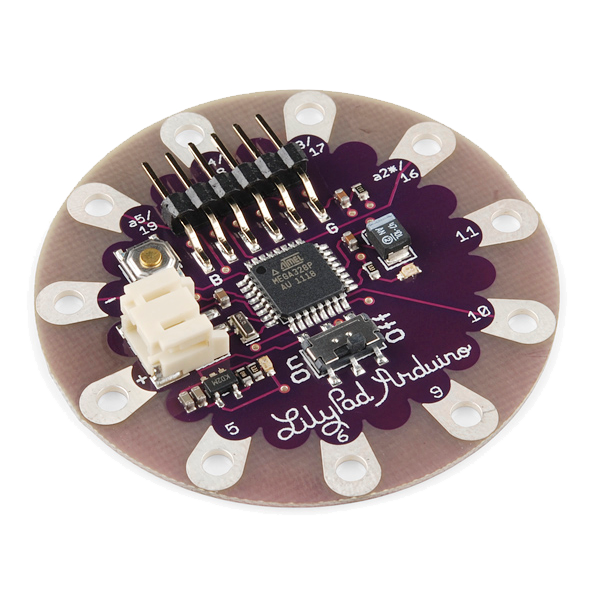 LilyPad Arduino Simple Board1 stykki
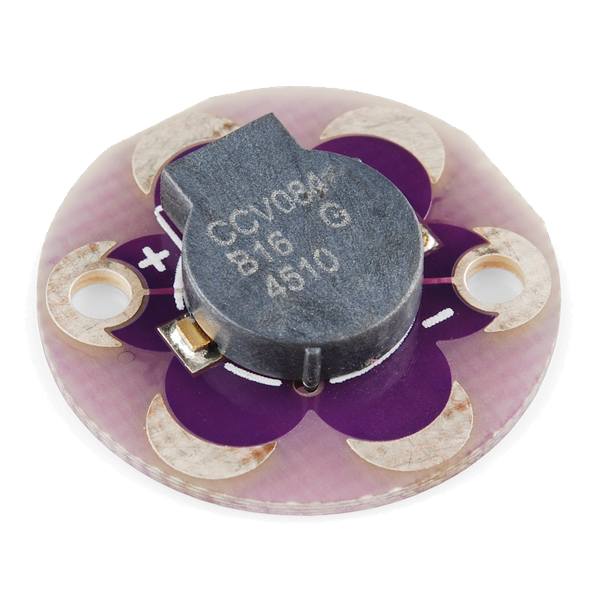 LilyPad Buzzer1 stykki
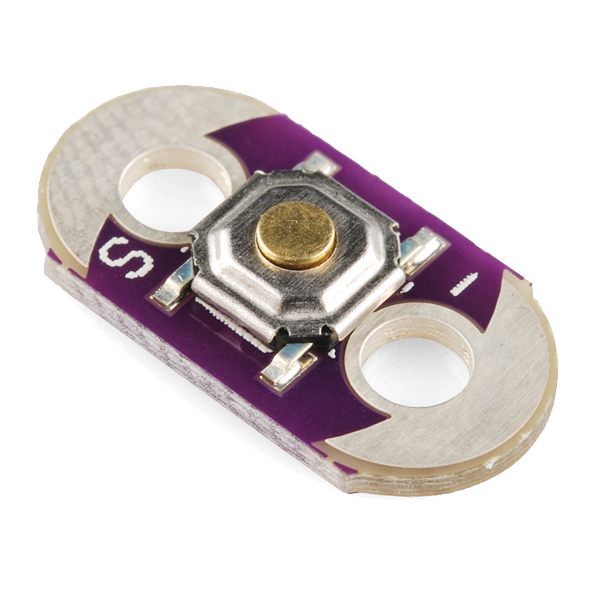 LilyPad Button Board1 stykki
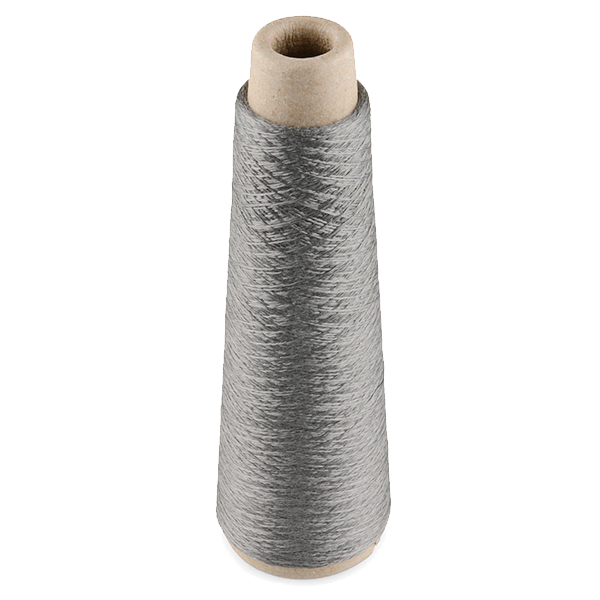 Conductive Thread - 60g (Stainless Steel)1 spóla
 Ullarþófaplata1 plata
Nauðsynleg verkfæri:
 Handsaumsnálar
Connect the programmer
Connect the programmer
Plug the LilyPad FTDI onto the programming header and connect the USB cable. Open the Arduino IDE and select the LilyPad Arduino board and its serial port.
Nauðsynleg verkfæri:
 Tölva með Arduino IDE
 LilyPad FTDI Basic Breakout - 5V
 USB-B-snúra
Upload the melody sketch
Upload the melody sketch
Paste this sketch and upload. Pressing the button plays a short rising scale on the buzzer.
Press to play, then compose
Press to play, then compose
Press the button — you should hear the five notes. Change the tune by editing the melody[] frequencies (higher number = higher note) and the durations[] in milliseconds, then re-upload. Add more notes to both arrays to make a longer song.
Go wireless and wear it
Go wireless and wear it
Unplug the FTDI, sew a LilyPad coin-cell holder to the board (+ to +, - to -), drop in a CR2032 and switch on. Sew the felt onto a badge or card — press it to play your tune anywhere.
Efni fyrir þetta skref:
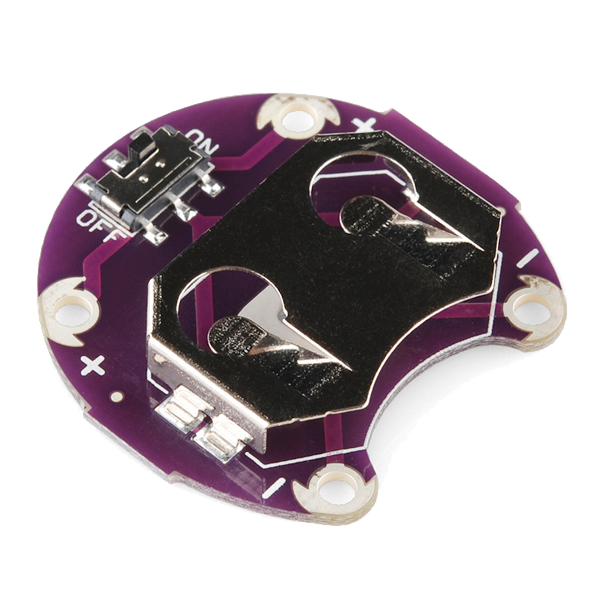 LilyPad Coin Cell Battery Holder - w/Switch - 20mm1 stykki
 Hnapparafhlaða CR20321 stykki
Efni
7- LilyPad Arduino Simple Board10% þóknun1 stykki$19.60
- LilyPad Buzzer10% þóknun1 stykki$7.62
- LilyPad Button Board10% þóknun1 stykki$2.23
- 1 spóla$40.13
- 1 plataStaðgengill
- 1 stykki$5.05
- 1 stykkiStaðgengill
Nauðsynleg verkfæri
4- Staðgengill
- Staðgengill
- LilyPad FTDI Basic Breakout - 5V10% þóknun$14.38
- USB-B-snúra10% þóknunMagento Legacy Storeships internationallyStaðgengill
Tengd Blueprint
Þessi blueprint deila þekkingu — tækni, efni eða meginreglur

CC0 opinbert ríki
Þessi teikning er gefin út undir CC0. Þér er frjálst að afrita, breyta, dreifa og nota þetta verk í hvaða tilgangi sem er, án þess að biðja um leyfi.
Studdu smiðinn með því að kaupa vörur í gegnum teikningu hans þar sem hann fær þóknun smiða sem seljendur ákvarða, eða búðu til nýja endurskoðun á þessari teikningu og tengdu hana sem tengingu í þinni eigin teikningu til að deila tekjum.