
LIST
FEGURÐ OG VELLÍÐAN
HANDVERK
MENNING OG SAGA
SKEMMTUN
UMHVERFI
MATUR OG DRYKKUR
ÖFUGVERKFRÆÐI
VÍSINDI
ÍÞRÓTTIR
TÆKNI
KLÆÐANLEG TÆKNI
Malt Whisky: Malt and Barley Meal Mashed at 150 F, Fermented 8 to 12 Days and Distilled (Byrn, 1868)
Alchometer

Búin til af

Alchometer

18. nóvember 2026GB
7
0
0
0
0

Malt Whisky: Malt and Barley Meal Mashed at 150 F, Fermented 8 to 12 Days and Distilled (Byrn, 1868)

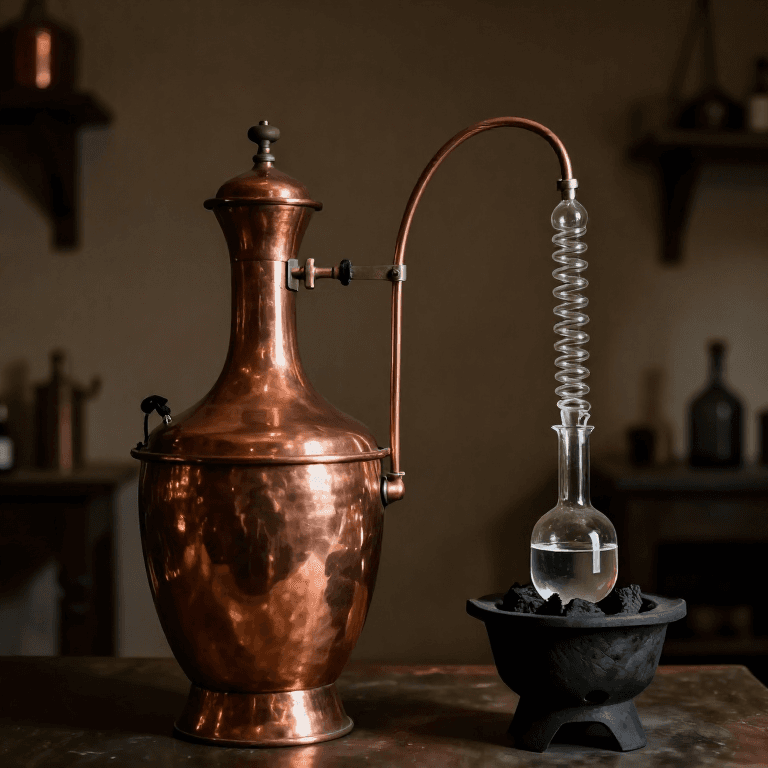
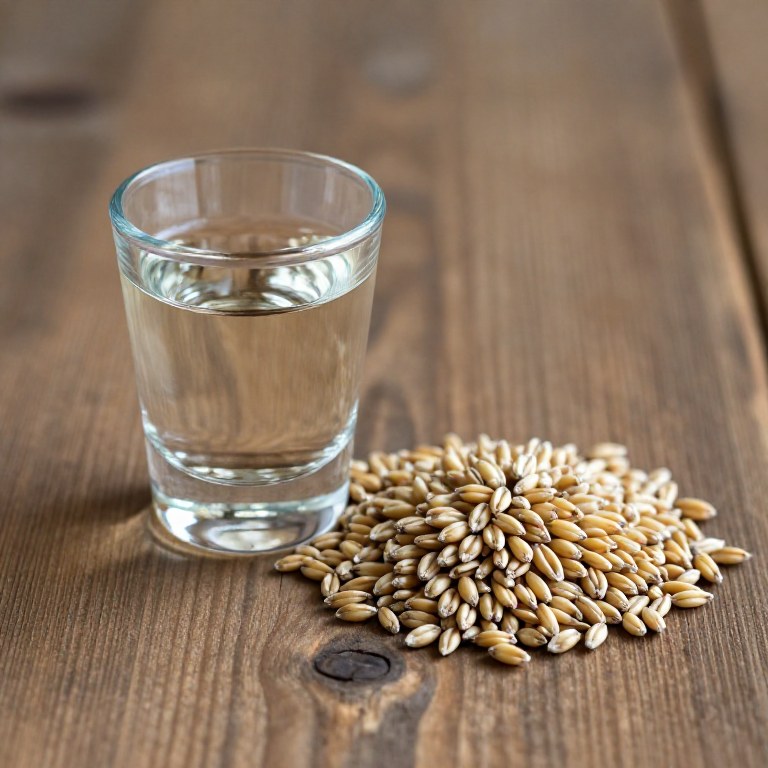
Malt whisky as M. La Fayette Byrn gives it in The Complete Practical Distiller (1868): one part bruised malt to four to nine of barley meal, with oats, mashed at 150 F, the wort drawn off and a second hotter water run through, cooled quickly to 65-70 F, fermented eight to twelve days with yeast added over three days, then distilled and doubled. Distilling spirits without a licence is illegal in many countries: check your law first.
Lengra kominn
About 3 weeks

Leiðbeiningar

1

Read Byrn, and the law

"In this country the term distillation is often applied to the whole process of converting malt or other saccharine matter into spirits or alcohol." (p. 96.) Ours: distilling spirits without a licence is illegal in many countries, Norway and the United States among them. Check your law first.
2

The still

A pot still with a worm in a tub of cold water.
3

His measures in metric

Hleð Jupyter-vinnubók…
4

Bruise and grind

Bruise 1 part of malt and grind 4 to 9 parts of barley to meal. Add oats in proportion to the raw grain.

Efni fyrir þetta skref:

Ljóst maltLjóst malt1 as required
ByggkornByggkorn1 as required
HafrakornHafrakorn1 as required

Nauðsynleg verkfæri:

KornmyllaKornmylla
5

Mash at 150 F

Infuse the meal with 12 to 13 gallons of water at 150 F (66 C) per bushel. Stir hard to break the lumps, for two hours or more, keeping the heat up with 7 or 8 gallons more of water just under boiling.

Efni fyrir þetta skref:

VatnVatn1 as required

Nauðsynleg verkfæri:

TrébaliTrébali
TréskeiðTréskeið
EldhúshitamælirEldhúshitamælir
Stór potturStór pottur
6

Settle and draw off

Let it settle two hours, then run off the wort from the top, about one-third of the water used.

Nauðsynleg verkfæri:

TrébaliTrébali
MælikannaMælikanna
7

Second water

Add about 8 gallons more water a little under 200 F (93 C), stir half an hour, let it settle an hour and a half, and draw it off.

Efni fyrir þetta skref:

VatnVatn1 as required

Nauðsynleg verkfæri:

Stór potturStór pottur
TréskeiðTréskeið
EldhúshitamælirEldhúshitamælir
8

Cool fast to 65-70 F

Cool the worts as fast as possible to 65-70 F (18-21 C), in shallow troughs 2 or 3 inches deep or through a pipe in cold water, "to prevent acetification".

Nauðsynleg verkfæri:

TrébaliTrébali
EldhúshitamælirEldhúshitamælir
9

Yeast over three days

Run the wort into the fermenting vessel. Add yeast in nearly equal portions over three days, about 1 gallon in all for every 2 bushels of meal.

Efni fyrir þetta skref:

BrugggerBruggger1 as required

Nauðsynleg verkfæri:

TrétunnaTrétunna
10

Ferment 8 to 12 days

The heat rises to its highest, 80 F (27 C), in three or four days. Fermentation ends in eight to twelve days; close the vessel for the last half.

Nauðsynleg verkfæri:

TrétunnaTrétunna
EldhúshitamælirEldhúshitamælir
11

Charge and lute the still

Charge the still with the fermented wash and put in a piece of soap to keep it from frothing. Lute the joints of body and head with a paste of half whiting and half rye meal. Keep a piece of paste in reserve.

Efni fyrir þetta skref:

Kalsíumkarbónat (kalkhvíta)Kalsíumkarbónat (kalkhvíta)1 as required

RúgmjölRúgmjöl1 as required
VatnVatn1 as required
SápustykkiSápustykki1 stykki

Nauðsynleg verkfæri:
EimingartækiEimingartæki
12

Raise the fire by degrees

Start a moderate fire and increase it by degrees, feeling the body of the still with your hand. When the still-head grows hot, damp the fire. Keep candles and flames away from the spirit; have a wet woollen blanket ready.

Nauðsynleg verkfæri:

EimingartækiEimingartæki
Ofið ullarteppiOfið ullarteppi
13

Set aside the first runnings

Ours, not Byrn's: collect the first small portion that runs from the worm separately and do not drink it; the first runnings of a fruit spirit can carry methanol.

Nauðsynleg verkfæri:

MælikannaMælikanna
14

Run the low wines

Distil off the low wines. Byrn: "an hydrometer is used to ascertain its progressive diminution of strength; and when it acquires a certain weakness the process is stopped"; or, his general test, as long as a little thrown on the hot still-head will take fire.

Nauðsynleg verkfæri:

EimingartækiEimingartæki
KertiKerti
TrétunnaTrétunna
FlotvogFlotvog
15

Double the low wines

Keep the low wines of about three distillations; they fill the still for the doubling, the second extraction. Distil them again the same way.

Nauðsynleg verkfæri:

EimingartækiEimingartæki
16

Cut at the bead

Keep trying the spirit in a glass phial. When the bead falls at once and does not stay on the surface, change the receiver: what follows is feints.

Nauðsynleg verkfæri:

Glerhettuglas (lítið, fyrir sýni)Glerhettuglas (lítið, fyrir sýni)
MælikannaMælikanna
17

Collect the feints, stop the fire

Go on collecting the feints as long as they burn on the still-head. When they no longer burn, put out the fire and pour the feints into a cask of their own.

Nauðsynleg verkfæri:

TrétunnaTrétunna
KertiKerti
18

Bring to proof

Lower the spirit with water to proof by the hydrometer.

Efni fyrir þetta skref:

VatnVatn1 as required

Nauðsynleg verkfæri:

FlotvogFlotvog
MælikannaMælikanna
19

Redistil the feints

When you have enough feints, charge the still with them almost to the top, add 4 lb (1.8 kg) of salt, and draw off as long as the spirit is strong enough.

Efni fyrir þetta skref:

SaltSalt1.8 kg

Nauðsynleg verkfæri:

EimingartækiEimingartæki
20

Keep it in glass

Byrn, on brandy: "When brandy is kept in vessels the pores of which will not admit of any transmission of the liquor, (as glass, for instance,) the brandy will improve." (p. 95.)

Efni fyrir þetta skref:

Glerflöskur með tappaGlerflöskur með tappa1 stykki

Nauðsynleg verkfæri:

MælikannaMælikanna
21

Troubleshooting

Malt whisky problems and fixes.

Flow

Loading...
22

History and honest limits

**M. La Fayette Byrn**, *The Complete Practical Distiller* (Philadelphia, 1868), pp. 96-97. He notes that "Indian corn, in this process, can be used instead of the barley, and the raw oats can be omitted", and that "quick distillation does not injure the flavour of spirits". His doubling and cut are his general pot-still rules (pp. 12-15, 142, 163). He gives no proof figures. Ours: the metric conversions, the law note and setting aside the first runnings.

Efni

10

Nauðsynleg verkfæri

12

Þessi teikning býr til

CC0 opinbert ríki

Þessi teikning er gefin út undir CC0. Þér er frjálst að afrita, breyta, dreifa og nota þetta verk í hvaða tilgangi sem er, án þess að biðja um leyfi.

Studdu smiðinn með því að kaupa vörur í gegnum teikningu hans þar sem hann fær þóknun smiða sem seljendur ákvarða, eða búðu til nýja endurskoðun á þessari teikningu og tengdu hana sem tengingu í þinni eigin teikningu til að deila tekjum.

Umræða

(0)

Skrá inn til að taka þátt í umræðunni

Hleður athugasemdum...