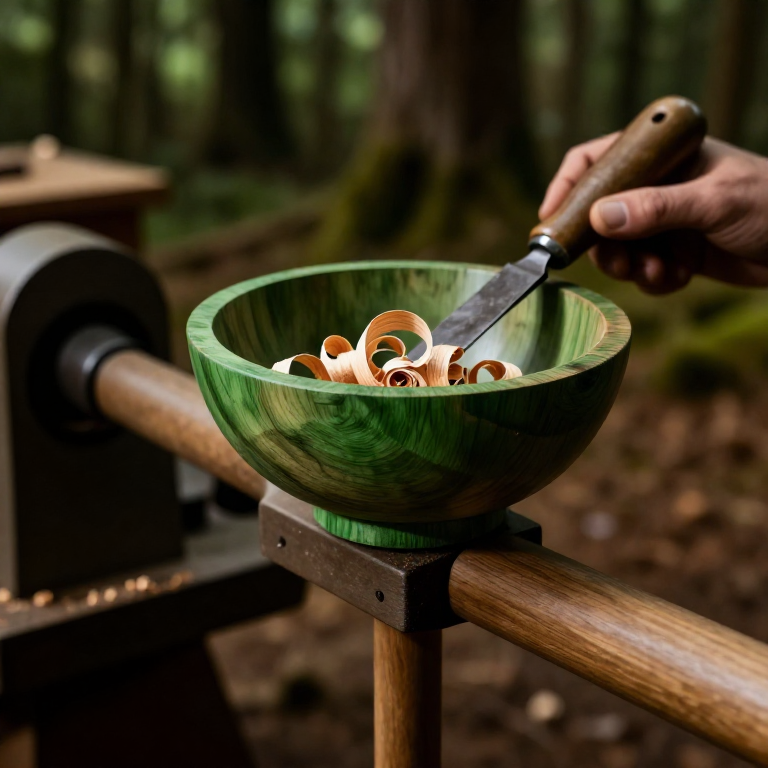


Turning a Bowl on a Pole Lathe — Foot-Powered Green Wood Turning
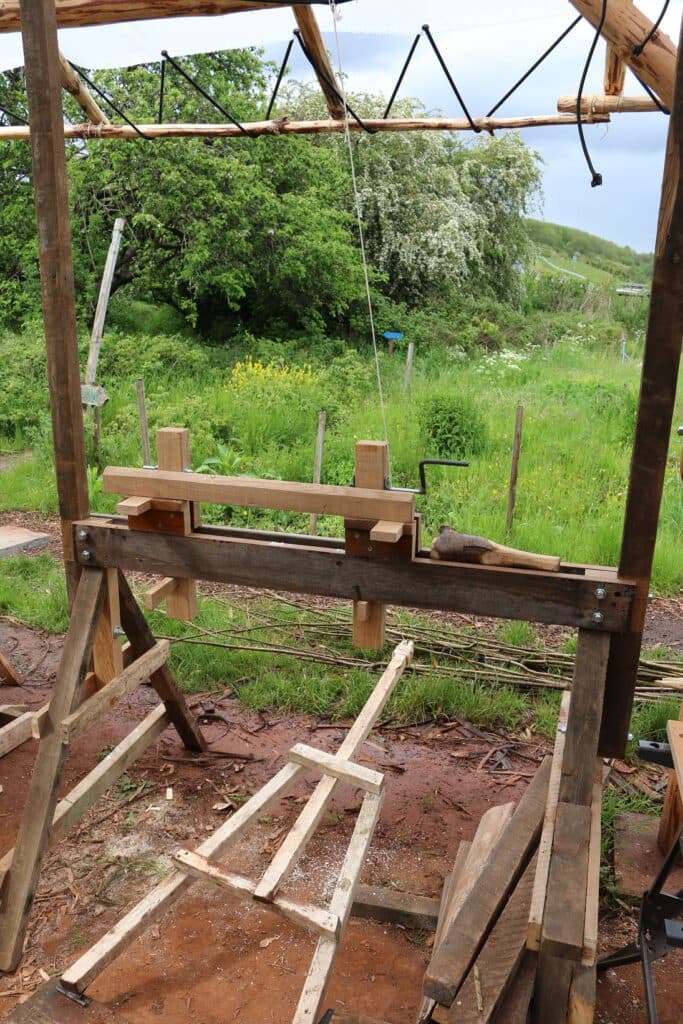
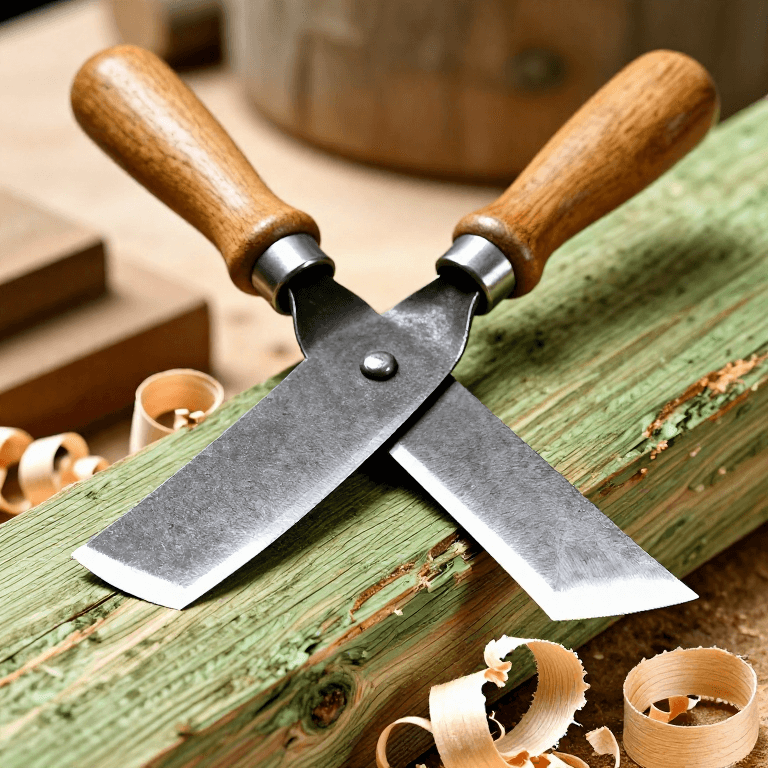
The pole lathe is the oldest form of powered turning — a foot treadle spins the workpiece against a cutting tool, and the spring of a bent pole returns the treadle for the next stroke. It produces work identical in quality to a modern lathe but operates on human power alone. Bowl turning on a pole lathe was a specialist trade in medieval Europe — the bodger (itinerant chair-maker) and the bowl turner worked in the forest where the timber grew, using nothing but a pole lathe, a drawknife, and a set of turning gouges.
Pole lathe turning is intermittent — the workpiece spins toward the tool on the down-stroke (cutting) and reverses on the return stroke (no cutting). This alternating motion means the turner only cuts on half the cycle, but the rhythm becomes natural within minutes. The key advantage is control: the speed is proportional to the foot pressure, so the turner can slow down for delicate finishing cuts and speed up for roughing.
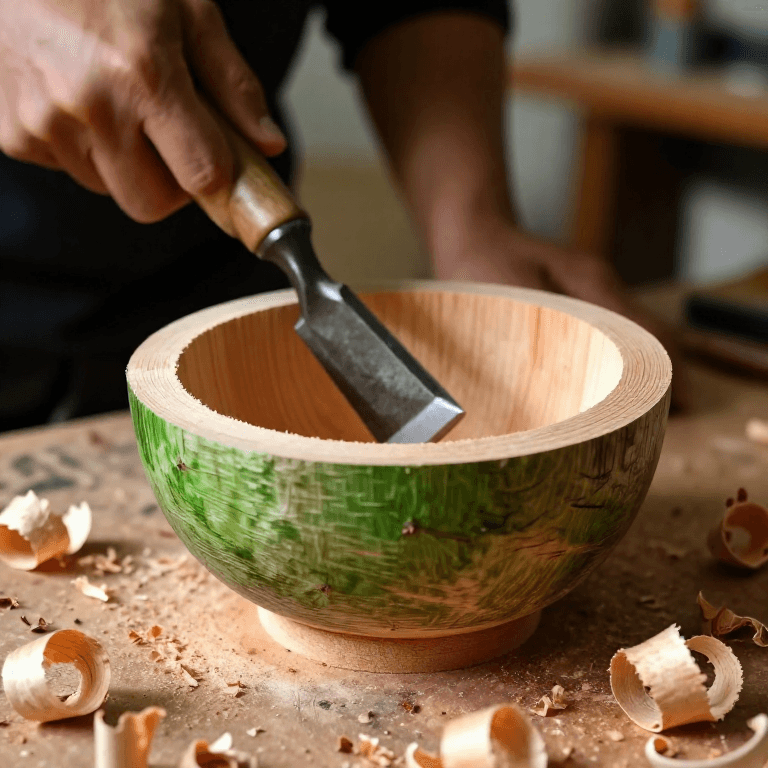
Bowls are turned from a disc-shaped blank cut across the grain of a green log. Green wood turns easily, producing long ribbons of shaving. The finished bowl is removed from the lathe while still damp and left to dry slowly — it will distort slightly into an oval as the grain shrinks unevenly, a characteristic signature of pole-lathe work.
Leiðbeiningar
Prepare a bowl blank from a green log
Prepare a bowl blank from a green log
Efni fyrir þetta skref:
 Grænt bolstykki
Mount the blank on the pole lathe
Mount the blank on the pole lathe
Nauðsynleg verkfæri:
 Stangarrennibekkur
Rough-turn the outside
Rough-turn the outside
Nauðsynleg verkfæri:
 Trésporjárn
 Rennsmíðajárn (hálfrúnnt)
Hollow the inside
Hollow the inside
Finish-turn and smooth
Finish-turn and smooth
Part off and dry the bowl
Part off and dry the bowl
Nauðsynleg verkfæri:
 Fráskurðarjárn
Efni
1- 1 stykkiStaðgengill
Nauðsynleg verkfæri
4- Staðgengill
- Staðgengill
- Staðgengill
- Staðgengill
Efni úr tengdum teikningum
Þessi teikning býr til

Tengd Blueprint
Þessi blueprint deila þekkingu — tækni, efni eða meginreglur
CC0 opinbert ríki
Þessi teikning er gefin út undir CC0. Þér er frjálst að afrita, breyta, dreifa og nota þetta verk í hvaða tilgangi sem er, án þess að biðja um leyfi.
Studdu smiðinn með því að kaupa vörur í gegnum teikningu hans þar sem hann fær þóknun smiða sem seljendur ákvarða, eða búðu til nýja endurskoðun á þessari teikningu og tengdu hana sem tengingu í þinni eigin teikningu til að deila tekjum.