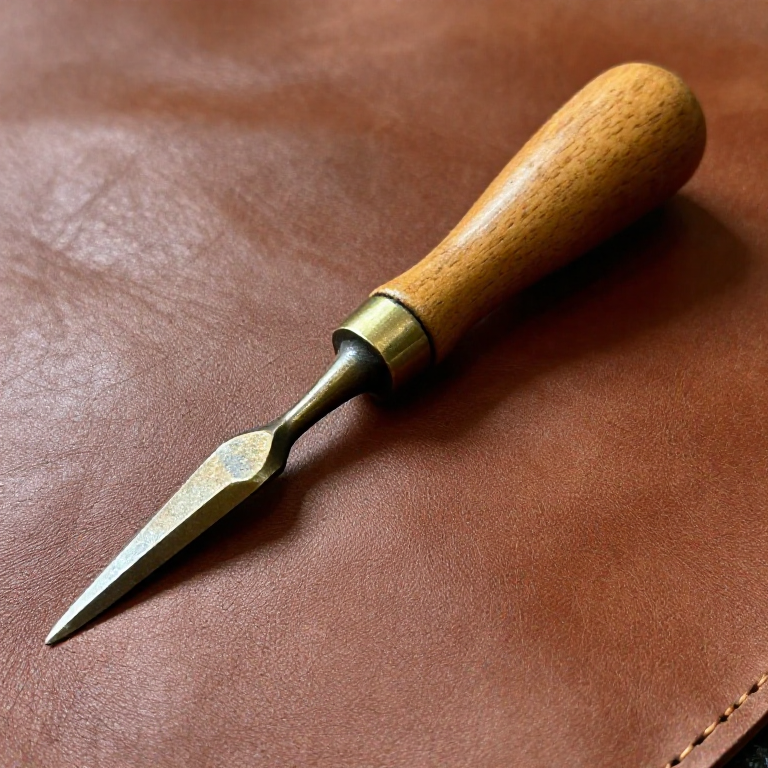


Making a Bronze Awl — The Leatherworker's Piercing Tool
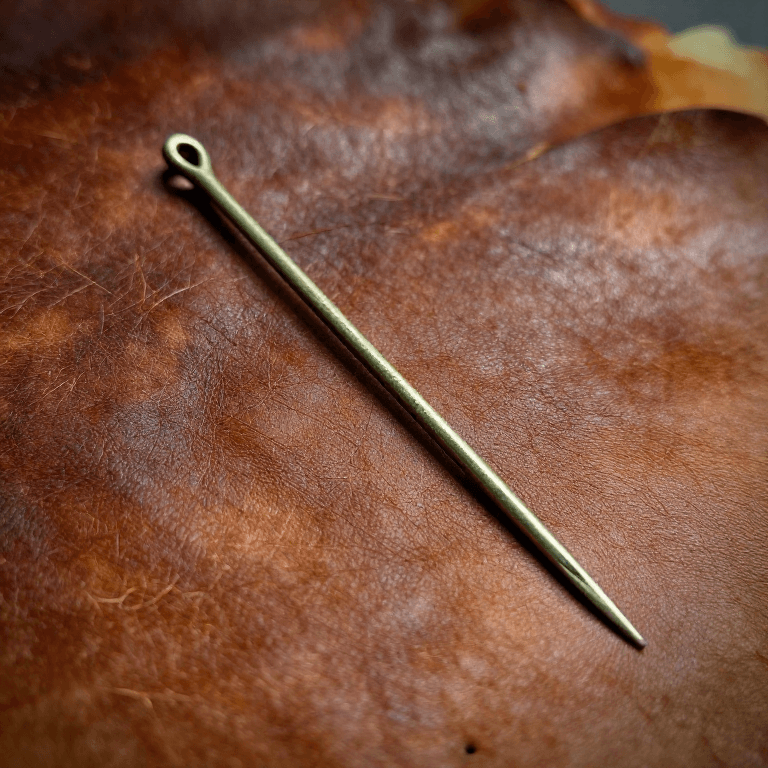
The awl is one of the oldest and simplest metal tools — a pointed bronze rod set into a handle, used to punch holes in leather, wood, and bark. Bronze awls appeared alongside the earliest copper tools and remained essential through the entire Bronze Age because no other tool could make a clean, round hole in thick leather for stitching.
An awl is cast as a simple rod in an open stone groove, then one end is hammered to a sharp conical point while the other end is left blunt and set into a wooden or antler handle. The simplicity of the form belies its importance: without the awl, there are no leather bags, no stitched hide clothing, no bound book covers, and no harness for draught animals.
Istruzioni
Cast a bronze rod
Cast a bronze rod
Materiali per questo passaggio:
 Lamiera di rame36 g
Hammer the point
Hammer the point
Strumenti necessari:
 Percussore di pietra
 Lastra di pietra piatta
Shape the tang
Shape the tang
Sharpen and polish the point
Sharpen and polish the point
Materiali per questo passaggio:
 Sabbia fine50 g
Strumenti necessari:
 Pietra per affilare
Make the handle
Make the handle
Set the awl into the handle
Set the awl into the handle
Materiali
2- 36 gSegnaposto
- 50 gSegnaposto
Strumenti richiesti
3- Segnaposto
- Segnaposto
- Segnaposto
Materiali dei progetti collegati
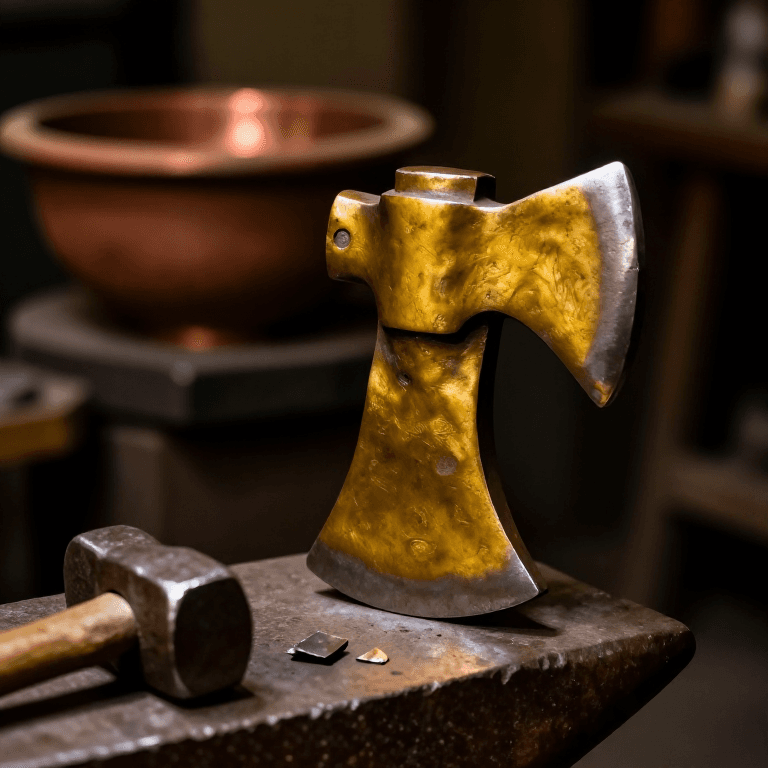
Questo progetto realizza
Blueprint correlati
Questi blueprint condividono conoscenze — tecniche, materiali o principi
CC0 Pubblico dominio
Questo progetto è rilasciato sotto CC0. Sei libero di copiare, modificare, distribuire e utilizzare quest'opera per qualsiasi scopo, senza chiedere permesso.
Supporta il Maker acquistando prodotti tramite il suo progetto dove guadagna una Commissione Maker stabilita dai venditori, oppure crea una nuova iterazione di questo progetto e includilo come collegamento nel tuo progetto per condividere i ricavi.