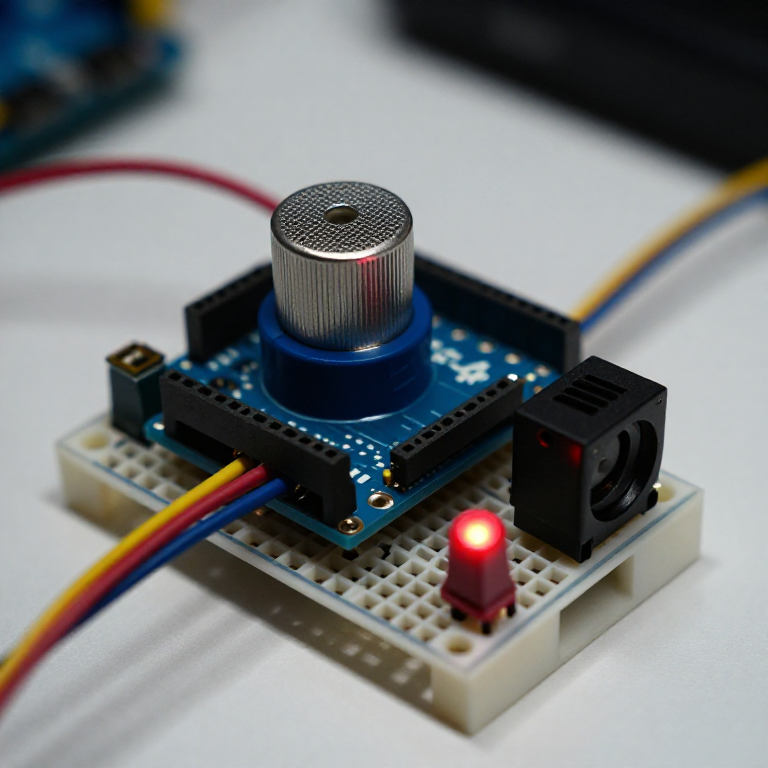


Building a Methane Gas Leak Detector
Build a circuit that sniffs out methane — the main component of natural gas — and alarms when it rises. An MQ-4 sensor's reading climbs when combustible gas is present; the Arduino compares it to clean air and triggers a buzzer and red LED. A great combustible-gas sensing project — with two honest notes: methane is flammable, and this is a demonstration, NOT a certified gas-leak detector.
Istruzioni
Wire the sensor, buzzer and LED
Wire the sensor, buzzer and LED
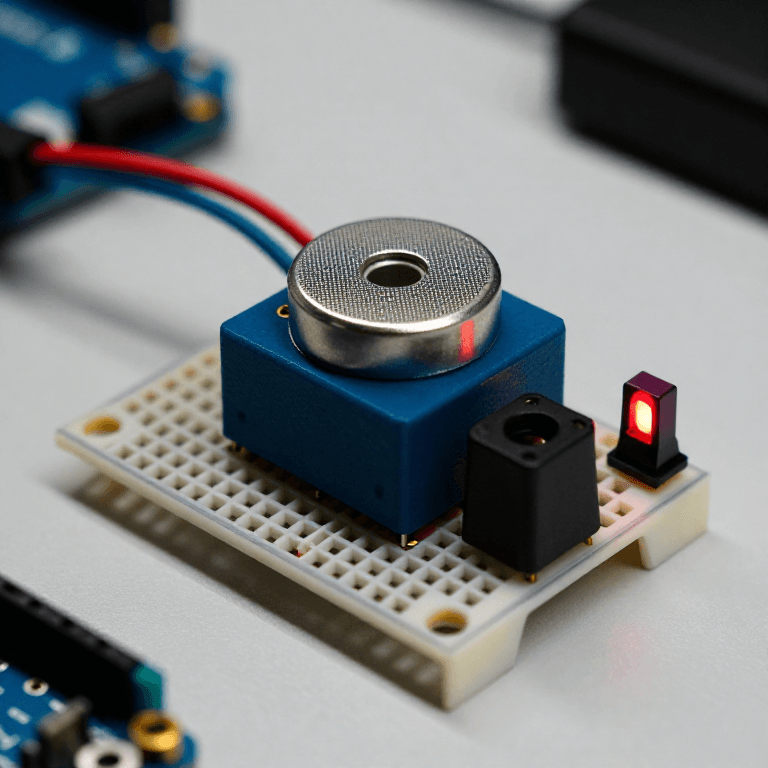
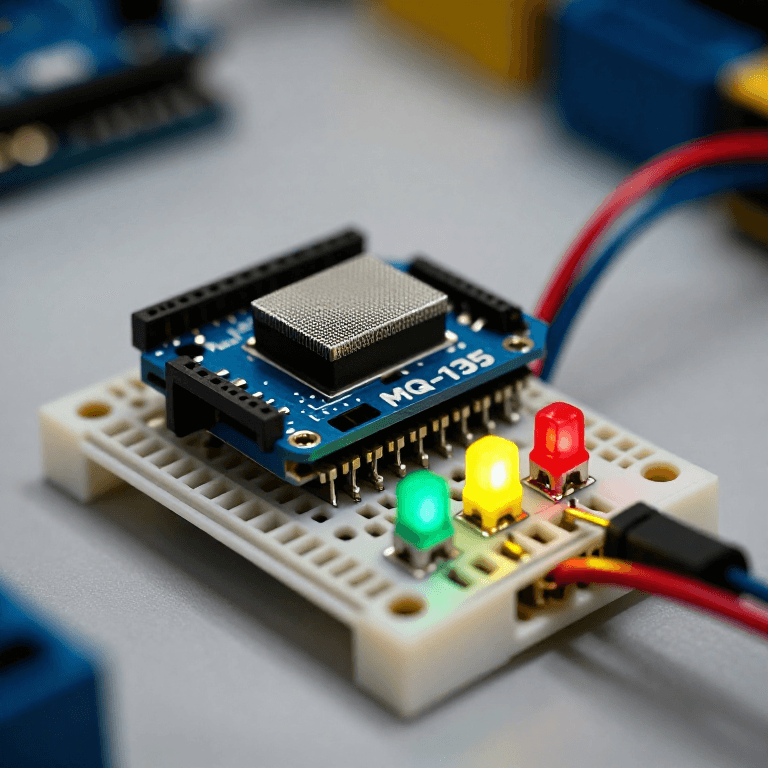
On the breadboard: MQ-4 VCC to Arduino 5V, GND to GND, and its analog output (AOUT) to A0. Active buzzer + to pin 8, - to GND. Red LED anode to pin 7 through a 330 Ω resistor, cathode to GND.
Materiali per questo passaggio:
 Arduino Uno R31 pezzo
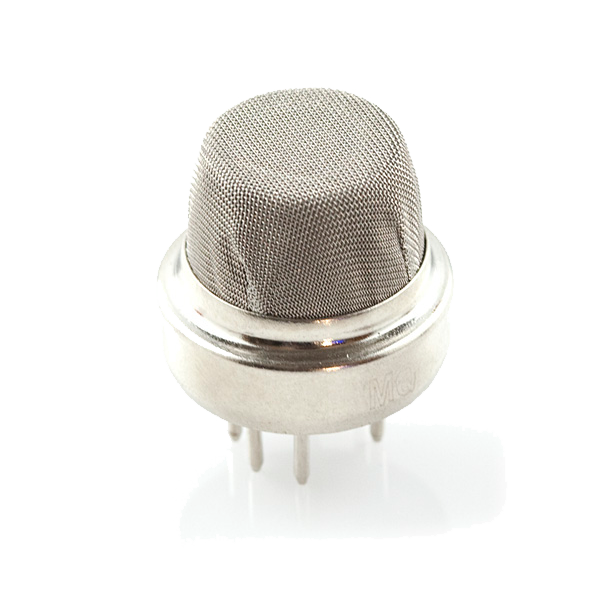 Methane CNG Gas Sensor - MQ-41 pezzo
 Modulo cicalino attivo1 pezzo
 LED da 5 mm1 pezzo
 Resistenza da 330 ohm1 confezione
 Breadboard1 pezzo
 Cavetti ponticello1 confezione
Connect and open the IDE
Connect and open the IDE
Plug the Arduino into your computer with the USB cable, open the Arduino IDE, and select Arduino Uno and its serial port.
Strumenti necessari:
 Computer con l'IDE Arduino
 Cavo USB-B
Upload the detector sketch
Upload the detector sketch
Paste this sketch and upload. It warms the sensor, records a clean-air baseline, then sounds the buzzer and lights the LED whenever the reading rises above that baseline.
Warm up, baseline and test SAFELY
Warm up, baseline and test SAFELY
Power it in fresh air and let the 2-minute warm-up set the baseline (a new MQ-4 also needs a 24–48 h burn-in). Test with only a TINY controlled source in a well-ventilated room — a brief puff of gas from an UNLIT lighter held near the sensor. NEVER test with a real gas leak, a large amount of gas, or anywhere near a flame or spark. Adjust ALARM_MARGIN for sensitivity.
Safety limits
Safety limits
Methane is highly flammable and, in enough concentration, explosive. This circuit is a LEARNING project and at best a supplementary indicator — it is NOT a certified gas-leak detector: the hobby MQ-4 gives a relative reading, not calibrated ppm, drifts, and needs re-baselining. For real protection use a certified natural-gas detector, and if you ever smell gas, do not switch anything on or off — leave and call your gas utility.
Materiali
7- Segnaposto
- Methane CNG Gas Sensor - MQ-410% commissione1 pezzo€4.50
- 1 pezzoSegnaposto
- Segnaposto
- 1 confezioneSegnaposto
- Segnaposto
- Segnaposto
Strumenti richiesti
3- Segnaposto
- 1 vendor sell this, none ship to you yetSegnaposto
- 1 vendor sell this, none ship to you yetSegnaposto
Blueprint correlati
Questi blueprint condividono conoscenze — tecniche, materiali o principi
CC0 Pubblico dominio
Questo progetto è rilasciato sotto CC0. Sei libero di copiare, modificare, distribuire e utilizzare quest'opera per qualsiasi scopo, senza chiedere permesso.
Supporta il Maker acquistando prodotti tramite il suo progetto dove guadagna una Commissione Maker stabilita dai venditori, oppure crea una nuova iterazione di questo progetto e includilo come collegamento nel tuo progetto per condividere i ricavi.