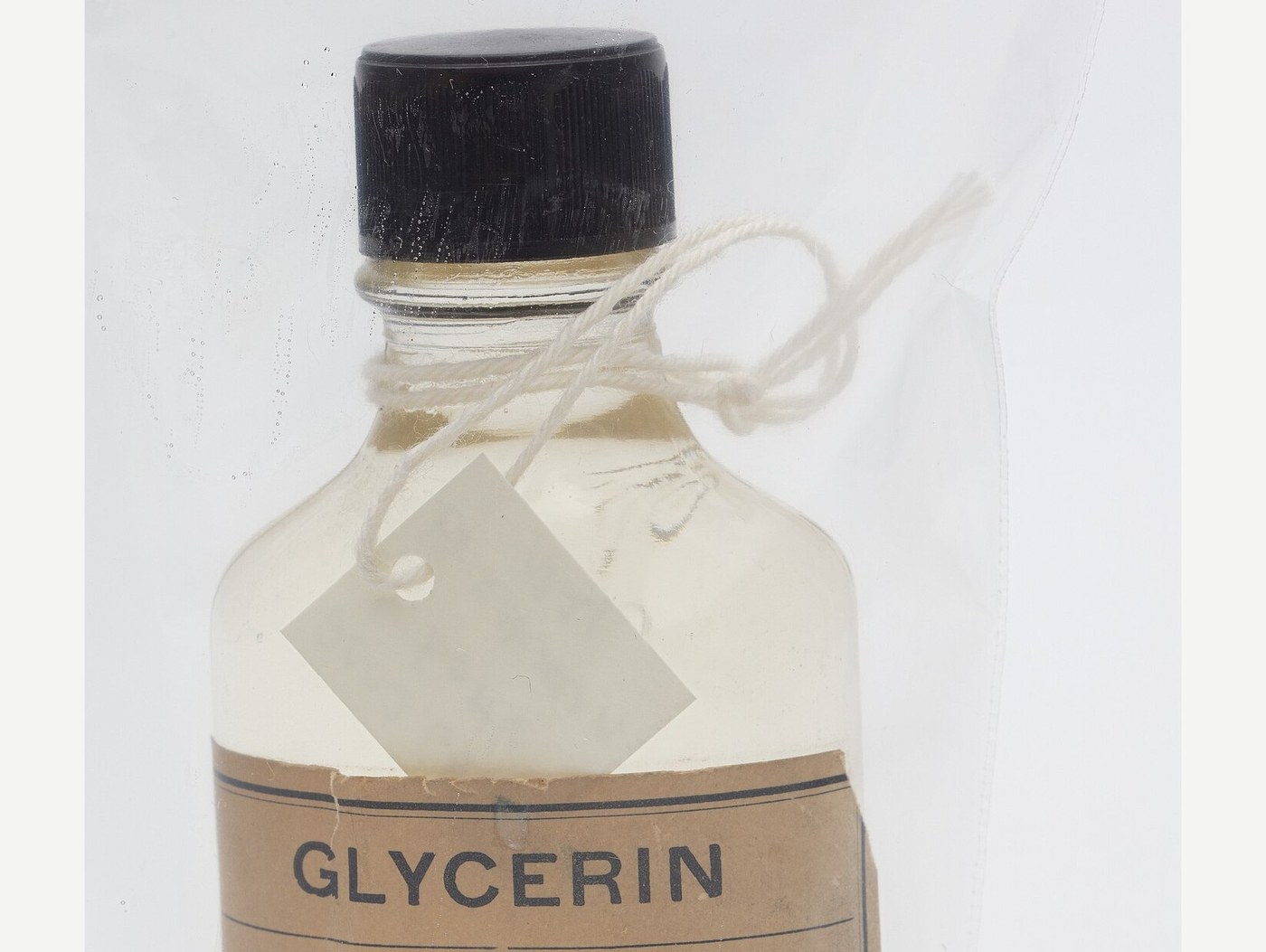


Glycerin from Candle-Works Sweet Water: Cap's Process
Istruzioni
Boil down the sweet water
Boil down the sweet water
Materiali per questo passaggio:
 Acque glicerinose1 as required
 Carbone bituminoso1 as required
Strumenti necessari:
 Caldaia di evaporazione
 Forno in mattoni
Find how much lime it holds
Find how much lime it holds
Strumenti necessari:
 Ossalato di ammonio
 Carta da filtro
 Crogiolo in argilla refrattaria
 Bilancia a bracci
Throw the lime down with sulfuric acid
Throw the lime down with sulfuric acid
Materiali per questo passaggio:
 Acido solforico1 as required
Strumenti necessari:
 Tino
 Occhiali antispruzzo chimico
 Guanti di gomma
Boil it out of contact with air, to 14° Twaddell
Boil it out of contact with air, to 14° Twaddell
Materiali per questo passaggio:
Carbone bituminoso1 as requiredStrumenti necessari:
Tino Pala di legnoForno in mattoni
 Densimetro
Neutralise any excess acid with chalk
Neutralise any excess acid with chalk
Materiali per questo passaggio:
 Carbonato di calcio - calcare frantumato1 as required
Strumenti necessari:
 Cartina al tornasolePala di legno
Boil on to 37.5° and filter
Boil on to 37.5° and filter
Materiali per questo passaggio:
Carbone bituminoso1 as requiredStrumenti necessari:
TinoPala di legnoForno in mattoniDensimetro Colino
Reduce to 49°, filtering again if needed
Reduce to 49°, filtering again if needed
Materiali per questo passaggio:
Carbone bituminoso1 as requiredStrumenti necessari:
Caldaia di evaporazioneForno in mattoniDensimetroColinoClear it through bone black
Clear it through bone black
Strumenti necessari:
 Nero d'ossaColino
Concentrate to 51° Twaddell
Concentrate to 51° Twaddell
Materiali per questo passaggio:
Carbone bituminoso1 as requiredStrumenti necessari:
Caldaia di evaporazioneForno in mattoniDensimetroCap's readings as specific gravity
Cap's readings as specific gravity
Troubleshooting
Troubleshooting
Flow
History and honest limits
History and honest limits
Materiali
4- 1 as requiredSegnaposto
- 1 as requiredSegnaposto
- 1 as requiredSegnaposto
- 1 as requiredSegnaposto
Strumenti richiesti
14- Segnaposto
- Segnaposto
- Segnaposto
- Segnaposto
- Segnaposto
- Segnaposto
- Segnaposto
- Segnaposto
- Segnaposto
- Segnaposto
- Segnaposto
- Segnaposto
- Segnaposto
- Segnaposto
Questo progetto realizza

Blueprint correlati
Questi blueprint condividono conoscenze — tecniche, materiali o principi
CC0 Pubblico dominio
Questo progetto è rilasciato sotto CC0. Sei libero di copiare, modificare, distribuire e utilizzare quest'opera per qualsiasi scopo, senza chiedere permesso.
Supporta il Maker acquistando prodotti tramite il suo progetto dove guadagna una Commissione Maker stabilita dai venditori, oppure crea una nuova iterazione di questo progetto e includilo come collegamento nel tuo progetto per condividere i ricavi.