ARTE
BELLEZZA E BENESSERE
MESTIERE
CULTURA E STORIA
DIVERTIMENTO
AMBIENTE
CIBO E BEVANDE
INGEGNERIA INVERSA
SCIENZE
SPORT
TECNOLOGIA
INDOSSABILI


Heat-Shrink Tubing
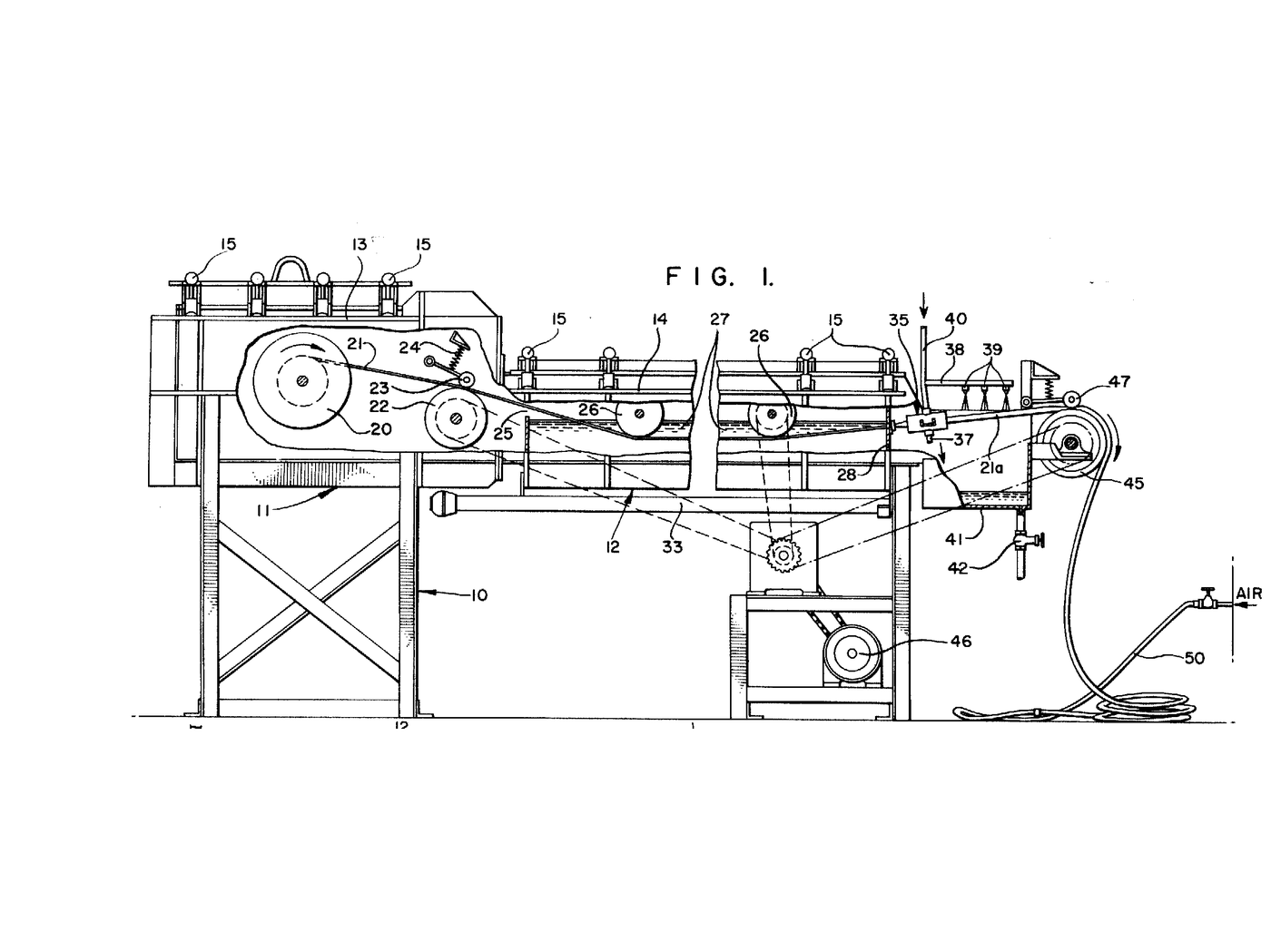
Paul Cook founded Raychem in 1957 to use radiation chemistry: electron beams that cross-link polyethylene chains so the plastic no longer melts, only softens. Such a material has a memory. Stretch it while hot, cool it stretched, and it keeps the new size until heated again - then it shrinks back tight onto whatever is inside.
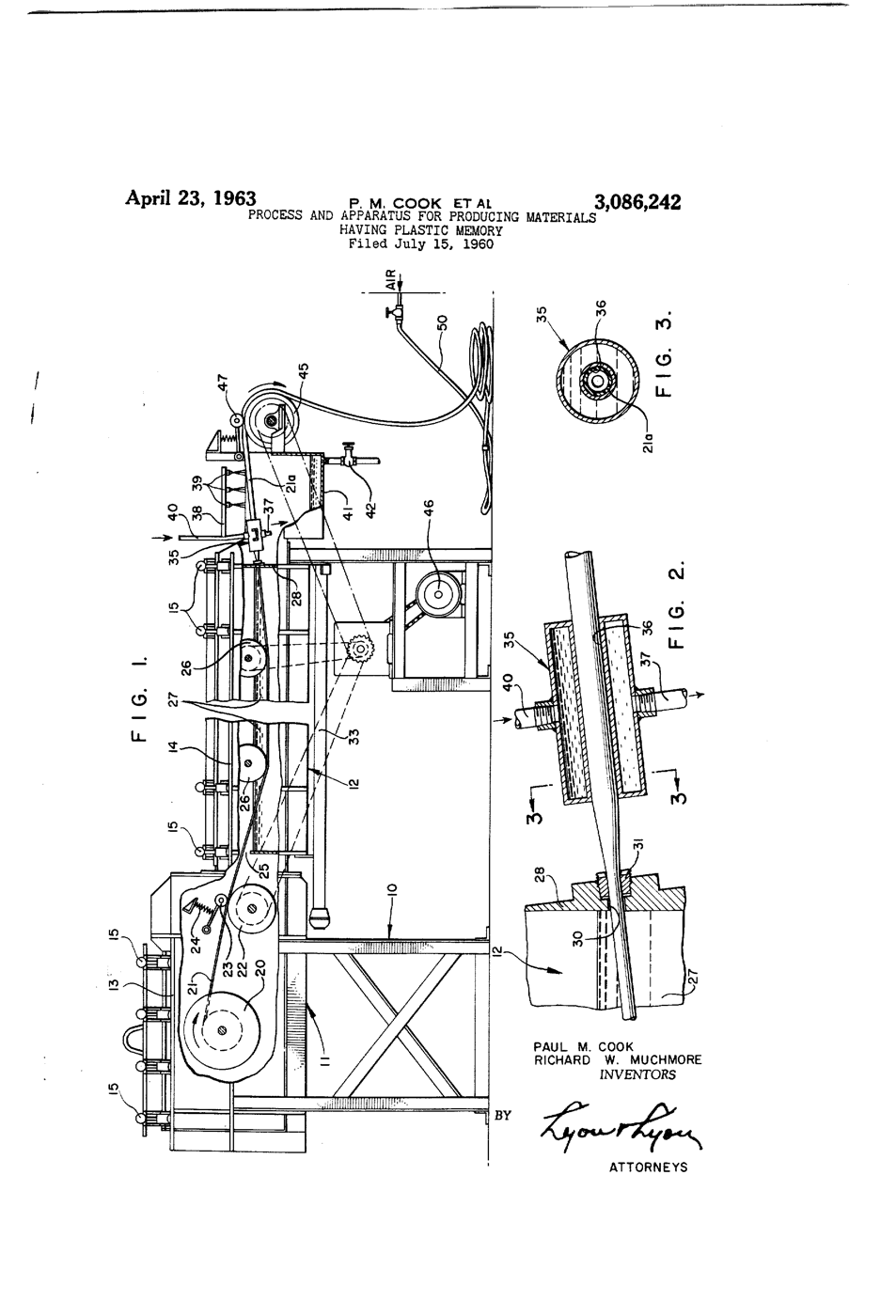
**US 3,086,242**, "Process and apparatus for producing materials having plastic memory", Cook and Muchmore, assigned to Raychem, filed 15. July 1960, granted 23. April 1963: tubing carried through a heated zone in a pressure vessel, expanded as it emerges, and cooled while expanded - "dimensionally heat-unstable tubing".
**You measure the memory and use it**: free-shrink a sample and check where the plastic went, then insulate a crimped wire splice.
Principiante
1 hour
Istruzioni
1
1
Measure as supplied
Measure as supplied
Cut 40 mm of 2:1 heat-shrink. Measure its flattened width, its wall (pinch one wall in the caliper) and its length.
Materiali per questo passaggio:
 Guaina termorestringente1 pezzo
Strumenti necessari:
 Taglierino
 Calibro digitale da 6 pollici
2
2
Shrink it free
Shrink it free
Hold it in the helping hands and heat evenly with the heat gun, keeping the gun moving, until it stops changing. Let it cool; measure inside diameter, wall and length again.
Strumenti necessari:
 Pistola termica
 Terza manoCalibro digitale da 6 pollici
 Occhiali di sicurezza trasparenti
3
3
Crimp the splice
Crimp the splice
Slide 40 mm of heat-shrink onto one wire first. Strip 6 mm from both wire ends, push them into a butt splice and crimp each side. Tug each wire to 20 N on the spring scale - it must not pull out.
Materiali per questo passaggio:
 Filo per cablaggio1 metro
 Giunto a crimpare non isolato1 pezzoGuaina termorestringente1 pezzo
Strumenti necessari:
 Spelafili
 Pinza a crimpare
 Dinamometro (bilancia a molla)
4
4
Shrink it on
Shrink it on
Centre the tube over the splice with 10 mm overlap onto the insulation each side. Heat from the middle outwards so air is pushed out, not trapped.
Strumenti necessari:
Pistola termica5
5
Test the insulation
Test the insulation
Wrap aluminium foil tightly round the shrunk sleeve. Set the multimeter to its highest resistance range and measure between the wire and the foil: it must read open circuit. Then check the wire end to end: near zero ohms.
Materiali per questo passaggio:
 Foglio di alluminio1 foglio
Strumenti necessari:
 Multimetro
6
6
Shrink ratio and conservation
Shrink ratio and conservation
Caricamento del notebook Jupyter…
7
7
History & Context
History & Context
**What the patent specifies:** tubing heated, expanded under pressure as it leaves a vessel, and cooled while expanded, to give material with plastic memory. **Modern build (derived):** commercial 2:1 polyolefin heat-shrink.
Heat-shrink replaced tape on aircraft, military and then all wiring harnesses; the same memory idea gives shrink film and pipe-joint sleeves. Its limits: it must be slid on before the joint is made, overheating chars it, and a thin wall offers little protection from abrasion.
Materiali
4- 2 pezziSegnaposto
- 1 metroSegnaposto
- Segnaposto
- 1 foglioSegnaposto
Strumenti richiesti
9- Segnaposto
- Segnaposto
- 1 vendor sell this, none ship to you yetSegnaposto
- Segnaposto
- Segnaposto
- Segnaposto
- Segnaposto
- Segnaposto
- Segnaposto
Questo progetto realizza
Blueprint correlati
Questi blueprint condividono conoscenze — tecniche, materiali o principi


CC0 Pubblico dominio
Questo progetto è rilasciato sotto CC0. Sei libero di copiare, modificare, distribuire e utilizzare quest'opera per qualsiasi scopo, senza chiedere permesso.
Supporta il Maker acquistando prodotti tramite il suo progetto dove guadagna una Commissione Maker stabilita dai venditori, oppure crea una nuova iterazione di questo progetto e includilo come collegamento nel tuo progetto per condividere i ricavi.