
ARTE
BELLEZZA E BENESSERE
MESTIERE
CULTURA E STORIA
DIVERTIMENTO
AMBIENTE
CIBO E BEVANDE
FUTURO VERDE
INGEGNERIA INVERSA
PROGETTI SCOLASTICI
SCIENZE
SPORT
TECNOLOGIA
INDOSSABILI
Making a Glass Bead on a Mandrel — Lampwork Beadmaking
Forge

Creato da

Forge

26. maggio 2026NO
29
0
0
0
0

Making a Glass Bead on a Mandrel — Lampwork Beadmaking

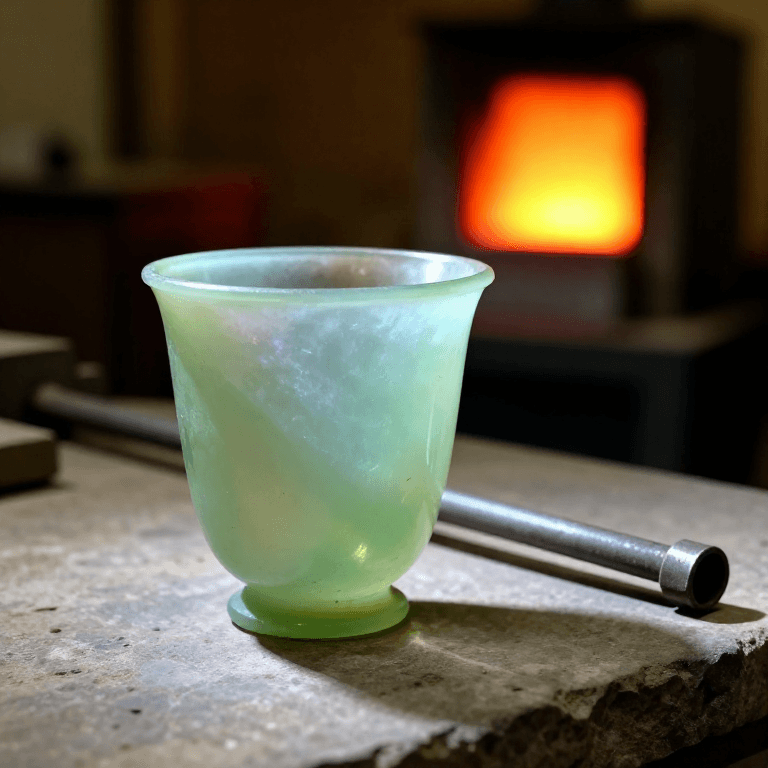
Lampwork is the art of shaping glass in the flame of a torch or oil lamp. A glass rod is heated until it flows, then wound around a steel mandrel coated in bead release to form a bead. By layering colours, pulling trails, and pressing with simple tools, the beadmaker creates intricate patterns in miniature. Glass beadmaking dates to at least 1500 BCE in Mesopotamia and Egypt, and lampwork beads have been trade goods across every continent. This blueprint covers the core technique of winding a single-colour round bead — the foundation for all lampwork.

Principiante
1-2 hours

Istruzioni

1

Set up the torch

Secure a propane or MAPP gas torch to the workbench, angled slightly upward. The flame should be a soft, bushy reducing flame about 10-15 cm long. Work in a well-ventilated area or under a fume hood.

Strumenti necessari:

Propane TorchPropane Torch
2

Prepare the mandrel with bead release

Dip a steel mandrel (a 2-3 mm diameter steel rod) into bead release — a clay-based slurry that prevents the glass from bonding permanently to the steel. Coat about 3 cm of the mandrel tip evenly. Allow to dry completely, then harden in the torch flame briefly.

Materiali per questo passaggio:

Bead ReleaseBead Release50 ml

Strumenti necessari:

Steel MandrelSteel Mandrel
3

Pre-heat the glass rod

Hold a soda-lime glass rod (5-6 mm diameter) at the edge of the flame and slowly introduce it to the heat. Move it gradually closer over 30 seconds. Sudden heating causes thermal shock — the rod will crack and spit shards.

Materiali per questo passaggio:

Glass Rod (soda-lime, coloured)Glass Rod (soda-lime, coloured)1 pezzo
4

Heat the glass to working temperature

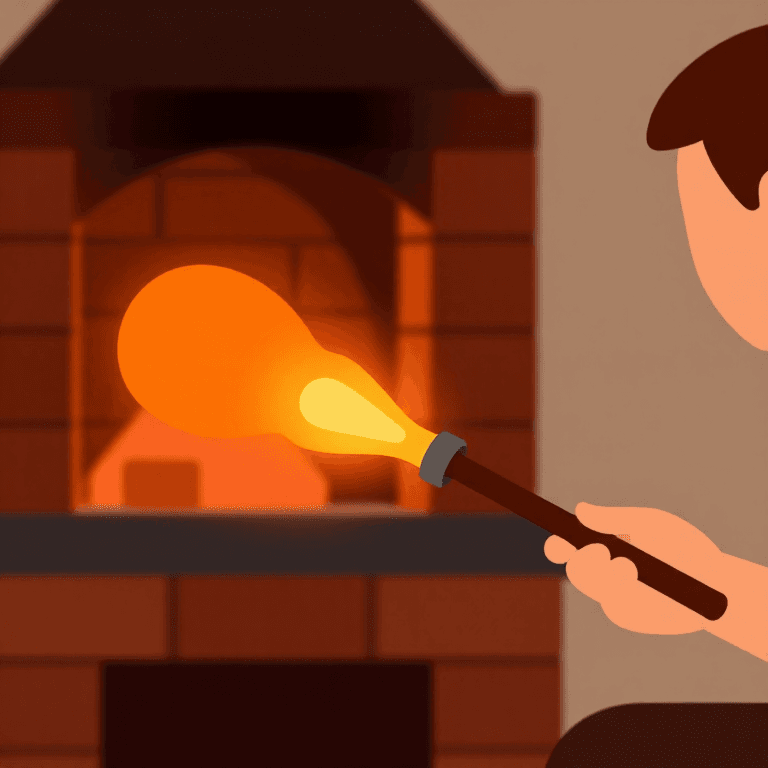
Move the rod tip into the hottest part of the flame. The glass will glow orange and begin to flow into a molten ball at the end of the rod. Rotate the rod slowly to keep the gather centred and round.
5

Wind the glass onto the mandrel

Pre-heat the coated section of the mandrel in the flame. Touch the molten glass ball to the mandrel and begin winding — rotate the mandrel steadily while feeding the glass rod. The glass wraps around the mandrel in a spiral. Keep even tension and speed for a uniform bead.
6

Shape the bead in the flame

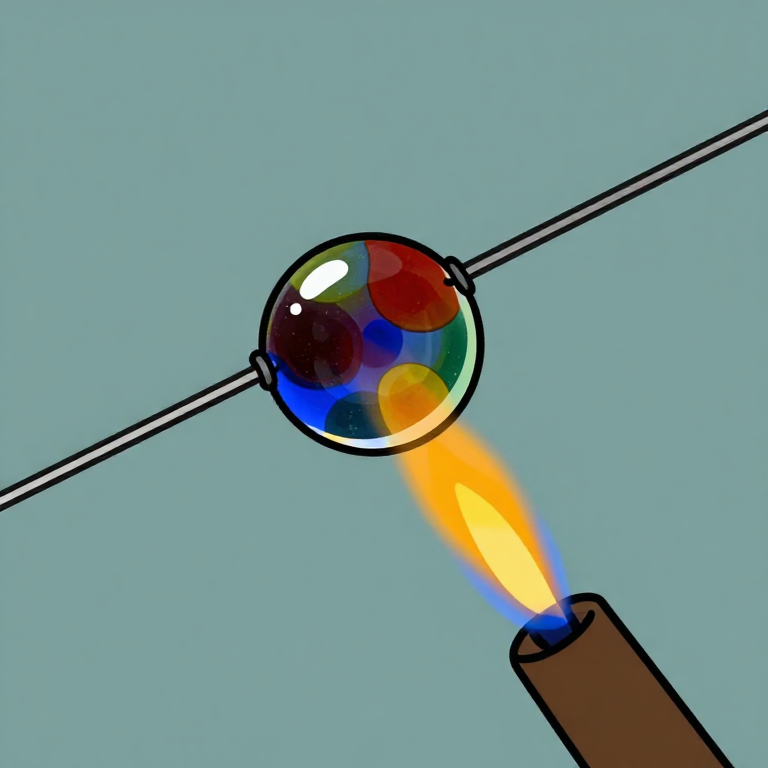
Once enough glass is wound on, set the glass rod aside. Hold the mandrel in the flame and rotate steadily. Gravity and surface tension will round the bead into a smooth sphere. To make a barrel shape, hold horizontally; for a disc, compress gently with a graphite paddle.
7

Even out the shape

If the bead is lopsided, hold the heavier side downward and let gravity pull it even. For precise shaping, press the bead gently into a graphite marver or use brass shaping tools. Keep the bead rotating to maintain symmetry.
8

Add decorative trails (optional)

For a striped pattern, heat a thin stringer (1-2 mm glass rod) of a contrasting colour and touch it to the rotating hot bead surface. The thin glass trail wraps around the bead. Melt in smooth by returning to the flame, or leave raised for texture.
9

Final flame polish

Hold the finished bead in the flame just long enough for the surface to become glossy and smooth — about 5-10 seconds of gentle rotation. Do not overheat or the bead will distort.
10

Anneal the bead

Place the mandrel with the bead into a pre-heated annealing kiln at approximately 510°C for soda-lime glass. If no kiln is available, bury the bead in vermiculite insulation to slow the cooling. Unannealed beads will crack within hours or days from internal stress.
11

Cool and remove from mandrel

After annealing (at least 1-2 hours in the kiln, or overnight in vermiculite), the bead is cool enough to handle. Soak in water for a few minutes to soften the bead release, then twist and slide the bead off the mandrel. Clean the hole with a pipe cleaner or thin file.
12

Clean and inspect

Rinse the bead under water to remove all bead release residue. Inspect for cracks, bubbles, or uneven shape. A properly made and annealed bead will ring when tapped against another glass bead — a dull thud indicates stress cracks. The bead is now ready for stringing into jewellery.

Materiali

2

Strumenti richiesti

2

Materiali dei progetti collegati

You can swap these in

Can't get one of the materials? Swap it for an equivalent — these work just as well.

CC0 Pubblico dominio

Questo progetto è rilasciato sotto CC0. Sei libero di copiare, modificare, distribuire e utilizzare quest'opera per qualsiasi scopo, senza chiedere permesso.

Supporta il Maker acquistando prodotti tramite il suo progetto dove guadagna una Commissione Maker stabilita dai venditori, oppure crea una nuova iterazione di questo progetto e includilo come collegamento nel tuo progetto per condividere i ricavi.

Commenti

(0)

Accedi per partecipare alla discussione

Caricamento commenti...