ARTE
BELLEZZA E BENESSERE
MESTIERE
CULTURA E STORIA
DIVERTIMENTO
AMBIENTE
CIBO E BEVANDE
INGEGNERIA INVERSA
SCIENZE
SPORT
TECNOLOGIA
INDOSSABILI
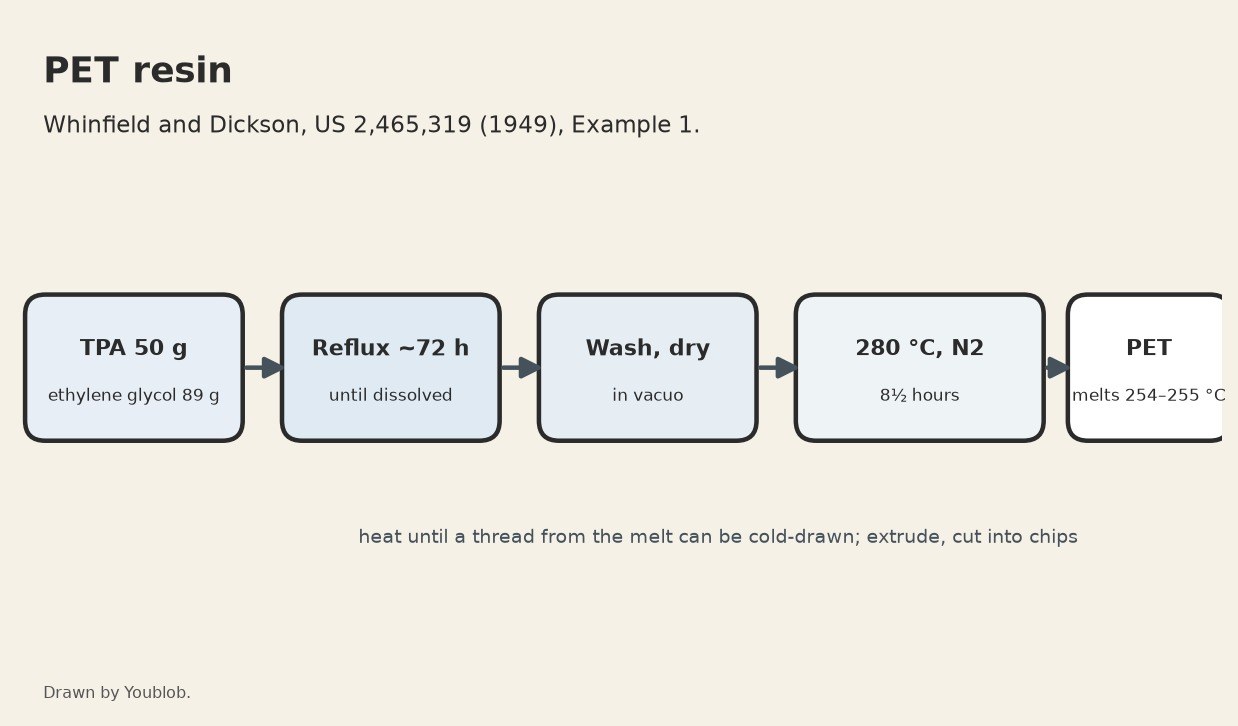


PET Resin: Terephthalic Acid and Ethylene Glycol, Whinfield and Dickson
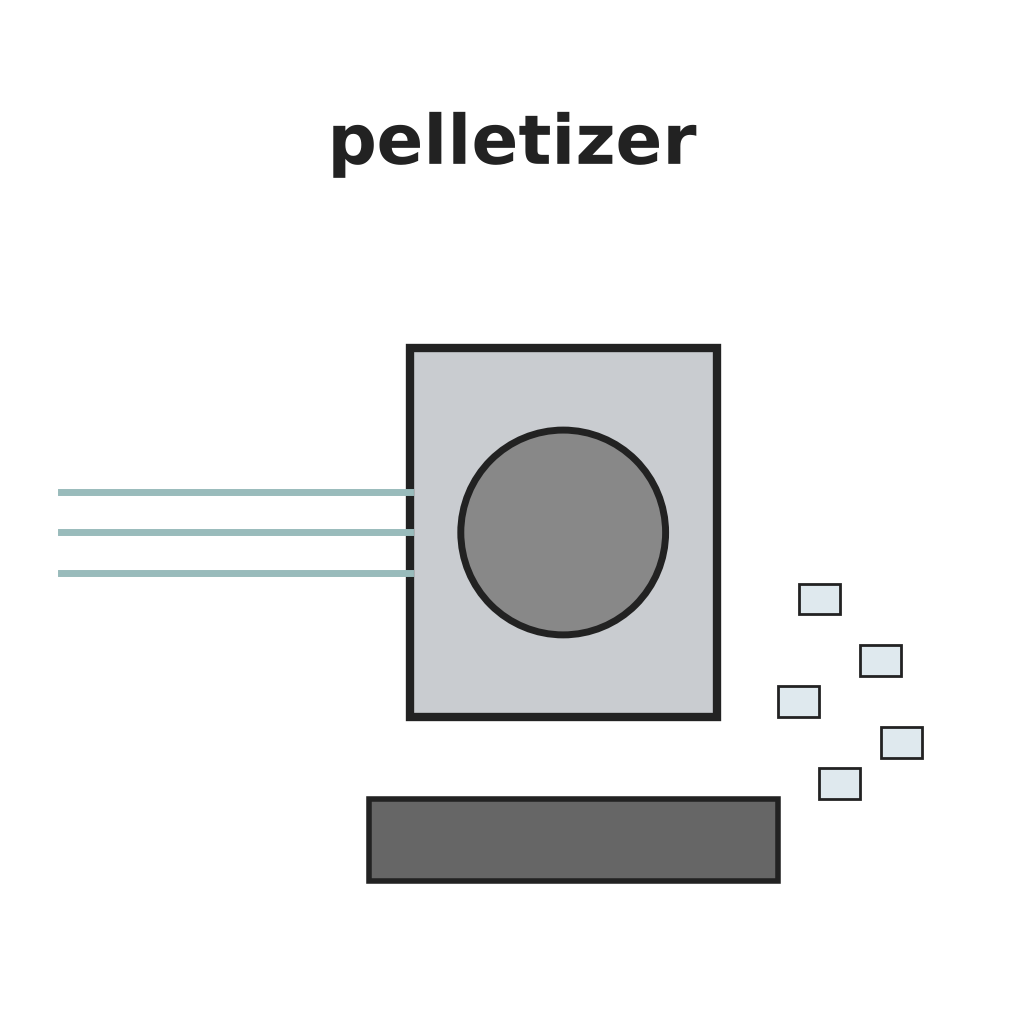
PET (polyethylene terephthalate) was invented by Whinfield and Dickson, whose patent (US 2,465,319, 1949) gives this first example: boil terephthalic acid in ethylene glycol until it dissolves, wash and dry the glycol ester, then heat it at 280 °C under nitrogen until it is a viscous polymer that melts at 254–255 °C and can be drawn into fibre. The melt is extruded and cut into chips (pellets) for moulding and spinning.
The picture: our diagram.
Avanzato
About 4 days
Istruzioni
1
1
Boil the acid in glycol
Boil the acid in glycol
Reflux 50 g terephthalic acid with 89 g ethylene glycol for about 72 hours, until it has all dissolved. This makes glycol terephthalate.
Materiali per questo passaggio:
 Acido tereftalico50 g
 Glicole etilenico89 g
Strumenti necessari:
 Bilancia a bracci
 Pallone a fondo tondo
 Serpentina del condensatore
 Piastra riscaldante
2
2
Wash and dry the ester
Wash and dry the ester
Wash the glycol terephthalate with water and dry it under vacuum.
Strumenti necessari:
 Acqua distillata
 Imbuto di vetro con gambo
 Carta da filtro
 Pompa per vuoto
3
3
Heat at 280 °C under nitrogen
Heat at 280 °C under nitrogen
Melt it and heat at 280 °C for 8½ hours in a slow stream of nitrogen: no air may reach it. It grows thick as it polymerises.
Strumenti necessari:
Pallone a fondo tondoPiastra riscaldante Termocoppia con lettore
 Bombola di azoto
 Guanti resistenti al calore
 Occhiali antispruzzo chimico
4
4
Test for cold-drawing
Test for cold-drawing
Pull a thread from the melt with a rod and let it cool. It is ready when the cold thread can be stretched to several times its length. The finished polymer melts at 254–255 °C.
Strumenti necessari:
 Bacchetta di vetroGuanti resistenti al calore
5
5
Extrude and cut into chips
Extrude and cut into chips
Extrude the molten polymer, let it cool, and cut it into chips (pellets).
Strumenti necessari:
 Estrusore per plastica
 GranulatoreGuanti resistenti al calore
Materiali
2- Segnaposto
- Segnaposto
Strumenti richiesti
15- Segnaposto
- Segnaposto
- Segnaposto
- Segnaposto
- Segnaposto
- Segnaposto
- Segnaposto
- 1 vendor sell this, none ship to you yetSegnaposto
- Segnaposto
- Segnaposto
- Segnaposto
- Segnaposto
- Segnaposto
- Segnaposto
- Segnaposto
Questo progetto realizza
Blueprint correlati
Questi blueprint condividono conoscenze — tecniche, materiali o principi
CC0 Pubblico dominio
Questo progetto è rilasciato sotto CC0. Sei libero di copiare, modificare, distribuire e utilizzare quest'opera per qualsiasi scopo, senza chiedere permesso.
Supporta il Maker acquistando prodotti tramite il suo progetto dove guadagna una Commissione Maker stabilita dai venditori, oppure crea una nuova iterazione di questo progetto e includilo come collegamento nel tuo progetto per condividere i ricavi.