ARTE
BELLEZZA E BENESSERE
MESTIERE
CULTURA E STORIA
DIVERTIMENTO
AMBIENTE
CIBO E BEVANDE
INGEGNERIA INVERSA
SCIENZE
SPORT
TECNOLOGIA
INDOSSABILI


Ratchet-Bar Egg Beater: Push a Rack, the Floats Spin Both Ways
Beating eggs in a closed beater keeps the air out, and a beater bolted to its vessel is slow to empty and clean.
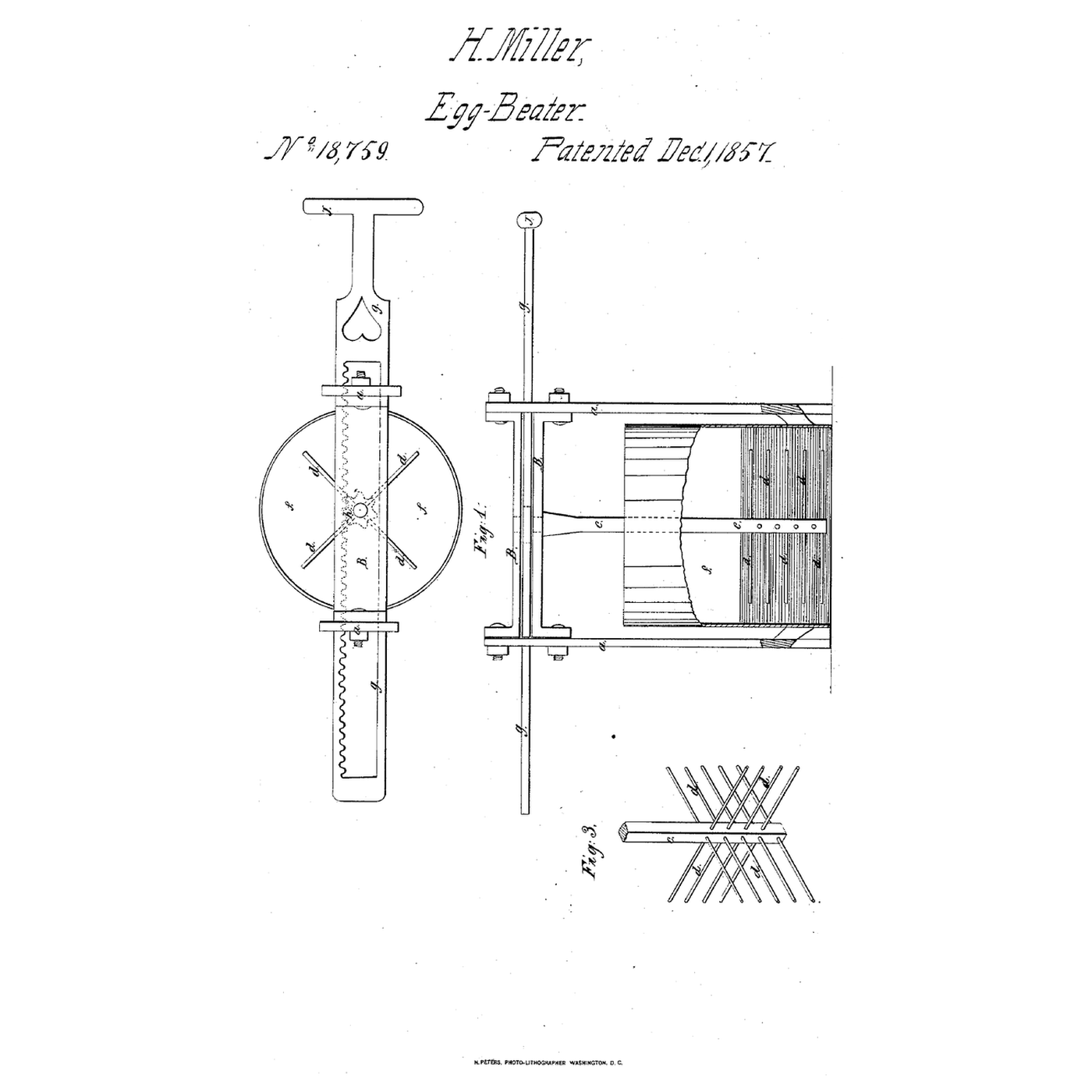
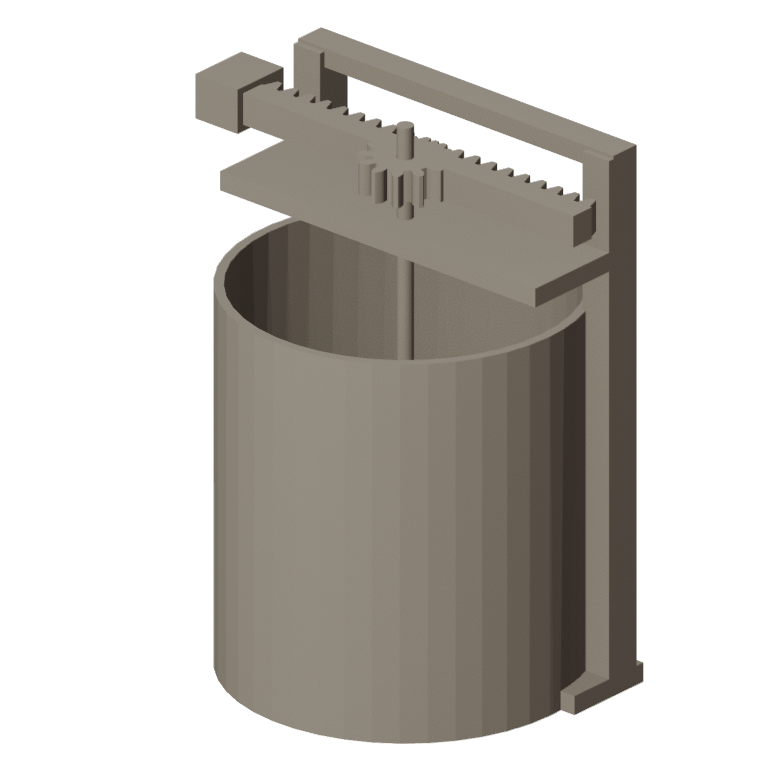
Harvey Miller of Cincinnati, Ohio, received US 18,759, dated 1 December 1857, for an egg beater: a frame whose standards clasp an open jar, a bar sliding through slots that gears into a pinion on a vertical spindle, and wire floats on the spindle that turn rapidly one way then the other as the bar is pushed to and fro; lifting the frame frees the jar.
This rung works out the turns per stroke, then prints the rack and pinion, builds the frame and floats, and times a beating.
Intermedio
About 5 hours, plus printing
Istruzioni
1
1
Turns per stroke
Turns per stroke
Caricamento del notebook Jupyter…
2
2
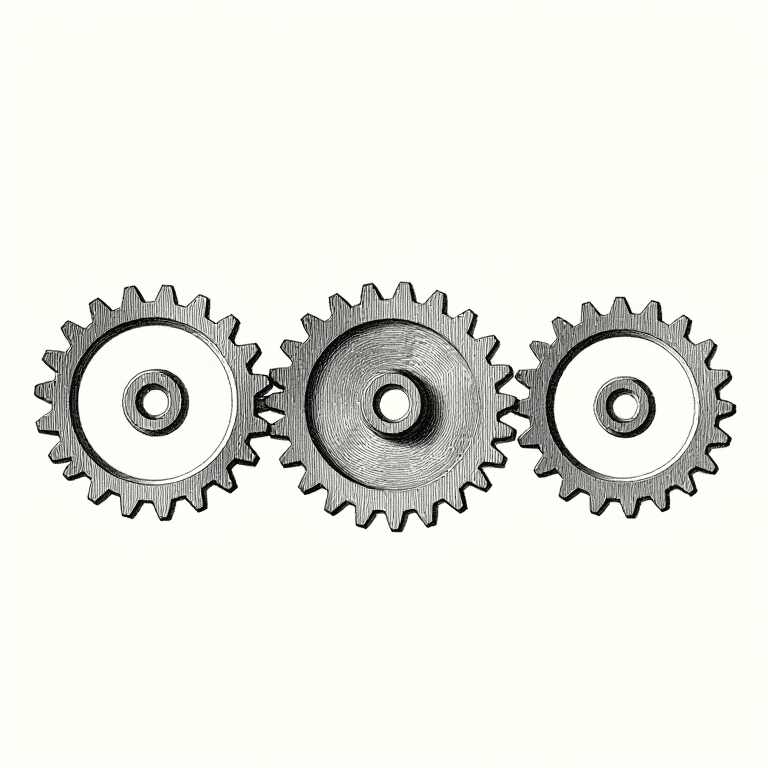
The rack and pinion it uses
The rack and pinion it uses
The embedded blueprint turns a straight push into rotation. Miller pushes the rack by hand and the pinion spins the floats.
3
3
Read US 18,759
Read US 18,759
"By this arrangement, if one hand be placed upon the upper bar B to hold the machine steady, while with the other hand upon the handle j, of the ratchet bar g, a reciprocating motion be given to the ratchet bar, then the spindle c, with its floats d, is set in rapid motion, alternately revolving in each direction."
4
4
Print the rack and pinion
Print the rack and pinion
Print the 12-tooth pinion (/uploads/blueprints/ratchet-bar-egg-beater-pinion.stl) and the 20-tooth rack (/uploads/blueprints/ratchet-bar-egg-beater-rack.stl). Print in PETG at 0.2 mm layers, 30 % infill, 4 walls.
Materiali per questo passaggio:
 Filamento PETG1 pezzo
Strumenti necessari:
 Stampante 3D a filamento (FDM)
5
5
Build the frame
Build the frame
Cut two 170 mm standards and two cross-bars from hardwood. Screw them into a gate that straddles the jar, cut 13 × 11 mm slots across the standards' tops for the rack, and give the feet a curve to fit the jar.
Materiali per questo passaggio:
 Blocco di legno duro1 pezzo
 Vite da legno #8 x 1"1 pezzo
Strumenti necessari:
 Sega da traforo
 Lime (lima a mano)
 Trapano a batteria
 Serie di punte da trapano
 Set di cacciaviti
 Righello
6
6
Make the spindle and floats
Make the spindle and floats
Cut 160 mm of 5 mm steel rod. Bend three loops of stainless wire 45 mm across and 50 mm high, bind their ends to the rod's lower end, and epoxy them. Press the pinion onto the top.
Materiali per questo passaggio:
 Tondo di acciaio dolce1 pezzo
 Filo di acciaio inox1 pezzo
 Resina epossidica bicomponente1 pezzo
Strumenti necessari:
 Seghetto per metalli
 Pinze a becchi tondi
 Pinze a becchi piatti
 Occhiali di sicurezza trasparenti
7
7
Assemble
Assemble
Hang the spindle from the lower cross-bar in a 5 mm hole, slide the rack through the slots so its teeth mesh with the pinion, and stand the gate over the bowl.
Materiali per questo passaggio:
 Rondella piana1 pezzo
Strumenti necessari:
Trapano a batteriaSerie di punte da trapano8
8
The patent drawing
The patent drawing
US 18,759 drawing sheet, public domain (expired patent).
9
9
Beat egg whites
Beat egg whites
Separate two egg whites into the bowl. Pump the rack at about two strokes a second and time how long until they hold stiff peaks.
Materiali per questo passaggio:
 Uovo2 pezzi
Strumenti necessari:
 Grande ciotola da impasto in acciaio inossidabile
 Cronometro
10
10
A rack that jams, slips or a float that hits the bowl
A rack that jams, slips or a float that hits the bowl
Ratchet-bar egg beater troubleshooting.
Flow
Loading...
11
11
History and honest limits
History and honest limits
**Harvey Miller** of Cincinnati, Ohio, received US 18,759, dated 1 December 1857. His frame and parts were cast iron, the floats iron wire coated with tin, the jar porcelain or tin with no cover, so air has free access; neither shaft nor floats touch the vessel. He did not claim the ratchet bar or revolving beaters alone, only the frame with them in combination with the jar.
**Honest limits.** FDM prints hold food in their layer lines, so wash well and replace when worn. Printed PETG gears and a hardwood gate stand in for cast iron. Your times are the result.
Materiali
8- 1 pezzoSegnaposto
- 1 pezzoSegnaposto
- 1 pezzoSegnaposto
- 1 pezzoSegnaposto
- 1 pezzoSegnaposto
- Segnaposto
- 1 pezzoSegnaposto
- 2 pezziSegnaposto
Strumenti richiesti
13- Segnaposto
- Segnaposto
- Segnaposto
- 1 vendor sell this, none ship to you yetSegnaposto
- Segnaposto
- Segnaposto
- Segnaposto
- Segnaposto
- Segnaposto
- Segnaposto
- Segnaposto
- Segnaposto
Questo progetto realizza
Blueprint correlati
Questi blueprint condividono conoscenze — tecniche, materiali o principi


CC0 Pubblico dominio
Questo progetto è rilasciato sotto CC0. Sei libero di copiare, modificare, distribuire e utilizzare quest'opera per qualsiasi scopo, senza chiedere permesso.
Supporta il Maker acquistando prodotti tramite il suo progetto dove guadagna una Commissione Maker stabilita dai venditori, oppure crea una nuova iterazione di questo progetto e includilo come collegamento nel tuo progetto per condividere i ricavi.