ARTE
BELLEZZA E BENESSERE
MESTIERE
CULTURA E STORIA
DIVERTIMENTO
AMBIENTE
CIBO E BEVANDE
INGEGNERIA INVERSA
SCIENZE
SPORT
TECNOLOGIA
INDOSSABILI
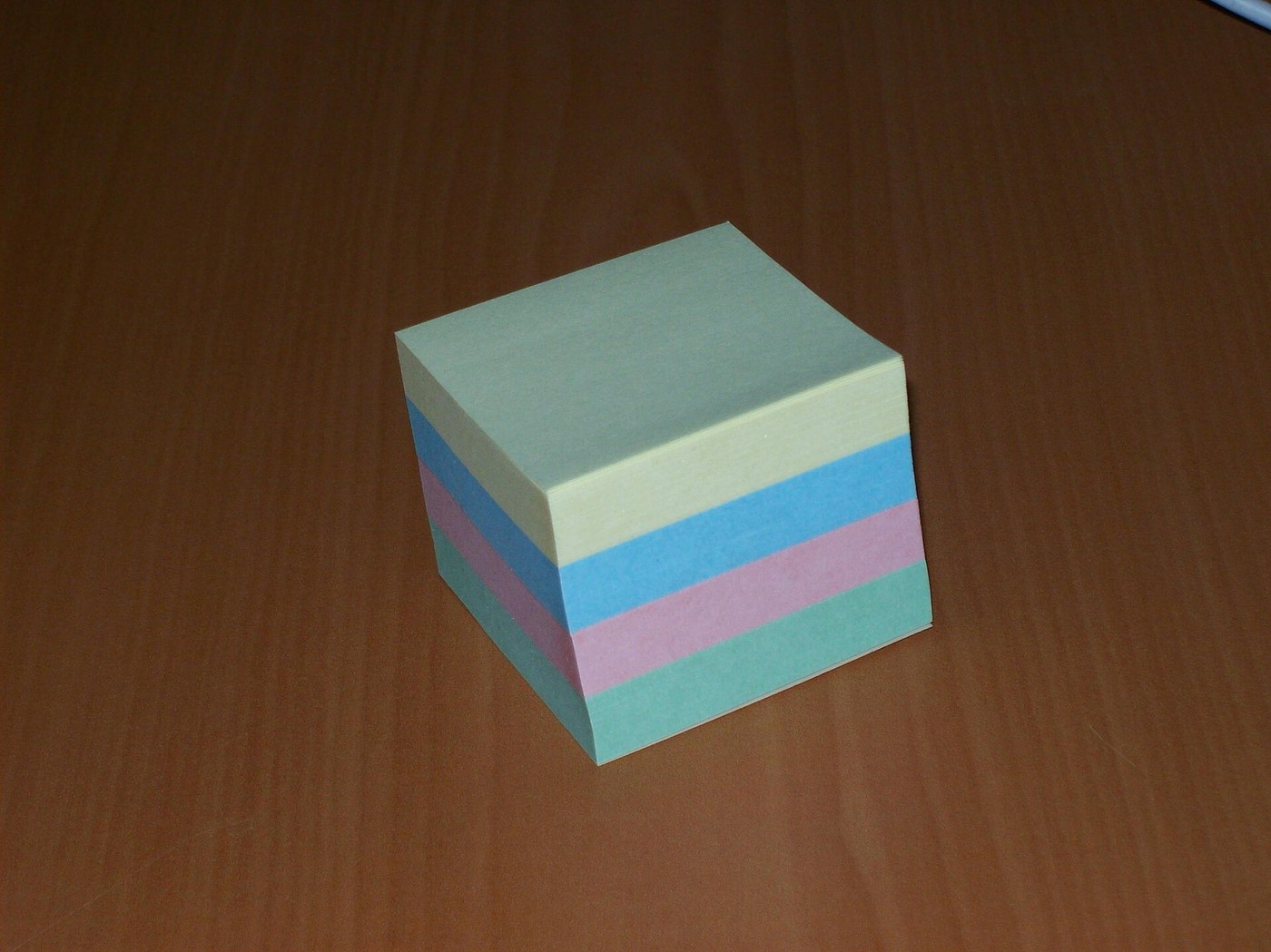


Repositionable Microsphere Adhesive
In 1968 Spencer Silver at 3M, trying to make a very strong adhesive, made the opposite: an acrylate that formed tiny tacky spheres and held only lightly. For years it had no product. In 1974 his colleague Art Fry coated it on bookmarks for his church hymnal so they would stay put without tearing the pages; the sticky note reached shops in 1980.
**US 3,691,140**, "Acrylate copolymer microspheres", Silver, filed 9. March 1970, granted 12. September 1972: "inherently tacky", elastomeric microspheres of an acrylate ester such as iso-octyl acrylate with a small share of an ionic monomer.
**You measure what makes it different from tape**: the peel force over twenty re-sticks, side by side with masking tape, and the spheres themselves under a microscope.
Principiante
1 hour
Istruzioni
1
1
Look at the stripe
Look at the stripe
Put a sticky note's adhesive stripe under the digital microscope at high magnification. Beside it, a strip of masking tape. Capture both; measure the bead size and spacing on the note.
Strumenti necessari:
 Microscopio digitale
 Nastro di carta per mascherature
 Foglietti adesivi riposizionabili
2
2
Clean the glass
Clean the glass
Wipe a glass sheet with isopropyl alcohol and let it dry. Cut the masking tape to the same 25 mm width and 75 mm length as the note's sticky area.
Strumenti necessari:
 Lastra di vetro
 Forbici
 Righello
 Carta da cucina
 Alcol isopropilico al 99 %
3
3
Peel at 90 degrees
Peel at 90 degrees
Press the note and the tape onto the glass with one firm thumb stroke each. Clip a paper clip to each free end, hook the spring scale, and peel straight up, slowly. Record the steady force.
Materiali per questo passaggio:
 Graffette2 pezzi
Strumenti necessari:
 Dinamometro (bilancia a molla)
4
4
Re-stick and repeat
Re-stick and repeat
Stick the same pieces down again in the same place and peel again. Record peel 1, 2, 5, 10 and 20.
Strumenti necessari:
Dinamometro (bilancia a molla)5
5
Peel ladder and contact area
Peel ladder and contact area
Caricamento del notebook Jupyter…
6
6
History & Context
History & Context
**What the patent specifies:** inherently tacky, elastomeric, solvent-insoluble acrylate copolymer microspheres made by suspension polymerisation with an ionic comonomer. **Modern build (derived):** a commercial sticky-note pad, tested.
The same idea now holds repositionable labels, wall graphics and removable flags. Its limits: a weak grip by design, fading tack as dust and fibre collect on the spheres, and poor hold on rough or damp surfaces.
Strumenti richiesti
9- Segnaposto
- Segnaposto
- Segnaposto
- Segnaposto
- Segnaposto
- Segnaposto
- Segnaposto
- Segnaposto
- Segnaposto
Blueprint correlati
Questi blueprint condividono conoscenze — tecniche, materiali o principi


CC0 Pubblico dominio
Questo progetto è rilasciato sotto CC0. Sei libero di copiare, modificare, distribuire e utilizzare quest'opera per qualsiasi scopo, senza chiedere permesso.
Supporta il Maker acquistando prodotti tramite il suo progetto dove guadagna una Commissione Maker stabilita dai venditori, oppure crea una nuova iterazione di questo progetto e includilo come collegamento nel tuo progetto per condividere i ricavi.