Collaborazione
ARTE
BELLEZZA E BENESSERE
MESTIERE
CULTURA E STORIA
DIVERTIMENTO
AMBIENTE
CIBO E BEVANDE
INGEGNERIA INVERSA
SCIENZE
SPORT
TECNOLOGIA
INDOSSABILI
Atmospheric Barrel Churn: Reversed Concave Dashers Close to the Staves, Fresh or Warmed Air Piped to the Middle
Buttercup

Creato da

Buttercup

11. novembre 2026IE
1
0
0
0
0

Atmospheric Barrel Churn: Reversed Concave Dashers Close to the Staves, Fresh or Warmed Air Piped to the Middle

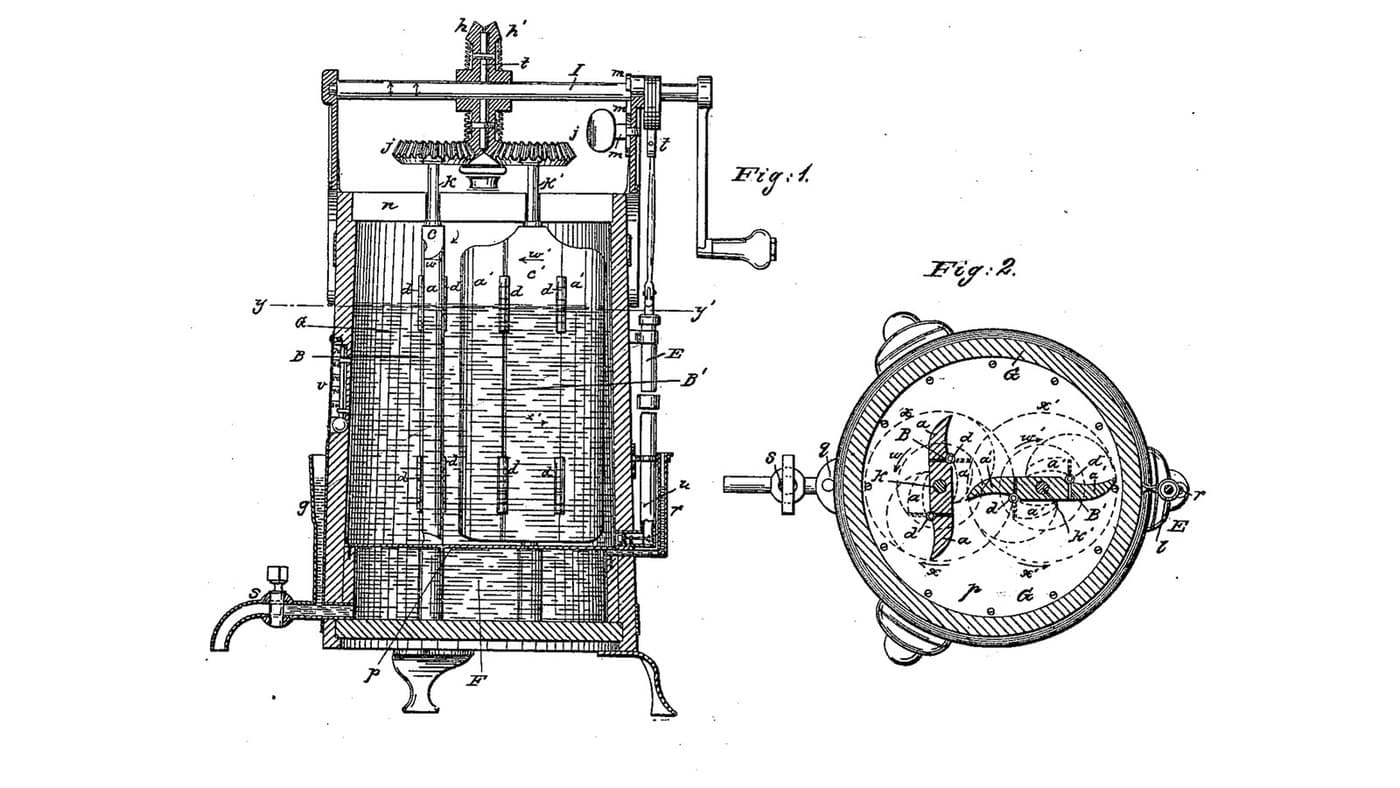
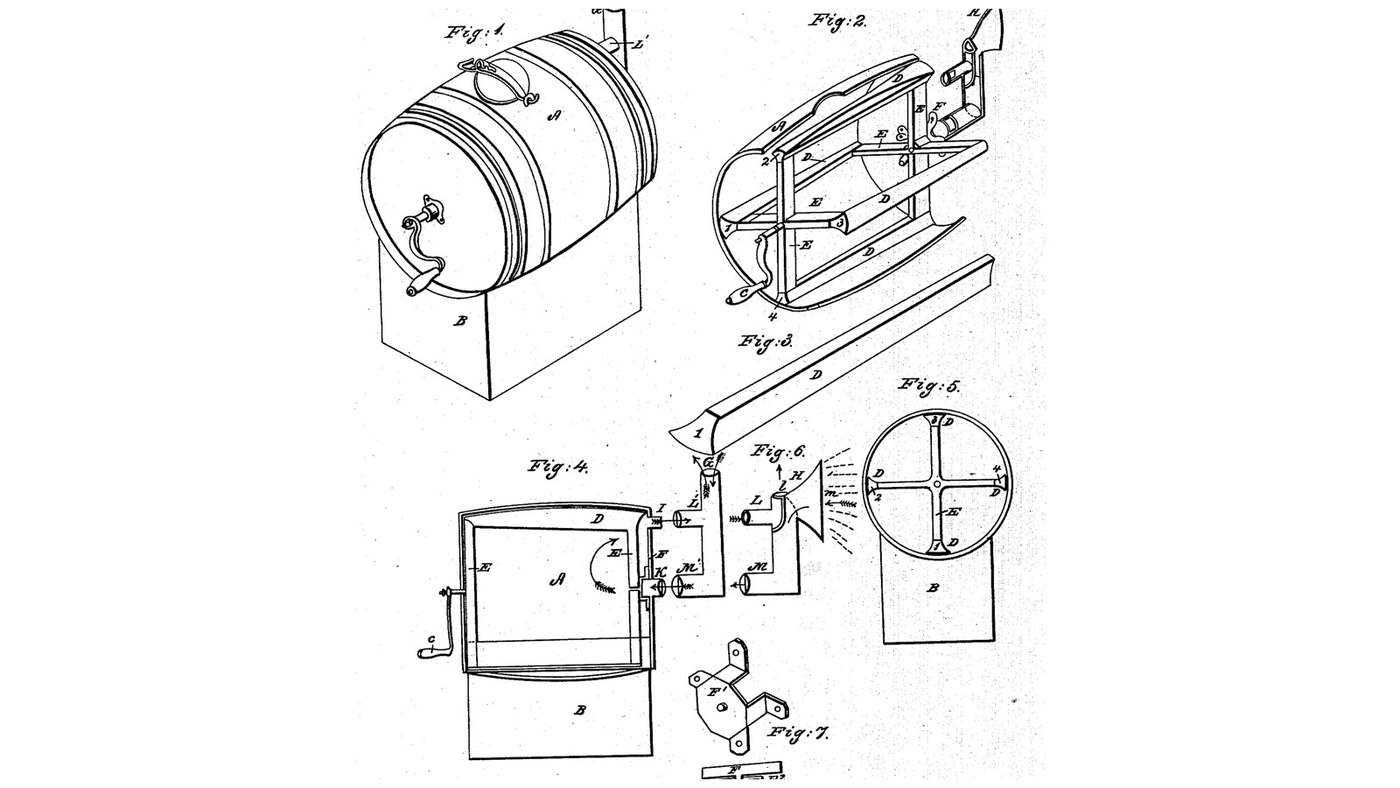
Henry Rohrer of Strasburg township, Pennsylvania, received US 26,377, dated 6 December 1859, for improvements to the common barrel churn, which he named the "Champion atmospheric churn". Four concave, tapering dashers run close to the staves with their wide and narrow ends alternating, so they rub as well as beat. Two tubes through the rear head let fresh air into the middle and steam and musty air out; in winter a funnel-mouthed pipe set near a hot stove brings warm air instead. The patent gives no sizes; every size here is ours.
Intermedio
About 2 days, plus printing

Istruzioni

1

Rohrer's temperatures, and the dashers' sweep

Caricamento del notebook Jupyter…
2

Air into the cream, three weeks before

Clow pumped air in at the bottom. Rohrer lets it in by pipes alone, warmed from the stove when needed.
3

Read US 26,377

"The concaved, tapering sides of the dashers with the wide end of the one followed by the narrow end of the other in its revolutions, produces side eddies as well as being beaten and partially retained by the concaved side; thus a thorough mixing is produced, while a constant supply of fresh air is admitted through the pipe G to the center of the churn"
4

Print the step F

A raised open step 80 x 80 mm and 55 mm deep, open at the sides, with a 17 mm socket for the rear pivot. PETG, 0.2 mm layers, 40 % infill, 4 walls.
File di designSTLCC0 - Free
5

Barrel A, base B and hatch

Use a wooden barrel about 450 mm long inside, 320 mm across at the heads. Cut a 120 mm hatch in the bilge with a hardwood lid. Bore the front head 17 mm in its centre for the shaft. Bore the rear head 21 mm in its centre for tube K and 21 mm 120 mm above it for tube I. Make a cradle of two shaped hardwood saddles on a base board so the barrel lies level. Fill the barrel with water overnight so it swells tight, then empty it.

Materiali per questo passaggio:

Botte di legnoBotte di legno1 pezzo
Tavola di legno duroTavola di legno duro2 pezzi
Colla da legnoColla da legno1 pezzo
Viti da legnoViti da legno12 pezzi

Strumenti necessari:

Seghetto alternativoSeghetto alternativo
BussolaBussola
Trapano a batteriaTrapano a batteria
Set di punte a lanciaSet di punte a lancia
Sega circolare da bancoSega circolare da banco
Morsetto a barraMorsetto a barra
Metro a nastroMetro a nastro
AcquaAcqua
6

Dashers D and crosses E

Shave four hardwood dashers 400 mm long, tapering from 70 to 35 mm wide, with a 20 mm deep concave face on the inner side and the outer edge left straight. Make two crosses of hardwood 15 x 24 mm, 290 mm across, and screw the dashers to their ends, outer edges 150 mm from the centre, the wide ends alternately at the front and the rear. Fix the front cross on a 16 mm stainless shaft through the front head with a crank C outside, and a 16 mm pivot on the rear cross's centre.

Materiali per questo passaggio:

Tavola di legno duroTavola di legno duro2 pezzi
Viti da legnoViti da legno16 pezzi
Barra di acciaio inossidabileBarra di acciaio inossidabile1 pezzo
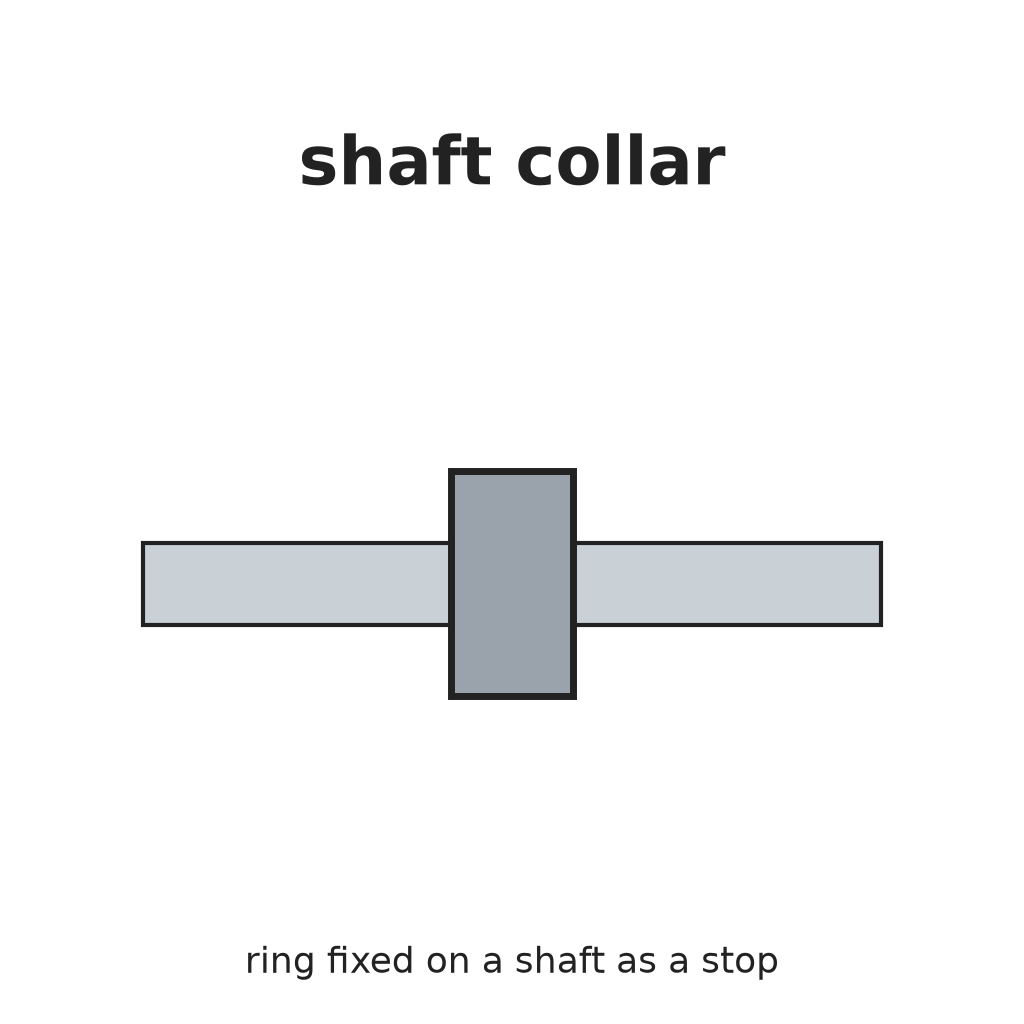
Shaft CollarShaft Collar2 pezzi
Tasselli di legno duroTasselli di legno duro1 pezzo
Colla da legnoColla da legno1 pezzo

Strumenti necessari:

Pialletto a due maniciPialletto a due manici
Sega circolare da bancoSega circolare da banco
Trapano a batteriaTrapano a batteria
Serie di punte da trapanoSerie di punte da trapano
Seghetto per metalliSeghetto per metalli
Lime (lima a mano)Lime (lima a mano)
Set di cacciavitiSet di cacciaviti
Carta abrasivaCarta abrasiva
Metro a nastroMetro a nastro
7

Step F, tubes I and K, pipes G and H

Screw the printed step over the rear head's centre hole, its socket on the axis. Seal two 20 mm stainless tubes, 70 mm long, through the rear head: K in the centre under the step, I above it. Make the atmospheric pipe G: an upright stainless tube open at its top, joined to I and K by short tubes and elbows. For winter make pipe H: a stainless funnel, mouth m, on a tube to K, with a tee on the tube from I open as the vent l; set the funnel near a warm stove, never on it, and use silicone tube for the joints.

Materiali per questo passaggio:

Tubo di acciaio inossidabileTubo di acciaio inossidabile2 pezzi
Tubo in siliconeTubo in silicone1 pezzo
Imbuto in acciaio inossidabileImbuto in acciaio inossidabile1 pezzo
Sigillante siliconicoSigillante siliconico1 pezzo
Viti da legnoViti da legno4 pezzi
Filamento PETGFilamento PETG1 pezzo

Strumenti necessari:

Stampante 3D a filamento (FDM)Stampante 3D a filamento (FDM)
Seghetto per metalliSeghetto per metalli
Lime (lima a mano)Lime (lima a mano)
Cannello a propanoCannello a propano
Morsa da bancoMorsa da banco
Guanti resistenti al caloreGuanti resistenti al calore
Set di cacciavitiSet di cacciaviti
8

The build in 3D

FreeCAD model of this build, the barrel, heads and cradle cut through the middle: the four alternately reversed dashers on their two crosses, the shaft and crank, the step F on the rear head over tube K, tube I, and the atmospheric pipe G outside. The frame was turned through a quarter turn.
File di designBLENDCC0 - Free
9

Churn

Fill the barrel about half full with heavy cream, about 15 litres. Bring it to 15-18 °C, checked with the thermometer; in winter put pipe H on with its funnel near the warm stove, otherwise pipe G. Close the hatch and turn the crank steadily, timing it. When the butter comes, open the hatch, take out the butter, drain the buttermilk, wash the butter in cold water until it runs clear, salt and weigh it.

Materiali per questo passaggio:

Panna da montarePanna da montare15 l
Sale marino grossoSale marino grosso1 pezzo
AcquaAcqua1 pezzo

Strumenti necessari:

Termometro a sonda permanenteTermometro a sonda permanente
CronometroCronometro
Bilancia digitale da cucinaBilancia digitale da cucina
Grande ciotola da impasto in acciaio inossidabileGrande ciotola da impasto in acciaio inossidabile
10

Troubleshooting

Atmospheric barrel churn troubleshooting.

Flow

Loading...
11

History and honest limits

**Henry Rohrer** of Strasburg township, Lancaster County, Pennsylvania, US 26,377, 6 December 1859, "Churn". He knew of other ways of bringing air to cream, and claimed the tubes I, K in the rear head with the pipes G and H, mouth m, partition l and tubes L, M, with the dashers D on an open step F. He says he "tested in my own buttery to my entire satisfaction". The patent gives no sizes; every size here is ours. His temperatures, 60 to 65 °F, are 15.6 to 18.3 °C.

Materiali

15

Strumenti richiesti

22

File di progetto

2

CC0 Pubblico dominio

Questo progetto è rilasciato sotto CC0. Sei libero di copiare, modificare, distribuire e utilizzare quest'opera per qualsiasi scopo, senza chiedere permesso.

Supporta il Maker acquistando prodotti tramite il suo progetto dove guadagna una Commissione Maker stabilita dai venditori, oppure crea una nuova iterazione di questo progetto e includilo come collegamento nel tuo progetto per condividere i ricavi.

Commenti

(0)

Accedi per partecipare alla discussione

Caricamento commenti...