ARTE
BELLEZZA E BENESSERE
MESTIERE
CULTURA E STORIA
DIVERTIMENTO
AMBIENTE
CIBO E BEVANDE
INGEGNERIA INVERSA
SCIENZE
SPORT
TECNOLOGIA
INDOSSABILI
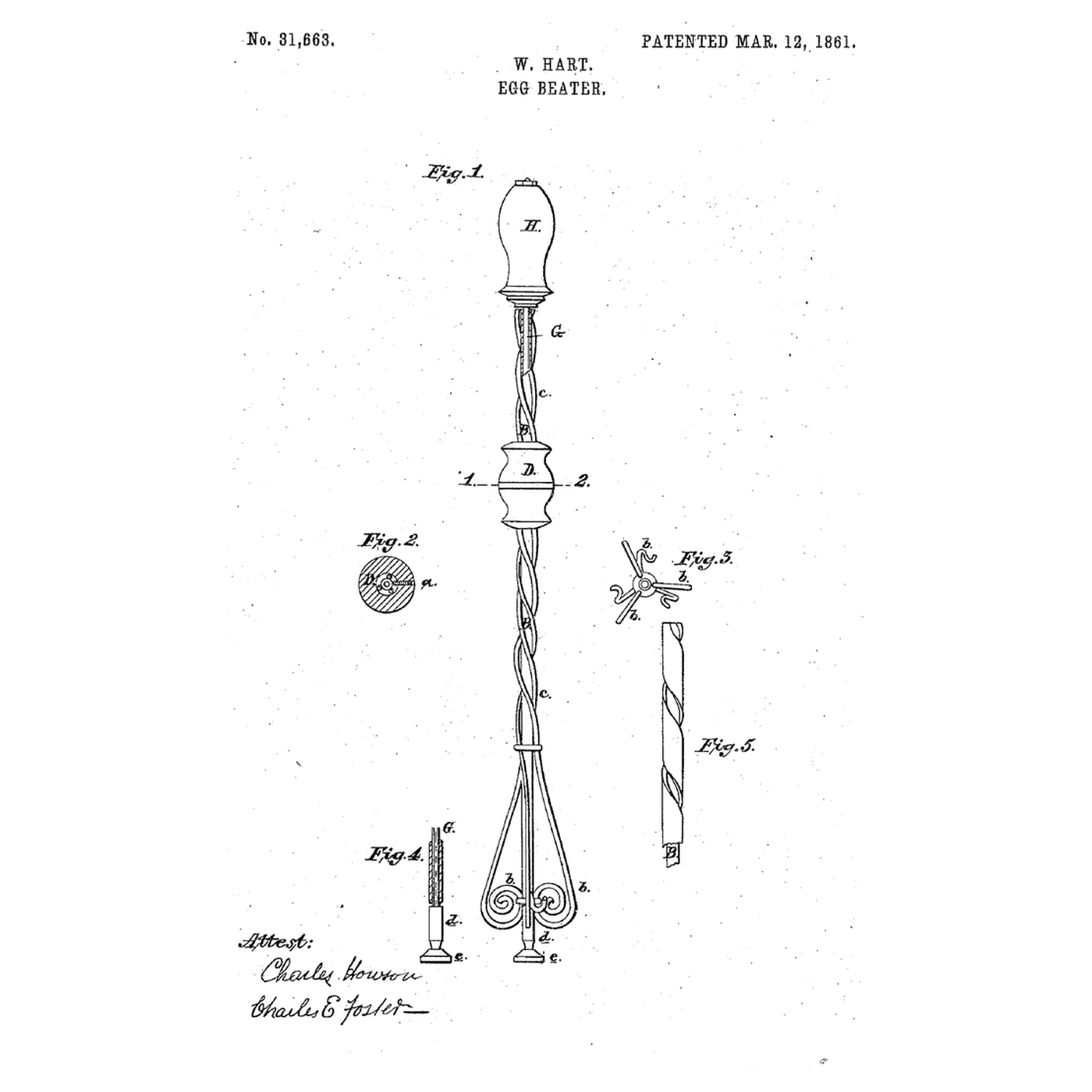


Screw-Tube Egg Beater: The Tube Spins, the Rod Stands Still
A push-spinning egg beater turns on its point in the bowl: it wanders, and pressing on it slows it.
Walter Hart of Philadelphia received US 31,663, dated 12 March 1861, for an egg beater whose wire beaters are on a tube with a screw thread, spun by a nut slid up and down; inside it a rod fixed to the handle ends in a button that rests on the bottom of the vessel, so "the base ... is stationary and therefore has no tendency to slip" and the pressure is borne by the rod, leaving the tube free to turn.
This rung works out the tube's turns per stroke, then prints the lobed screw tube and nut, fits rod, button and beaters, and times a beating.
Principiante
About 2 hours, plus printing
Istruzioni
1
1
Turns per stroke
Turns per stroke
Caricamento del notebook Jupyter…
2
2
A spiral and slide before it
A spiral and slide before it
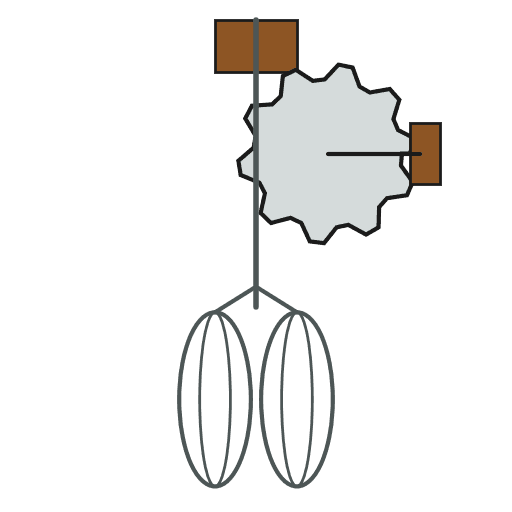
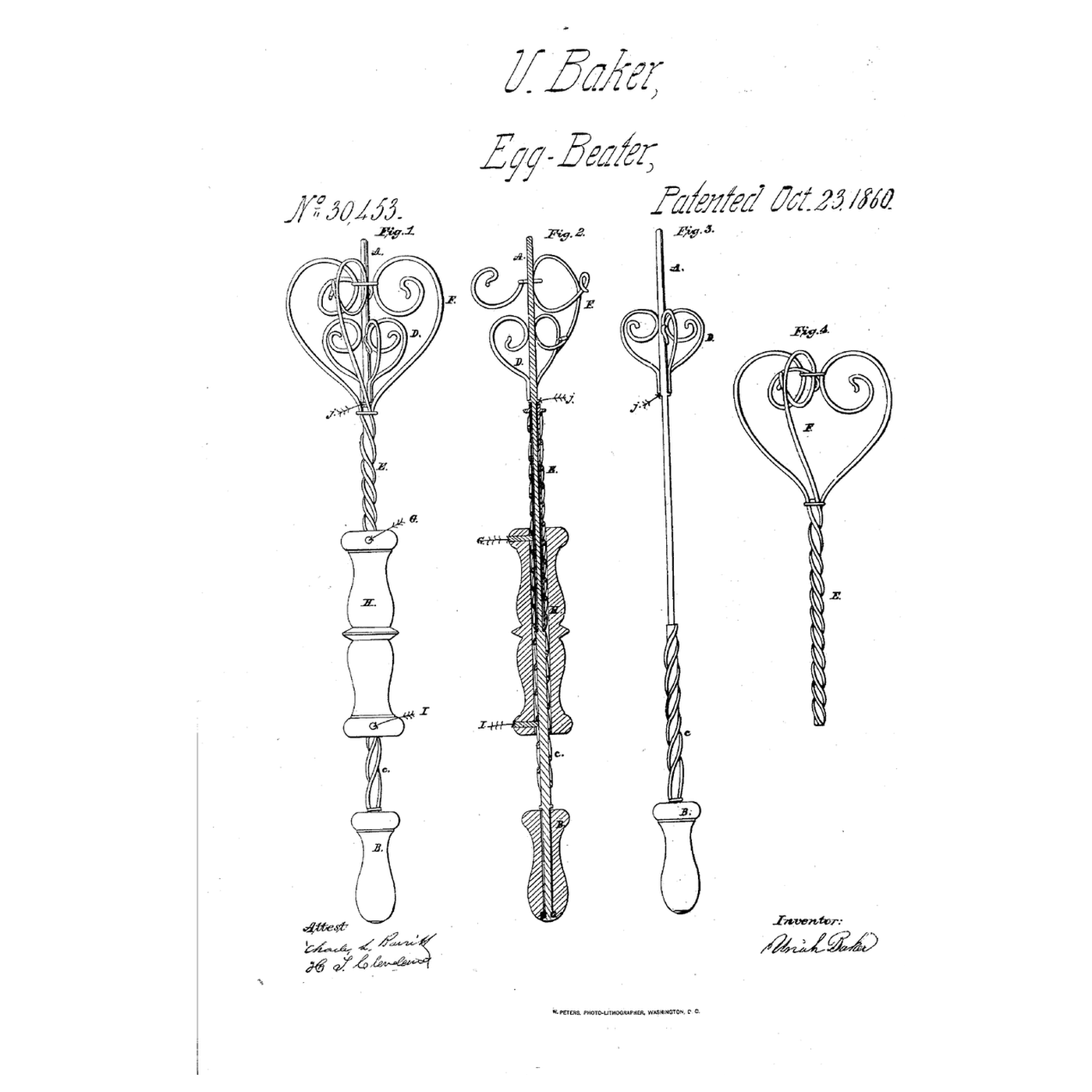
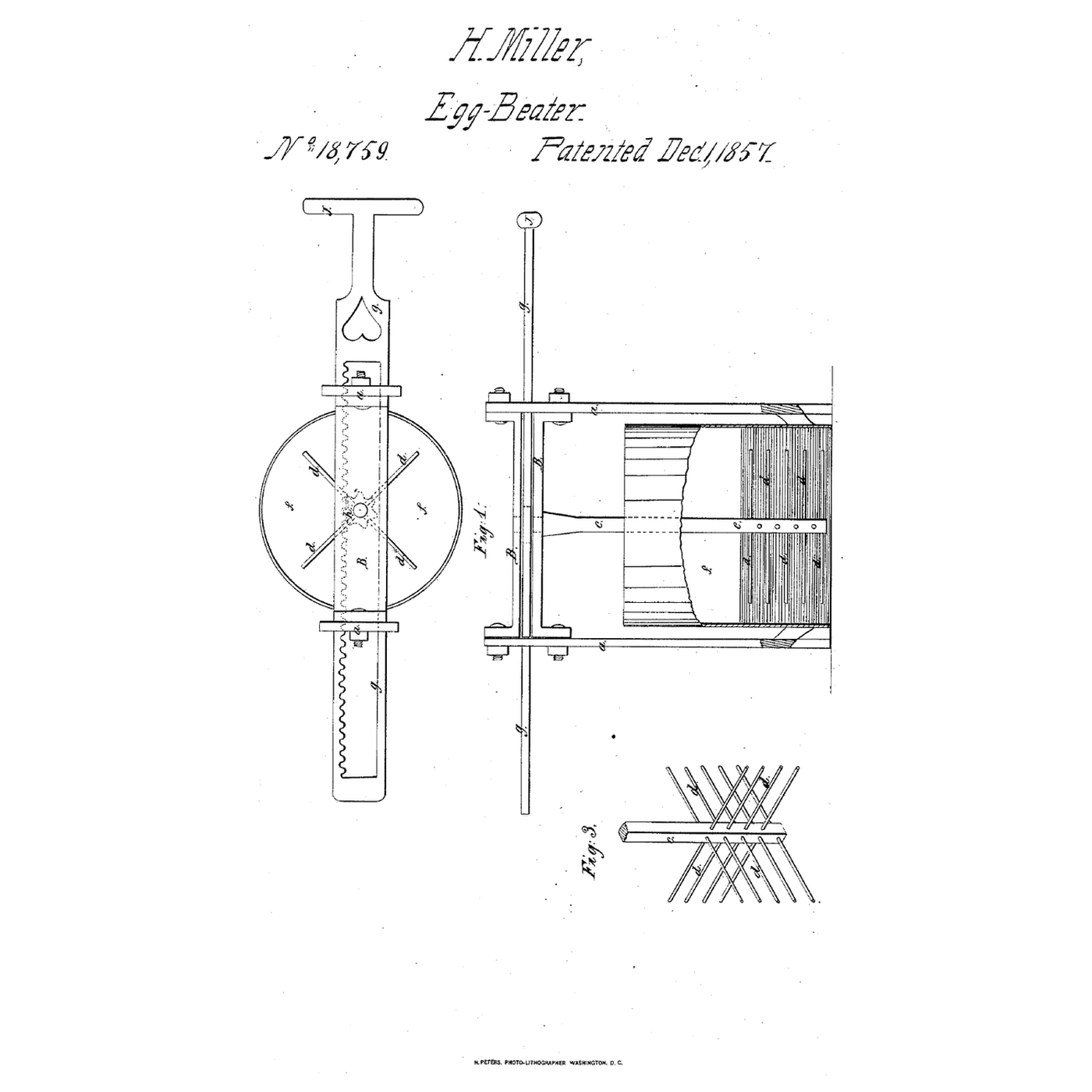
The embedded blueprint turns two scrolls with a slide on two spirals. Hart turns one screw tube and stands the whole beater on a still rod.
3
3
Read US 31,663
Read US 31,663
"In my improved egg beater the base, consisting of the button e, which rests on the bottom of the vessel, is stationary and therefore has no tendency to slip and as the pressure imparted to it is sustained by the stationary rod and not by the tube the latter is free to rotate under any pressure to which the instrument may be necessarily subjected."
4
4
Print the tube and nut
Print the tube and nut
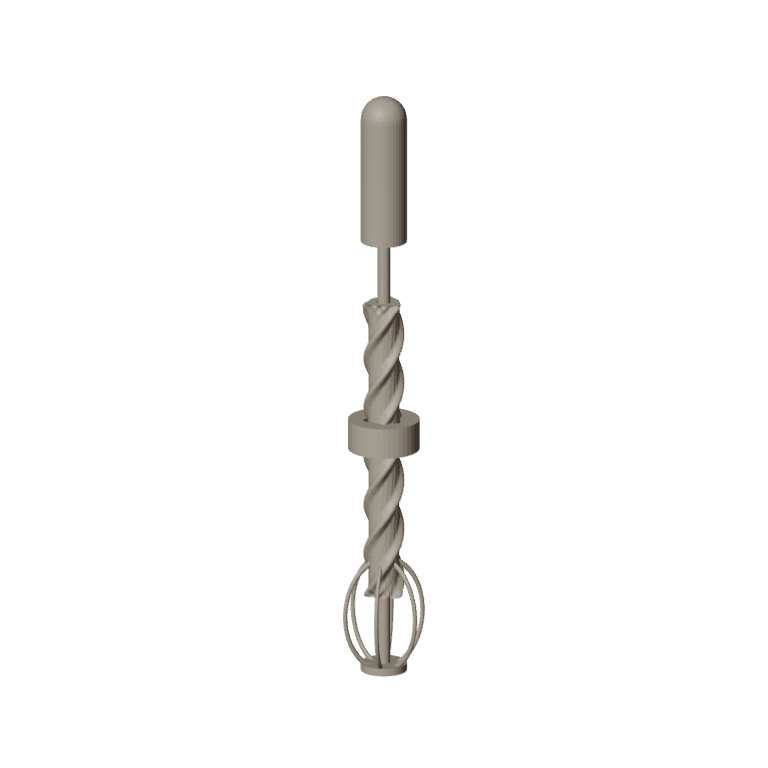
Print the three-lobed screw tube (/uploads/blueprints/screw-tube-egg-beater-tube.stl) standing upright, and the nut (/uploads/blueprints/screw-tube-egg-beater-nut.stl). Print in PETG at 0.2 mm layers, 30 % infill, 4 walls.
Materiali per questo passaggio:
 Filamento PETG1 pezzo
Strumenti necessari:
 Stampante 3D a filamento (FDM)
5
5
Bend the beaters
Bend the beaters
Bend three loops of stainless wire about 32 mm across and 45 mm high, and epoxy their ends round the tube's lower end.
Materiali per questo passaggio:
 Filo di acciaio inox1 pezzo
 Resina epossidica bicomponente1 pezzo
Strumenti necessari:
 Pinze a becchi tondi
 Pinze a becchi piatti
6
6
Rod, button and handle
Rod, button and handle
Pass a 5 mm rod through the tube, with the nut on the tube. Epoxy a washer to the rod's foot as the button, leaving the tube 2 mm of play, and a hardwood handle on its top.
Materiali per questo passaggio:
 Tondo di acciaio dolce1 pezzo
 Rondella piana1 pezzo
 Tasselli di legno duro1 pezzoResina epossidica bicomponente1 pezzo
Strumenti necessari:
 Seghetto per metalli
 Morsa da banco
 Trapano a batteria
 Serie di punte da trapano
7
7
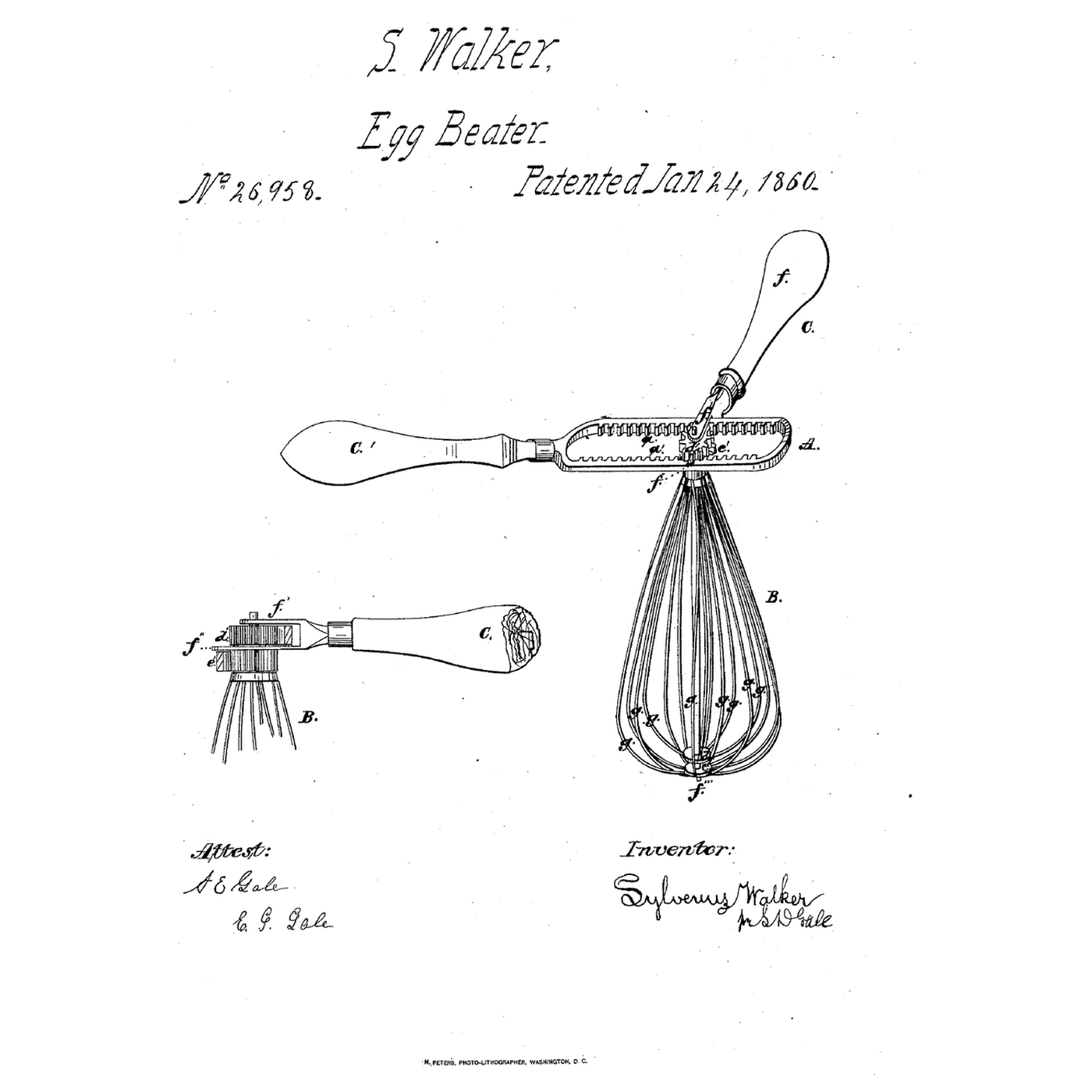
The patent drawing
The patent drawing
US 31,663 drawing sheet, public domain (expired patent).
8
8
Beat egg whites
Beat egg whites
Stand the button on the bowl's bottom, hold the handle, and slide the nut up and down; time two whites to stiff peaks. Note whether the button stays put.
Materiali per questo passaggio:
 Uovo2 pezzi
Strumenti necessari:
 Grande ciotola da impasto in acciaio inossidabile
 Cronometro
9
9
A tube that sticks, a nut that binds
A tube that sticks, a nut that binds
Screw-tube egg beater troubleshooting.
Flow
Loading...
10
10
History and honest limits
History and honest limits
**Walter Hart** of Philadelphia received US 31,663, dated 12 March 1861. His thread is three wires coiled on the tube, their lower ends spread into the beaters; the nut is wood with a pin entering between the wires; a strip of metal lapped spirally may replace the wires. He did not claim the screw spindle, beaters and nut as such, which were known, but their combination with the internal rod and button.
**Honest limits.** FDM prints hold food in their layer lines, so wash well and replace when worn. A printed lobed tube stands in for his wire thread. Your times are the result.
Materiali
7- 1 pezzoSegnaposto
- 1 pezzoSegnaposto
- Segnaposto
- 1 pezzoSegnaposto
- 1 pezzoSegnaposto
- 1 pezzoSegnaposto
- 2 pezziSegnaposto
Strumenti richiesti
9- Segnaposto
- Segnaposto
- Segnaposto
- Segnaposto
- Segnaposto
- 1 vendor sell this, none ship to you yetSegnaposto
- Segnaposto
- Segnaposto
Questo progetto realizza
Blueprint correlati
Questi blueprint condividono conoscenze — tecniche, materiali o principi

CC0 Pubblico dominio
Questo progetto è rilasciato sotto CC0. Sei libero di copiare, modificare, distribuire e utilizzare quest'opera per qualsiasi scopo, senza chiedere permesso.
Supporta il Maker acquistando prodotti tramite il suo progetto dove guadagna una Commissione Maker stabilita dai venditori, oppure crea una nuova iterazione di questo progetto e includilo come collegamento nel tuo progetto per condividere i ricavi.