Collaborazione
ARTE
BELLEZZA E BENESSERE
MESTIERE
CULTURA E STORIA
DIVERTIMENTO
AMBIENTE
CIBO E BEVANDE
INGEGNERIA INVERSA
SCIENZE
SPORT
TECNOLOGIA
INDOSSABILI
Oblique Perforated-Dasher Churn: A Slanted Spindle Drives the Cream Down and Sideways, a Guard Turns It Back
Buttercup

Creato da

Buttercup

11. novembre 2026IE
2
0
0
0
0

Oblique Perforated-Dasher Churn: A Slanted Spindle Drives the Cream Down and Sideways, a Guard Turns It Back

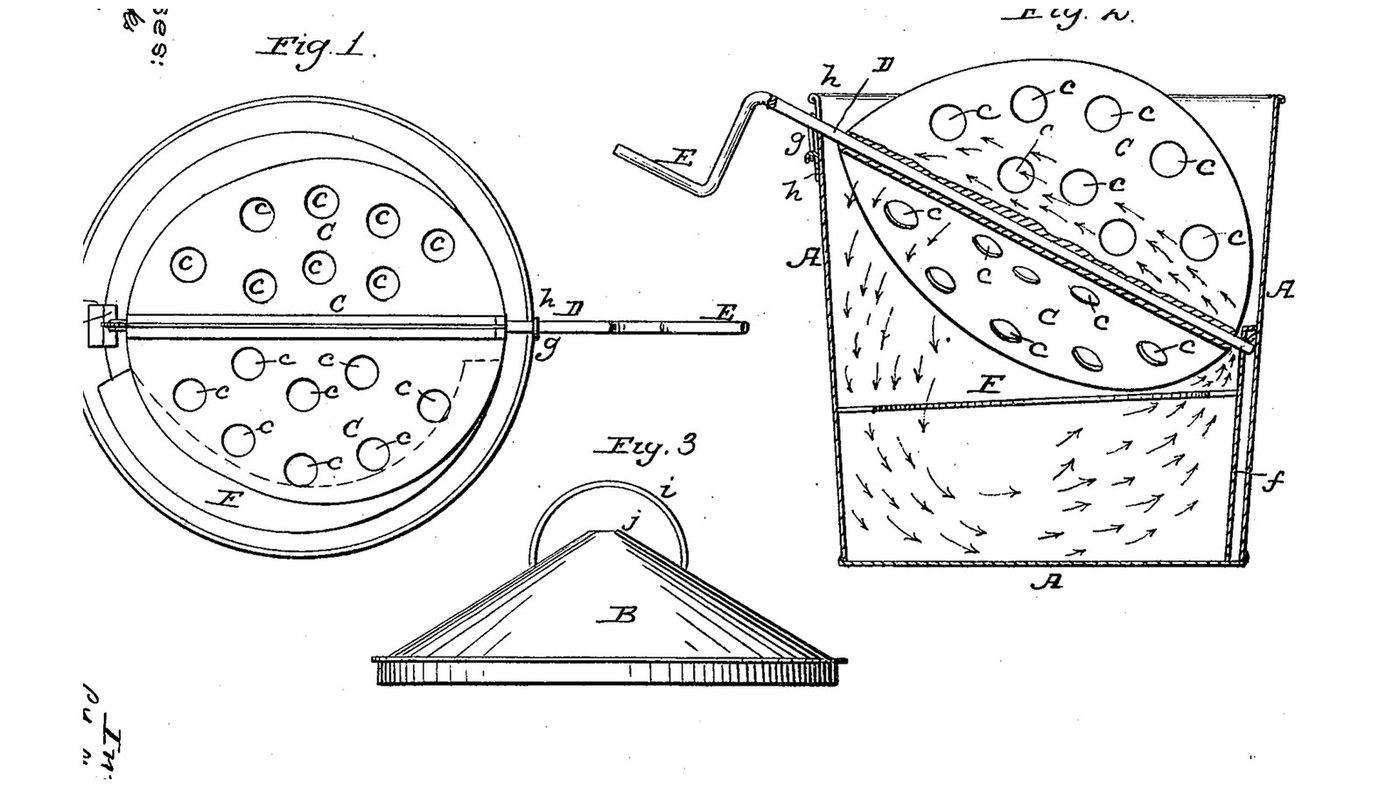
E. N. Sprinkle of Marion, Virginia, received US 25,985, dated 1 November 1859, for a churn. Three perforated dashers turn on a spindle set slantwise across the churn, from a standard low on one side to a slot in the rim on the other, and a crank on its end turns it fast. The cream is driven down and towards one side and cut by the holes' edges; a sloping guard under the dashers sends it back up to them, and the bottom stays clear for gathering the butter. The patent gives no sizes; every size here is ours.
Principiante
About a day, plus printing

Istruzioni

1

The spindle's slope, and where the cream goes

Caricamento del notebook Jupyter…
2

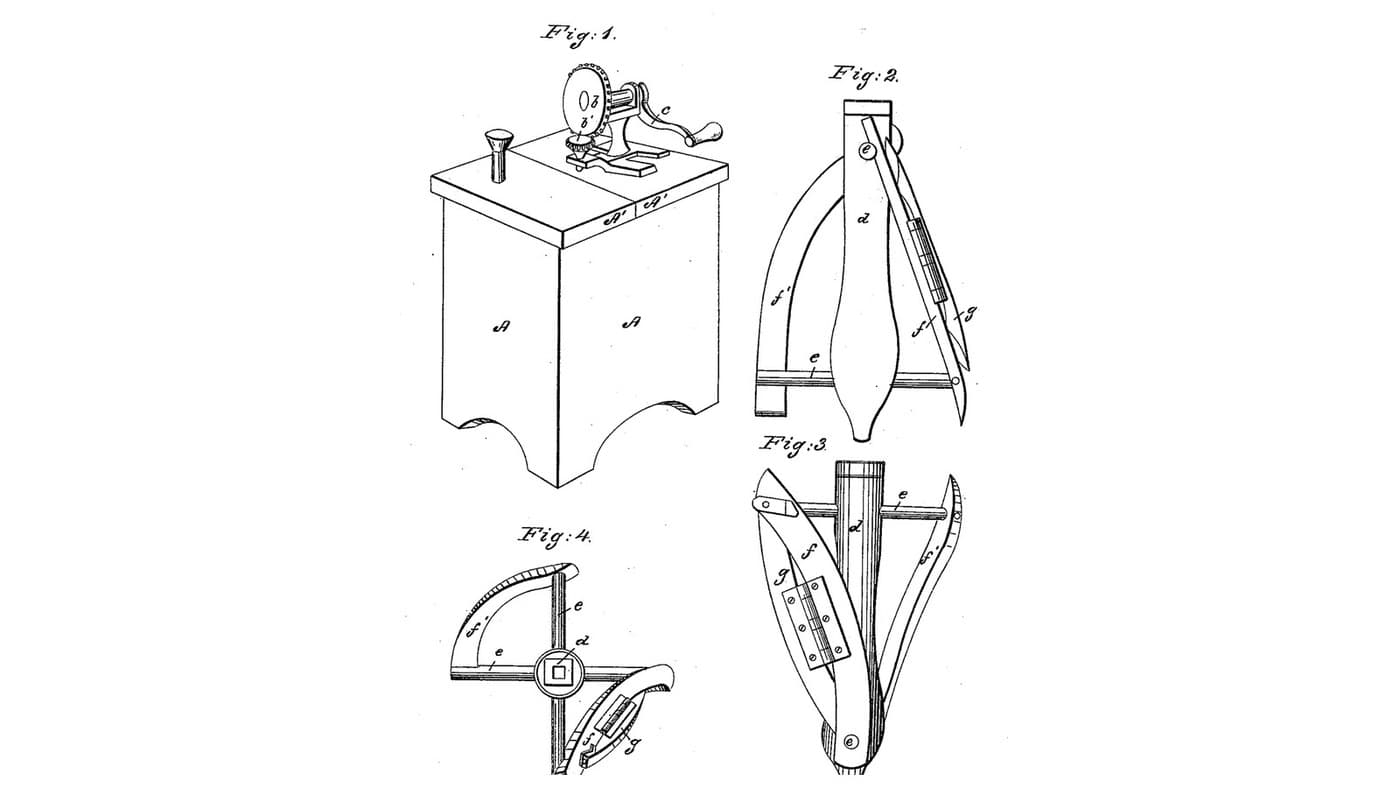
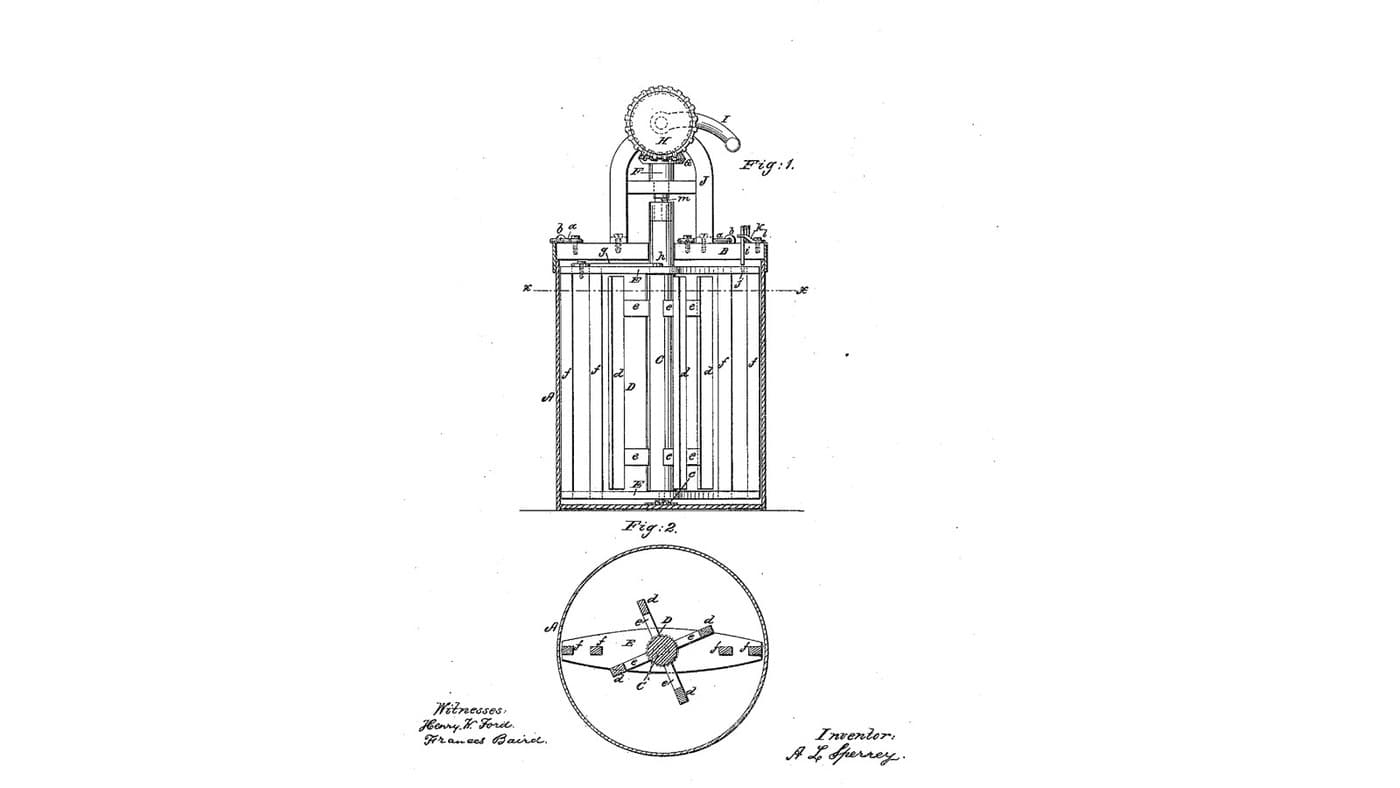
A turning dasher with curved wings, seven weeks before

Hassler's dasher stands upright. Sprinkle tilts his spindle so the dashers drive the cream sideways too.
3

Read US 25,985

"By reason of the dashers being operated in an oblique position, it will be seen that the cream will not only be forced down but will also be forced toward the side of the churn which supports the upper end of the dasher shaft, and is thus not only effectually agitated by the motion of the dashers, but is also cut and stirred by the edges of the perforations c, c, c, in the dashers"
4

Print the dashers C

Three perforated half-ellipse blades, 210 x 80 mm and 4 mm thick, round a 24 mm tube bored 12.6 mm, with a cross hole for a pin. Print with supports. PETG, 0.2 mm layers, 40 % infill, 4 walls.
File di designSTLCC0 - Free
5

Print the standard f

A post 30 mm square and 178 mm tall on a 60 mm base with an M6 nut trap, its top bored 12.8 mm at 38 degrees for the spindle's lower end, e. PETG, 0.2 mm layers, 40 % infill, 4 walls.
File di designSTLCC0 - Free
6

Print the guard's leg

A leg 24 mm across and 92 mm tall on a 50 mm foot, to hold the guard's low end. PETG, 0.2 mm layers, 40 % infill, 4 walls.
File di designSTLCC0 - Free
7

Standard f, guard F and slot h

Drill a 6.5 mm hole in the bucket's floor 115 mm from its centre. Push an M6 nut into the standard's trap, lay an O-ring under its base and bolt it over the hole from underneath, its sloping bore facing across the bucket. Cut the guard F from 8 mm hardwood: a half-circle to fit the bucket 110 mm up, notched round the standard. Screw it to the standard's side 125 mm up and onto its leg, 95 mm up at the far end, on one side of the spindle's line. Cut a slot 13 mm wide and 12 mm deep in the rim opposite the standard, and screw an eye h' beside it.

Materiali per questo passaggio:

Secchio da 20 litriSecchio da 20 litri1 pezzo
Assortimento di bulloni a testa esagonaleAssortimento di bulloni a testa esagonale1 pezzo

Dado esagonaleDado esagonale1 pezzo
Rondella pianaRondella piana1 pezzo
O-ringO-ring1 pezzo
Tavola di legno duroTavola di legno duro1 pezzo
Viti da legnoViti da legno4 pezzi
Gancio e occhielloGancio e occhiello1 pezzo
Filamento PETGFilamento PETG1 pezzo

Strumenti necessari:

Stampante 3D a filamento (FDM)Stampante 3D a filamento (FDM)
Trapano a batteriaTrapano a batteria
Serie di punte da trapanoSerie di punte da trapano
Seghetto alternativoSeghetto alternativo
BussolaBussola
Seghetto per metalliSeghetto per metalli
Lime (lima a mano)Lime (lima a mano)
Chiave regolabile a rullinoChiave regolabile a rullino
Set di cacciavitiSet di cacciaviti
8

Spindle D and crank E

Cut 12 mm stainless rod 625 mm long. Heat 415 mm from one end with the torch and bend it at right angles, then 120 mm further on bend it back parallel to make the crank. Slide the dasher onto the straight part and pin it 70 mm from the end. Set the end into the standard's bore and lay the spindle in the slot, then hook the catch g over it into the eye.

Materiali per questo passaggio:

Barra di acciaio inossidabileBarra di acciaio inossidabile1 pezzo

Strumenti necessari:

Cannello a propanoCannello a propano
Morsa da bancoMorsa da banco
MartelloMartello
Guanti resistenti al caloreGuanti resistenti al calore
Seghetto per metalliSeghetto per metalli
Lime (lima a mano)Lime (lima a mano)
Trapano a batteriaTrapano a batteria
Serie di punte da trapanoSerie di punte da trapano
9

Cover B

Cut a hardwood cover to sit on the rim, with a notch for the spindle at the slot, a 10 mm vent hole j, and a screw eye in the middle with a ring of stainless wire for lifting, i.

Materiali per questo passaggio:

Tavola di legno duroTavola di legno duro1 pezzo
Occhiello a viteOcchiello a vite1 pezzo
Filo di acciaio inoxFilo di acciaio inox1 pezzo

Strumenti necessari:

Seghetto alternativoSeghetto alternativo
BussolaBussola
Trapano a batteriaTrapano a batteria
Serie di punte da trapanoSerie di punte da trapano
Carta abrasivaCarta abrasiva
10

The build in 3D

FreeCAD model of this build, the bucket and cover cut through the middle: the standard, the slanting spindle with its crank, the three-bladed dasher, and the guard on its leg. The dasher was turned through 24 angles.
File di designBLENDCC0 - Free
11

Churn

Pour about 6 litres of heavy cream at about 15 °C into the bucket, checked with the thermometer, and put the cover on. Turn the crank fast and steadily, timing it. When the butter comes, unhook the catch, lift the spindle and dasher out, gather the butter from the clear bottom, drain the buttermilk, wash the butter in cold water until it runs clear, salt and weigh it.

Materiali per questo passaggio:

Panna da montarePanna da montare6 l
Sale marino grossoSale marino grosso1 pezzo
AcquaAcqua1 pezzo

Strumenti necessari:

Termometro a sonda permanenteTermometro a sonda permanente
CronometroCronometro
Bilancia digitale da cucinaBilancia digitale da cucina
Grande ciotola da impasto in acciaio inossidabileGrande ciotola da impasto in acciaio inossidabile
12

Troubleshooting

Oblique dasher churn troubleshooting.

Flow

Loading...
13

History and honest limits

**E. N. Sprinkle** of Marion, Smyth County, Virginia, US 25,985, 1 November 1859, "Churn". He claimed, as an improvement on the churn patented to Hatfield and Goldsmith on 13 July 1858, "the combination of the perforated obliquely arranged dashers C, C, C, with the single inclined stationary guard F". The patent gives no sizes; every size here is ours. His cover is conical; ours is flat.

Materiali

15

Strumenti richiesti

18

File di progetto

4

CC0 Pubblico dominio

Questo progetto è rilasciato sotto CC0. Sei libero di copiare, modificare, distribuire e utilizzare quest'opera per qualsiasi scopo, senza chiedere permesso.

Supporta il Maker acquistando prodotti tramite il suo progetto dove guadagna una Commissione Maker stabilita dai venditori, oppure crea una nuova iterazione di questo progetto e includilo come collegamento nel tuo progetto per condividere i ricavi.

Commenti

(0)

Accedi per partecipare alla discussione

Caricamento commenti...