ARTE
BELLEZZA E BENESSERE
MESTIERE
CULTURA E STORIA
DIVERTIMENTO
AMBIENTE
CIBO E BEVANDE
INGEGNERIA INVERSA
SCIENZE
SPORT
TECNOLOGIA
INDOSSABILI


The Reusable Can Opener: A Stop on the Knife and a Rim Left to Use Again
A can hacked open is fit only to be thrown away.
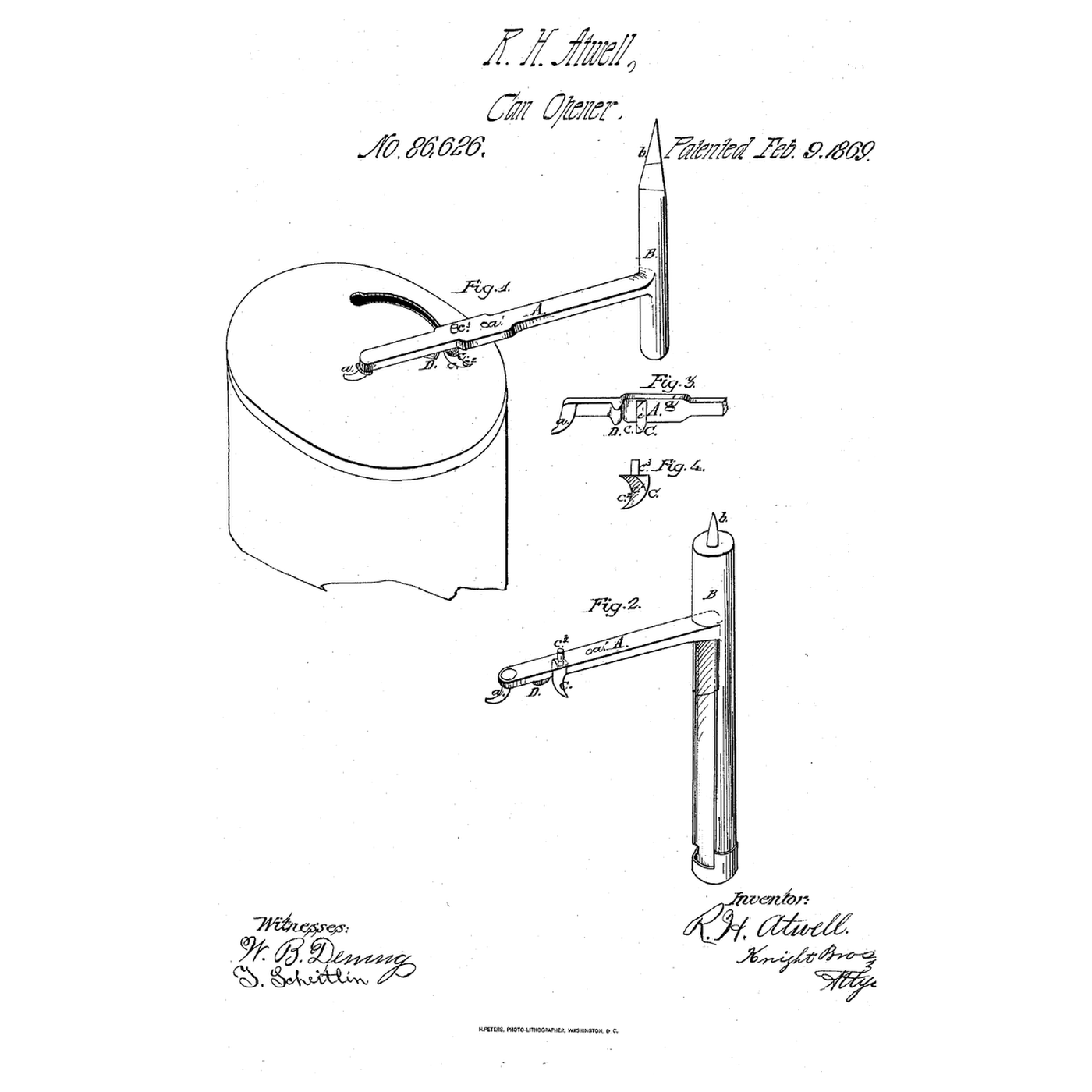
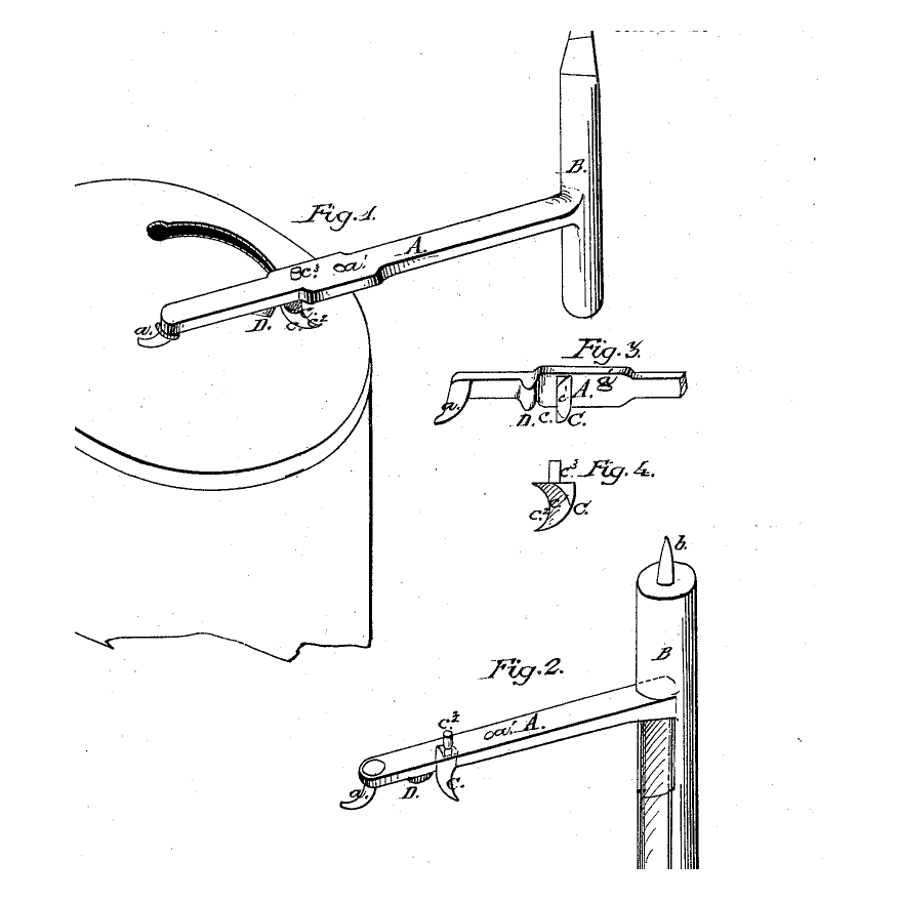
Richard H. Atwell of Baltimore, Maryland, received US 86,626, dated 9 February 1869, for a can opener: a bar at right angles to a handle that carries a piercer, a hook-shaped fulcrum pin in a hole made at the centre of the piece to be removed, a concave knife in one of several holes, and a stop that limits how far the knife goes in; the edges of the opening are so turned "as to adapt the can to be again used."
This rung works out which hole leaves a usable rim, then builds the bar, pin, knife and stop and opens a can cleanly enough to refill.
Intermedio
About 3 hours
Istruzioni
1
1
Which hole leaves a rim
Which hole leaves a rim
Caricamento del notebook Jupyter…
2
2
A centre-pivot cutter before it
A centre-pivot cutter before it
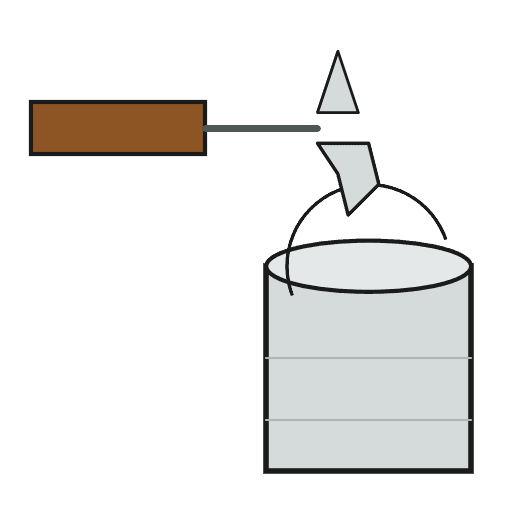
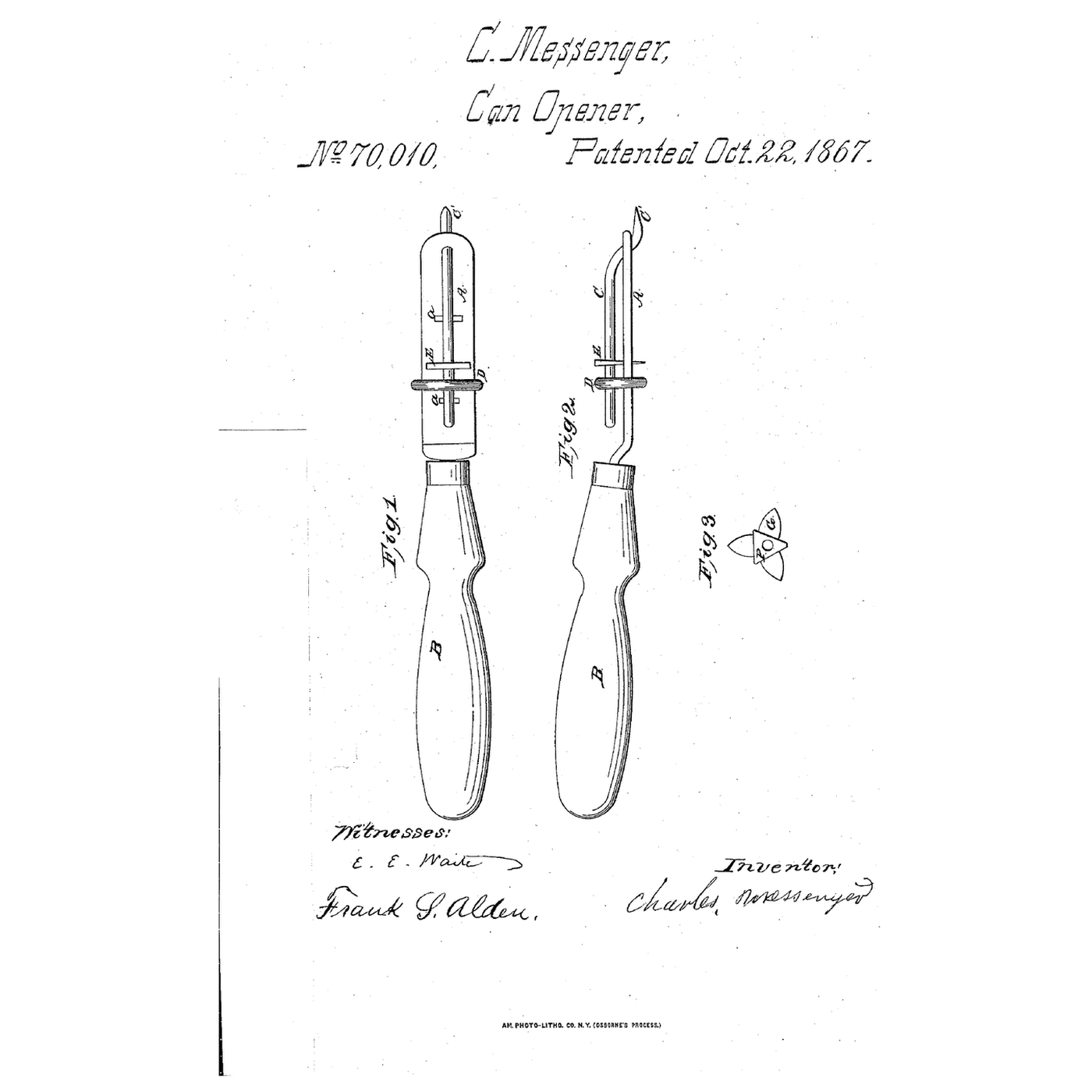
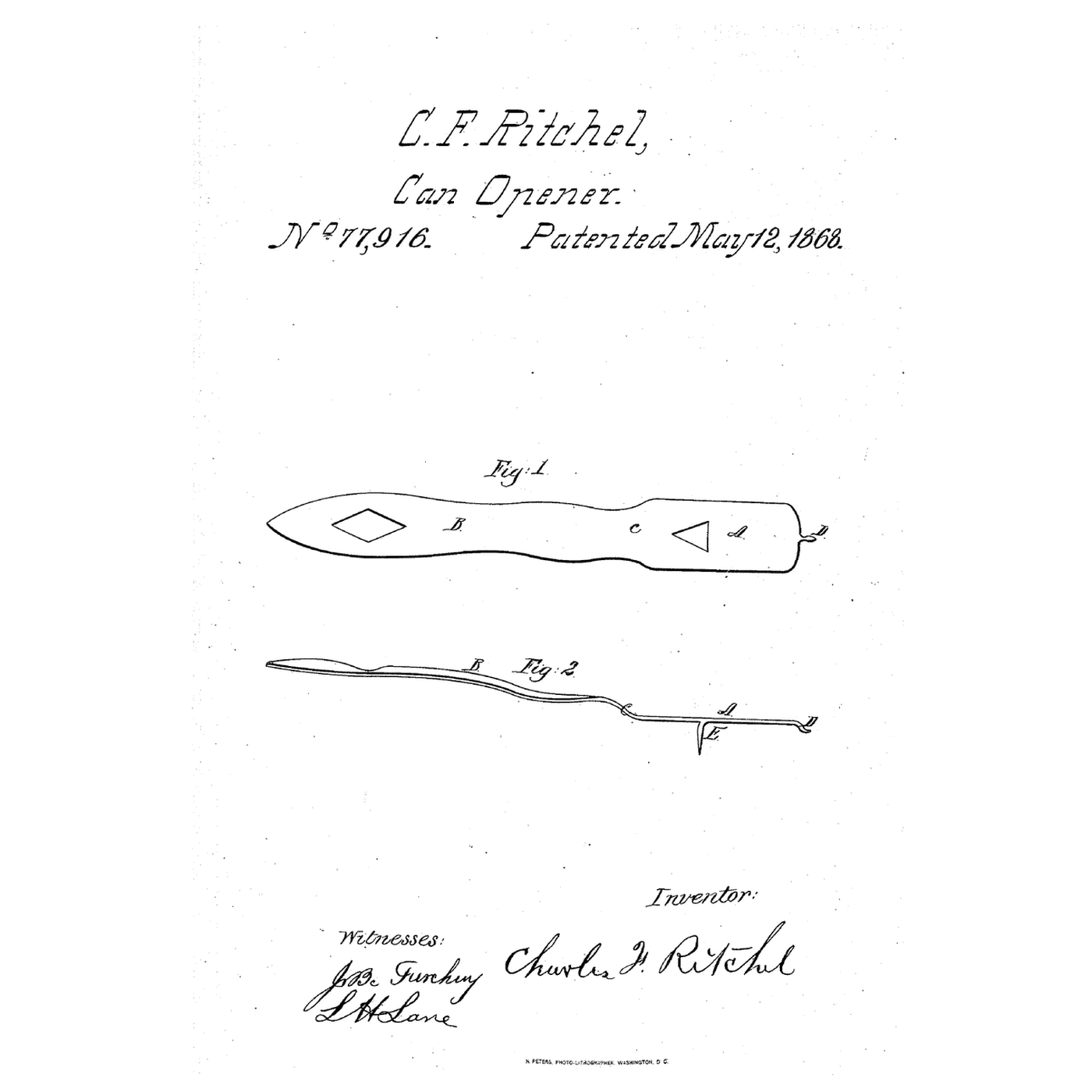
The embedded blueprint cuts a round hole round a spike. Atwell adds a stop on the knife and turns the edge so the can is fit to use again.
3
3
Read US 86,626
Read US 86,626
"The edges of the opening made in the can are so turned, by this construction of knife, as to adapt the can to be again used."
"A rest or stop, D, preferably cast on the bar, and arranged between the fulcrum a and knife C, limits the insertion of the knife, and thus prevents its hanging in the tin at its shank."
4
4
Make the bar and handle
Make the bar and handle
Cut 90 mm of 25 × 3 mm flat bar and drill 5 mm holes 20, 28 and 36 mm from one end. Fix its other end at right angles into a hardwood handle with epoxy, and file a point on the handle's far end as the piercer.
Materiali per questo passaggio:
 Piatto di acciaio dolce1 pezzo
 Tasselli di legno duro1 pezzo
 Resina epossidica bicomponente1 pezzo
Strumenti necessari:
 Seghetto per metalli
 Bulino da centro
 Trapano a batteria
 Serie di punte da trapano
 Lime (lima a mano)
5
5
Make the hook pin and stop
Make the hook pin and stop
Bend 4 mm steel rod into a hook and fix it through the bar's end as the fulcrum pin. Epoxy a hardwood stop under the bar between the pin and the first hole, 4 mm deep.
Materiali per questo passaggio:
 Tondo di acciaio dolce1 pezzo
 Blocco di legno duro1 pezzoResina epossidica bicomponente1 pezzo
Strumenti necessari:
 Morsa da banco
 MartelloSeghetto per metalliTrapano a batteriaSerie di punte da trapano
6
6
Make the knife
Make the knife
Cut a knife from 1 mm steel sheet with a 5 mm shank, file its cutting edge concave and its flat side toward the pin. Fit the shank through a hole and nut it on top.
Materiali per questo passaggio:
 Lamiera di acciaio dolce1 pezzo
 Dado esagonale1 pezzo
 Viti da metallo1 pezzo
Strumenti necessari:
 Cesoie da lattoniereLime (lima a mano)
 Pietra per affilare
 Chiave regolabile a rullino
 Occhiali di sicurezza trasparenti
7
7
The patent drawing
The patent drawing
US 86,626 drawing sheet, public domain (expired patent).
8
8
Open a can for reuse
Open a can for reuse
Pierce the centre of a sealed can's top with the handle's point and hook the pin in. Press the knife through to the stop and turn the bar round once. Measure the rim left and run a finger-safe check along it with a rag.
Materiali per questo passaggio:
 Barattolo di latta1 pezzo
Strumenti necessari:
 Calibro digitale da 6 pollici
 Cronometro
 Guanti da lavoro in pelle
9
9
A knife that hangs, wanders or leaves a ragged rim
A knife that hangs, wanders or leaves a ragged rim
Reusable can opener troubleshooting.
Flow
Loading...
10
10
History and honest limits
History and honest limits
**Richard H. Atwell** of Baltimore, Maryland, received US 86,626, dated 9 February 1869. His bar may be cast in one piece with the handle or hinged to it; the knife is held from lateral pressure and bending, its edge preferably concave so it need not be pressed down to its work. When the can is not to be refilled, part of the circle may be cut and the piece bent up.
**Honest limits.** Epoxy and a hardwood stop stand in for his casting, and the knife is unhardened sheet. Your rim measurements are the result.
Materiali
9- 1 pezzoSegnaposto
- 1 pezzoSegnaposto
- Segnaposto
- 1 pezzoSegnaposto
- 1 pezzoSegnaposto
- 1 pezzoSegnaposto
- 1 pezzoSegnaposto
- 1 pezzoSegnaposto
- 1 pezzoSegnaposto
Strumenti richiesti
14- Segnaposto
- Segnaposto
- 1 vendor sell this, none ship to you yetSegnaposto
- Segnaposto
- Segnaposto
- Segnaposto
- Segnaposto
- Segnaposto
- Segnaposto
- Segnaposto
- Segnaposto
- Segnaposto
- Segnaposto
- Segnaposto
Questo progetto realizza
Blueprint correlati
Questi blueprint condividono conoscenze — tecniche, materiali o principi


CC0 Pubblico dominio
Questo progetto è rilasciato sotto CC0. Sei libero di copiare, modificare, distribuire e utilizzare quest'opera per qualsiasi scopo, senza chiedere permesso.
Supporta il Maker acquistando prodotti tramite il suo progetto dove guadagna una Commissione Maker stabilita dai venditori, oppure crea una nuova iterazione di questo progetto e includilo come collegamento nel tuo progetto per condividere i ricavi.