ARTE
BELLEZZA E BENESSERE
MESTIERE
CULTURA E STORIA
DIVERTIMENTO
AMBIENTE
CIBO E BEVANDE
INGEGNERIA INVERSA
SCIENZE
SPORT
TECNOLOGIA
INDOSSABILI
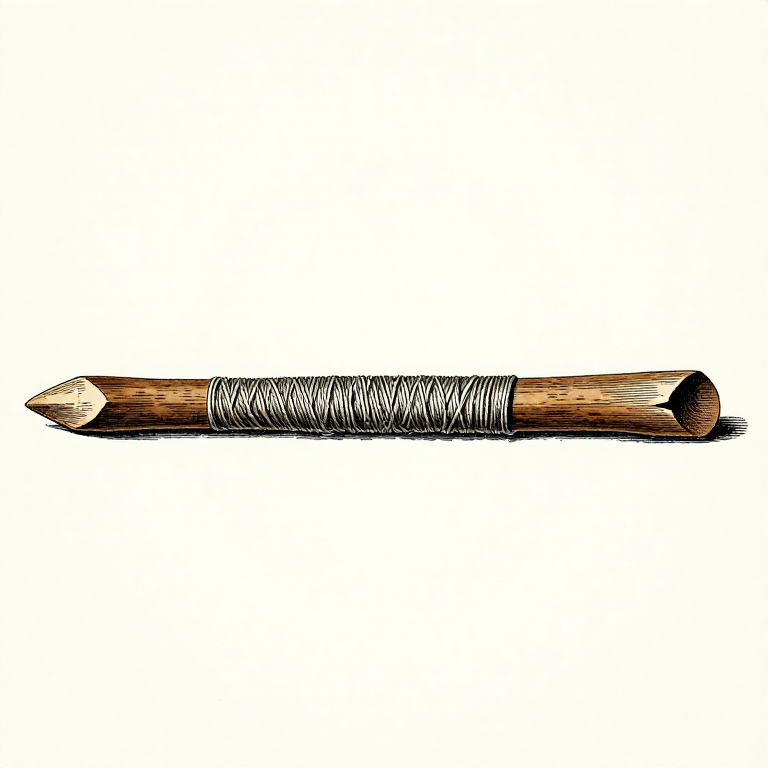


Weaving Evenly: The Beat, the Selvedge and the Draw-In
Once the warp is on, weaving is a cycle of four motions repeated thousands of times: open the shed, throw the shuttle, change the shed, beat.
Everything about the quality of the cloth is in how consistently that cycle is performed. A beat that varies gives bands of dense and open cloth; a weft laid in too tight pulls the edges in; a shuttle caught on a slack thread leaves a float.
None of it is difficult. All of it is a habit, and the habits are worth building deliberately in the first hour rather than discovering in the first metre.
Intermedio
4 hours
Istruzioni
1
1
The beat, and why it must be the same every time
The beat, and why it must be the same every time
The beat pushes each new weft thread against the last, and how hard it is pushed decides the picks per inch — the density of the cloth in the length direction.
**Beat with the same force every pick.** Not with more force to "make it firm": a consistent light beat gives a better cloth than a variable hard one, because variation shows and density does not.
**Beat on the same shed position each time.** Beating with the shed open gives a different result from beating with it closed or changing, because the warp threads are at different angles. Pick one and keep to it. Beating on a closed shed packs harder; beating on an open one is gentler and more even.
**Let the loom do it.** On a hanging beater, a swing from the same height each time is far more repeatable than pushing. The weight of the beater is the measurement.
**Watch the fell line** — the edge of the woven cloth. It should advance steadily and stay straight and parallel to the beater. A fell that is further advanced at one side means the beat is uneven across the width.
**Check the picks per inch every few centimetres** for the first while, until the hand knows the beat. A ruler laid on the cloth takes five seconds and catches drift before it becomes a band.
Materiali per questo passaggio:
 Filo di ordito in cotone1 pezzo
 Filato di lana non tinto1 pezzo
Strumenti necessari:
 Telaio a pedali
 Navetta a barchetta
 Righello
2
2
Selvedges: the edge that gives everything away
Selvedges: the edge that gives everything away
The selvedge is the woven edge of the cloth, where the weft turns and comes back. It is the hardest part to do well and the first thing anyone looks at.
**Lay the weft in at an angle, not straight across.** A weft laid straight across has exactly the width of the warp and no more, so when it bends around the warp threads it comes up short and pulls the edges in. Laying it at a shallow angle — a gentle arc, or a distinct diagonal — leaves the extra length the bending needs.
**How much extra:** on a plain weave the weft has to travel about a tenth further than the straight-line width. That is the arc.
**Do not pull the weft tight at the turn.** The commonest cause of a ragged selvedge and of draw-in, and it is a reflex that has to be unlearned.
**Keep the tension of the shuttle consistent.** A shuttle that unwinds freely sometimes and drags at others makes an uneven edge whatever the hands do — which is why a boat shuttle with a smooth bobbin is worth having.
**A floating selvedge** — one or two threads at each edge threaded through the reed but not through any heddle — makes a clean edge almost automatically, because the shuttle always passes over it going one way and under it coming back. It is the standard fix for twills, where the structure otherwise leaves the edge ragged.
Materiali per questo passaggio:
Filo di ordito in cotone1 pezzoStrumenti necessari:
Navetta a barchetta NavettaTelaio a pedali
3
3
Draw-in and take-up, which are not the same thing
Draw-in and take-up, which are not the same thing
**Draw-in** is the cloth becoming narrower than the warp was in the reed. It happens because the weft has to bend around the warp threads, so it pulls them together.
**A small amount is normal and unavoidable** — 5 to 10% on a plain weave. It must be allowed for when the warp width is chosen, or the finished cloth is narrower than wanted.
**Excessive draw-in** comes from pulling the weft tight, and it has a specific signature: the edge warp threads rub hard against the reed at every beat and start to break, one after another, always at the edges. If edge threads keep breaking, the cause is draw-in and not weak yarn.
**Take-up** is the other one: the warp being used up faster than the cloth grows, because the warp bends around every weft thread. Also 5 to 10% on a plain weave, also unavoidable, and it is why the warp rung adds it to the length.
**Both scale with how much interlacing there is.** A plain weave has the most of both; a satin has very little.
**Measure the width of the cloth every so often** and write it down. A steady width means a steady technique. A width that narrows along the cloth means the hands are tightening as the weaver tires, which is the single most common thing to see in a first long piece.
Materiali per questo passaggio:
Filo di ordito in cotone1 pezzoStrumenti necessari:
RighelloTelaio a pedali4
4
Rhythm, joins and stopping
Rhythm, joins and stopping
**Weave in a rhythm.** The cycle should be the same every time in the same order — shed, throw, beat, change — because consistency comes from repetition and not from attention. A weaver watching the cloth closely weaves worse than one who has the rhythm.
**Joining a new weft:** overlap the old and new ends by a few centimetres in the same shed, with the ends tucked back around a warp thread. Do it at a random point rather than always at the selvedge, or every join shows in a line down the edge.
**Never join in the middle of a pattern block** if there is one; join where the structure hides it.
**Stopping for the day:** leave the shed closed and the tension on, and do not leave a warp tensioned for months — it takes a set and the cloth changes where it stood. If it must be left, slacken it.
**Starting again:** weave the first few picks carefully and check the density against the cloth below. A visible line where a session started is the most common fault in a long piece, and it is caused by the beat not being what it was, which is caused by the hand having forgotten. Check against the ruler rather than the memory.
**Advance the warp often and by a small amount.** Weaving at the far end of the reach changes the shed geometry and the beat with it, so the cloth changes too.
Materiali per questo passaggio:
Filato di lana non tinto1 pezzoFilo di ordito in cotone1 pezzoStrumenti necessari:
Navetta a barchetta IncannatoioRighello
 Forbici
Materiali
2- 4 pezziSegnaposto
- 2 pezziSegnaposto
Blueprint correlati
Questi blueprint condividono conoscenze — tecniche, materiali o principi
CC0 Pubblico dominio
Questo progetto è rilasciato sotto CC0. Sei libero di copiare, modificare, distribuire e utilizzare quest'opera per qualsiasi scopo, senza chiedere permesso.
Supporta il Maker acquistando prodotti tramite il suo progetto dove guadagna una Commissione Maker stabilita dai venditori, oppure crea una nuova iterazione di questo progetto e includilo come collegamento nel tuo progetto per condividere i ricavi.