Collaborazione
ARTE
BELLEZZA E BENESSERE
MESTIERE
CULTURA E STORIA
DIVERTIMENTO
AMBIENTE
CIBO E BEVANDE
INGEGNERIA INVERSA
SCIENZE
SPORT
TECNOLOGIA
INDOSSABILI
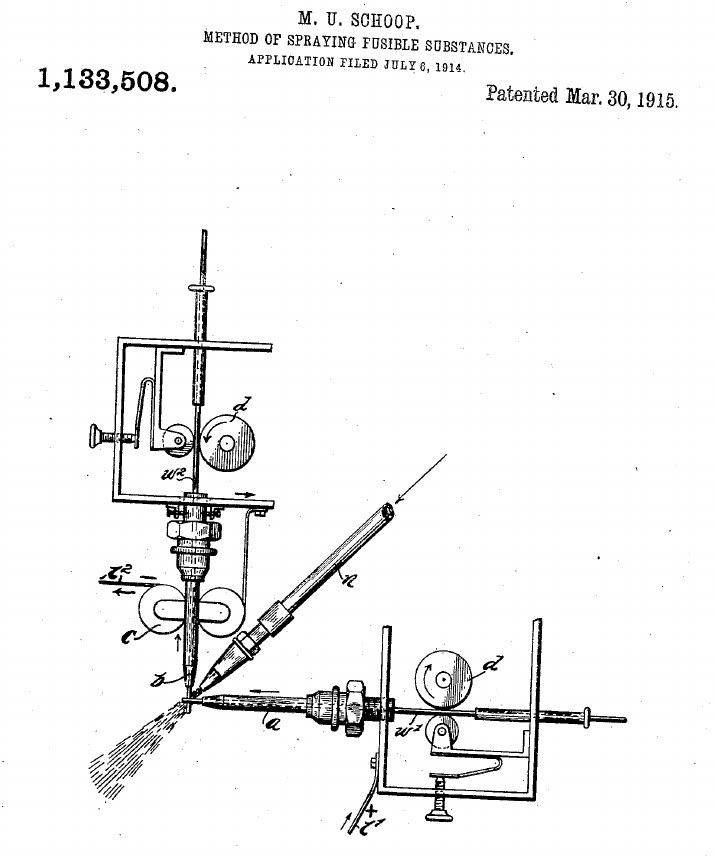


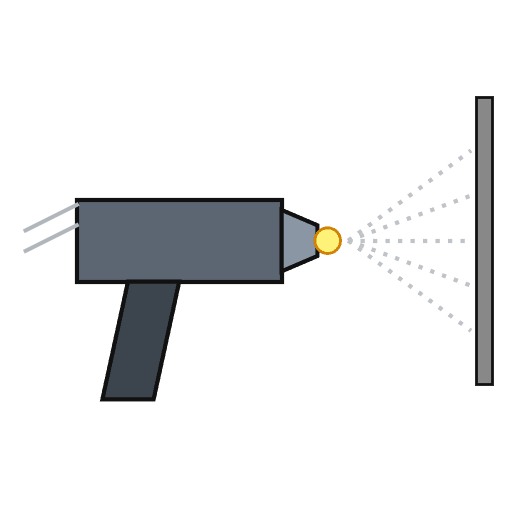
Wire-Arc Spray Gun: Two Crossed Wires, a Vibrating Arc and an Air Blast (Schoop, US 1,133,508, 1915)
The first wire-arc metal sprayer. Two metal wires are pushed through iron tubes until their tips cross. Current through the wires also runs an electromagnet that pulls one tube back, so a small arc springs between the tips and melts them; a jet of air blows the molten metal off as a fine spray and puts the arc out, the magnet lets go, the wires touch again, and the cycle repeats very fast.
Result: a continuous spray of molten metal for coating a surface.
Source: M. U. Schoop, US 1,133,508 (1915). Unknown: the wire metals and sizes, the coil, the air pressure. Picture: the patent drawing.
Avanzato
Unknown
Istruzioni
1
1
Make the feed tubes and rolls
Make the feed tubes and rolls
Make two feed tubes ending in nozzles, preferably of iron. For each, mount a pair of feed rolls in a frame to push a wire through the tube. Set the tubes at about 90° to each other so the wires cross as they come out, the nozzles only a few millimetres apart. Mount one tube on an elastic support so it can move a little. Not given: sizes, the roll drive (the air blast may drive a small turbine for it).
Materiali per questo passaggio:
 Tubo di ferro2 feed tubes
 Metallo sconosciuto1 rolls, frames
 Molla a balestra1 elastic support
Strumenti necessari:
 Tornio per metalli
 Dimensioni sconosciute
2
2
Fit the electromagnet
Fit the electromagnet
Wind an electromagnet beside the springing tube, so the tube is its armature. Wire the coil into the same circuit as the two tubes and wires, positive to one tube and negative to the other. When current flows the magnet pulls the tube aside and draws its wire slightly back from the other. Ours: enamelled copper wire for the coil. Not given: the coil.
Materiali per questo passaggio:
 Filo di rame smaltato1 coilMetallo sconosciuto1 magnet core
 Filo di rame1 circuit leads
Strumenti necessari:
 Set di cacciaviti
3
3
Fit the air blast
Fit the air blast
Aim a blast pipe at the point where the wires cross, either close to it or 20-30 mm away, whichever sprays best for the metal. Feed it with compressed air or another gas. Not given: the pressure.
Materiali per questo passaggio:
 Ugello per aria1 pezzo
 Tubo per aria compressa1 pezzo
Strumenti necessari:
 Compressore d'aria industriale
 Chiave regolabile a rullino
4
4
Spray
Spray
Load a wire of the coating metal in each tube and feed them until they touch. Switch on the current, generally 40 to 75 volts depending on the metal and wire thickness, and the air. The magnet pulls the wires apart, an arc melts their tips, the air blows the melt away as spray and snuffs the arc, the magnet releases, and the cycle repeats very rapidly. The positive wire burns faster, so feed it faster or use a thicker wire; match the feed to the melting. Hold the work in the spray. Without the vibration the arc flickers and the wires may weld together.
Strumenti necessari:
 Alimentatore in corrente continuaCompressore d'aria industrialeMetallo sconosciuto
Materiali
7- 2 feed tubesSegnaposto
- 1 magnet coreSegnaposto
- 1 elastic supportSegnaposto
- 1 coilSegnaposto
- 1 circuit leadsSegnaposto
- 1 pezzoSegnaposto
- 1 pezzoSegnaposto
Strumenti richiesti
7- Segnaposto
- Segnaposto
- Segnaposto
- Segnaposto
- Segnaposto
- Segnaposto
- Segnaposto
Materiali dei progetti collegati
Questo progetto realizza
CC0 Pubblico dominio
Questo progetto è rilasciato sotto CC0. Sei libero di copiare, modificare, distribuire e utilizzare quest'opera per qualsiasi scopo, senza chiedere permesso.
Supporta il Maker acquistando prodotti tramite il suo progetto dove guadagna una Commissione Maker stabilita dai venditori, oppure crea una nuova iterazione di questo progetto e includilo come collegamento nel tuo progetto per condividere i ricavi.