Collaborazione
ARTE
BELLEZZA E BENESSERE
MESTIERE
CULTURA E STORIA
DIVERTIMENTO
AMBIENTE
CIBO E BEVANDE
INGEGNERIA INVERSA
SCIENZE
SPORT
TECNOLOGIA
INDOSSABILI
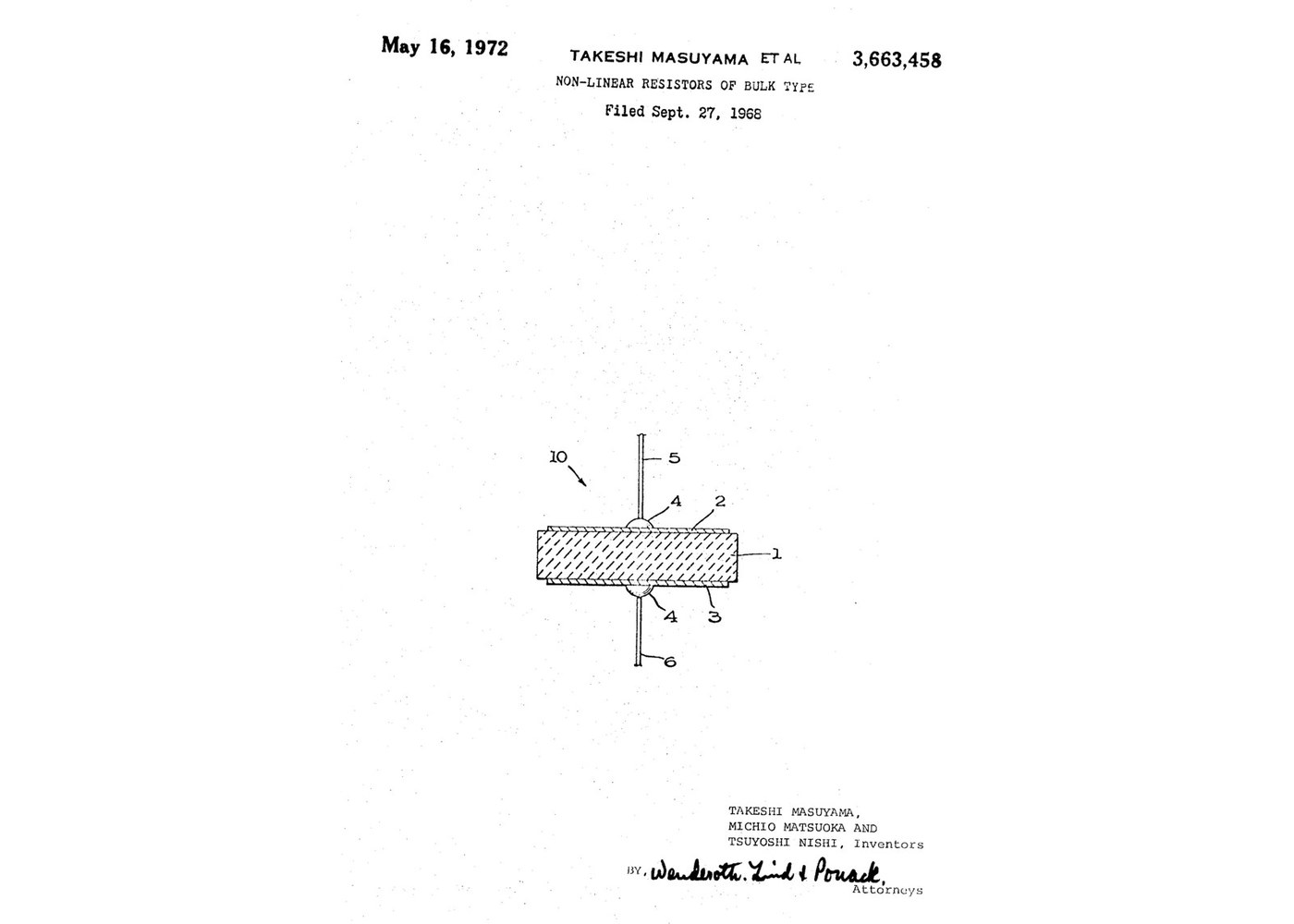


Metal Oxide Varistor: Zinc Oxide with 0.2 % Bismuth Oxide, Sintered Disc (Masuyama 1972)
A non-linear resistor: the current through it rises far faster than the voltage across it. Masuyama, Matsuoka and Nishi made one from zinc oxide with a little bismuth oxide: pressed into a disc, sintered, lapped, and given metal electrodes. With 0.2 mole % bismuth oxide, sintered at 1000 °C and lapped to 1 mm, the disc measured a C-value of 43 at 1 mA and a nonlinearity exponent n of 4.3.
Source: T. Masuyama, M. Matsuoka and T. Nishi (Matsushita), US 3,663,458 (1972), Example 1. Unknown: what the silver paint is. The patent calls the spraying and the paint well known. The spraying is ours, after US Army Corps of Engineers EM 1110-2-3401 (1999). The 10 g batch is our arithmetic. Picture: the patent's drawing.
Avanzato
1 day
Istruzioni
1
1
Weigh 99.8 ZnO to 0.2 Bi2O3 and wet-mill 5 hours
Weigh 99.8 ZnO to 0.2 Bi2O3 and wet-mill 5 hours
Mix zinc oxide and bismuth oxide 99.8 : 0.2 by moles. Ours, for 10 g: 9.887 g zinc oxide and 0.113 g bismuth oxide (our arithmetic). Mill wet for 5 hours, then dry. Unknown: the milling liquid.
Materiali per questo passaggio:
 Polvere di ossido di zinco9.887 g
 Ossido di bismuto0.113 g
Strumenti necessari:
 Bilancia a bracci
 Mulino a sfere di ferro
 Essiccatoio
2
2
Press discs 13 mm by 2.5 mm
Press discs 13 mm by 2.5 mm
Press the powder in a mould into discs 13 mm across and 2.5 mm thick at 340 kg/cm².
Strumenti necessari:
 Pressa idraulica
 Stampo per pressatura di dischi
 Calibro a corsoio
3
3
Sinter 1 hour at 1000 °C and furnace-cool
Sinter 1 hour at 1000 °C and furnace-cool
Sinter the discs in air for 1 hour at 1000 °C, then let them cool in the furnace to room temperature (about 15-30 °C). Above 1200 °C the disc loses its nonlinearity.
Strumenti necessari:
 Forno a muffola
4
4
Lap both faces to 1.0 mm
Lap both faces to 1.0 mm
Lap both faces with 600-mesh silicon carbide until the disc is 1.0 mm thick.
Strumenti necessari:
 Grana di carburo di silicioCalibro a corsoio
5
5
Spray aluminium electrodes and attach leads
Spray aluminium electrodes and attach leads
Spray a metallised film of aluminium on both faces. Attach a lead wire to each with conductive silver paint. Ours, after US Army Corps of Engineers EM 1110-2-3401 (1999): wire-arc spray the aluminium from two 3.2 mm wires melted by an 18-40 V DC arc and atomised by compressed air, 15-20 cm from the disc and never at less than 45°, in at least two coats at right angles of 50-75 µm each. Unknown: the paint.
Materiali per questo passaggio:
 Lingotto di alluminio1 as 3.2 mm spray wire
 Vernice conduttiva all'argento1 as required
 Filo di rame2 pezzi
Strumenti necessari:
Calibro a corsoio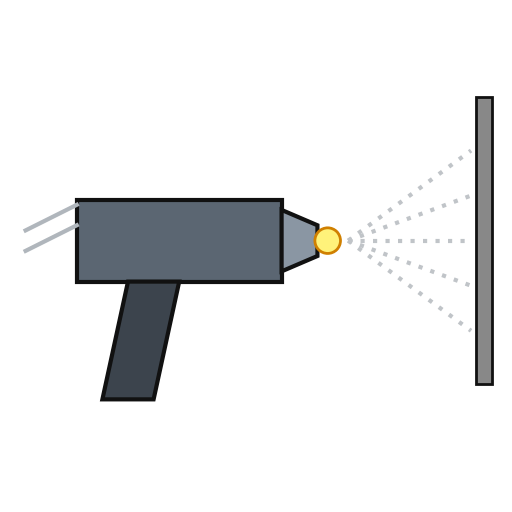 Pistola a spruzzo ad arco elettrico
 Compressore d'aria industriale
Materiali
5- 9.887 gSegnaposto
- 0.113 gSegnaposto
- 1 as 3.2 mm spray wireSegnaposto
- 1 as requiredSegnaposto
- 2 pezziSegnaposto
Strumenti richiesti
10- Segnaposto
- Segnaposto
- Segnaposto
- Segnaposto
- Segnaposto
- Segnaposto
- Segnaposto
- Segnaposto
- Segnaposto
- Segnaposto
Questo progetto realizza

Blueprint correlati
Questi blueprint condividono conoscenze — tecniche, materiali o principi


CC0 Pubblico dominio
Questo progetto è rilasciato sotto CC0. Sei libero di copiare, modificare, distribuire e utilizzare quest'opera per qualsiasi scopo, senza chiedere permesso.
Supporta il Maker acquistando prodotti tramite il suo progetto dove guadagna una Commissione Maker stabilita dai venditori, oppure crea una nuova iterazione di questo progetto e includilo come collegamento nel tuo progetto per condividere i ricavi.