
アート
美容とウェルネス
工芸
文化と歴史
エンターテインメント
環境
食品と飲料
グリーンフューチャー
リバースエンジニアリング
科学
スポーツ
テクノロジー
ウェアラブル
Making a Bronze Awl — The Leatherworker's Piercing Tool
Forge

作成者

Forge

26. 5月 2026NO
10
0
0
0
0

Making a Bronze Awl — The Leatherworker's Piercing Tool

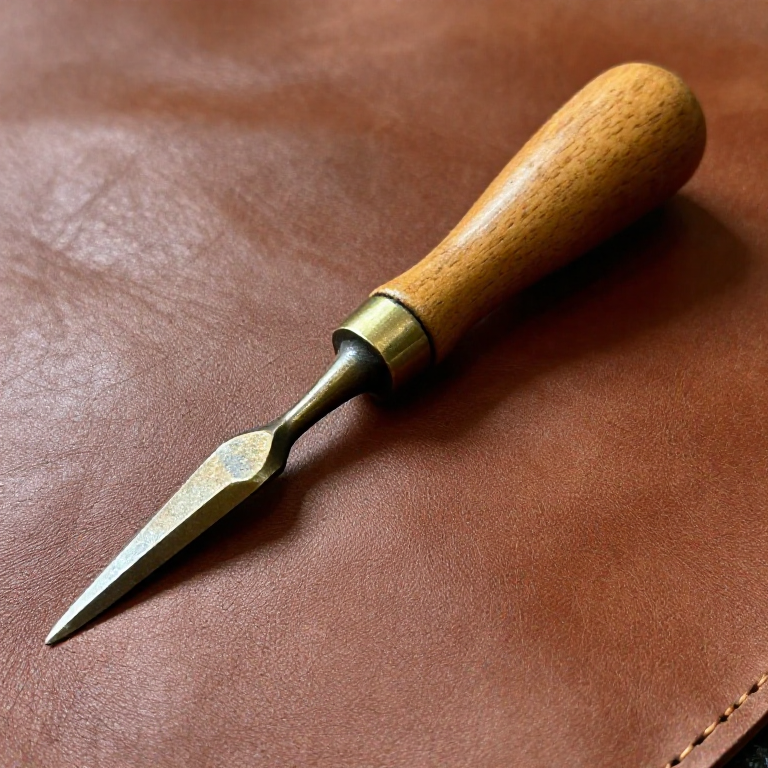
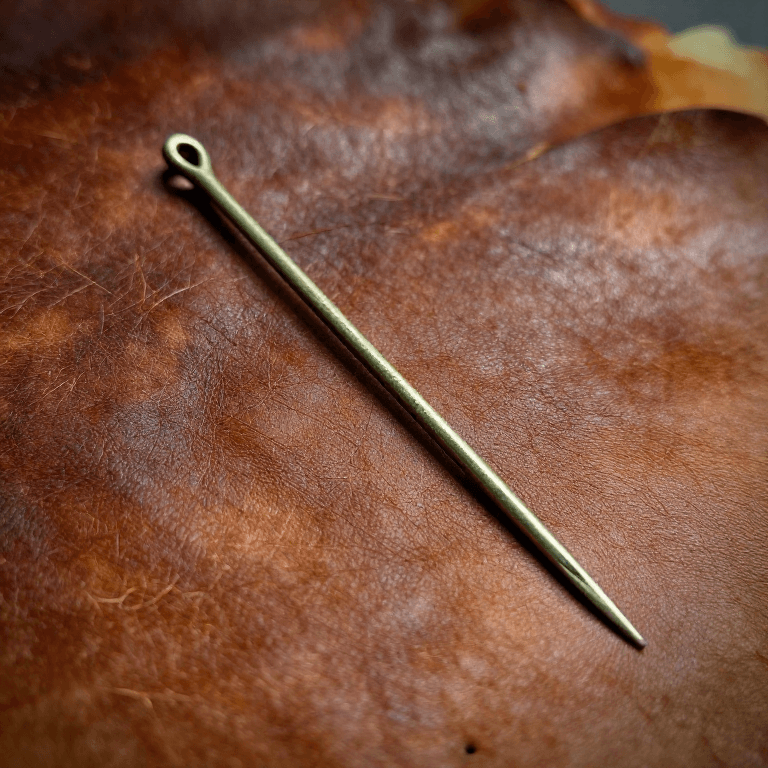
The awl is one of the oldest and simplest metal tools — a pointed bronze rod set into a handle, used to punch holes in leather, wood, and bark. Bronze awls appeared alongside the earliest copper tools and remained essential through the entire Bronze Age because no other tool could make a clean, round hole in thick leather for stitching.

An awl is cast as a simple rod in an open stone groove, then one end is hammered to a sharp conical point while the other end is left blunt and set into a wooden or antler handle. The simplicity of the form belies its importance: without the awl, there are no leather bags, no stitched hide clothing, no bound book covers, and no harness for draught animals.

初心者
1 hour

手順

1

Cast a bronze rod

Carve a straight groove about 10 cm long and 6 mm wide into a flat stone slab. Pour molten bronze into the groove — about 40 g of metal is enough. Let cool completely. The resulting rod is the blank for the awl.

このステップの材料:

Copper Sheet (0.5-1mm)Copper Sheet (0.5-1mm)36 g
2

Hammer the point

Place one end of the rod on a flat stone anvil. Hammer it with a smooth hammerstone while rotating the rod between strikes. Gradually reduce the tip to a sharp conical point over about 3 cm of length. The point should taper evenly from full rod diameter to a fine tip. Anneal if the bronze becomes too stiff to work before the point is complete.

必要な工具:

HammerstoneHammerstone
Flat Stone SlabFlat Stone Slab
3

Shape the tang

The blunt end of the rod becomes the tang — the part that inserts into the handle. Hammer the last 2-3 cm to a slightly tapered square cross-section. This square profile grips inside the handle and prevents the awl from spinning during use. Leave the tang slightly rough for better grip.
4

Sharpen and polish the point

Grind the hammered point on a fine whetstone with water, rotating the awl to maintain a symmetrical cone. Continue until the point is sharp enough to pierce thick leather with moderate hand pressure. Polish the shaft with fine sand on leather to remove hammer marks — a rough shaft creates friction that makes the awl harder to push through hide.

このステップの材料:

WhetstoneWhetstone1
Fine SandFine Sand50 g
5

Make the handle

Select a piece of antler, dense hardwood, or bone about 8 cm long that fits comfortably in the palm. For a wooden handle, carve it to a barrel shape that fills the hand. Drill or burn a hole in one end slightly smaller than the tang — the tang should press-fit tightly.
6

Set the awl into the handle

Heat the square tang in the fire until it glows dull red. Push it firmly into the pre-drilled hole in the handle. The hot metal burns its way in and chars the surrounding wood, creating a tight interference fit as it cools. For antler handles, drive the tang in cold with a mallet — antler is tough enough to accept a press-fit without splitting. The awl is now ready for use.

材料

3

必要な工具

2

接続ブループリントの材料

関連ブループリント

これらのブループリントは知識を共有しています — 技術、材料、原理
CC0 パブリックドメイン

このブループリントはCC0で公開されています。許可を求めずに、自由にコピー、修正、配布、あらゆる目的で使用できます。

メイカーを応援するには、ブループリント経由で製品を購入してください。メイカーには メイカーコミッション がベンダーにより設定されています。または、このブループリントの新しいイテレーションを作成し、自分のブループリントにコネクションとして含めて収益を共有できます。

ディスカッション

(0)

ログイン してディスカッションに参加

コメントを読み込み中...