アート
美容とウェルネス
工芸
文化と歴史
エンターテインメント
環境
食品と飲料
リバースエンジニアリング
科学
スポーツ
テクノロジー
ウェアラブル

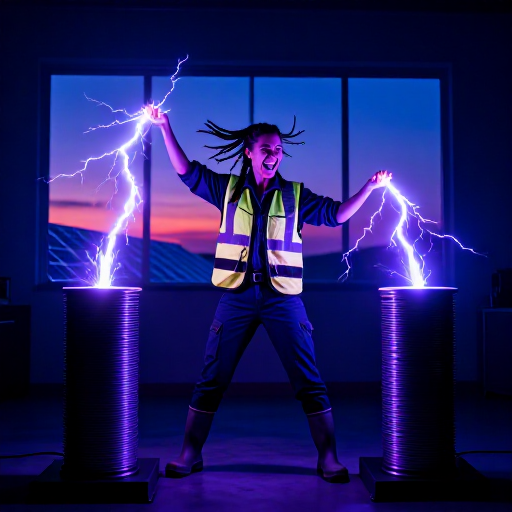

Choosing the Wire: Solid or Stranded, and What the Gauge Number Means
Wire is not just wire. Solid or stranded decides whether it survives being moved; the gauge decides how much current it can carry and how much voltage it loses on the way.
Both choices are usually made by whatever is on the shelf, and both have a failure mode that appears weeks later. Solid core in anything that flexes work-hardens and snaps inside its insulation, where you cannot see it. Wire too thin for its current gets warm, then hot, and the insulation is what fails first.
307 published blueprints on Youblob use wire. The bench batch covered the circuit; this one covers everything that leaves the board.
初心者
2 hours
手順
1
1
Solid for things that stay still, stranded for things that move
Solid for things that stay still, stranded for things that move
SOLID core is one thick conductor. It holds its shape, pushes into a breadboard neatly, and is what house wiring uses — because house wiring never moves.
STRANDED is many fine conductors twisted together. Each strand bends through a much smaller radius than one thick wire would, so the bundle flexes without fatiguing. Anything on a door, a lid, a robot arm or a lead that gets coiled up must be stranded.
The failure is specific and worth recognising: a solid wire that has been flexed repeatedly breaks INSIDE the insulation, so the joint looks perfect and the circuit is open. The published fault-finding rung is where that gets diagnosed; choosing stranded is where it gets avoided.
このステップの材料:
 銅線1 個
銅線1 個必要な工具:
 ワイヤーストリッパー
 拡大ルーペ
拡大ルーペ 接続用電線
接続用電線2
2
The gauge number runs backwards
The gauge number runs backwards
In AWG, a BIGGER number is a THINNER wire. 30 AWG is hair-fine wire-wrap; 22 AWG is typical hookup wire; 14 AWG is a mains circuit; 4 AWG is a car battery lead.
The scale is logarithmic and there is one number worth memorising: every THREE gauges roughly doubles or halves the cross-sectional area. So 16 AWG has about twice the copper of 19 AWG and about half of 13 AWG, and you can estimate the rest from any gauge you know.
Metric wire is sized directly by cross-section in square millimetres — 0.5 mm², 1.5 mm², 2.5 mm² — which is less confusing and increasingly common. The notebook step converts between them.
必要な工具:
ワイヤーストリッパー 計算機接続用電線
3
3
Current, heat and voltage drop
Current, heat and voltage drop
Jupyter ノートブックを読み込み中…
必要な工具:
計算機 マルチメーター
4
4
Insulation, colour and the conventions worth keeping
Insulation, colour and the conventions worth keeping
Insulation has a temperature rating and a voltage rating. PVC is the default and softens near a soldering iron; silicone stays flexible and tolerates heat, which is why it is worth the cost for anything near a hot part.
Colour carries no electrical meaning at all — it is purely a convention, and its whole value is that you keep it. Red for positive and black for negative in DC work is nearly universal and costs nothing to follow. Inventing your own scheme is fine; changing it halfway through a project is not.
Where a wire's colour cannot be chosen, label it. A strip of tape with a number at each end of a long run saves far more time later than it costs now, and it is what turns a bundle of identical black wires from a puzzle into a harness.
必要な工具:
ワイヤーストリッパー 結束バンド接続用電線
 電気絶縁テープ
関連ブループリント
これらのブループリントは知識を共有しています — 技術、材料、原理

CC0 パブリックドメイン
このブループリントはCC0で公開されています。許可を求めずに、自由にコピー、修正、配布、あらゆる目的で使用できます。
メイカーを応援するには、ブループリント経由で製品を購入してください。メイカーには メイカーコミッション がベンダーにより設定されています。または、このブループリントの新しいイテレーションを作成し、自分のブループリントにコネクションとして含めて収益を共有できます。