アート
美容とウェルネス
工芸
文化と歴史
エンターテインメント
環境
食品と飲料
リバースエンジニアリング
科学
スポーツ
テクノロジー
ウェアラブル
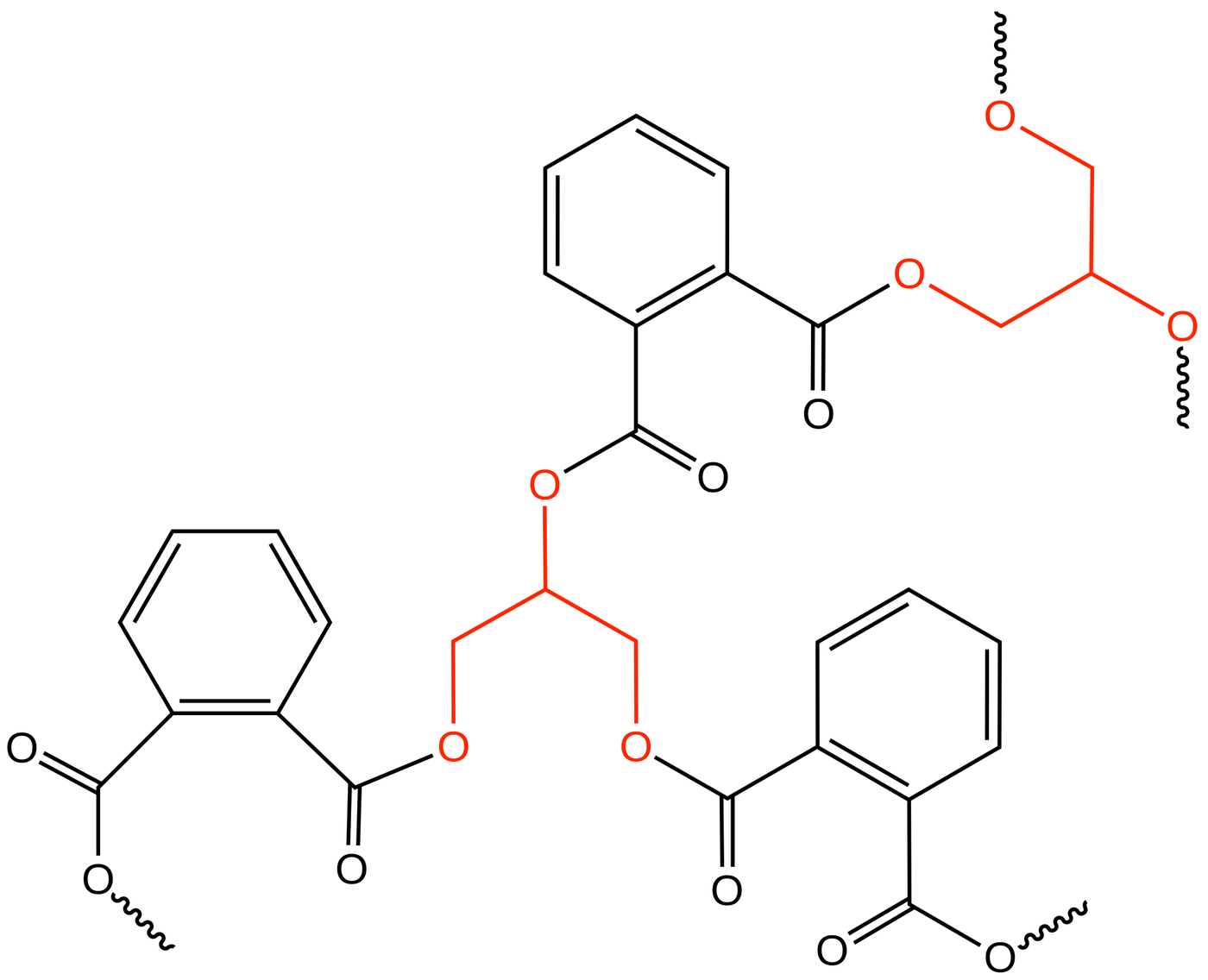


Glyptal Resin from Glycerin and Phthalic Anhydride: Callahan, 1914
Michael J. Callahan of General Electric patented this in 1914, US 1,108,329 (filed 1912): glycerin and phthalic anhydride heated together give a brittle, transparent, yellowish resin that dissolves in acetone and serves as a varnish. Heated afterwards at a moderate temperature for a long time it turns hard, infusible and insoluble, free of bubbles, with high dielectric strength, for insulating coils and wires. Resins of glycerol and phthalic acid like this were the original alkyds, sold under the name Glyptal.
上級者
Workshop process
手順
1
1
Weigh out the charge
Weigh out the charge
Jupyter ノートブックを読み込み中…
2
2
Fuse the charge
Fuse the charge
Mix two parts by weight of phthalic anhydride with one part of glycerin and heat slowly in a suitable container. At about 100 °C the two fuse to a clear liquid and a slight distillation begins.
このステップの材料:
 無水フタル酸2 parts by weight
 グリセロール1 part by weight
必要な工具:
 ホウケイ酸ビーカー
 ホットプレート
 温度計
 ガラス撹拌棒
3
3
Hold at 185 °C until distillation stops
Hold at 185 °C until distillation stops
Raise the temperature to about 185 °C and keep it there until distillation ceases. Then go on heating at this temperature, or a little higher, about 210 °C, until the first stage of the reaction is complete.
必要な工具:
ホットプレート温度計4
4
Test samples and stop in time
Test samples and stop in time
Take small samples from the mass and let them cool. As soon as a sample is hard and brittle, without stickiness, stop heating and let the product cool. It sets to a brittle, transparent, somewhat yellowish mass that melts again on heating and dissolves in acetone. Do not heat further: the second stage then starts with a rapid rise in temperature, violent boiling sets in at about 275 °C, and the result is a hard, brittle mass full of cavities.
必要な工具:
ガラス撹拌棒温度計5
5
Dissolve it in acetone for varnish
Dissolve it in acetone for varnish
Dissolve the resin in acetone. The solution is clear and can be used as a varnish: impregnate the fibrous covering of coils or wires with it, or paint it on, then evaporate the acetone.
必要な工具:
ホウケイ酸ビーカーガラス撹拌棒 細い筆
 アセトン
6
6
Harden it slowly
Harden it slowly
Harden the coated or cast resin by heating it at a moderate temperature, preferably about 85 to 100 °C, for a time that depends on the mass: a layer about 0.2 inch thick takes about 15 to 20 hours. In some cases a higher temperature, say 135 °C, can be used. No bubbles form, and the product is hard, dense, infusible and practically insoluble in the usual solvents.
必要な工具:
 乾燥炉温度計
この設計図で作るもの

関連ブループリント
これらのブループリントは知識を共有しています — 技術、材料、原理

CC0 パブリックドメイン
このブループリントはCC0で公開されています。許可を求めずに、自由にコピー、修正、配布、あらゆる目的で使用できます。
メイカーを応援するには、ブループリント経由で製品を購入してください。メイカーには メイカーコミッション がベンダーにより設定されています。または、このブループリントの新しいイテレーションを作成し、自分のブループリントにコネクションとして含めて収益を共有できます。