アート
美容とウェルネス
工芸
文化と歴史
エンターテインメント
環境
食品と飲料
リバースエンジニアリング
科学
スポーツ
テクノロジー
ウェアラブル
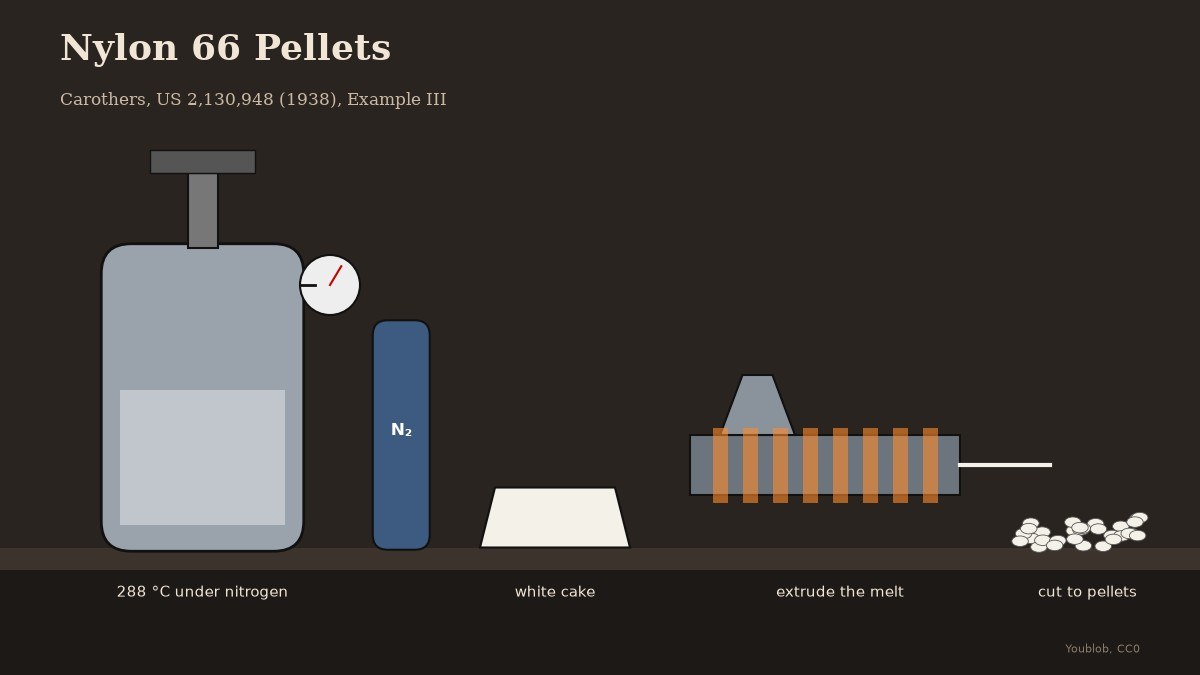


Nylon 66 Pellets: Nylon Salt Polymerised in an Autoclave, Carothers 1938
Nylon salt heated to 288 °C under oxygen-free nitrogen gives off water and joins into long chains of nylon 66 (Carothers, du Pont, US 2,130,948, 1938: two moles of salt in a silver-lined autoclave). A pinch of extra adipic acid keeps the melt's viscosity steady. The polymer is then extruded and cut into pellets.
The picture: our drawing of the autoclave and the pellet line.
上級者
A day
手順
1
1
Charge the autoclave
Charge the autoclave
Put two moles of nylon salt (525 g) and 0.02 mole of adipic acid (2.9 g) in a two-litre silver-lined autoclave with a stainless stirrer and a reflux condenser leading to a receiver.
このステップの材料:
 ナイロン塩525 g
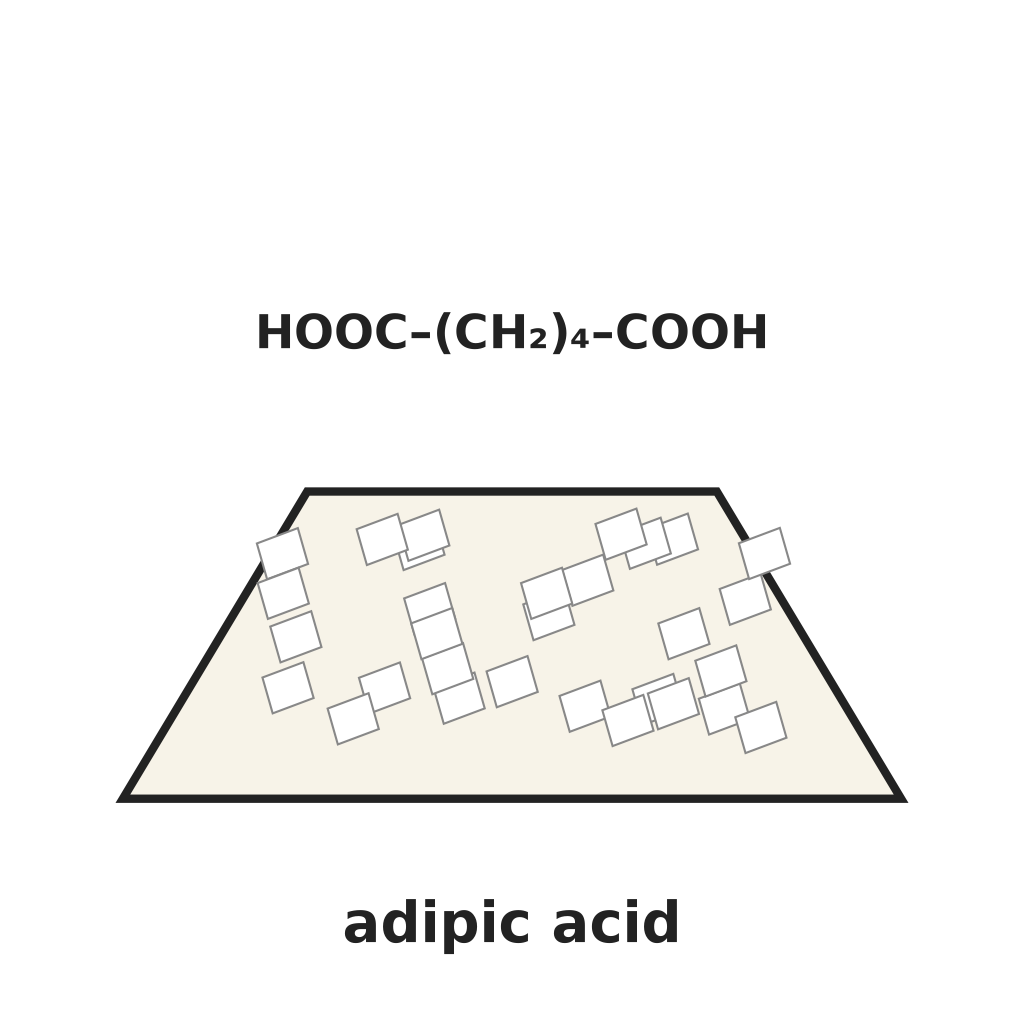 アジピン酸2.9 g
必要な工具:
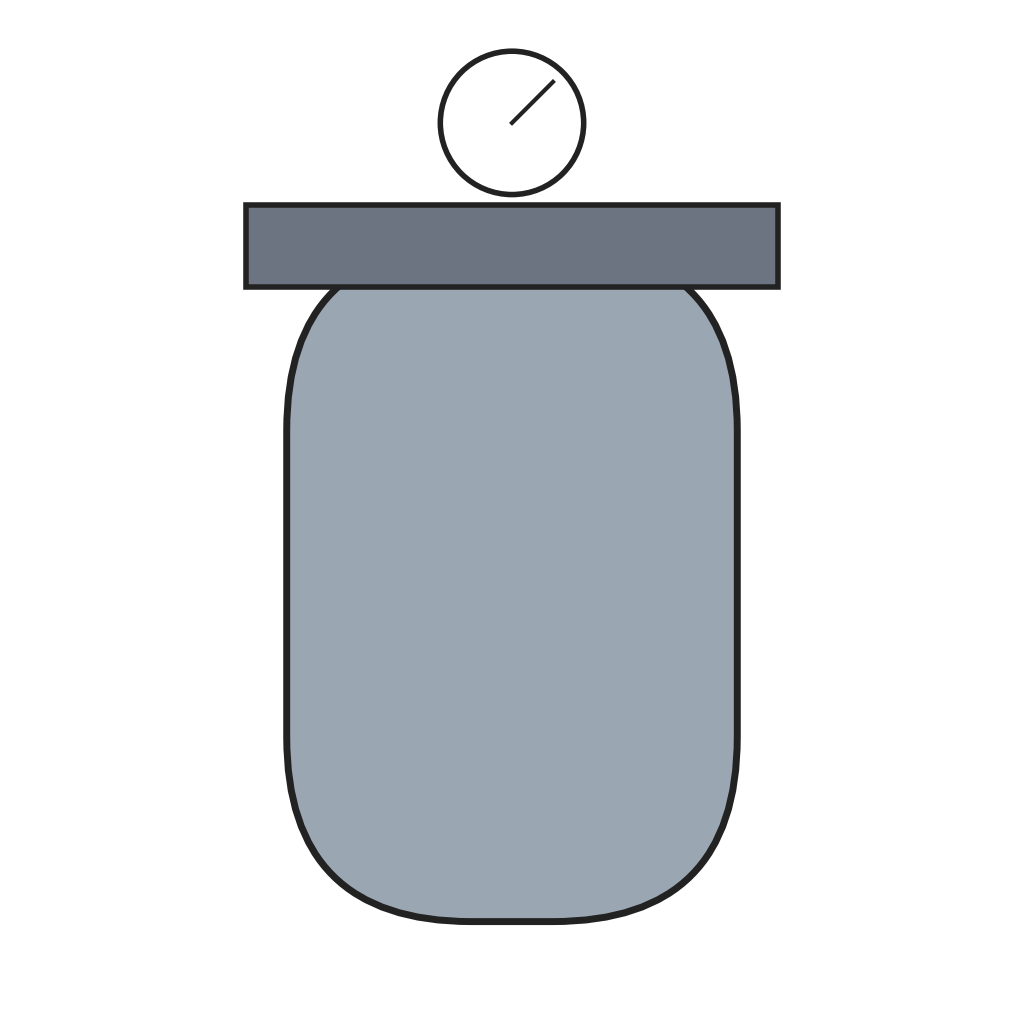 加圧反応器
 凝縮器のコイル
 デジタルキッチンスケール
2
2
Drive out the air
Drive out the air
Evacuate, fill with nitrogen, evacuate again, then apply 80 lb/in² of nitrogen. Use nitrogen free of oxygen; oxygen spoils the polymer.
必要な工具:
 真空ポンプ
 窒素
 圧力計
3
3
Heat to 288 °C
Heat to 288 °C
Start the stirrer and heat to 288 °C over 1.5 hours.
必要な工具:
加圧反応器 表示器付き熱電対
4
4
Let the water off
Let the water off
Bring the pressure down to atmospheric over half an hour and keep heating and stirring 2.5 hours. Then pull to 200 mm absolute for a few minutes.
必要な工具:
加圧反応器真空ポンプ圧力計表示器付き熱電対5
5
Cool and take out
Cool and take out
Cool. The polymer comes out as a white solid cake that melts at about 263 °C.
必要な工具:
加圧反応器6
6
Pelletise
Pelletise
Break up the cake (our step), melt it in the extruder, draw the strand and cut it into pellets.
必要な工具:
 プラスチック押出機
 押出ダイ
7
7
Grams and pressures
Grams and pressures
Jupyter ノートブックを読み込み中…
この設計図で作るもの
関連ブループリント
これらのブループリントは知識を共有しています — 技術、材料、原理


CC0 パブリックドメイン
このブループリントはCC0で公開されています。許可を求めずに、自由にコピー、修正、配布、あらゆる目的で使用できます。
メイカーを応援するには、ブループリント経由で製品を購入してください。メイカーには メイカーコミッション がベンダーにより設定されています。または、このブループリントの新しいイテレーションを作成し、自分のブループリントにコネクションとして含めて収益を共有できます。