コラボレーション
アート
美容とウェルネス
工芸
文化と歴史
エンターテインメント
環境
食品と飲料
リバースエンジニアリング
科学
スポーツ
テクノロジー
ウェアラブル
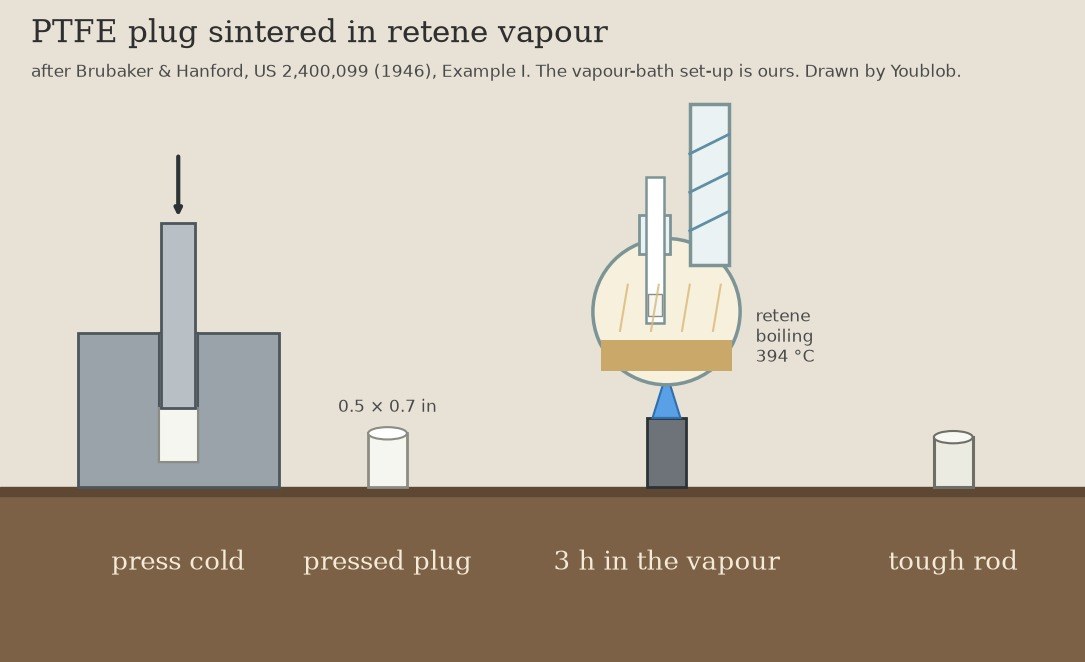


PTFE Rod: a Plug Sintered in Boiling Retene Vapour (Brubaker & Hanford 1946)
The first example of du Pont's way to shape PTFE: press a small rod of powder cold, then heat it above 327 °C out of the mould. Here the heat comes from the vapour of boiling retene, which boils at 394 °C, so the temperature holds steady by itself. The plug comes out sintered into one tough piece.
Source: M. M. Brubaker and W. E. Hanford (du Pont), US 2,400,099 (1946), Example I. The pressure is the patent's usual range, as the example gives none. The mould, press and the vapour-bath set-up are ours. Picture drawn by Youblob.
上級者
1 day
手順
1
1
Press a plug from the powder
Press a plug from the powder
At room temperature, press small particles of PTFE in a mould into a plug 0.5 in across and 0.7 in long. The example gives no pressure; the patent's usual range is 100–3000 lb/sq in.
このステップの材料:
 PTFE 樹脂粉末1 as required for the plug
必要な工具:
 圧縮成形金型
 油圧プレス
 定規
2
2
Set up a retene vapour bath
Set up a retene vapour bath
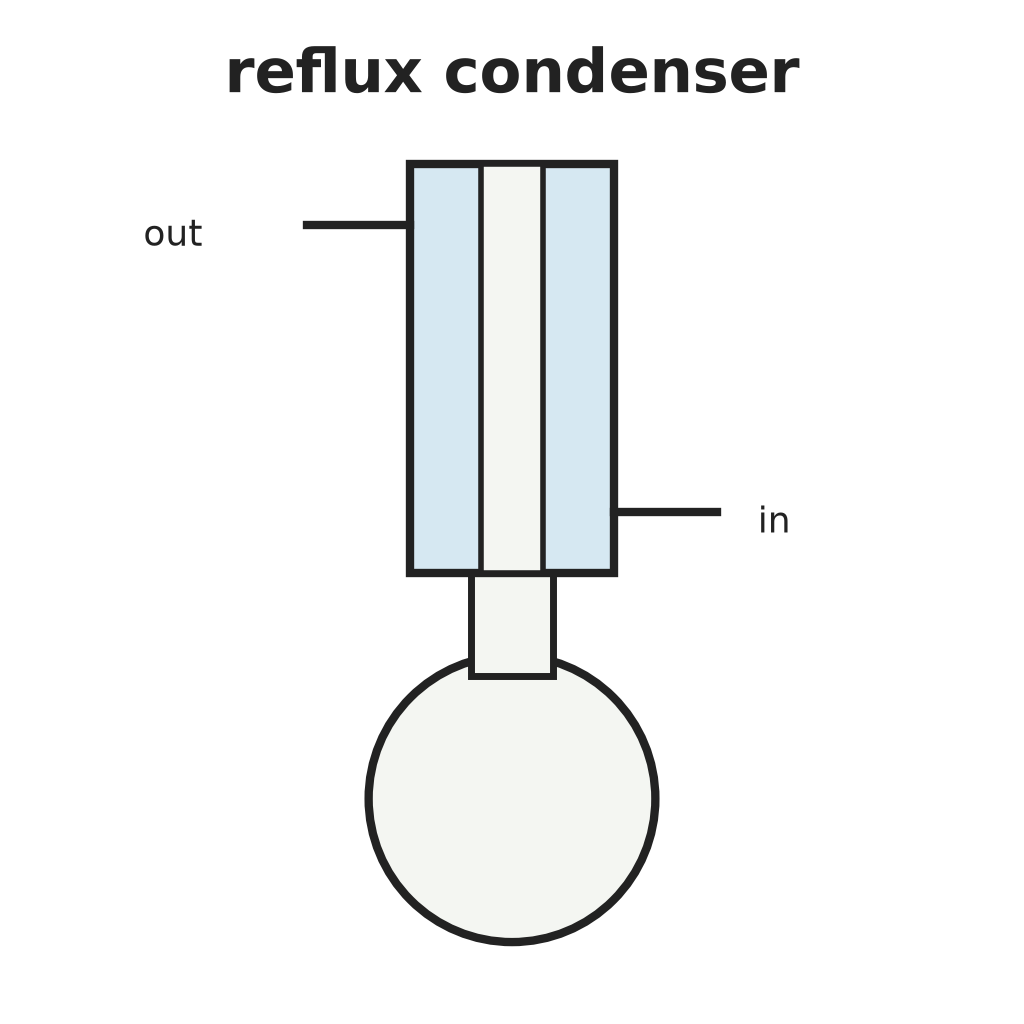
Boil retene so its vapour fills the space round a glass tube. Ours: retene in a flask on a burner, a reflux condenser on top, and the tube standing in the vapour.
必要な工具:
 レテン
 ガラス蒸留フラスコ
 還流冷却器
 ブンゼンバーナー
 試験管
3
3
Sinter for 3 hours
Sinter for 3 hours
Take the plug out of the mould, put it in the glass tube, and heat it in the vapour of boiling retene (394 °C) for 3 hours.
必要な工具:
試験管レテンブンゼンバーナー4
4
Cool it under the retene
Cool it under the retene
Remove the heat source and let the plug cool where it is. It is now sintered together into a tough mass.
必要な工具:
試験管この設計図で作るもの

関連ブループリント
これらのブループリントは知識を共有しています — 技術、材料、原理


CC0 パブリックドメイン
このブループリントはCC0で公開されています。許可を求めずに、自由にコピー、修正、配布、あらゆる目的で使用できます。
メイカーを応援するには、ブループリント経由で製品を購入してください。メイカーには メイカーコミッション がベンダーにより設定されています。または、このブループリントの新しいイテレーションを作成し、自分のブループリントにコネクションとして含めて収益を共有できます。