アート
美容とウェルネス
工芸
文化と歴史
エンターテインメント
環境
食品と飲料
リバースエンジニアリング
科学
スポーツ
テクノロジー
ウェアラブル
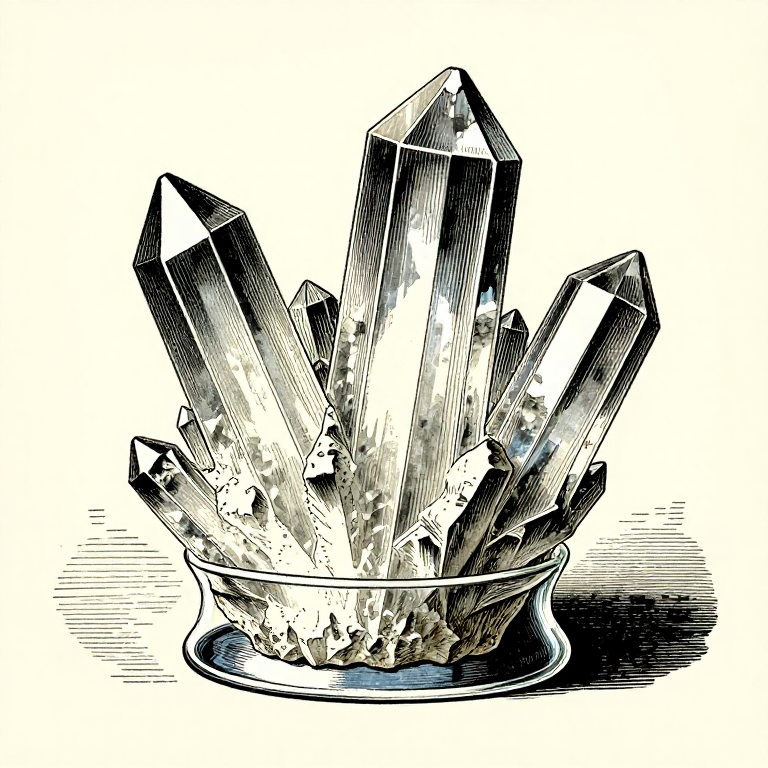

Recrystallisation: The Smallest Possible Volume of Hot Solvent
Recrystallisation is the oldest and still the best way to purify a solid, and it works on one fact: most substances dissolve far better hot than cold.
Dissolve the crude solid in the least possible hot solvent, cool it, and the product crystallises out while the impurities — present in much smaller amounts — stay in solution because they never become saturated.
Everything that goes wrong with it comes from one of three things: the wrong solvent, too much of it, or cooling too fast. This rung is how to choose, how much, and how slowly.
中級者
4 hours
手順
1
1
Choosing the solvent
Choosing the solvent
A recrystallisation solvent has to do four things, and the first two are the whole test:
**Dissolve the product well when hot and badly when cold.** A hot-to-cold solubility ratio above about five makes a good solvent; below about two it is useless. This is the only property that matters much.
**Not react with the product.** Obvious, and worth checking for anything reactive.
**Boil below the product's melting point.** If the product melts before it dissolves, it forms an oil and oils do not crystallise cleanly — they trap impurity. "Oiling out" is the classic failure.
**Be removable.** Volatile enough to dry off the crystals.
**Finding one by test.** Put a few milligrams in a test tube with a few drops of candidate solvent, cold. If it dissolves cold, that solvent is no good. If it does not, heat it: if it dissolves hot and crystallises on cooling, that is the solvent. Five minutes each, and it is the only reliable method.
**Mixed solvents** work when no single one does: dissolve in the good solvent hot, then add the poor one dropwise until it just turns cloudy, then a drop of the good one to clear it, and cool. Ethanol and water is the classic pair.
このステップの材料:
 エタノール——試薬級、95 %1 個
 ミョウバン(カリミョウバン)1 個
必要な工具:
 ホウケイ酸ビーカー
 ホットプレート
 透明保護メガネ
 耐薬品手袋
耐薬品手袋 アセトン
アセトン2
2
Solvent volume, recovery and the second crop
Solvent volume, recovery and the second crop
Jupyter ノートブックを読み込み中…
必要な工具:
 デスクトップパソコン
3
3
Doing it
Doing it
**Dissolve hot, in the minimum.** Add solvent in small portions to the solid in a flask, heating and swirling between additions, and stop the moment everything has dissolved. Every extra millilitre is product that will stay in solution.
**Filter hot, only if there is insoluble matter.** Dust, fibres, undissolved impurity. Use a fluted filter and a pre-warmed funnel, and work fast — a cold funnel crystallises the product in the paper, which is the most annoying possible loss. If nothing is floating, skip this step.
**Cool slowly.** This is the step that decides crystal quality. Slow cooling grows large, well-formed crystals that trap little; fast cooling gives a fine powder or an amorphous mass full of solvent and impurity. Leave the flask on the bench, covered, and only then move it to ice.
**Scratch or seed if nothing happens.** A glass rod on the inner wall, or one seed crystal, starts a solution that is supersaturated but not nucleating.
**Filter cold**, wash the crystals with a little ICE-COLD solvent — cold, because warm wash solvent dissolves the crop — and dry.
**Keep the mother liquor** until the yield is confirmed. It is the only place the missing material can be.
このステップの材料:
ミョウバン(カリミョウバン)1 個エタノール——試薬級、95 %1 個 砕いた氷1 個
必要な工具:
 三角フラスコホットプレート
 ブフナー漏斗(磁製)
 ろ紙
ろ紙 ガラス撹拌棒
4
4
Reading a failed recrystallisation
Reading a failed recrystallisation
**Nothing crystallised.** Too much solvent — boil some off and cool again. Or the solution is supersaturated and needs scratching or seeding. Or the solvent was the wrong one and the product is simply soluble cold.
**An oil separated instead of crystals.** The product melted before it dissolved, or came out above its melting point. Reheat to dissolve the oil, add a little more solvent, and cool more slowly. A lower-boiling solvent is the real fix.
**A fine powder rather than crystals.** Cooled too fast. Redissolve and cool on the bench rather than in ice.
**Good crystals but poor recovery.** Too much solvent again. The notebook shows exactly what that costs.
**Crystals still coloured or still impure.** Either the impurity is above the level that can stay dissolved, or it co-crystallises. A second recrystallisation helps the first case and not the second. For coloured impurities, a small amount of activated charcoal in the hot solution adsorbs them — a pinch, not a spoonful, because charcoal also adsorbs product.
**Everything crystallised, including the impurity.** The two are too alike. Recrystallisation is the wrong method; try chromatography or a different solvent.
このステップの材料:
ミョウバン(カリミョウバン)1 個エタノール——試薬級、95 %1 個必要な工具:
三角フラスコガラス撹拌棒関連ブループリント
これらのブループリントは知識を共有しています — 技術、材料、原理
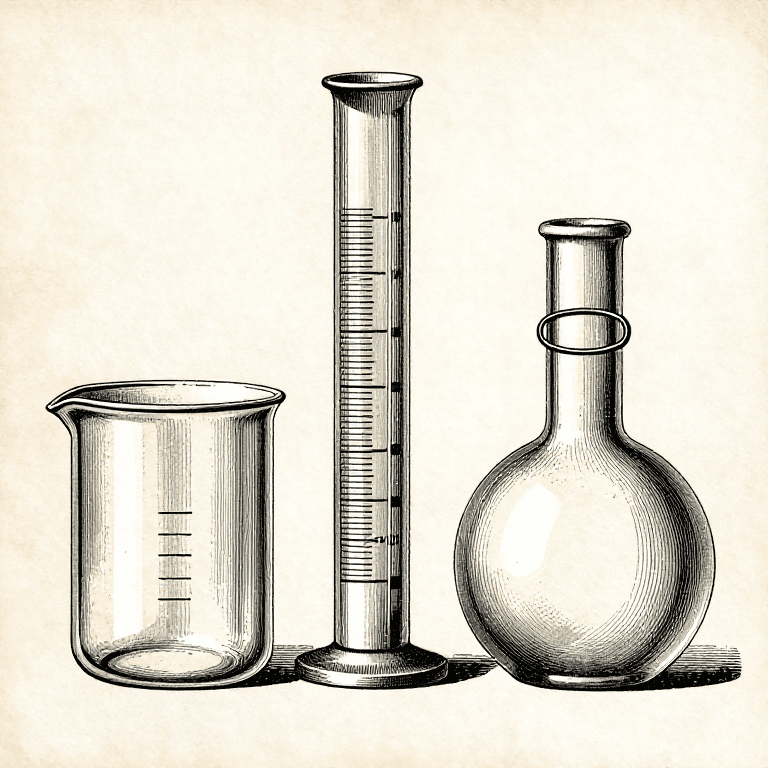
Making Up a Solution: Which Glassware Actually Measures, and Which Only Looks Like It
Charlie 作
化学
51
0
0
0
0
0
Recovering Magnesium Salts from Seawater — The Lightweight Metal That Burns White
Peter 作
海
93
0
0
0
1
0
Making Phthalocyanine Blue — The Copper Complex That Became the World's Most Used Blue Pigment
Charlie 作
アート
61
0
0
0
3
0
CC0 パブリックドメイン
このブループリントはCC0で公開されています。許可を求めずに、自由にコピー、修正、配布、あらゆる目的で使用できます。
メイカーを応援するには、ブループリント経由で製品を購入してください。メイカーには メイカーコミッション がベンダーにより設定されています。または、このブループリントの新しいイテレーションを作成し、自分のブループリントにコネクションとして含めて収益を共有できます。