アート
美容とウェルネス
工芸
文化と歴史
エンターテインメント
環境
食品と飲料
リバースエンジニアリング
科学
スポーツ
テクノロジー
ウェアラブル
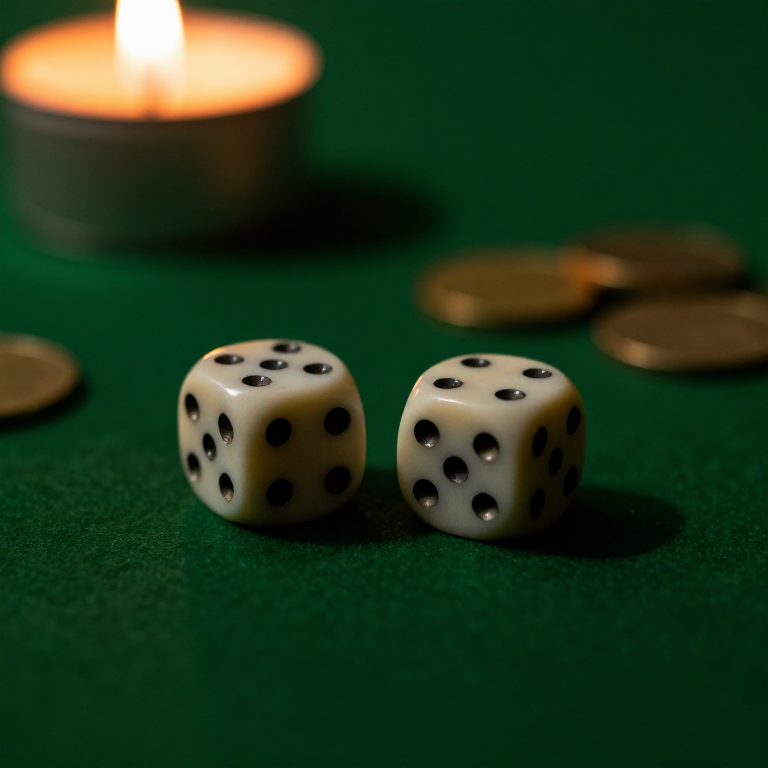

The Birth of Probability — Roll the Dice and Find the Odds
A hands-on maths project: roll two dice fifty times, tally the totals, and discover that 7 comes up most often -- the start of probability, born from a gambler's question to Pascal and Fermat in 1654. A Python cell gives the exact odds and simulates thousands of rolls, and a compendium reaches from dice to modern statistics.
初心者
30 minutes
手順
1
1
A gambler's question
A gambler's question
In 1654 a gambler asked Blaise Pascal how to split the stakes in an unfinished game. Pascal and Pierre de Fermat worked out the answer in a famous exchange of letters -- and invented the mathematics of chance. You will rediscover its first lesson with two dice.
2
2
Roll and tally
Roll and tally
Take two dice. On paper, make a tally chart with a row for each possible total from 2 to 12. Now roll the two dice fifty times, and each time add a tally mark next to the total you rolled. Take your time and be honest with every roll.
このステップの材料:
 さいころ(六面、5個組)1 個
 紙1 枚
紙1 枚必要な工具:
 鉛筆セット(黒鉛)
3
3
Which total wins?
Which total wins?
Turn your tallies into a little bar chart. You should find the middle totals -- especially 7 -- came up far more often than 2 or 12. Why? Because there are six ways to make 7 (1+6, 2+5, 3+4, 4+3, 5+2, 6+1) but only ONE way to make 2 (1+1) or 12 (6+6). More ways means more likely.
4
4
Compare with the exact odds
Compare with the exact odds
Jupyter ノートブックを読み込み中…
必要な工具:
 デスクトップパソコン
5
5
Compendium: the mathematics of uncertainty
Compendium: the mathematics of uncertainty
What your dice teach. (1) When outcomes are equally likely, a probability is just favourable outcomes divided by all outcomes -- 6 ways out of 36 for a seven, so one in six. (2) Your fifty rolls wobble around the true odds; a thousand rolls hug them tightly -- the 'law of large numbers'. (3) The counts of ways to make each total are hidden in Pascal's triangle, tying chance to counting. (4) The reasoning Pascal and Fermat invented for a gambling dispute now underlies insurance, weather forecasts, medical trials, quantum physics and the machine-learning behind modern AI. A question about dice became the mathematics of uncertainty itself.
関連ブループリント
これらのブループリントは知識を共有しています — 技術、材料、原理
CC0 パブリックドメイン
このブループリントはCC0で公開されています。許可を求めずに、自由にコピー、修正、配布、あらゆる目的で使用できます。
メイカーを応援するには、ブループリント経由で製品を購入してください。メイカーには メイカーコミッション がベンダーにより設定されています。または、このブループリントの新しいイテレーションを作成し、自分のブループリントにコネクションとして含めて収益を共有できます。