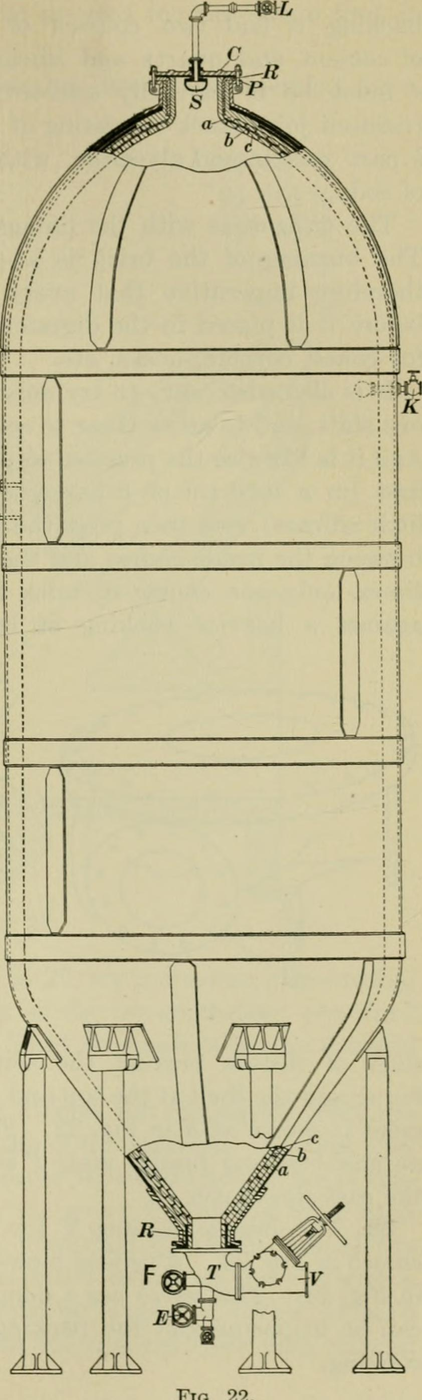


Sulfite Wood Pulp
Grinding wood into pulp gives you fibre and everything else that was in the tree — including lignin, the brown glue that holds plant cells together. Groundwood paper made that way yellows and turns brittle, which is why Victorian newspapers crumble.
Benjamin Chew Tilghman's answer was chemical, not mechanical. US 70,485, “Improved mode of treating vegetable substances for making paper-pulp”, granted 5 November 1867 (filed 26 October 1867), claims treating fibrous vegetable matter with a solution of sulphurous acid in water, heated in a closed vessel under pressure “to dissolve the intercellular incrusting or cementing constituents” and leave the fibre intact.
That phrase is the whole invention: dissolve the glue, keep the fibre. This blueprint demonstrates that selective dissolution safely — with washing soda instead of pressurised sulphurous acid — and measures the difference against a purely mechanical pulp.
手順
Understand what is being dissolved
Understand what is being dissolved
Plant fibre is cellulose. It is cemented together by lignin. Mechanical pulping tears fibre and keeps the lignin; chemical pulping dissolves the lignin and frees whole fibre. Write that distinction down before you start.
Safety substitution — read this before mixing anything
Safety substitution — read this before mixing anything
Tilghman's process uses sulphurous acid under pressure in a sealed digester. That is genuinely dangerous and is not reproducible in a classroom. This blueprint substitutes sodium carbonate (washing soda) in an open pan at atmospheric pressure. The chemistry differs — soda is alkaline, sulphite is acidic — but the mechanism demonstrated is the same: a hot chemical bath selectively dissolves lignin and leaves cellulose. Wear eye protection; soda ash is an irritant, not a poison.
Prepare two identical fibre samples
Prepare two identical fibre samples
Weigh out two 10 g samples of linen rag, torn small. Keep them identical.
このステップの材料:
 リネンのぼろ布20 g
必要な工具:
 デジタルキッチンスケール
Make the mechanical pulp (the control)
Make the mechanical pulp (the control)
Soak sample A in plain water for 20 minutes, then tear and mash it. This is groundwood in miniature — all the fibre, all the non-fibre.
このステップの材料:
リネンのぼろ布10 gMix the chemical liquor
Mix the chemical liquor
Dissolve 10 g sodium carbonate in 500 ml hot water. Stir until clear.
このステップの材料:
 炭酸ナトリウム(ソーダ灰)10 g
必要な工具:
デジタルキッチンスケールCook sample B in the liquor
Cook sample B in the liquor
Simmer sample B in the soda solution for 20 minutes. Do not boil dry.
このステップの材料:
リネンのぼろ布10 g炭酸ナトリウム(ソーダ灰)10 g必要な工具:
 ストップウォッチ
Watch the liquor colour
Watch the liquor colour
Record the liquor colour every 5 minutes. It darkens to brown as lignin and gums dissolve out. The colour in the pot is the material leaving the fibre.
必要な工具:
ストップウォッチRinse sample B thoroughly
Rinse sample B thoroughly
Rinse under running water until the water runs clear and the pulp no longer feels slippery.
Compare the two pulps by eye and hand
Compare the two pulps by eye and hand
Sample B should be paler, softer and separate into individual fibres more readily. Examine both with the magnifying glass and note fibre length.
必要な工具:
 虫眼鏡
虫眼鏡Weigh both dried pulps
Weigh both dried pulps
Squeeze and dry both, then weigh. Sample B has lost mass — that lost mass is what Tilghman dissolved. Record the percentage.
必要な工具:
デジタルキッチンスケールForm a sheet from each
Form a sheet from each
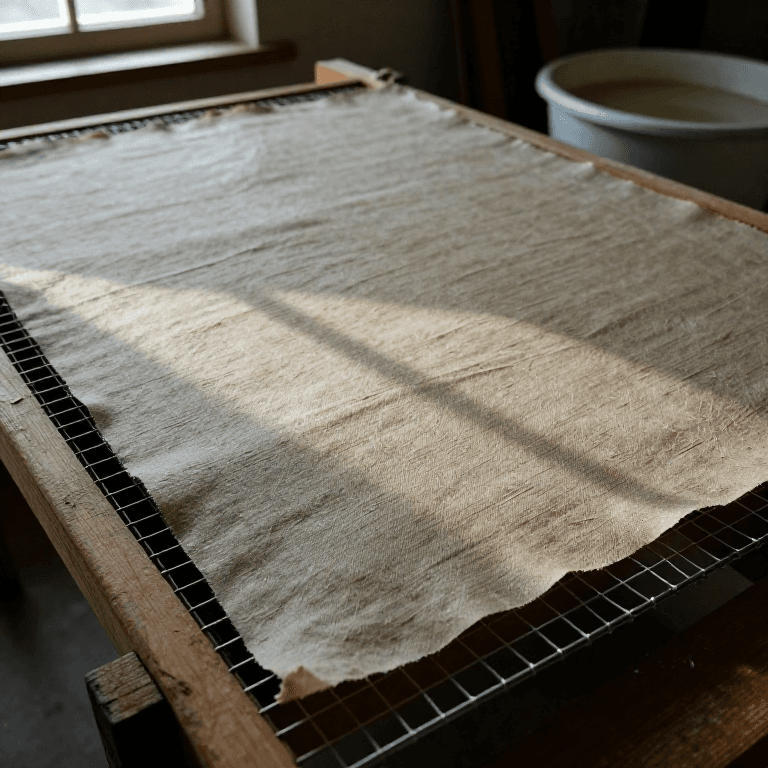
Disperse each pulp in water and couch a small sheet onto watercolour paper. Press and dry.
このステップの材料:
 水彩紙2 枚
Compare strength
Compare strength
Tear each dried sheet. The chemically pulped sheet should tear with more resistance and a longer fibre pull.
Age-test both sheets
Age-test both sheets
Put both sheets on a sunny windowsill for a week and compare yellowing. Lignin is what browns. This is the experiment that explains crumbling newsprint.
History & Context
History & Context
US 70,485, Benjamin C. Tilghman, granted 5 November 1867, filed 26 October 1867. The granted title is “Improved mode of treating vegetable substances for making paper-pulp” — it never uses the word sulfite.
Tilghman is the same Philadelphia chemist who patented sandblasting (US 108,408, 1870). He is properly Benjamin Chew Tilghman; his own signature reads “B. C.”, though patent headers and catalogue metadata have variously misprinted it as B. G. and Benjamin J.
He held British and American patents across 1866, 1867 and 1869. Commercially the process was slow to take: the Swedish chemist Carl Daniel Ekman ran the first successful sulfite mill, and it was decades before chemical pulp displaced groundwood for quality papers. Groundwood never went away — it is still what newsprint is made from, which is precisely why newspapers still yellow.
Why this matters beyond paper. Selective dissolution — take out the binder, keep the structure — is a general materials strategy. It reappears in retting flax, in de-lignifying bamboo for textiles, and in modern biorefinery work that treats lignin as the product rather than the waste.
接続ブループリントの材料


関連ブループリント
これらのブループリントは知識を共有しています — 技術、材料、原理


CC0 パブリックドメイン
このブループリントはCC0で公開されています。許可を求めずに、自由にコピー、修正、配布、あらゆる目的で使用できます。
メイカーを応援するには、ブループリント経由で製品を購入してください。メイカーには メイカーコミッション がベンダーにより設定されています。または、このブループリントの新しいイテレーションを作成し、自分のブループリントにコネクションとして含めて収益を共有できます。