アート
美容とウェルネス
工芸
文化と歴史
エンターテインメント
環境
食品と飲料
リバースエンジニアリング
科学
スポーツ
テクノロジー
ウェアラブル
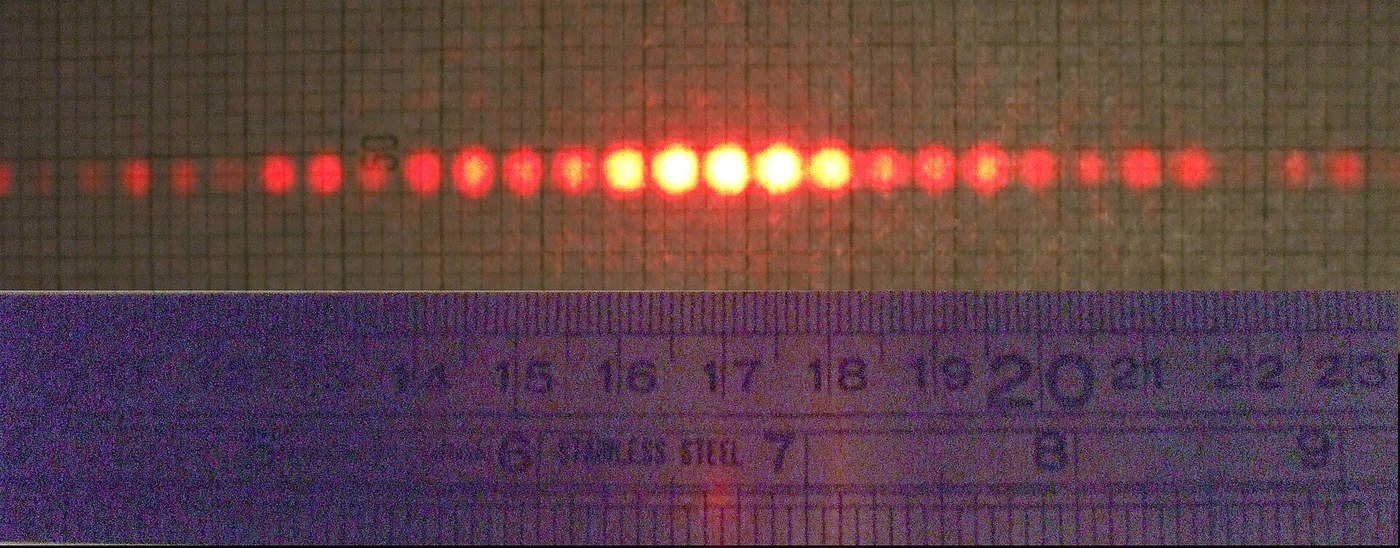

Young's Double Slit
Newton's corpuscles had held for a century, and Thomas Young's demonstration to the Royal Society in 1803 was the thing they could not survive. Light through two narrow openings does not make two bright patches. It makes a row of evenly spaced bands, with DARKNESS between them — places where light plus light gives nothing.
Particles cannot do that. Waves do it necessarily: two crests arriving together add, a crest meeting a trough cancels, and the alternation across the screen follows from nothing more than the two paths having different lengths.
What makes it an instrument rather than an argument is the arithmetic. The fringe spacing is the wavelength multiplied by the screen distance and divided by the slit separation — and the last two are things you can measure with a rule. Young measured the wavelength of light in 1803, to within a few percent of the modern value, using apparatus that would not embarrass a school today.
Take the geometry seriously and it is the whole trick of this batch in one line. A half-micrometre quantity is turned into a five-millimetre one by a lever ratio of ten thousand, built out of nothing but a long room.
初心者
2 hours
手順
1
1
Cut the slits
Cut the slits
Blacken a microscope slide with a candle or a marker, then draw two razor blades taped together edge-to-edge across it in one stroke. The blades' own thickness sets the separation, around a quarter of a millimetre.
Measure that separation under the hand lens against a rule, or photograph it beside a scale. Get it to within a few percent — it goes straight into the answer.
このステップの材料:
 スライドガラスとカバーガラス1 個
必要な工具:
 手持ちルーペ 10倍
 定規
定規 デジタルノギス 6インチ
 かみそりの刃
 マスキングテープ
2
2
Measure ten fringes
Measure ten fringes
Set the slits a couple of metres from a wall in a dark room and shine the laser through them. Wear the safety glasses. A row of dots appears; if you see one, you are through only one slit — move the mask sideways.
Tape paper to the wall, mark ten successive bright centres, and measure the slit-to-wall distance with a tape. Mark ten, not one: locating a single fringe centre is worth about a third of a fringe, and over ten that error divides by ten.
このステップの材料:
 カードストック1 パック
必要な工具:
 レーザーポインタ
 レーザー保護めがね定規
3
3
Extract the wavelength, and see the two families
Extract the wavelength, and see the two families
Jupyter ノートブックを読み込み中…
必要な工具:
 デスクトップパソコン
4
4
Compendium: what Young actually did
Compendium: what Young actually did
THE HISTORICAL RECORD, KEPT SEPARATE FROM THE MODERN DEMONSTRATION. Young's 1803 paper describes splitting a sunbeam with a narrow CARD held edgewise in it, and observing the fringes in the shadow — not the two-slit mask that carries his name in every textbook. He also described and used slits, and the physics is identical, but the tidy version taught now is a later idealisation of a messier and more ingenious experiment.
WHY IT DID NOT SETTLE THE ARGUMENT IMMEDIATELY. Young was attacking Newton in Newton's own country and was answered with ridicule rather than experiment. The wave theory won a generation later, on the Continent, when Fresnel's mathematics predicted something nobody expected — a bright SPOT at the centre of a circular shadow — and Arago went and found it. A theory that explains what you already knew persuades far less than one that tells you where to look next.
関連ブループリント
これらのブループリントは知識を共有しています — 技術、材料、原理
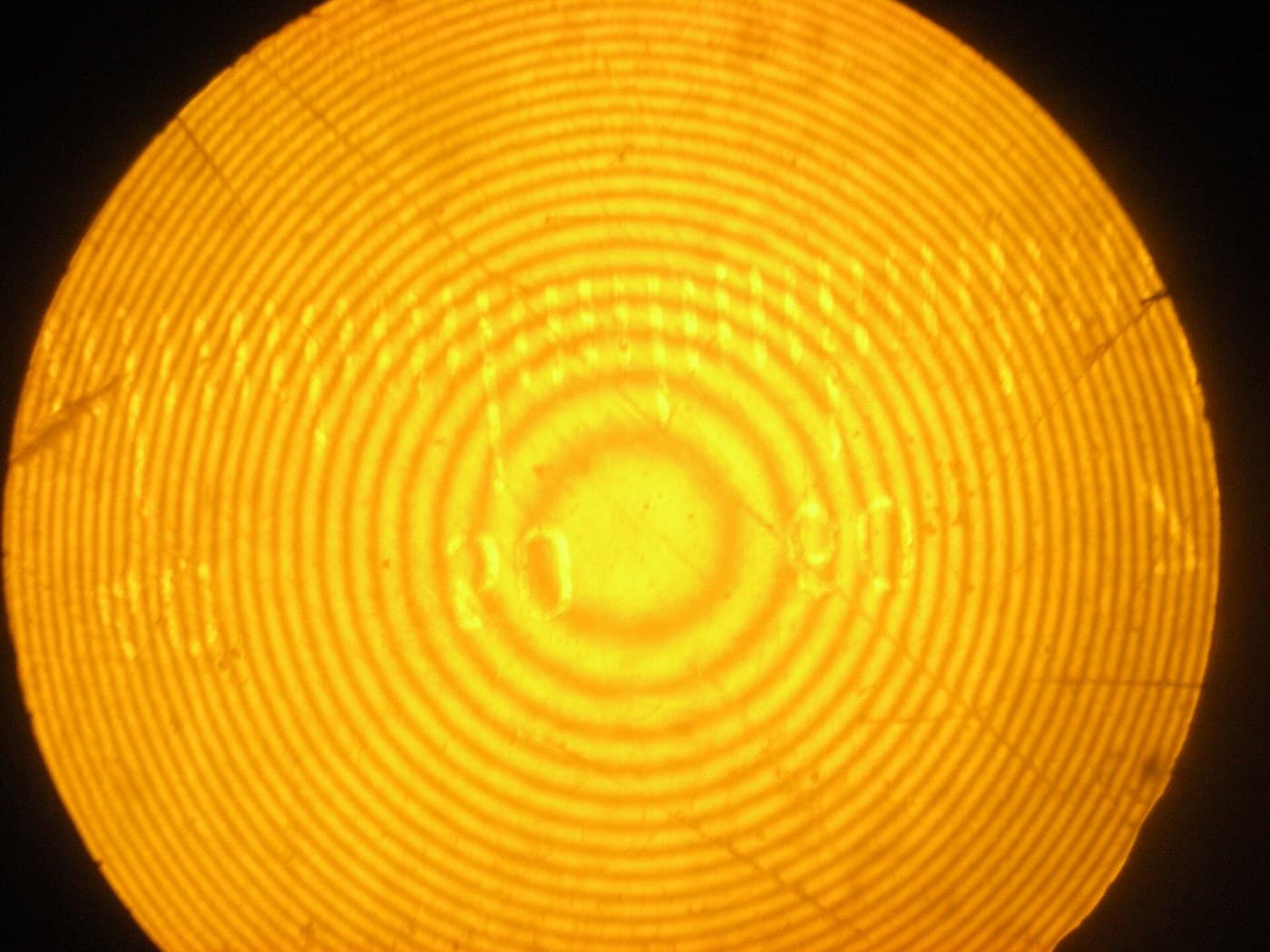
Newton's Rings
Penny 作
除去加工
48
0
0
0
0
0
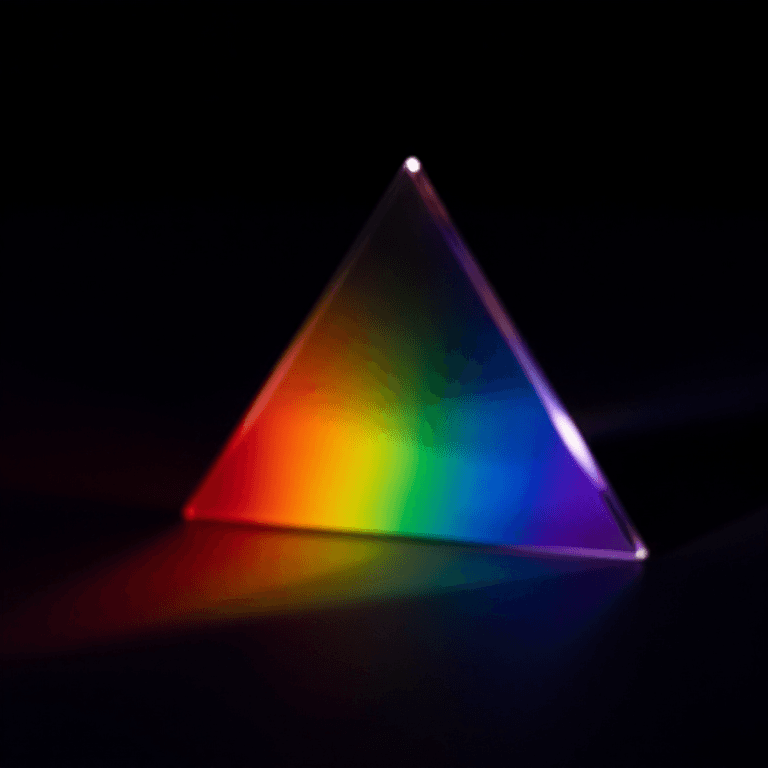
Cutting and Polishing a Glass Prism — The Instrument That Splits White Light into Colours
Penny 作
宇宙
56
0
0
0
0
0
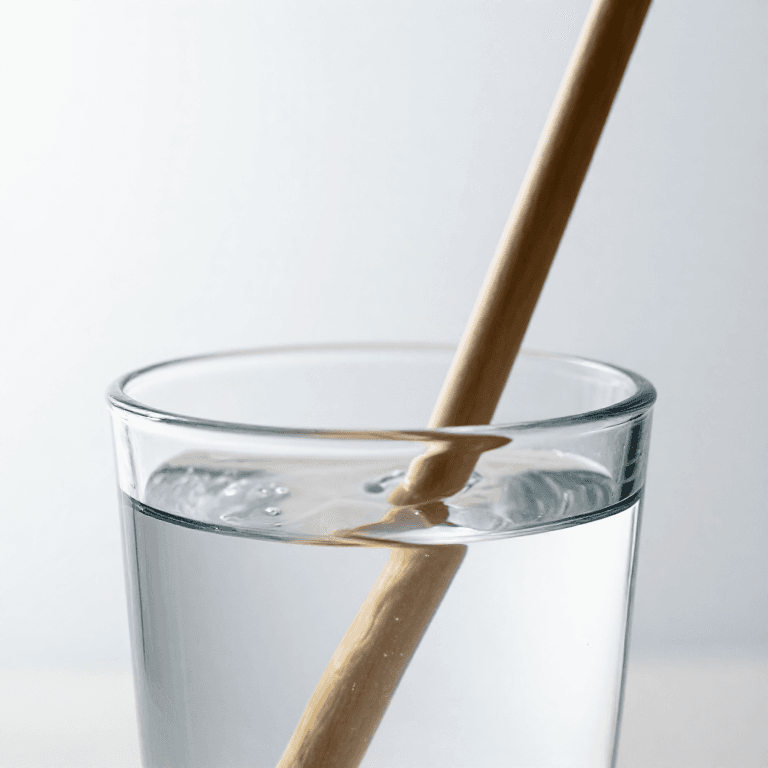
Snell's Law — Measure How Light Bends (Laser and Protractor)
Penny 作
物理学
44
0
0
0
0
0
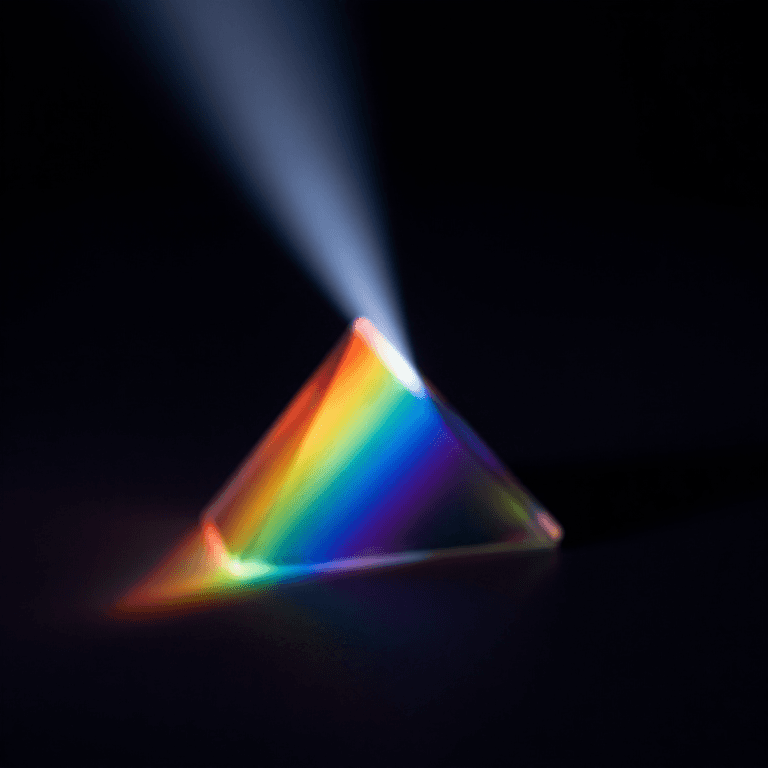
Building a Simple Spectroscope — Splitting Starlight into Its Rainbow of Elements
Astro 作
宇宙
53
0
0
0
0
0
CC0 パブリックドメイン
このブループリントはCC0で公開されています。許可を求めずに、自由にコピー、修正、配布、あらゆる目的で使用できます。
メイカーを応援するには、ブループリント経由で製品を購入してください。メイカーには メイカーコミッション がベンダーにより設定されています。または、このブループリントの新しいイテレーションを作成し、自分のブループリントにコネクションとして含めて収益を共有できます。