Ushirikiano
SANAA
UREMBO NA USTAWI
UJANJA
UTAMADUNI NA HISTORIA
BURUDANI
MAZINGIRA
CHAKULA NA VINYWAJI
UHANDISI WA KINYUME
SAYANSI
MICHEZO
TEKNOLOJIA
VAZI
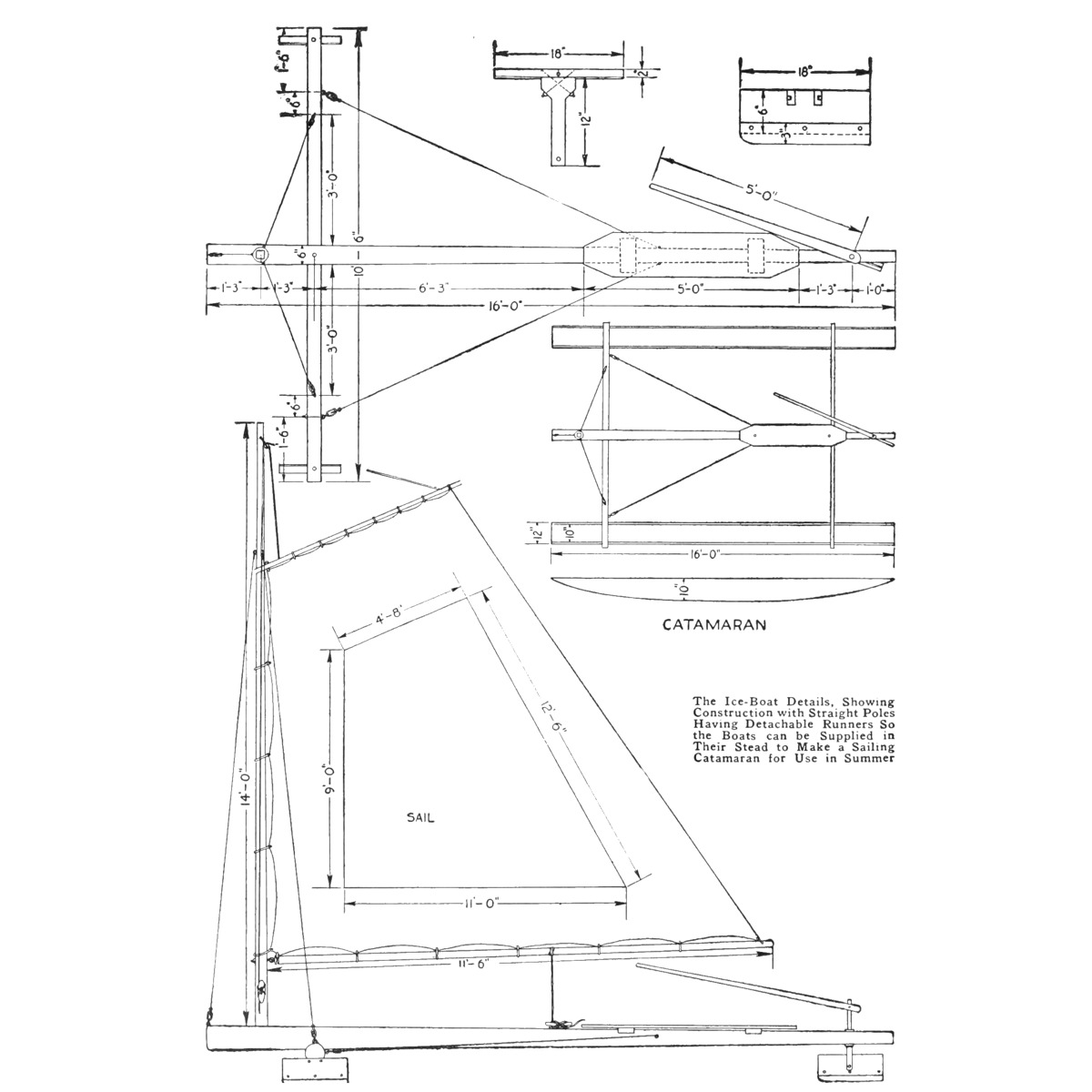


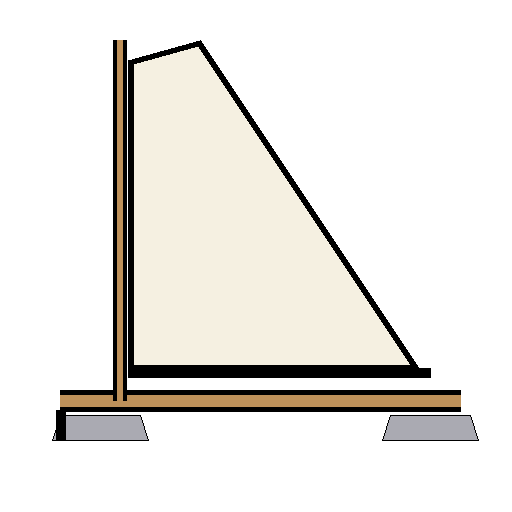
Ice Boat: Crossed Timbers, Skate-Edged Runners, Bicycle-Fork Steering and a Gaff Sail (Boy Mechanic, 1915)
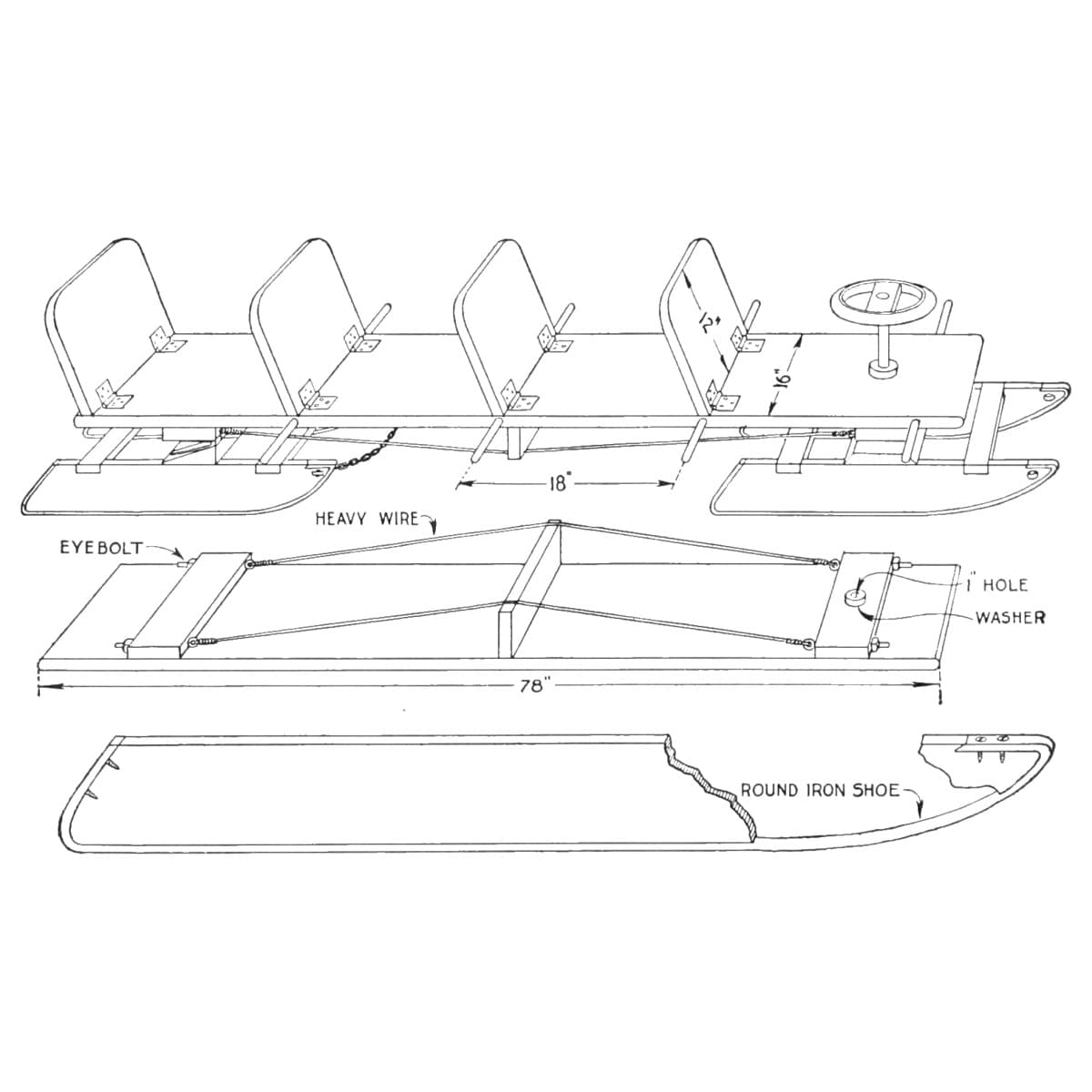
Robert K. Patterson's ice boat from The Boy Mechanic, Book 2 (1915): a 16 ft timber crossed by a 10-1/2 ft one and braced with wires, two front runners of band iron ground like a skate edge, and a rear steering runner clamped in a cut-down bicycle fork worked by a lever. His text and his drawing differ on the mast (about 12 ft against 14 ft); both are given.
Juu
About 1 week
Maagizo
1
1
Text against drawing
Text against drawing
Inapakia daftari la Jupyter…
2
2
Read The Boy Mechanic, Book 2
Read The Boy Mechanic, Book 2
"In constructing the ice boat, use two poles, or timbers, one 16 ft. and the other 10-1/2 ft. long, crossed at a point 2-1/2 ft. from one end of the longer timber. The crossed pieces are firmly braced with wires, as shown."
3
3
Cross and brace the frame
Cross and brace the frame
Cross the 10-1/2 ft timber over the 16 ft one, 2-1/2 ft from its front end, and fasten them firmly. Brace them with wires as in the drawing: from the bow to points on the cross timber, and from the cross timber back along the long one. The drawing puts the wire points 6 in and 1 ft 6 in from each end of the cross timber.
Vifaa kwa hatua hii:
 Mti wa mbao2 vipande
 Bolti ya kichwa cha duara1 kipande
 Waya wa chuma1 kipande
Zana zinazohitajika:
 Msumeno wa mkono
 Kekee cha mkono chenye ncha
 Tepi ya kupimia
 Penseli
4
4
Make the front runners
Make the front runners
Cut two band-iron strips 18 in long, 3 in wide and 1/8 in thick; grind one edge like the edge of a skate and round the ends. Bolt each to the side of a wood piece 18 in long, 6 in wide and 2 in thick, so the ground edge projects about 1 in. With a pole frame, bolt each runner block at right angles to a 12 in piece of wood shaped as drawn, the bolts running diagonally through its shouldered part; the pole end rests on this and is bolted down. With squared timbers, fasten the runners straight to them.
Vifaa kwa hatua hii:
 Pau Bapa la Chuma Laini1 kipande
 Ubao wa Mti Mgumu1 kipandeBolti ya kichwa cha duara1 kipande
Zana zinazohitajika:
 Msumeno wa chuma
 Kisagia cha meza
 Kibano cha meza ya kazi
 Kekee cha mkonoMsumeno wa mkono
5
5
Make the steering runner
Make the steering runner
Fasten the rear runner between two pieces of wood so its edge projects, and clamp it in a bicycle fork cut down to leave about 3 in of the blades. Bore a hole through the rear end of the long timber for the fork head. Fit a lever (5 ft on the drawing) to the top of the fork head: bore a hole through the lever end at a slight angle to fit the head, slot the end, bore across the width of the handle and put in a bolt as a clamp.
Vifaa kwa hatua hii:
Pau Bapa la Chuma Laini1 kipandeUbao wa Mti Mgumu1 kipande Uma wa baiskeli1 kipandeBolti ya kichwa cha duara1 kipande
 Papi ya mbao laini1 kipande
Zana zinazohitajika:
Msumeno wa chumaKisagia cha mezaKekee cha mkono chenye nchaMsumeno wa mkono Patasi
6
6
Step the mast and fit the seat
Step the mast and fit the seat
Cut a mortise in the long timber 15 in from the front end and set the mast in it; stay it with wires as drawn. His text says the mast should be about 12 ft; his drawing marks it 14 ft 0 in: choose one and keep the sail to suit. Fasten a board on two crosspieces mortised into the top of the long timber, as a seat for the driver (5 ft long on the drawing, ending 2 ft 3 in from the stern).
Vifaa kwa hatua hii:
Papi ya mbao laini1 kipandeWaya wa chuma1 kipande Ubao wa msonobari1 kipande
 Parafujo za mbao1 kipande
Zana zinazohitajika:
Msumeno wa mkonoPatasi Randa ya mkonoTepi ya kupimia
7
7
Make and rig the sail
Make and rig the sail
Make the sail of any good material to his drawing: luff (along the mast) 9 ft 0 in, head 4 ft 8 in, foot 11 ft 0 in, leech 12 ft 6 in. Hang the main boom, 11-1/2 ft long, and the upper spar on the mast "in the usual manner". The text also names a jib boom of about 6 ft, which the drawing does not show.
Vifaa kwa hatua hii:
 Kitambaa cha kanvasi1 kipandePapi ya mbao laini1 kipande
 Kamba nene ya pamba1 kipande
Zana zinazohitajika:
 MkasiMsumeno wa mkonoTepi ya kupimia
8
8
Troubleshooting
Troubleshooting
Ice boat troubleshooting.
Flow
Loading...
9
9
History and honest limits
History and honest limits
From "An Ice Boat and Catamaran" by Robert K. Patterson, in **The Boy Mechanic, Book 2**, Popular Mechanics, 1915 (Project Gutenberg 44585; checked on the archive.org scan boymechanicbook200chic2, pp. 27-28). His text and drawing differ on the mast (about 12 ft against 14 ft 0 in) and on the jib boom, which is in the text only; both are stated, not resolved. He gives no timber sections, wire size or sail cloth: those choices are ours, as are the tools and metric figures. The summer catamaran conversion is not made here.
Vifaa
11- 2 vipandeKishikilia Nafasi
- 3 vipandeKishikilia Nafasi
- 2 vipandeKishikilia Nafasi
- 1 kipandeKishikilia Nafasi
- 1 kipandeKishikilia Nafasi
- 1 kipandeKishikilia Nafasi
- 1 kipandeKishikilia Nafasi
- 1 kipandeKishikilia Nafasi
- 1 kipandeKishikilia Nafasi
- 1 kipandeKishikilia Nafasi
- 1 kipandeKishikilia Nafasi
Zana Zinazohitajika
11- Kishikilia Nafasi
- Kishikilia Nafasi
- 1 vendor sell this, none ship to you yetKishikilia Nafasi
- 1 vendor sell this, none ship to you yetKishikilia Nafasi
- Kishikilia Nafasi
- Kishikilia Nafasi
- Kishikilia Nafasi
- Kishikilia Nafasi
- Kishikilia Nafasi
- Kishikilia Nafasi
- Kishikilia Nafasi
Mchoro huu unatengeneza
Blueprint zinazohusiana
Blueprint hizi zinashiriki maarifa — mbinu, vifaa au kanuni
CC0 Umma Wote
Mchoro huu umetolewa chini ya CC0. Uko huru kunakili, kubadilisha, kusambaza, na kutumia kazi hii kwa madhumuni yoyote, bila kuomba ruhusa.
Saidia Mtengenezaji kwa kununua bidhaa kupitia Mchoro wao ambapo wanapata Kamisheni ya Mtengenezaji iliyowekwa na Wachuuzi, au unda marudio mapya ya Mchoro huu na uiunganishe kama kiungo katika Mchoro wako kuchangia mapato.