
Making a Motion-Reactive LilyPad Patch
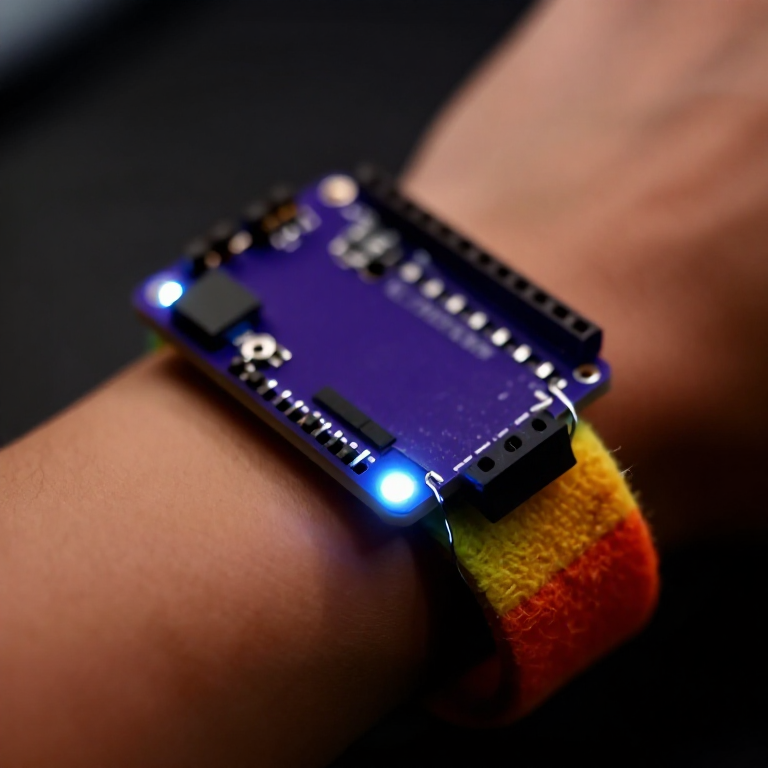
Sew a patch that lights up when it moves. A LilyPad accelerometer senses motion in three directions, and a short program flashes an LED whenever you shake or swing it — a reactive costume piece, a dance accessory, or a 'don't-touch' bag alarm. Introduces the accelerometer and reading three sensor axes at once.
Maagizo
Sew the board, accelerometer and LED
Sew the board, accelerometer and LED
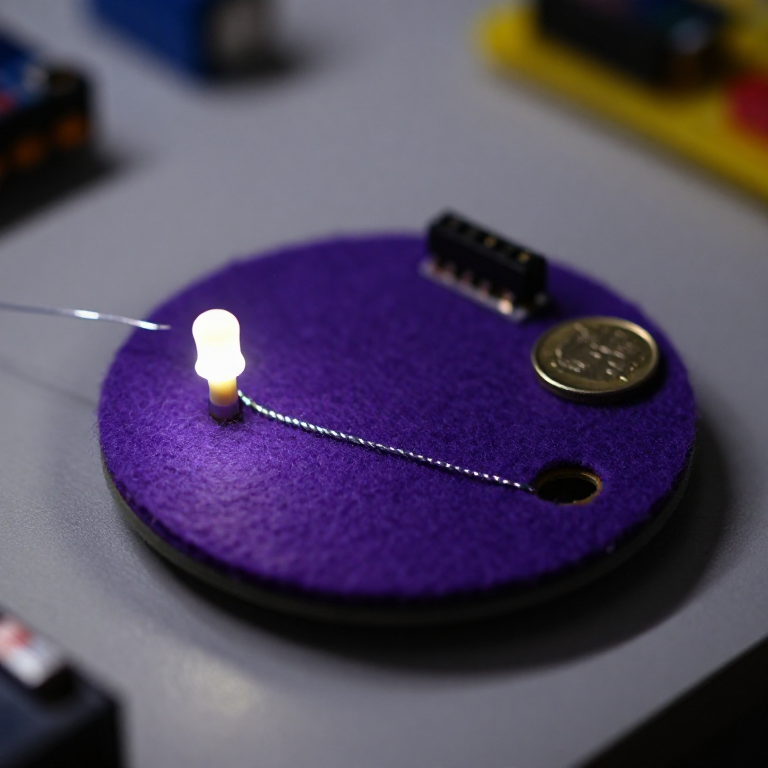
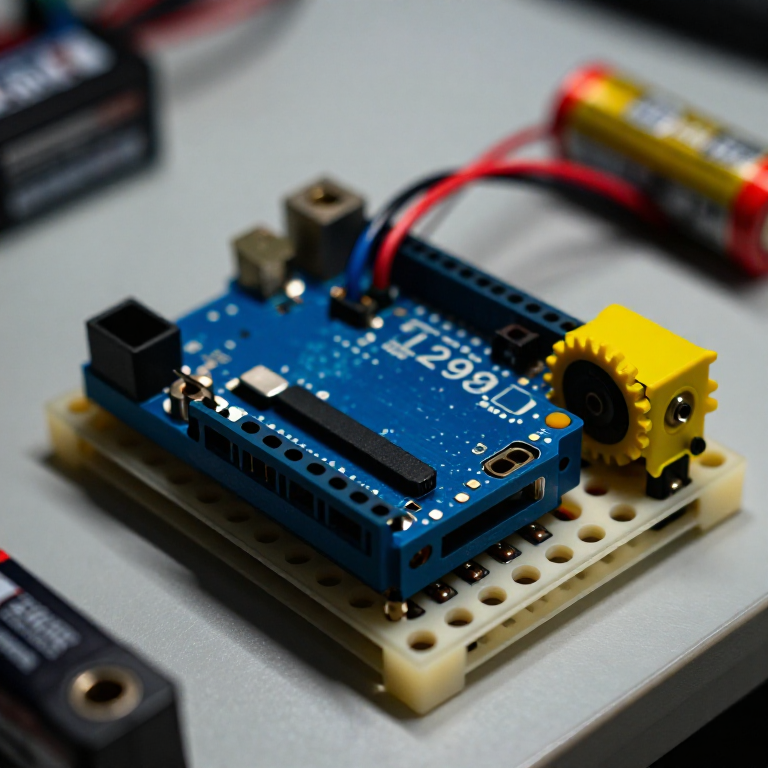
Sew a LilyPad Arduino, a LilyPad accelerometer and a LilyPad LED onto felt. Wire it: the accelerometer's + to the board's +, its - to -, and its X, Y and Z tabs to analog pins A2, A3 and A4; the LED to pin 5 and to -. Keep every line separate.
Vifaa kwa hatua hii:
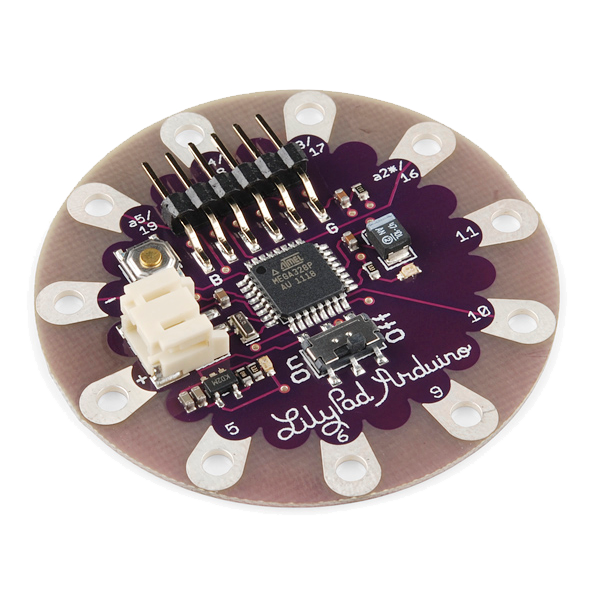 LilyPad Arduino Simple Board1 kipande
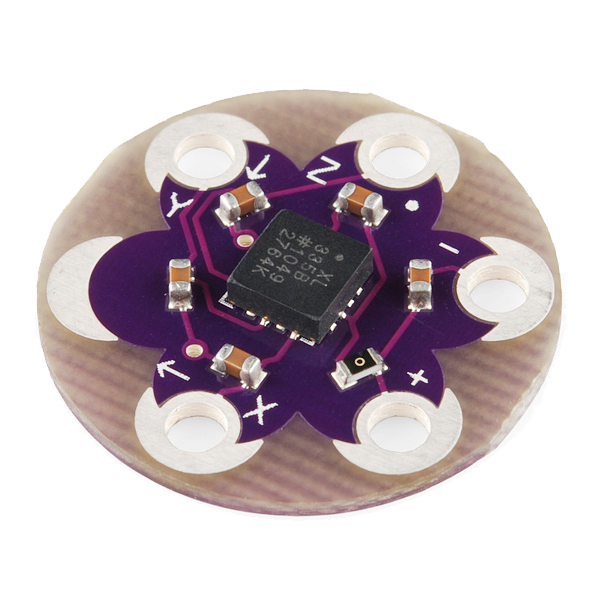 LilyPad Accelerometer ADXL3351 kipande
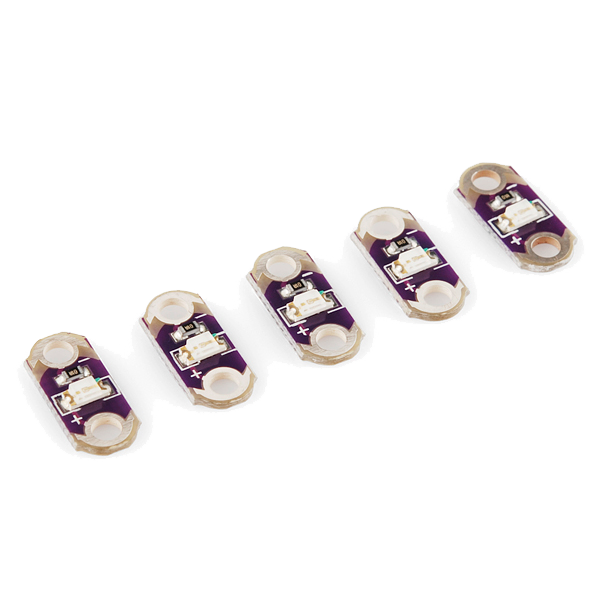 LilyPad LED - 5 pcs1 paketi
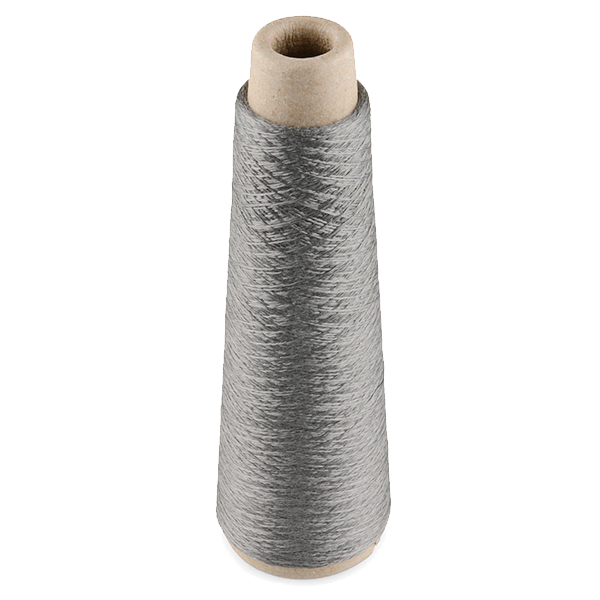 Conductive Thread - 60g (Stainless Steel)1 spu
 Hand Sewing Needles (Assorted, 30-Pack)1 paketi
 Wool Felt Sheet1 karatasi
Connect the programmer
Connect the programmer
Plug the LilyPad FTDI onto the programming header and connect the USB cable. Open the Arduino IDE and select the LilyPad Arduino board and its serial port.
Vifaa kwa hatua hii:
 LilyPad FTDI Basic Breakout - 5V1 kipande
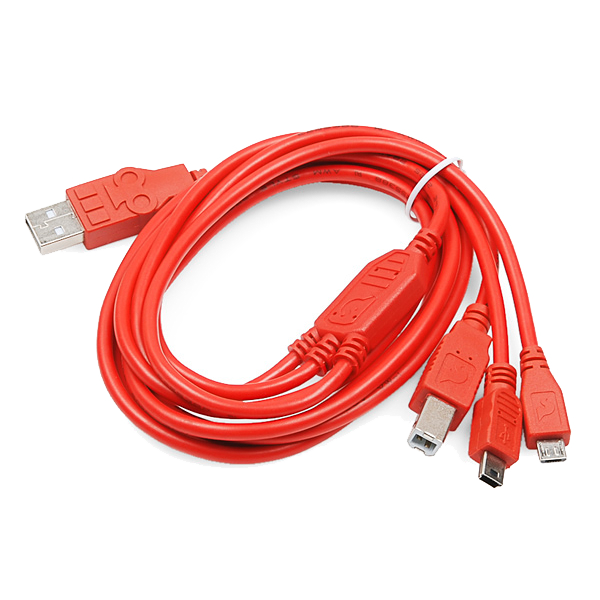 SparkFun Cerberus USB Cable - 1.8 meter1 kipande
Zana zinazohitajika:
 Computer with Arduino IDE
Upload the motion sketch
Upload the motion sketch
Paste this sketch and upload. It watches how much the three axes change between readings and lights the LED when the patch moves.
Test and tune the sensitivity
Test and tune the sensitivity
Hold the patch still — the LED stays off. Shake or swing it — the LED lights. If it's too twitchy or not sensitive enough, change moveThreshold in the sketch (higher = needs a bigger movement) and re-upload.
Go wireless and wear it
Go wireless and wear it
Unplug the FTDI, sew a LilyPad coin-cell holder to the board (+ to +, - to -), drop in a CR2032 and switch on. Sew the felt onto a sleeve, shoe or bag — it flashes whenever you move.
Vifaa kwa hatua hii:
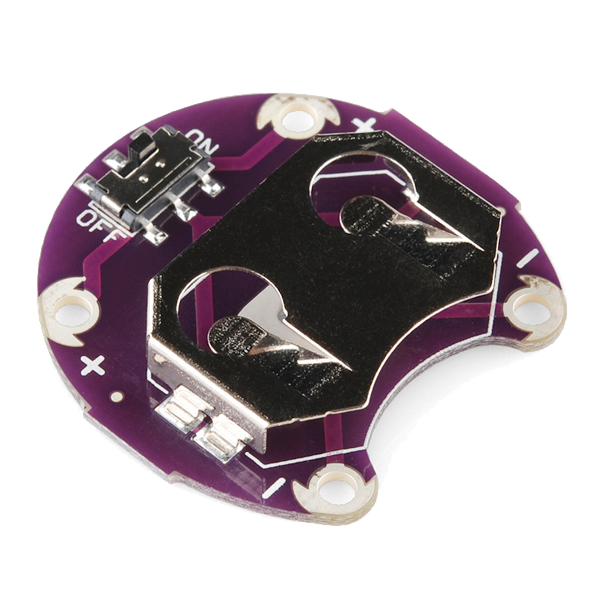 LilyPad Coin Cell Battery Holder - w/Switch - 20mm1 kipande
 CR2032 Coin Cell Battery1 kipande
Vifaa
10- 1 kipande$20.00
- 1 kipande$14.00
- 1 paketi$5.00
- Kishikilia Nafasi
- 1 karatasiKishikilia Nafasi
- 1 kipande$14.00
- $6.00
- $5.00
- 1 kipandeKishikilia Nafasi
Zana Zinazohitajika
1- Kishikilia Nafasi
Blueprint zinazohusiana
Blueprint hizi zinashiriki maarifa — mbinu, vifaa au kanuni
Related blueprints
Other builds that share materials, tools, or techniques with this one.
CC0 Umma Wote
Mchoro huu umetolewa chini ya CC0. Uko huru kunakili, kubadilisha, kusambaza, na kutumia kazi hii kwa madhumuni yoyote, bila kuomba ruhusa.
Saidia Mtengenezaji kwa kununua bidhaa kupitia Mchoro wao ambapo wanapata Kamisheni ya Mtengenezaji iliyowekwa na Wachuuzi, au unda marudio mapya ya Mchoro huu na uiunganishe kama kiungo katika Mchoro wako kuchangia mapato.