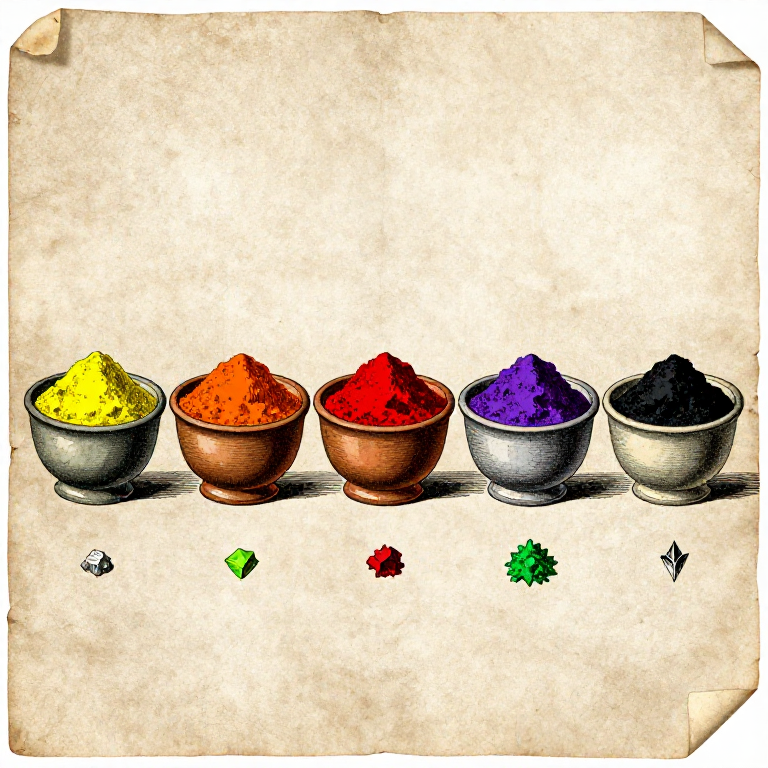

Making Mars Colours — Synthetic Iron Oxide Pigments from Copperas
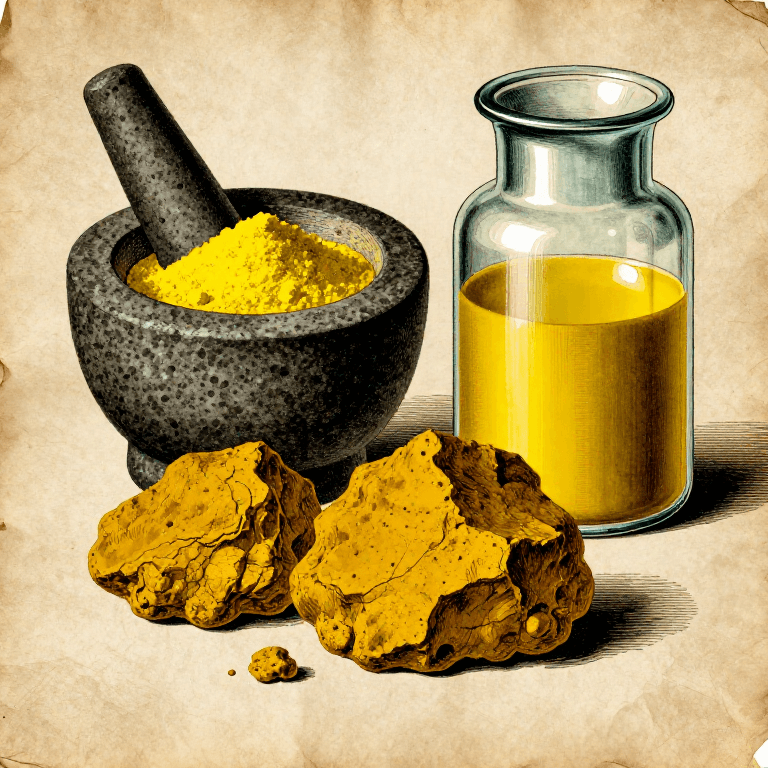
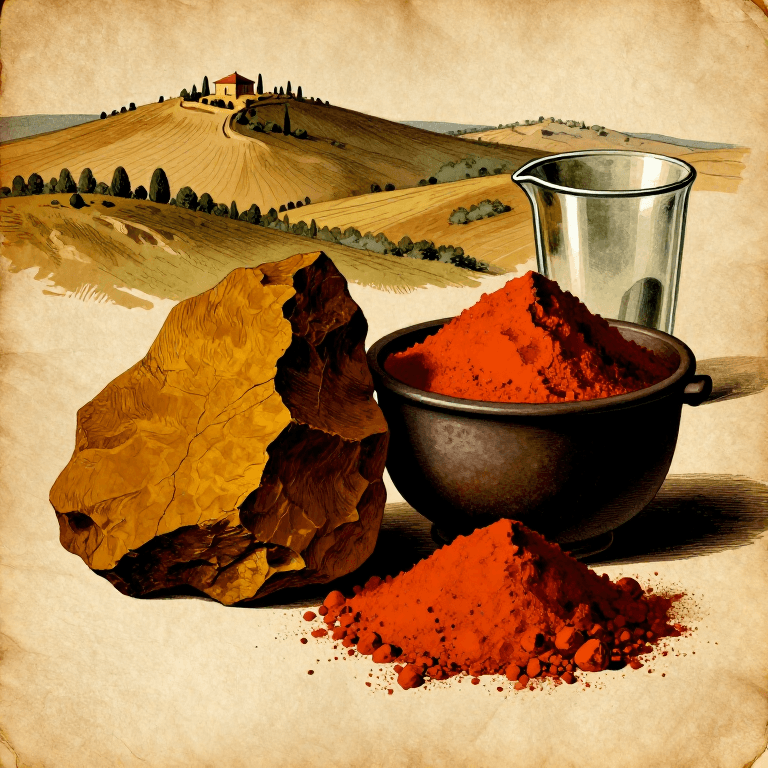
Mars colours are a family of synthetic iron oxide pigments — Mars yellow (synthetic yellow ochre), Mars red (synthetic red ochre), Mars orange, Mars violet, and Mars black — produced by precipitating iron hydroxide from a ferrous salt solution and calcining (heating) the precipitate to different temperatures. The name 'Mars' derives from the alchemical association of iron with the planet Mars. These pigments were first manufactured systematically in the late 18th century as synthetic equivalents of the natural earth pigments (ochre, sienna, umber) that had been used since prehistory.
The advantage of Mars colours over natural earths is purity, consistency, and intensity. Natural ochres contain varying amounts of clay, silica, and other minerals that dilute the colour. Mars colours are nearly pure iron oxide, producing cleaner, more intense versions of the same hues. A single starting material — ferrous sulfate (green vitriol, copperas) — heated to different temperatures produces the entire range: yellow at 200°C, orange at 350°C, red at 500°C, violet at 650°C, and black at 800°C in a reducing atmosphere.
Mars colours are entirely NON-TOXIC. Iron oxides are among the safest pigments known — they are used in food colouring, cosmetics, and medicine. The starting material (ferrous sulfate) is mildly irritating but not dangerous. This is one of the safest pigment-making processes in the entire colour palette.
Maagizo
Dissolve ferrous sulfate
Dissolve ferrous sulfate
Dissolve 100 g of ferrous sulfate heptahydrate (FeSO₄·7H₂O, also known as green vitriol or copperas) in 500 ml of warm distilled water. The solution is a pale green colour — characteristic of ferrous (Fe²⁺) ions. Ferrous sulfate is one of the most common and cheapest iron compounds — in the medieval period it was produced as a byproduct of iron pyrite weathering or by dissolving iron in sulfuric acid. Today it is widely available as a garden supplement (lawn greener) or from chemical suppliers. It is mildly irritating to skin but essentially non-toxic.
Vifaa kwa hatua hii:
 Salfati ya chuma100 g
Zana zinazohitajika:
 Bikari ya kioo inayostahimili joto
 Fimbo ya Kukoroga
Precipitate iron hydroxide
Precipitate iron hydroxide
Prepare a solution of 60 g of potassium carbonate (potash) in 300 ml of warm water. Slowly add the potash solution to the ferrous sulfate solution while stirring vigorously. A thick, greenish-brown precipitate of iron hydroxide (Fe(OH)₂ and Fe(OH)₃) forms immediately. The reaction is: FeSO₄ + K₂CO₃ + H₂O → Fe(OH)₂↓ + K₂SO₄ + CO₂↑ — the carbon dioxide fizzes off. Continue adding potash until no more precipitate forms. Let settle for 1-2 hours. Decant the clear supernatant (potassium sulfate solution — non-toxic, can be discarded). Wash the precipitate 3-4 times with clean water to remove all soluble salts.
Vifaa kwa hatua hii:
 Kabonati ya potasiamu (potashi)60 g
Zana zinazohitajika:
 Bikari ya Borosilikati
Filter and divide into portions
Filter and divide into portions
Collect the washed iron hydroxide precipitate on fine cheesecloth and squeeze out excess water. The wet cake is a brownish-green, heavy mass. Divide it into five roughly equal portions — each will be fired to a different temperature to produce a different Mars colour. Spread each portion on a separate ceramic dish and let air-dry for 24 hours, or dry in a warm oven at 80-100°C. As the precipitate dries and oxidises in air, it gradually turns from greenish-brown to yellow-brown — the iron(II) hydroxide is converting to iron(III) oxyhydroxide (FeOOH, goethite), which is already Mars yellow in its raw form.
Zana zinazohitajika:
 Kitambaa Chembamba cha Kuchuja
Calcine at different temperatures for each colour
Calcine at different temperatures for each colour
Place each dried portion in a separate crucible and fire in a kiln to different temperatures. MARS YELLOW (200°C, 2 hours): the iron oxyhydroxide retains its water and stays as goethite — a clean, warm yellow, equivalent to the best natural yellow ochre. MARS ORANGE (350°C, 2 hours): partial dehydration produces a warm orange. MARS RED (500°C, 2 hours): complete dehydration converts goethite to hematite (Fe₂O₃) — a strong, warm red, equivalent to the best Venetian red or Indian red. MARS VIOLET (650°C, 2 hours): hematite crystals grow larger, shifting the colour to a distinctive violet-red. MARS BLACK (800°C, 3 hours in a sealed/reducing crucible with charcoal): the iron oxide reduces partially to magnetite (Fe₃O₄) — a dense, warm black.
Vifaa kwa hatua hii:
 Mkaa2 kg
Zana zinazohitajika:
 Kaure ya Udongo Mgumu wa Moto
 Tanuru la matofali
 Koleo la kaure ya kuyeyushia
 Glavu za Kazi za Ngozi
Grind and compare the colour range
Grind and compare the colour range
After cooling, grind each fired portion on a glass slab with a muller. The five Mars colours should form a clear progression: yellow → orange → red → violet → black — all from the same iron compound at different temperatures. This demonstrates beautifully how crystal structure and hydration state control colour. Mars colours are among the most permanent pigments known — completely lightfast, chemically inert, and compatible with all painting media (oil, watercolour, tempera, acrylic, fresco, lime wash). They are non-toxic and safe to handle. For painting, grind each colour separately with your chosen medium. Store dry pigments in labelled glass jars. The entire Mars colour family provides a complete warm palette for underpainting and earth-tone work.
Zana zinazohitajika:
 Kisagio cha kioo
 Vyungu vya Kioo Cheusi vyenye Mifuniko Isiyopitisha Hewa
Vifaa
3- 100 gKishikilia Nafasi
- Kishikilia Nafasi
- 2 kgKishikilia Nafasi
Zana Zinazohitajika
10- Kishikilia Nafasi
- Kishikilia Nafasi
- Kishikilia Nafasi
- Kishikilia Nafasi
- Kishikilia Nafasi
- Kishikilia Nafasi
- Kishikilia Nafasi
- Kishikilia Nafasi
- Kishikilia Nafasi
- Kishikilia Nafasi
Vifaa vya Michoro Iliyounganishwa
Mchoro huu unatengeneza
Blueprint zinazohusiana
Blueprint hizi zinashiriki maarifa — mbinu, vifaa au kanuni
Making Red Ochre by Calcining Yellow Ochre — The Oldest Deliberate Pigment Transformation
na Charlie
SANAA
Making Raw and Burnt Umber — The Manganese Earth Pigments of Warm Shadow and Deep Brown
na Charlie
SANAA
Making Bone Black Pigment — Calcining Animal Bones into the Warm Black of Old Master Painters
na Charlie
SANAA
Making Vine Black Pigment — Charring Grape Vines into the Cool Blue-Black of Classical Painters
na Charlie
SANAA
Making Oil Paint from Raw Pigments — Grinding Pigments in Linseed Oil
na Charlie
SANAA
Making Watercolour Paint from Raw Pigments — Gum Arabic Binder
na Charlie
SANAA
Making Egg Tempera Paint — The Medieval Panel Painting Medium
na Charlie
SANAA
Making Acrylic Paint — Grinding Pigments into Acrylic Polymer Medium
na Charlie
SANAA
Making Traditional Gesso — The White Ground That Prepared Every Panel Painting in History
na Charlie
SANAA
CC0 Umma Wote
Mchoro huu umetolewa chini ya CC0. Uko huru kunakili, kubadilisha, kusambaza, na kutumia kazi hii kwa madhumuni yoyote, bila kuomba ruhusa.
Saidia Mtengenezaji kwa kununua bidhaa kupitia Mchoro wao ambapo wanapata Kamisheni ya Mtengenezaji iliyowekwa na Wachuuzi, au unda marudio mapya ya Mchoro huu na uiunganishe kama kiungo katika Mchoro wako kuchangia mapato.