SANAA
UREMBO NA USTAWI
UJANJA
UTAMADUNI NA HISTORIA
BURUDANI
MAZINGIRA
CHAKULA NA VINYWAJI
UHANDISI WA KINYUME
SAYANSI
MICHEZO
TEKNOLOJIA
VAZI
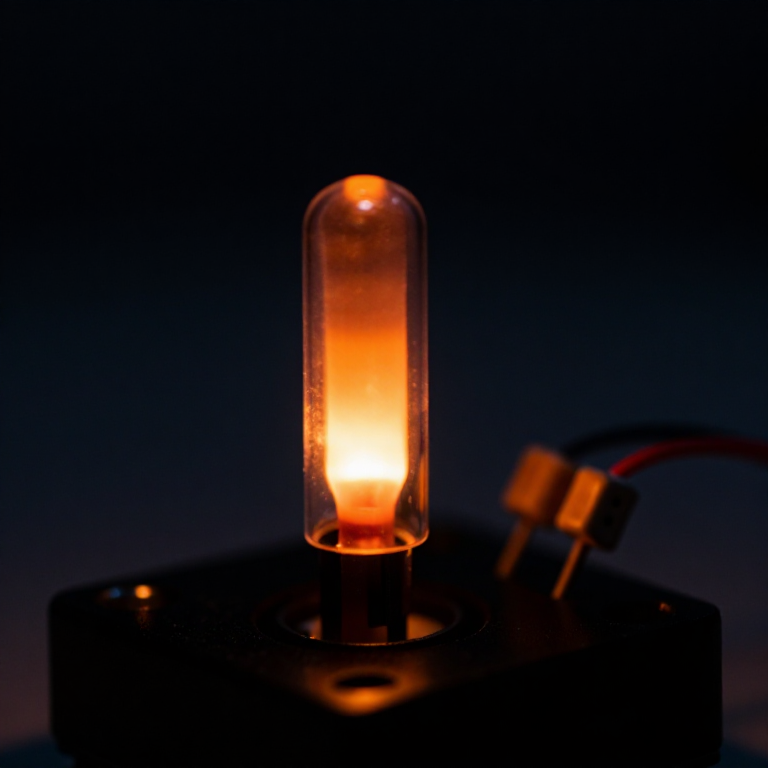


The Negative Feedback Amplifier
A telephone line across a continent needs hundreds of amplifiers in series, and their faults add. Each valve's gain drifts as it ages and each stage adds a little distortion, so a hundred repeaters each drifting one decibel is a hundred decibels of drift. Bell Labs spent the 1920s hand-selecting valves, matching them in pairs and re-matching them every year, and it was not working.
Harold Black tried the obvious fix first. His 1923 feedforward amplifier separated out the distortion, amplified it on its own, and subtracted it from the output further down. It works on the bench and it needs two active paths matched to about one per cent and HELD there while the valves age and the room warms up. Nothing in 1923 could do that.
On the morning of 2 August 1927, crossing the Hudson on the Lackawanna Ferry, he wrote the other answer on a spare copy of the New York Times. Feed a fraction of the output back to the input in opposition, and the closed-loop gain becomes A over one plus A-beta. Make the loop gain large and that collapses to one over beta - a number set by two resistors, which do not age, do not distort and cost nothing to match.
One decision buys four things at once, all divided or multiplied by the same factor: the distortion falls, the gain drift falls, the bandwidth rises, and the amplifier's own characteristics stop mattering. The price is stated just as plainly. To keep forty decibels of gain with forty decibels of feedback you must build eighty and throw half of it away.
It also buys a problem nobody had before. A loop can howl, and in 1927 there was no way to predict which one would.
Kati
3 hours
Maagizo
1
1
An amplifier with no feedback at all
An amplifier with no feedback at all
Build a common-emitter stage on the breadboard: 2N3904, 4k7 collector load, base biased near half the supply, emitter straight to ground through a 220 uF capacitor.
Feed it 10 mV at 1 kHz and measure the output. Note the gain. Then warm the transistor with your finger and watch the gain move.
Vifaa kwa hatua hii:
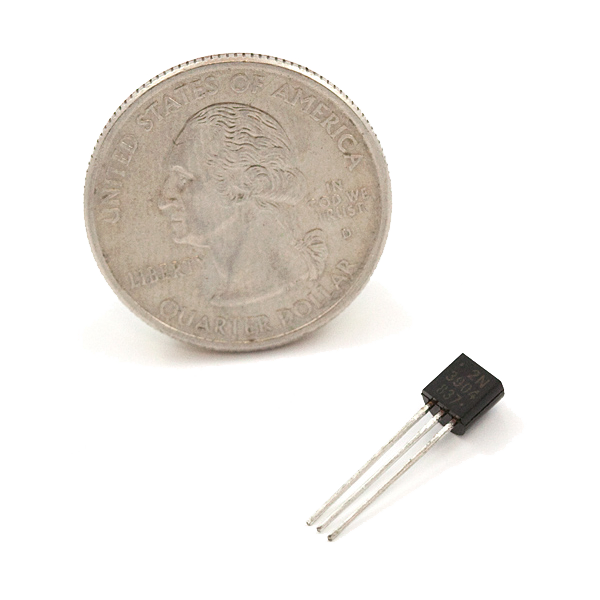 BJT Transistors - NPN 2N39041 kipande
 Kifurushi cha Vipinga vya 1/4 W1 kifaa
 Seti ya kapasita za elektroliti1 kifaa
Zana zinazohitajika:
 Bao la Majaribio
 Kitengeneza Ishara cha DDS
 Osilosikopu ya dijitali
 Chanzo cha umeme cha meza
 Mita-nyingi ya dijitali ya maabara
2
2
Take the capacitor out
Take the capacitor out
Remove the emitter bypass capacitor so the emitter resistor is in circuit for signal. You have just closed a feedback loop: the emitter voltage follows the output current and opposes the input.
Re-measure. The gain has collapsed to roughly the ratio of two resistors - and now it does not move when you warm the transistor, and the sine wave on the scope is visibly cleaner at large signals. Same parts, one component moved.
Vifaa kwa hatua hii:
Kifurushi cha Vipinga vya 1/4 W1 kifaaZana zinazohitajika:
Bao la MajaribioKitengeneza Ishara cha DDSOsilosikopu ya dijitaliMita-nyingi ya dijitali ya maabara3
3
One over beta, four benefits, and the thing Black tried first
One over beta, four benefits, and the thing Black tried first
Inapakia daftari la Jupyter…
Zana zinazohitajika:
 Kompyuta ya mezani
4
4
Compendium: the patent nobody believed, and the minus sign
Compendium: the patent nobody believed, and the minus sign
The British Patent Office initially treated the application the way they treated perpetual motion machines, on the reasonable-sounding grounds that an amplifier whose output opposes its input cannot amplify. It is a fair objection and the answer is that it does not amplify - the LOOP does, and what the loop delivers is not gain but accuracy. Black's US patent 2,102,671 was filed in 1932 and granted in 1937, ten years after the ferry. Bell System repeaters using it went into service in the 1930s and the same equation now sits under every operational amplifier, every switching regulator and every servo in this batch.
The minus sign is worth being careful about, because it is only a minus sign at low frequency. Every real amplifier adds phase shift as frequency rises, and at some frequency the feedback that was subtracting arrives 180 degrees late and starts adding instead. If the loop gain is still above one when that happens, the amplifier oscillates. More feedback makes every static property better and moves that frequency closer, which is why the Bell amplifiers with the most feedback were the ones that sang - and why the next two blueprints exist.
Vifaa
3- BJT Transistors - NPN 2N3904Kamisheni 10%1 kipande$0.77
- Kishikilia Nafasi
- Kishikilia Nafasi
Zana Zinazohitajika
6- 1 vendor sell this, none ship to you yetKishikilia Nafasi
- Kishikilia Nafasi
- 1 vendor sell this, none ship to you yetKishikilia Nafasi
- Kishikilia Nafasi
- Kishikilia Nafasi
- Kishikilia Nafasi
Jumla inayokadiriwa
Kile mtengenezaji alinunua. Malighafi zisizo na bei hupatikana pale unaponunua.
Blueprint zinazohusiana
Blueprint hizi zinashiriki maarifa — mbinu, vifaa au kanuni

CC0 Umma Wote
Mchoro huu umetolewa chini ya CC0. Uko huru kunakili, kubadilisha, kusambaza, na kutumia kazi hii kwa madhumuni yoyote, bila kuomba ruhusa.
Saidia Mtengenezaji kwa kununua bidhaa kupitia Mchoro wao ambapo wanapata Kamisheni ya Mtengenezaji iliyowekwa na Wachuuzi, au unda marudio mapya ya Mchoro huu na uiunganishe kama kiungo katika Mchoro wako kuchangia mapato.